




Retatrutide Research Guide: Identity, Evidence and Documentation
Retatrutide research spans molecular identity, receptor pharmacology and material characterisation. This overview explains how those evidence types fit together and where to…

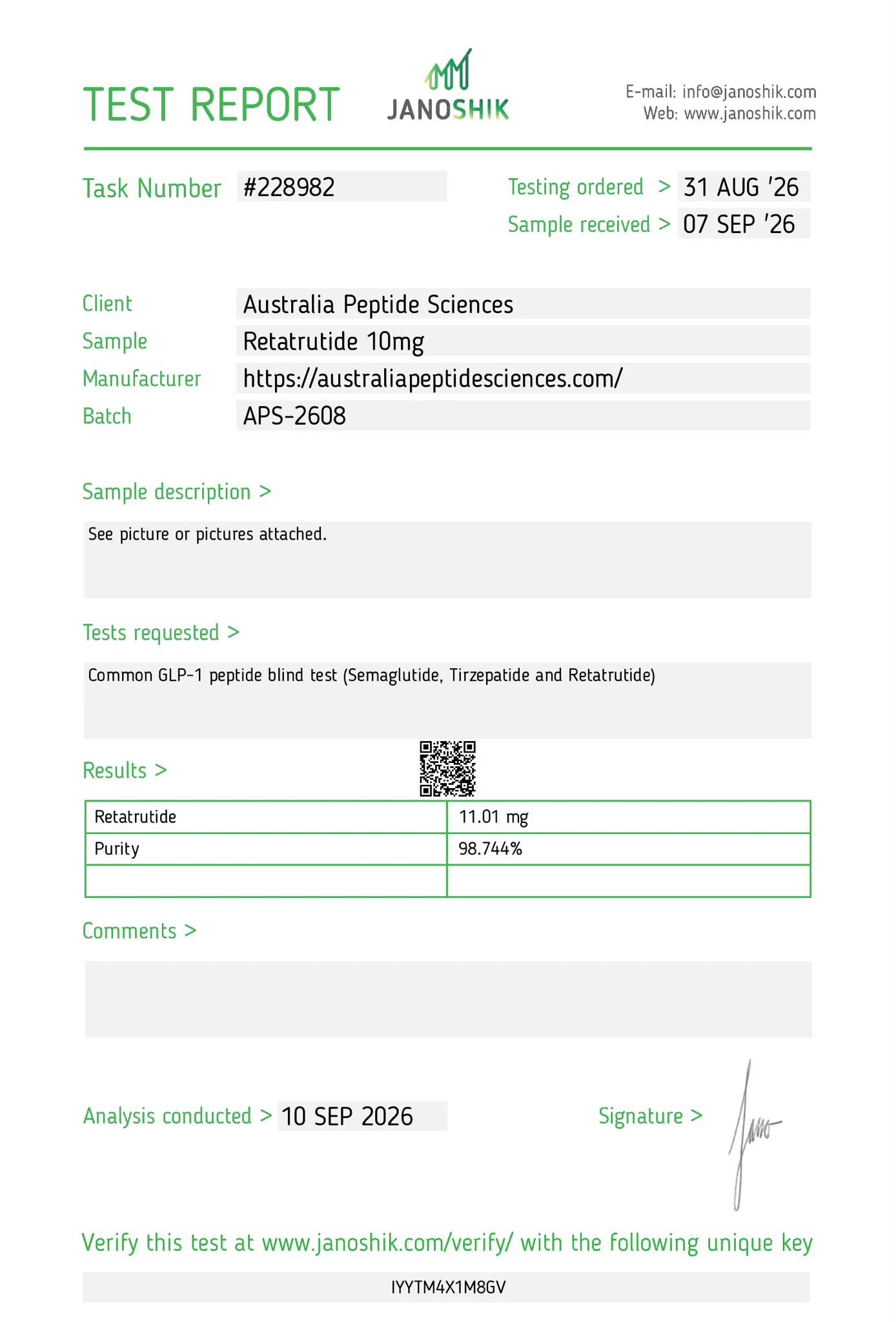
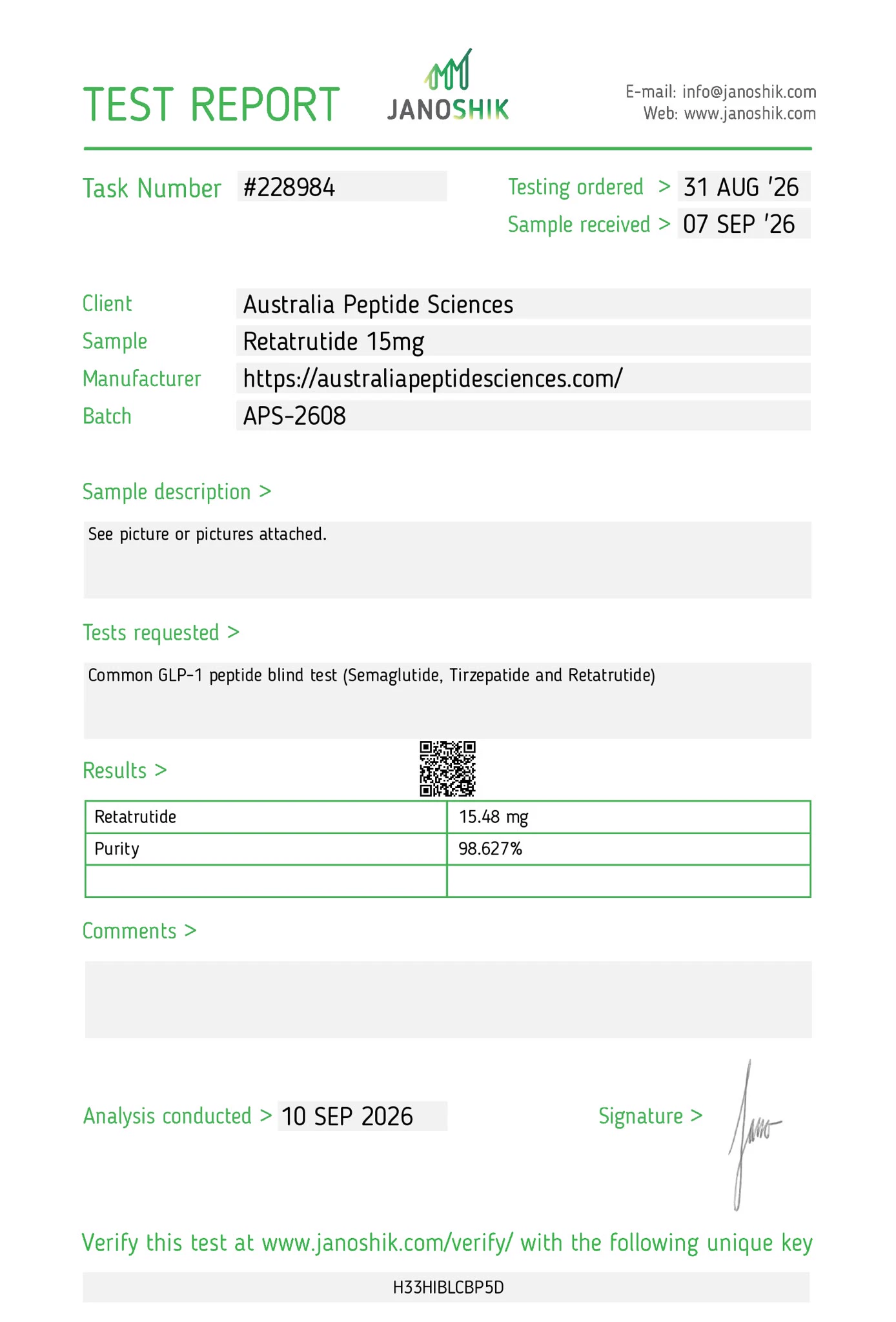
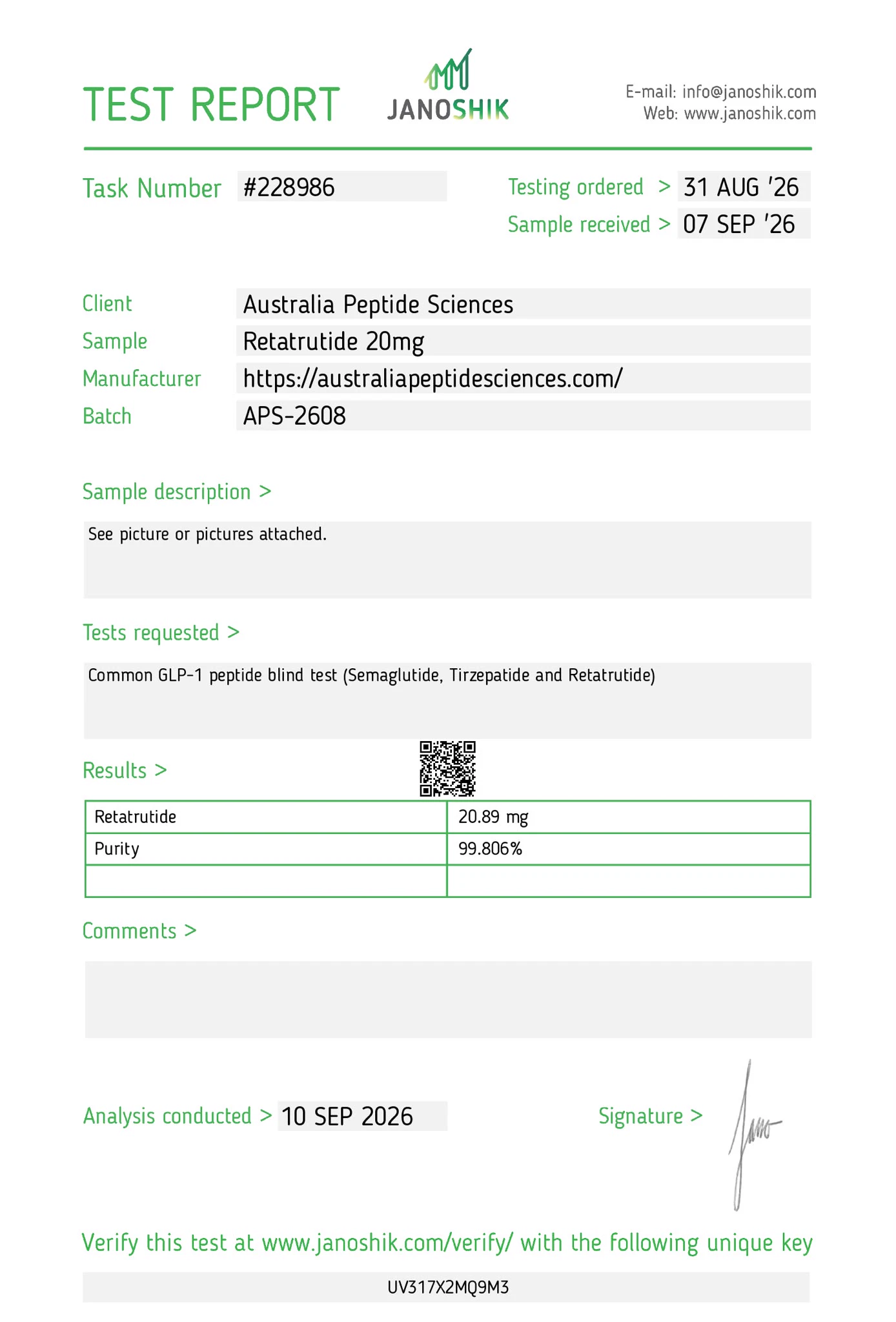
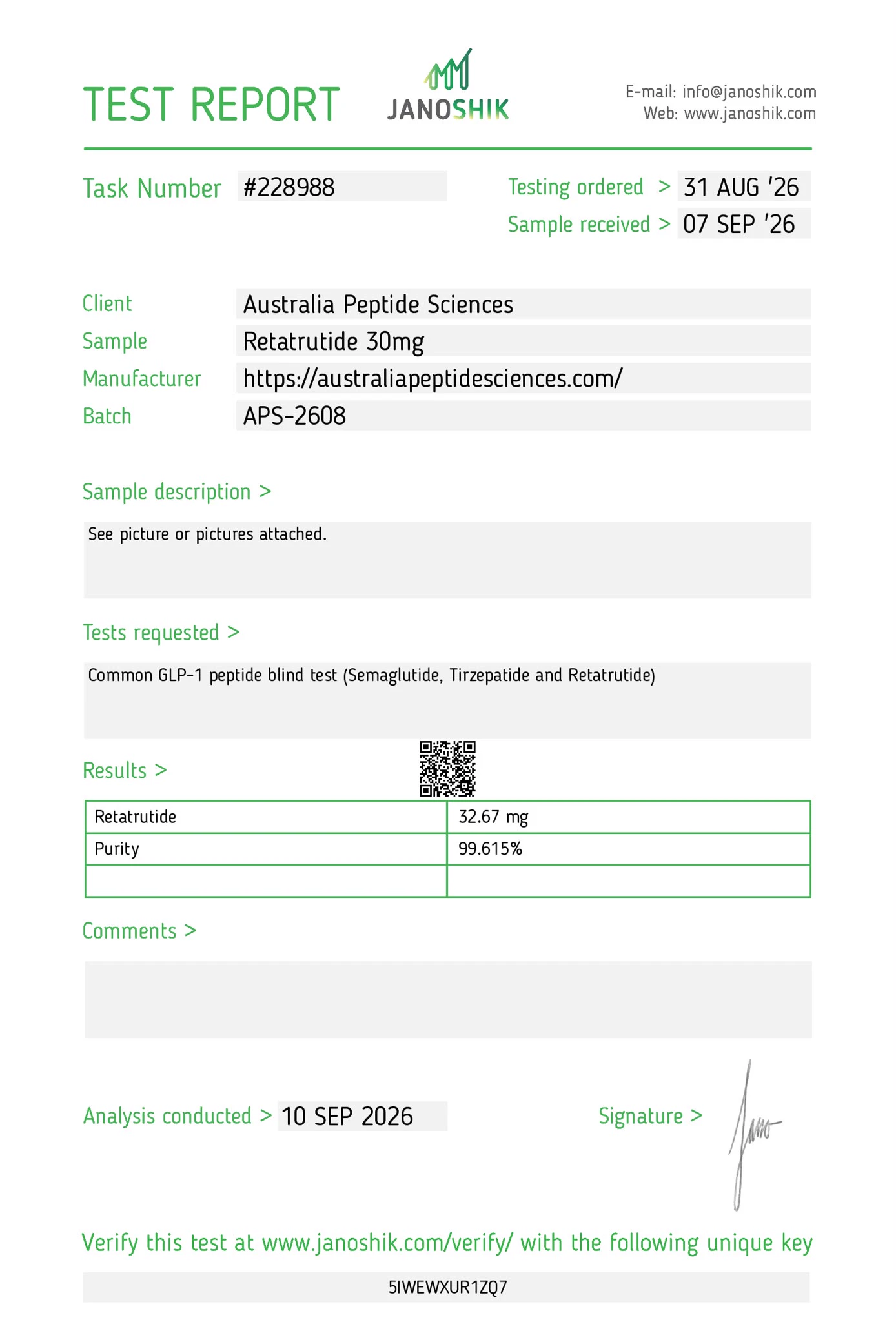
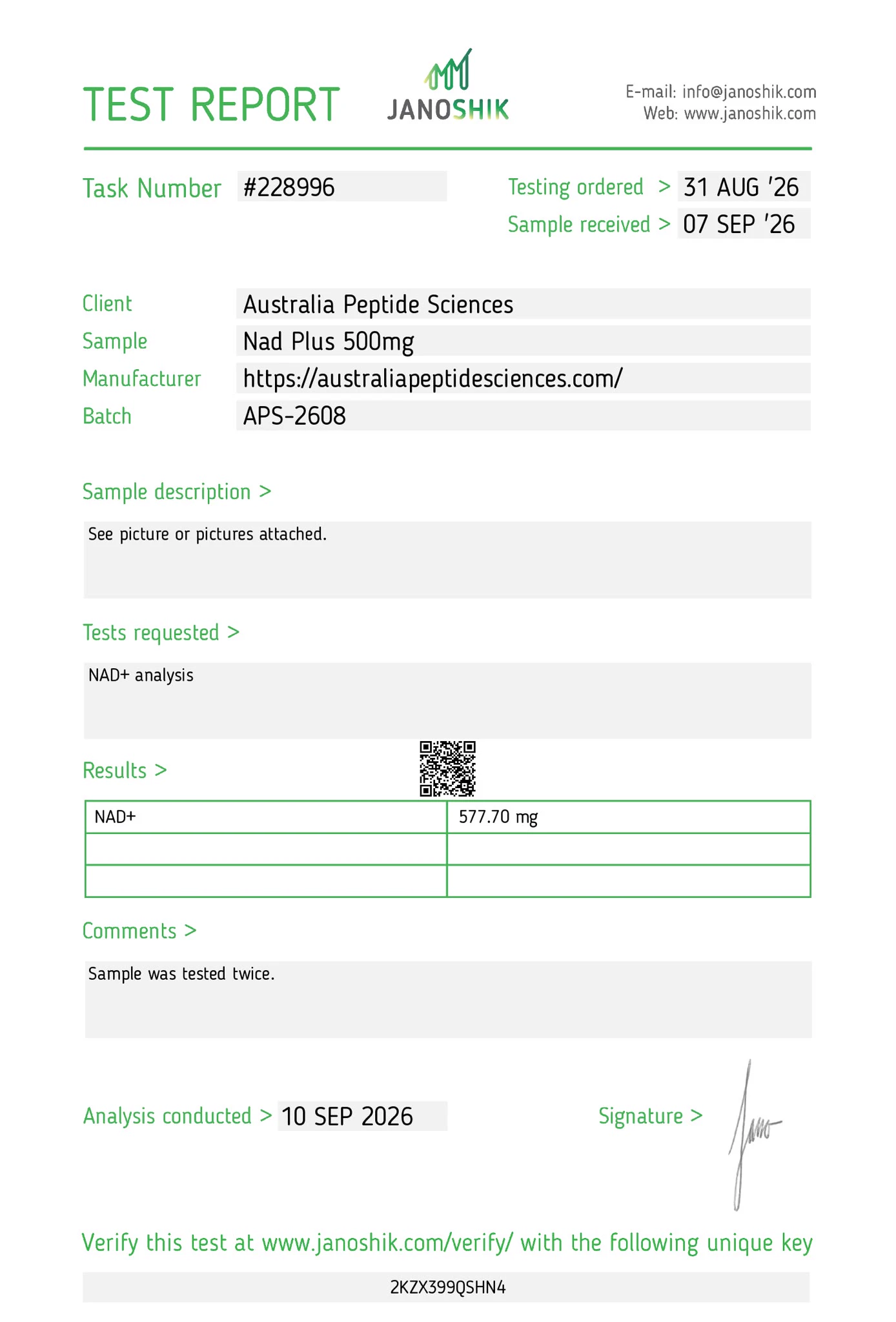
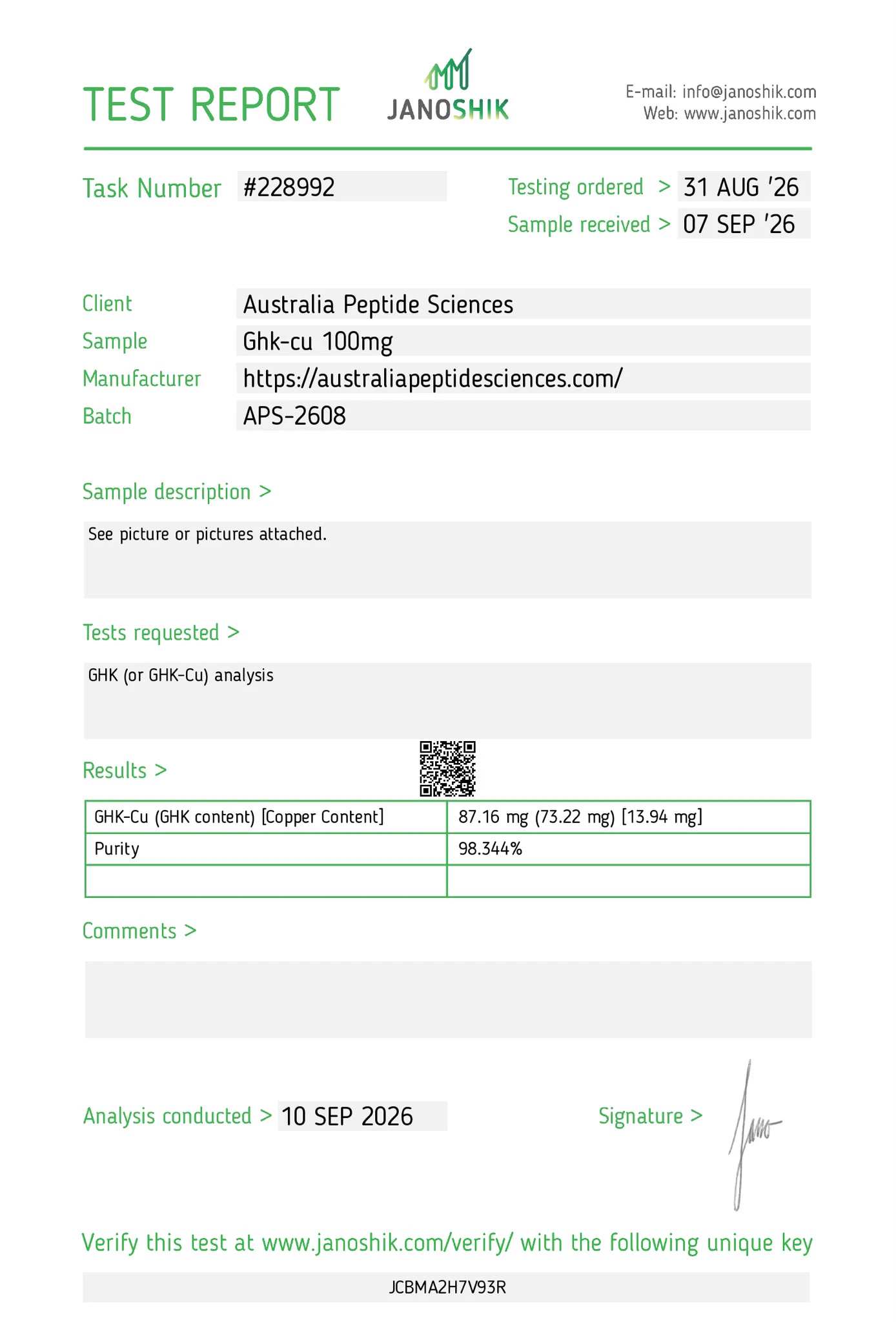
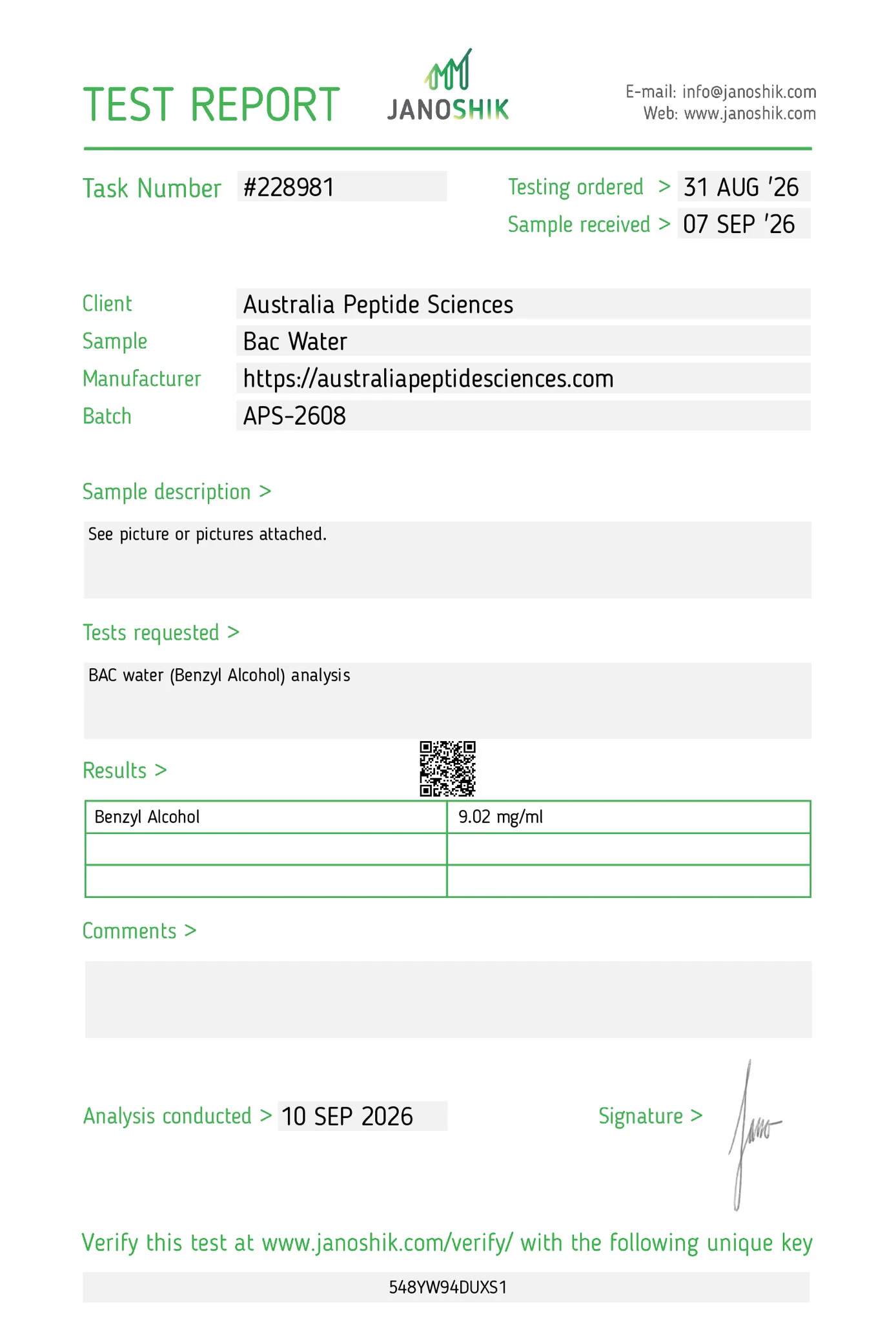
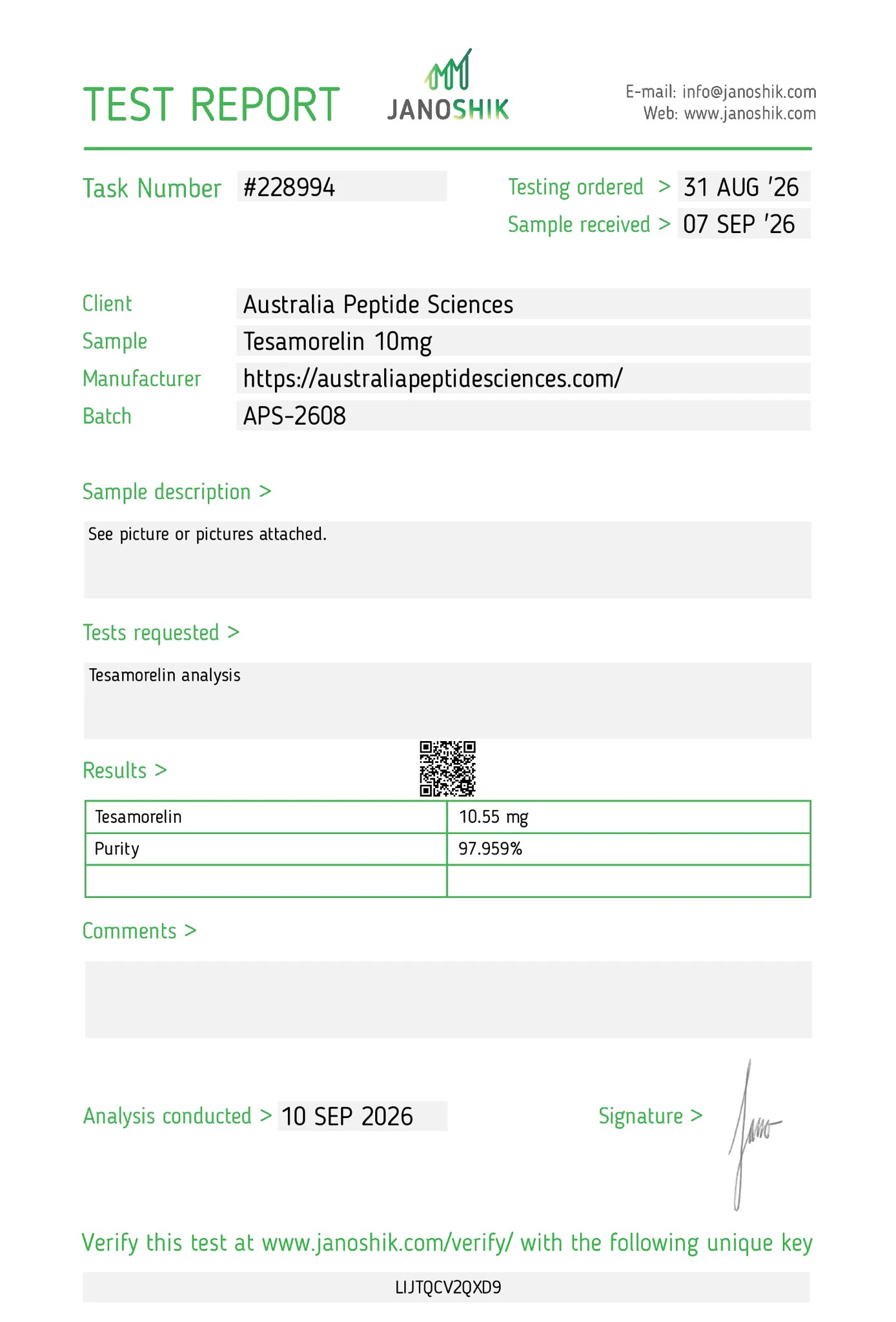
Australia Peptide Sciences provides Certificates of Analysis (COAs) for our research peptides, allowing researchers to review available laboratory testing and batch-specific analytical information. Browse the certificates below to review product identification, purity results, testing details, batch information, and analysis dates where available.
Review the available laboratory reports and select a certificate to view it in detail.
A peptide Certificate of Analysis, commonly called a peptide COA, is a laboratory document that records analytical information about a specific tested sample. Depending on the analysis performed, it may report product identity, measured purity, sample or batch details, tested amount, and other information relevant to the material submitted for testing.
A COA should be read in the context of the sample it represents. One report should not be assumed to describe every future batch of the same compound. Researchers should check the product name, batch or sample information, analysis date, and reported results on the individual certificate.
Identifies the peptide or research compound submitted for laboratory analysis.
Where provided, batch information helps connect the laboratory result to the specific sample represented by the report.
Peptide purity testing can provide a reported percentage or analytical result for the tested sample. The exact value should always be taken from the corresponding laboratory report.
Some reports include information about the measured or tested quantity of material.
The analysis date indicates when testing was completed for the sample.
Reports may include a task number, report reference, or verification information that can be used to identify the laboratory analysis.
Independent laboratory testing provides an additional layer of analytical documentation by separating the testing process from the product listing itself. The Certificates of Analysis displayed by Australia Peptide Sciences include third-party laboratory reports for the samples shown on this page.
Where a laboratory name, task number, or verification key appears on a report, researchers can use that information when reviewing the associated analysis. Results should be interpreted report by report, as purity levels, tested amounts, and other findings can differ between compounds, samples, and batches.
When reviewing a peptide COA, it is useful to compare several details rather than relying solely on the purity percentage.
Researchers can use the Certificates of Analysis above to review available laboratory testing information before visiting the corresponding research product pages.
Australia Peptide Sciences supplies peptides and research compounds intended strictly for laboratory and research use only. Products are not intended for human consumption.
A peptide COA is a Certificate of Analysis containing laboratory information about a tested peptide sample. Depending on the analysis performed, it may include product identification, purity results, sample or batch details, tested amount and the analysis date.
Purity refers to the analytical result reported for the tested sample using the laboratory’s testing methodology. Researchers should refer to the individual COA for the exact result rather than assuming that one purity result applies to every batch of a product.
A laboratory report relates to the sample submitted for testing. Where a batch number or other sample identifier is shown, it should be used to determine which batch or sample the reported result relates to.
Review the laboratory name, product identification, task or report number, batch information, and analysis date. Where the certificate contains a verification key or laboratory reference, that information can also be used when checking the report.
Continue exploring peptide research with these selected guides and comparison articles.

Retatrutide research spans molecular identity, receptor pharmacology and material characterisation. This overview explains how those evidence types fit together and where to…
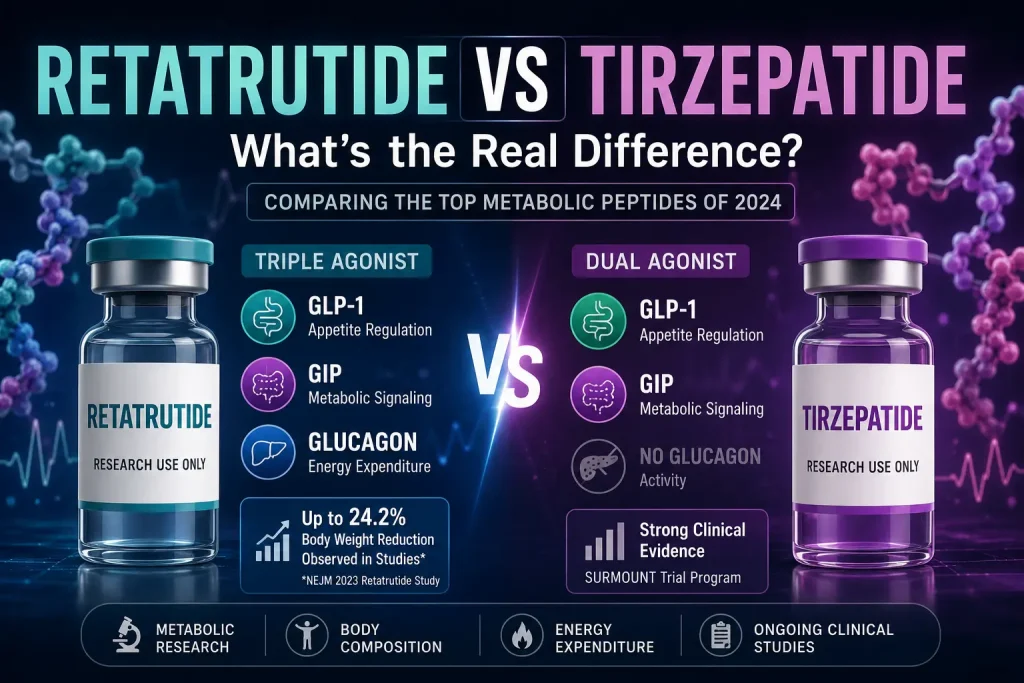
Retatrutide and Tirzepatide are peptide compounds studied for multi-receptor activity, but their receptor profiles are not identical. Tirzepatide is investigated at GIPR…

BPC-157 peptide has been investigated across a broad range of preclinical models involving gastrointestinal biology, angiogenesis, inflammatory signalling and tissue-response pathways. It…