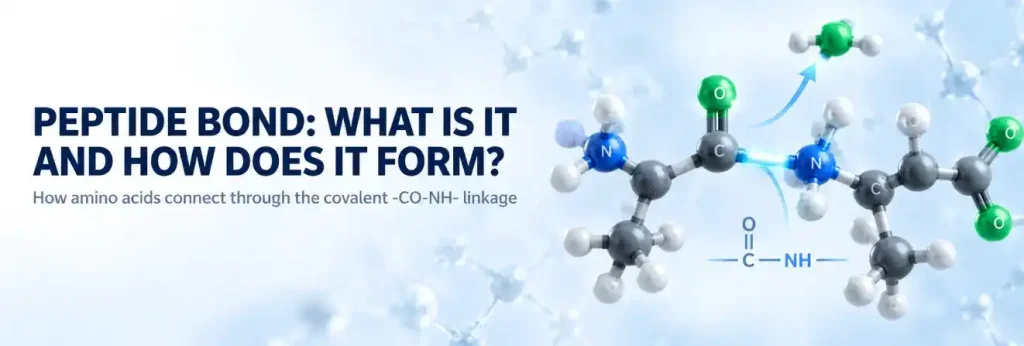
Peptide Bond: What Is It and How Does It Form?
A peptide bond is a covalent chemical bond that connects one amino acid to another, creating the backbone of peptides and proteins. It forms between…
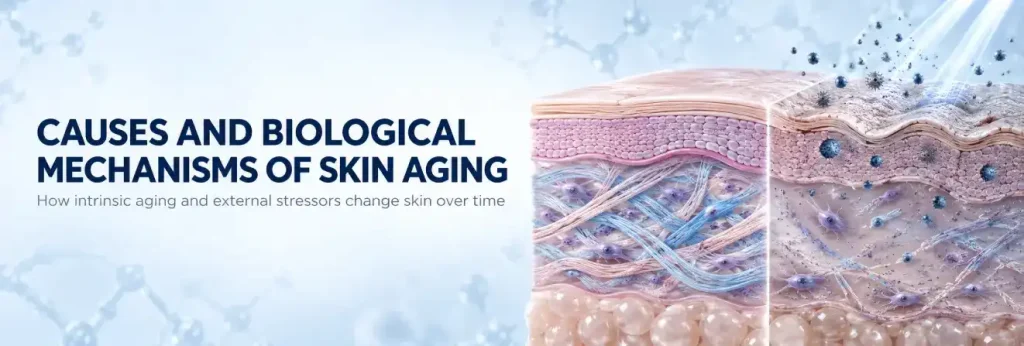
Skin aging is caused by a combination of intrinsic biological changes and extrinsic environmental exposures. Understanding what causes skin aging requires looking at changes in collagen, elastin,…
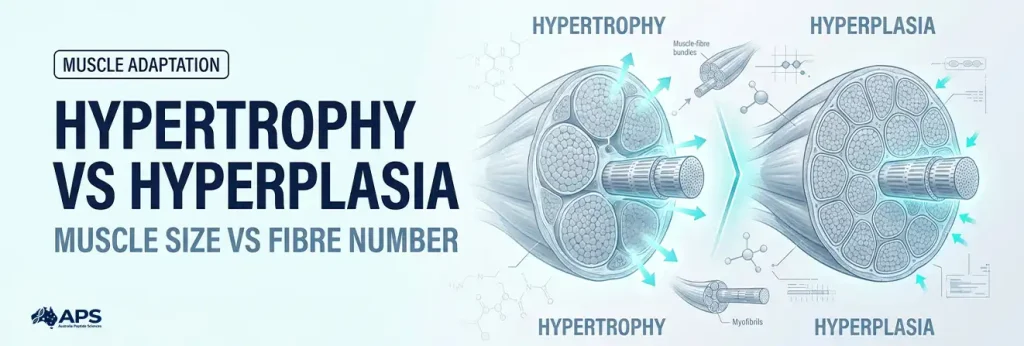
Hypertrophy vs hyperplasia describes two fundamentally different ways skeletal muscle can become larger: existing muscle fibres can increase in size, or the total number of…
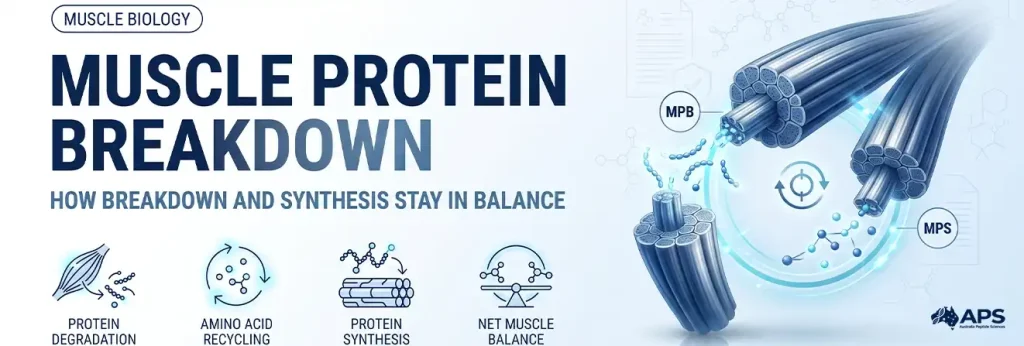
Muscle protein breakdown is the controlled process through which skeletal muscle proteins are dismantled into amino acids for reuse or replacement. It occurs continuously…
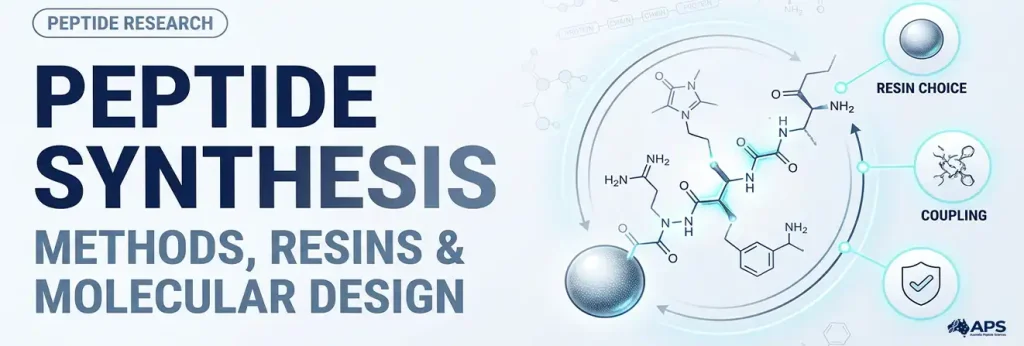
Peptide synthesis is the controlled laboratory process of assembling amino acids into a defined peptide sequence through repeated peptide-bond formation. Peptide synthesis starts with decisions…
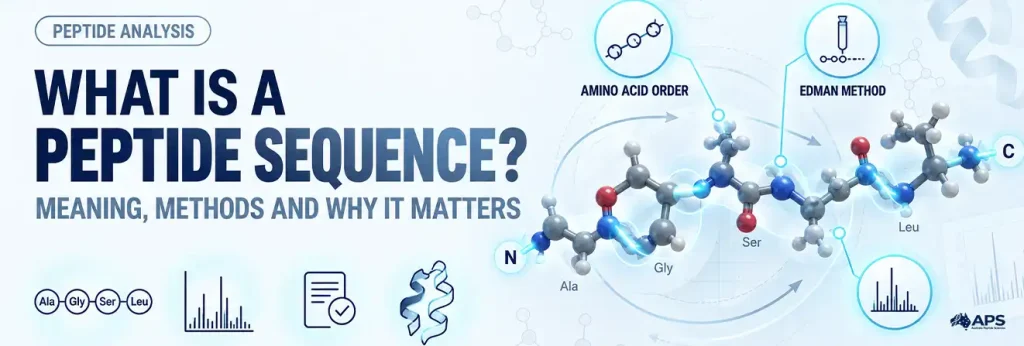
A peptide sequence is the ordered arrangement of amino acids joined within a peptide chain. This order defines the molecule’s primary structure and influences its…