
Peptide Comparison Guides
Explore side-by-side peptide comparisons covering key differences, mechanisms, research areas and available scientific evidence.
Browse Peptide ComparisonsExplore Peptide Comparisons
Browse our research-focused comparisons to explore how different peptides vary in their characteristics, mechanisms and areas of scientific investigation.
 Peptide Comparison
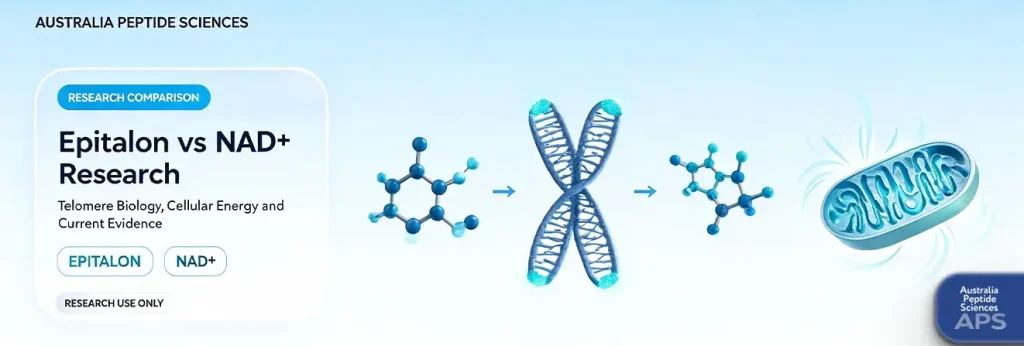
Epitalon vs NAD+ Research | Australia Peptide Sciences
Epitalon vs NAD+ is not a like-for-like comparison: Epitalon is a synthetic tetrapeptide studied mainly in telomere-related models, whereas NAD+ is an essential coenzyme…
Read Comparison Peptide Comparison
BPC-157 vs TB-500: Key Differences, Research and Safety
BPC-157 vs TB-500 is a common comparison among researchers exploring peptides linked to tendon repair, tissue recovery and wound healing. BPC-157 has been studied…
Read Comparison Peptide Comparison
GHK-Cu vs BPC-157 Research
GHK-Cu vs BPC-157 research compares two structurally different peptides studied across skin, vascular, gastrointestinal and connective-tissue models. GHK-Cu is more closely associated with copper-dependent…
Read Comparison Peptide Comparison
Reta Peptide vs Semaglutide: 2026 Research Evidence and Key Differences
Reta peptide vs semaglutide is a comparison between retatrutide, an investigational triple-receptor agonist, and semaglutide, an approved GLP-1 receptor agonist. Retatrutide activates GIP, GLP-1,…
Read Comparison Peptide Comparison
GLP-1 vs GIP vs Glucagon Receptors: Functions and Key Differences
GLP-1 vs GIP vs glucagon receptors are three related signalling systems involved in blood glucose regulation, appetite, nutrient handling and energy balance. GLP-1R primarily…
Read Comparison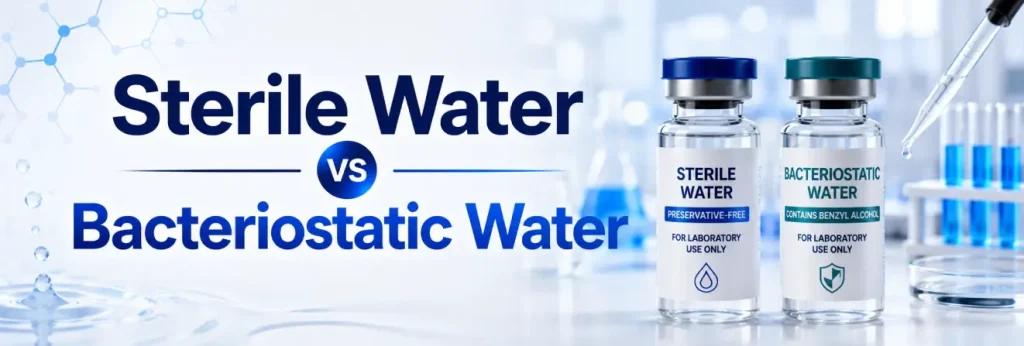 Peptide Comparison
Sterile Water vs Bacteriostatic Water: Key Lab Differences
Sterile water vs bacteriostatic water is primarily a comparison of preservative content and laboratory handling requirements. Preservative-free sterile water contains no antimicrobial additives, whereas…
Read Comparison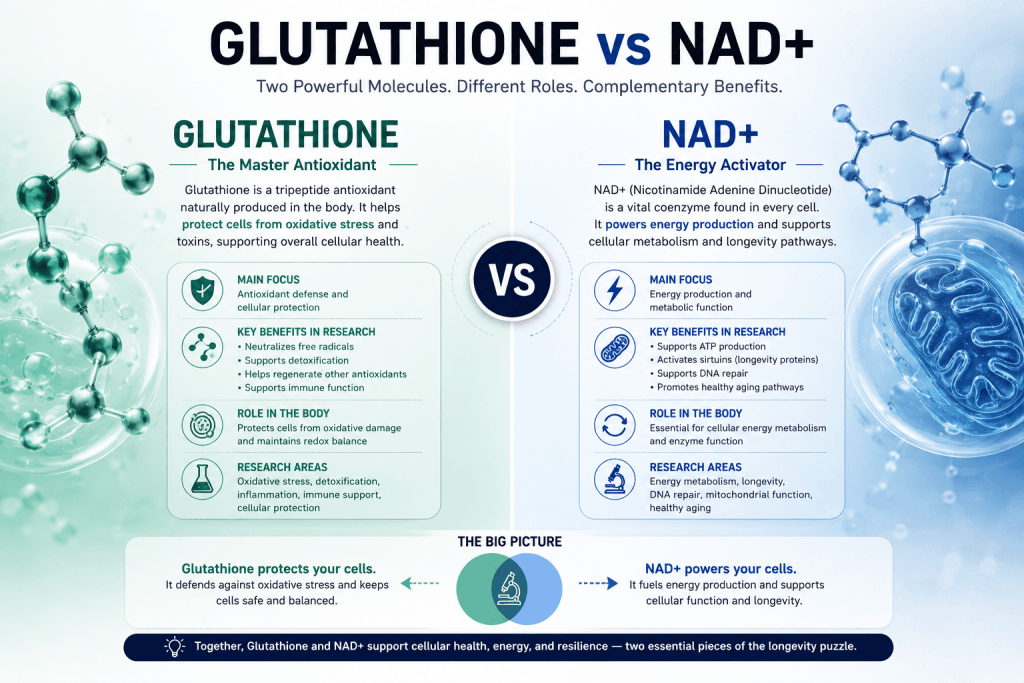 Peptide Comparison
Glutathione vs NAD+: Differences in Redox and Cellular Metabolism
Glutathione and NAD+ are both central to cellular biochemistry, but they perform fundamentally different functions. Glutathione is a tripeptide that participates extensively in cellular…
Read Comparison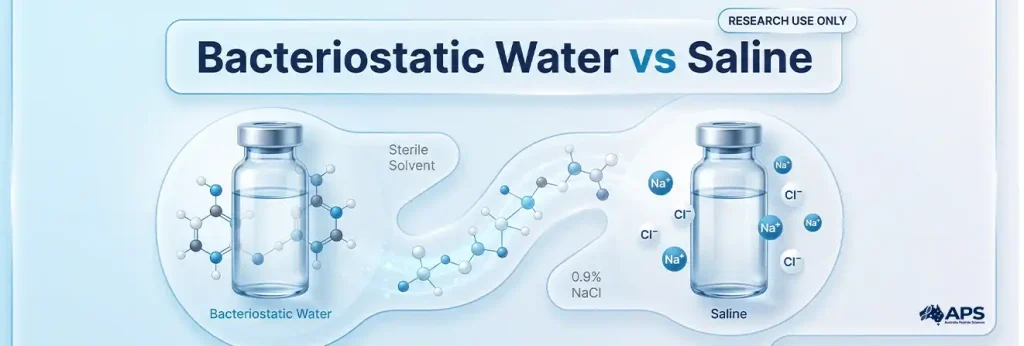 Peptide Comparison
Bacteriostatic Water vs Saline: Key Differences for Peptide Research
Bacteriostatic water vs saline is primarily a comparison of preservative content, sodium chloride content, and compatibility with a specific laboratory protocol. Bacteriostatic water is…
Read Comparison Peptide Comparison
Tirzepatide vs Semaglutide: Mechanisms, Trial Results and Safety
Tirzepatide vs semaglutide compares two peptide-based compounds with different receptor profiles: tirzepatide activates GIP and GLP-1 receptors, while semaglutide acts primarily through the GLP-1…
Read ComparisonPeptide Comparison FAQs
What is a peptide comparison guide?
A peptide comparison guide examines two or more peptides side by side, highlighting differences in their structure, mechanisms, research areas and available scientific evidence.
What can researchers compare between peptides?
Researchers may compare factors such as molecular characteristics, receptor activity, mechanisms of action, areas of investigation and findings reported in published research.
Are all peptides studied for the same research purposes?
No. Different peptides may interact with different biological pathways and are investigated across different areas of laboratory research. Each comparison should therefore consider the specific characteristics and available evidence for the compounds involved.
Where can I find detailed guides about individual peptides?
Individual peptide information can be found in our Research Peptide Guides, which provide more detailed coverage of specific compounds and their research context.
Explore Research Peptides
Browse the Australia Peptide Sciences range of research peptides and related compounds available for laboratory research in Australia.
For research use only. Not intended for human consumption or therapeutic use.