
Research Peptide Guides
Explore research peptide guides covering individual compounds, mechanisms, characteristics, scientific evidence and laboratory research considerations.
Browse Peptide GuidesExplore Our Research Peptide Guides
Browse detailed research guides covering individual peptides, their scientific characteristics, mechanisms, research areas and related laboratory information.
 Peptide Guide
IGF-1 LR3 Research Guide: Structure, Binding Proteins and Laboratory Use
IGF-1 LR3, also known as Long R3 IGF-I, is a modified IGF-I analogue used in laboratory research. Its structural changes reduce interactions with IGF…
Read Guide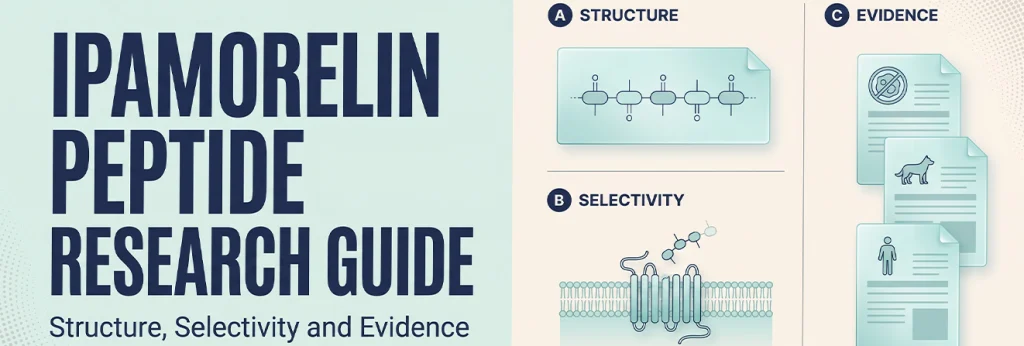 Peptide Guide
Ipamorelin Peptide Research Guide: Structure, Selectivity and Evidence
Ipamorelin is a synthetic five-residue peptide studied for ghrelin-receptor activation and growth hormone release. This guide covers its structure, selectivity, human pharmacokinetics, and clinical…
Read Guide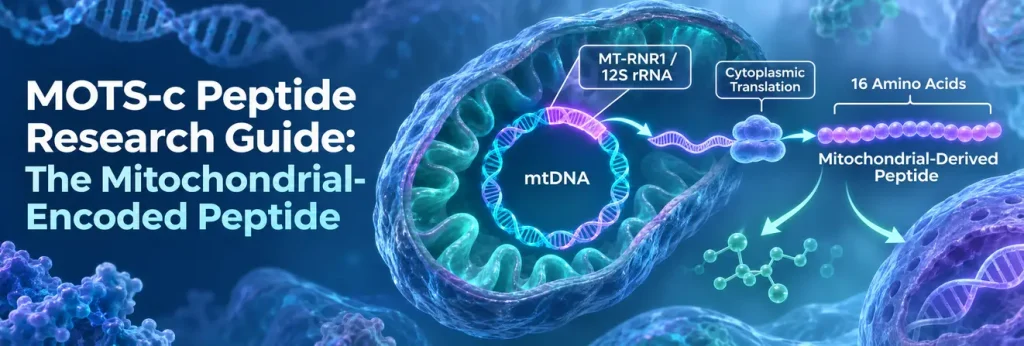 Peptide Guide
MOTS-c Peptide Research Guide: The Mitochondrial-Encoded Peptide
MOTS-c is a 16-amino-acid peptide encoded within mitochondrial DNA (mtDNA). First identified in 2015, it belongs to a group of mitochondrial-derived peptides (MDPs) investigated…
Read Guide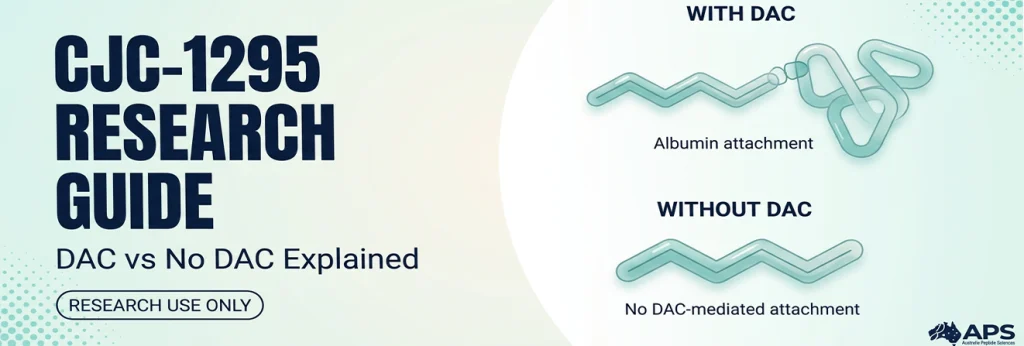 Peptide Guide
CJC-1295 Research Guide: DAC vs No DAC Explained
CJC-1295 is a synthetic growth hormone-releasing hormone analogue. The original compound uses a drug affinity complex, or DAC, to bind albumin, while “no DAC”…
Read Guide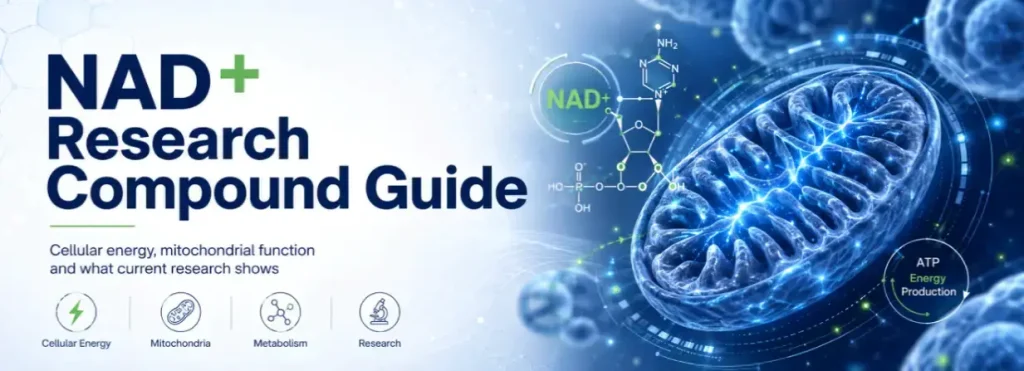 Peptide Guide
NAD+ Research Compound Guide | Australia Peptide Sciences
NAD+ research focuses on nicotinamide adenine dinucleotide, a coenzyme involved in cellular metabolism, redox balance, mitochondrial function and energy transfer. NAD+ also supports several…
Read Guide Peptide Guide
Glow Blend Peptide Research Guide | Australia Peptide Sciences
Glow Blend peptide is a multi-peptide research formulation combining BPC-157, TB-500 and GHK-Cu to investigate overlapping cellular, tissue-remodelling and skin-related pathways. Each component has…
Read Guide Peptide Guide
GLP-1 Peptide Research Guide | Australia Peptide Sciences
GLP-1 peptide research examines how glucagon-like peptide-1 and related compounds behave in receptor assays, cell systems, isolated tissues and whole-organism models. It covers native…
Read Guide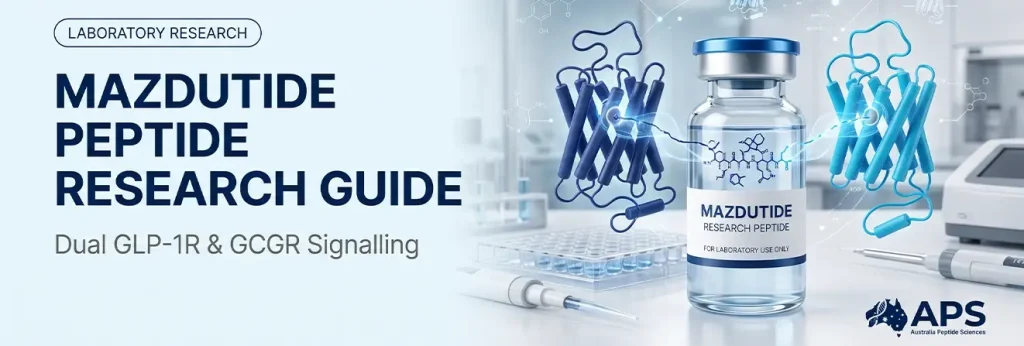 Peptide Guide
Mazdutide Peptide Research Guide
Mazdutide peptide is a synthetic, acylated analogue of oxyntomodulin studied for coordinated activation of the GLP-1 and glucagon receptors. Also known as IBI362 and…
Read Guide Peptide Guide
TB-500 Peptide Research Guide | Australia Peptide Sciences
TB-500 peptide is a synthetic research compound studied in relation to actin regulation, cellular migration and tissue-response pathways. It is associated with a short…
Read GuideResearch Peptide FAQs
What is a research peptide?
A research peptide is a peptide compound studied in laboratory or scientific research to investigate biological mechanisms, signalling pathways, molecular interactions or other research questions.
What information is included in the peptide research guides?
Our guides may cover peptide characteristics, mechanisms, areas of investigation, published scientific research, terminology and other information relevant to laboratory research.
How do research peptides differ from one another?
Peptides can differ in amino-acid sequence, molecular structure, biological targets, receptor interactions and the areas in which they are studied. Individual research guides provide more detail about these differences.
How should research peptides be stored?
Storage requirements can vary between compounds and formulations. Researchers should follow the storage and handling information provided for the specific product and consult the relevant product documentation where available.
Where can I compare two different peptides?
Visit our Peptide Comparison Guides to explore side-by-side comparisons of commonly researched peptides.
Explore Research Peptides
Browse research peptides and related compounds available from Australia Peptide Sciences for laboratory research in Australia.
For research use only. Not intended for human consumption or therapeutic use.