
Thymosin alpha 1 is a 28-amino-acid peptide studied for its interactions with immune cells and signalling pathways. It was first isolated from thymic tissue and is derived from prothymosin alpha.
Its synthetic form, thymalfasin, has been investigated in laboratory, animal and clinical studies. This guide reviews its structure, proposed mechanisms, evidence and Australian regulatory context.
Quick Answer: What Is Thymosin Alpha 1?
Thymosin alpha 1, or Tα1, is a 28-amino-acid peptide derived from prothymosin alpha. Research examines its effects on immune cells and signalling; findings vary by model, and clinical results are mixed.
What Is Thymosin Alpha 1?
The thymosin alpha-1 peptide was isolated from calf thymus, and Goldstein and colleagues reported its 28-residue sequence in 1977.
Studies report changes in immune-cell activity under particular experimental conditions.
Its effects vary with cell type, stimulus and experimental conditions.
1. Thymosin Alpha 1, Tα1 and Thymalfasin
Several names appear in the scientific literature:
- Thymosin alpha 1: the peptide’s commonly used name.
- Tα1 or TA1: abbreviations for thymosin alpha 1.
- Thymalfasin: the name used for the synthetic pharmaceutical form.
Thymalfasin has been used in medicines approved in some countries. Findings about a pharmaceutical preparation do not establish the formulation, quality or regulatory status of a separately sourced research material.
2. How Is Tα1 Related to Prothymosin Alpha?
Tα1 corresponds to a region near the start of prothymosin alpha, a larger mammalian protein, and may be generated by cleavage of that precursor.
Prothymosin alpha is the larger protein; Tα1 is a distinct, shorter peptide, as described in the published sequence research.
Thymosin Alpha 1 Structure and Molecular Properties
Its structure helps distinguish Tα1 from other peptides and contextualise laboratory findings.
| Property | Thymosin alpha 1 |
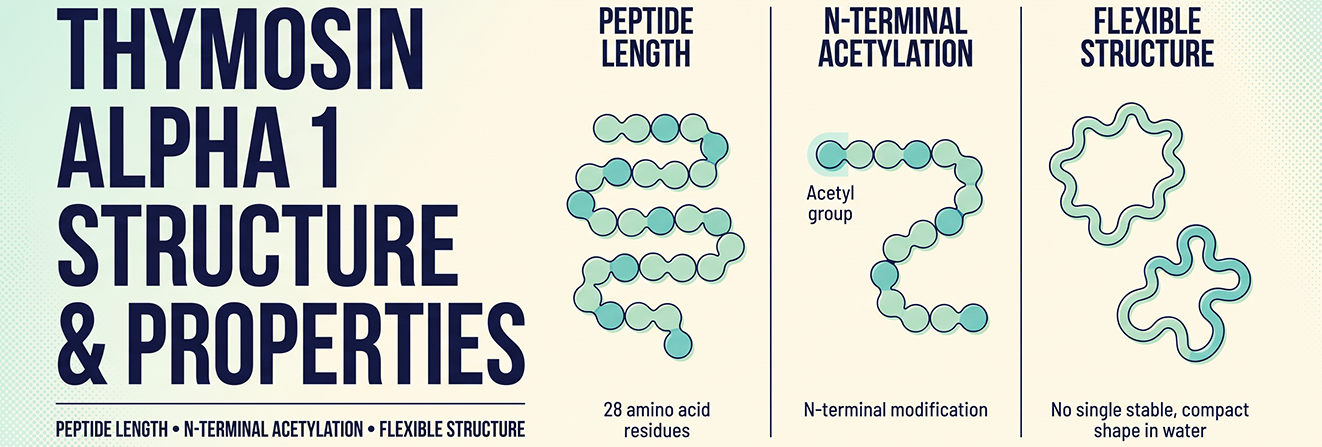
| Peptide length | 28 amino acid residues |
| Precursor protein | Prothymosin alpha |
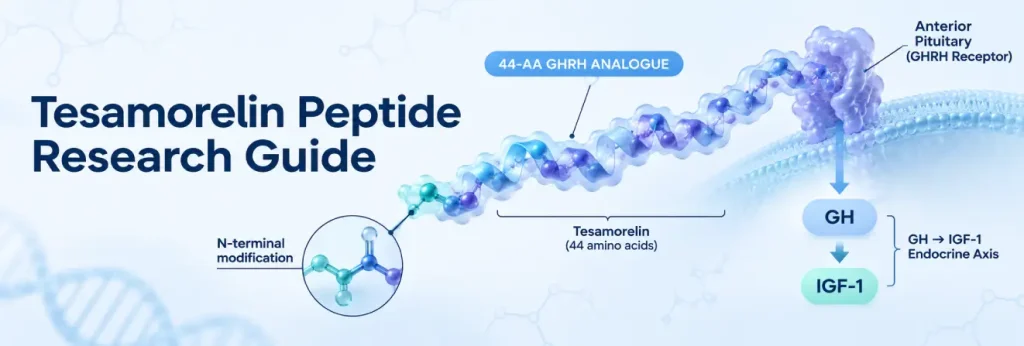
| N-terminal modification | Acetylation |
| Common abbreviations | Tα1 and TA1 |
| Synthetic pharmaceutical name | Thymalfasin |
| Principal research area | Immune-cell activity and signalling |
1. Amino Acid Sequence and N-Terminal Acetylation
The amino acid sequence determines the order of the building blocks in a peptide. Tα1 also has an acetyl group at its N-terminus, one end of the peptide chain.
The modification matters when comparing materials: peptides with the same listed amino acids can differ if their terminal groups differ.
Tα1 is rich in acidic amino acids, which influence its charge and behaviour in solution under defined conditions.
2. Does Thymosin Alpha 1 Have a Fixed Structure?
In aqueous solution, Tα1 is generally described as intrinsically disordered: it does not maintain one stable, compact three-dimensional shape.
NMR research found a more ordered conformation in a water-trifluoroethanol mixture; this result applies to those experimental conditions, not every environment.
Experimental conditions should be reported when comparing structural or biological findings.
How Does Thymosin Alpha 1 Affect Immune Signalling?
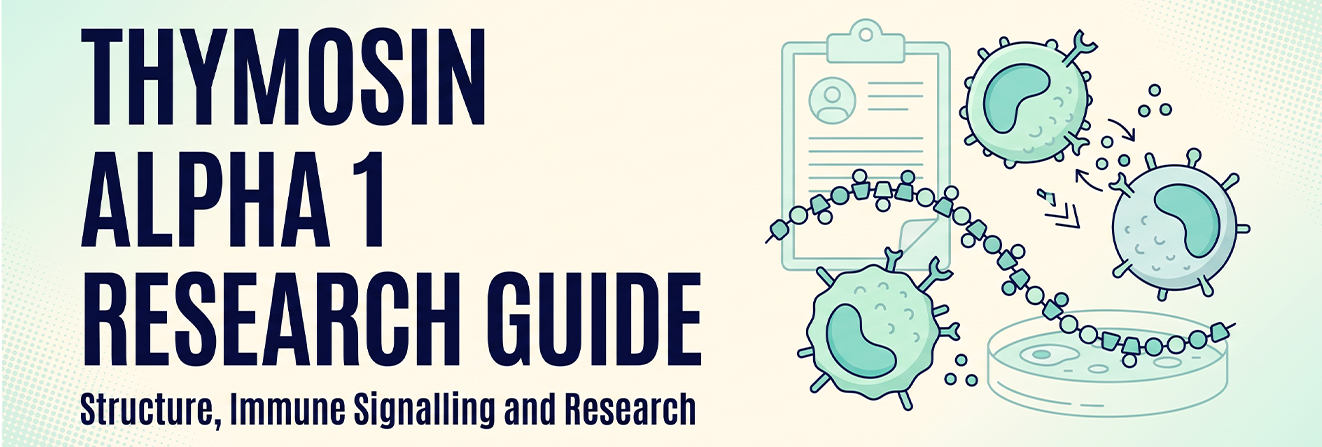
Studies have examined how Tα1 influences several immune-cell types and the signals they produce. These investigations include dendritic cells, T cells, natural killer cells and cells involved in innate immune responses.
Responses depend on the model, cell type and existing signals; isolated-cell results do not establish equivalent responses in organisms or clinical populations.
1. Dendritic Cells and Antigen Presentation
Dendritic cells connect innate and adaptive immunity by detecting material and presenting selected antigens to T cells.
A laboratory study reported changes in maturation-related markers in human monocyte-derived dendritic cells exposed to Tα1.
These observations generate hypotheses, not therapeutic conclusions.
2. Toll-Like Receptors and MyD88 Signalling
Toll-like receptors (TLRs) recognise microbial patterns and other signals, initiating intracellular pathways that influence immune-cell behaviour.
Studies have examined Tα1 alongside TLR signalling, including TLR9 and the adaptor protein MyD88 in cell and animal models.
Reported pathways include NF-κB and p38 MAPK, but findings depend on the model and stimulus.
Pathway associations do not prove direct TLR binding; specific molecular interactions remain under investigation.
3. Cytokines, T Cells and Natural Killer Cells
Researchers measure cytokines such as interleukin-12 and interferons when studying Tα1-associated responses.
Studies also examine T-cell differentiation and natural-killer-cell activity within defined experimental designs.
A laboratory cytokine change does not establish clinical benefit.
4. Why Is Tα1 Called an Immunomodulator?
“Immunomodulator” describes observed effects on immune activity in experimental settings.
It does not mean Tα1 uniformly “boosts” immunity or restores an ideal balance; responses depend on biological context and measured outcomes.
What Does Scientific Research Show About Thymosin Alpha 1?
Studies range from cell experiments and animal models to clinical trials, each with distinct questions and limitations.
| Research type | What it can investigate | Key limitation |
| Cell-based studies | Signalling pathways, cytokines and immune-cell markers | Isolated cells do not reproduce the whole organism |
| Animal studies | Immune responses in a living experimental model | Findings do not always translate to humans |
| Clinical studies | Outcomes in defined human populations | Results depend on study design, population and endpoints |
1. Findings From Cell-Based Studies
Cell-based studies measure markers, cytokines and signalling proteins in dendritic and other immune cells.
One study varied microbial stimuli in human monocyte-derived dendritic cells, illustrating how prior conditions shape cellular responses.
Cell studies inform mechanisms but cannot establish clinical effects.
2. Findings From Animal Studies
A mouse study examined dendritic-cell signalling and antifungal responses, identifying pathways associated with the observed effects.
Species and protocol differences limit extrapolation from animal findings to humans.
3. Clinical Research and Viral Hepatitis
Clinical studies have investigated thymalfasin in chronic viral hepatitis, using varied populations, comparisons and outcomes.
A phase 3 randomised trial studied Tα1 in chronic hepatitis B; interpret it alongside the wider evidence and current standards.
In the phase 3 trial report, complete response was recorded in 7 of 49 participants (14%) receiving Tα1 and 2 of 48 (4%) receiving placebo; the difference did not reach conventional statistical significance (P = 0.084).
A 2026 Cochrane review of 10 trials involving 1,349 adults judged the evidence very uncertain for most outcomes, underscoring the limits of the available clinical findings.
Evidence from a pharmaceutical preparation does not establish properties of a research material.
4. The TESTS Trial: A Negative Finding in Sepsis
The 2025 TESTS trial was a multicentre, randomised, placebo-controlled phase 3 study in adults with sepsis.
The corrected TESTS report found no clear evidence that thymosin alpha 1 reduced 28-day all-cause mortality versus placebo among 1,089 participants in the modified analysis (hazard ratio 0.97; 95% CI 0.76-1.24).
This result applies to the population and conditions studied; immune-marker changes do not necessarily predict clinical outcomes.
For an overview of thymosin alpha 1 and its connection to the thymus and immune system, watch the following discussion.
Thymosin Alpha 1 vs Thymosin Beta 4: What Is the Difference?
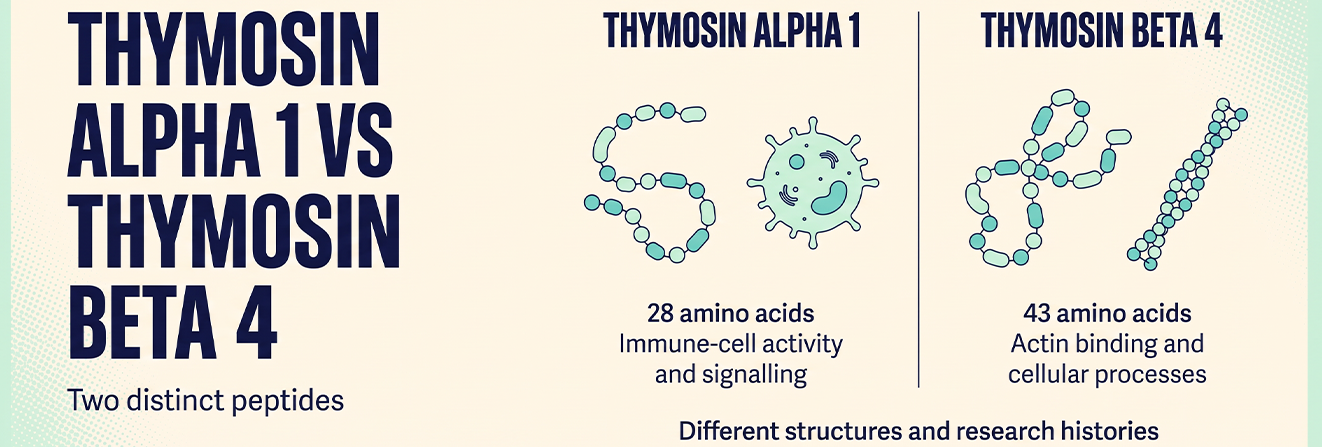
The phrase thymosin alpha 1 vs thymosin beta 4 reflects a search prompted by the shared word “thymosin”; the peptides are distinct, with different structures and research histories.
| Feature | Thymosin alpha 1 | Thymosin beta 4 |
| Length | 28 amino acids | 43 amino acids |
| Associated protein | Derived from prothymosin alpha | A distinct member of the beta-thymosin family |
| Prominent research focus | Immune-cell activity and signalling | Actin binding and cellular processes |
| Relationship | Separate peptide | Separate peptide |
Thymosin beta 4 interacts with monomeric actin, while Tα1 research centres on immune-cell responses; the peptides are not interchangeable.
TB-500 and Thymosin Beta 4
TB-500 has been associated with a synthetic fragment of thymosin beta 4. However, the identity of a product labelled TB-500 should be confirmed through appropriate analytical documentation.
An analytical study identified an acetylated seven-amino-acid fragment (positions 17-23) in a tested product labelled TB-500; that single-sample finding does not establish the contents of every product using the name.
How Is Tα1 Studied in the Laboratory?
In Ta1 immune research, experiments may use cell-based, animal or clinical models, depending on the question and study design.
A study model is a tool for testing a question, not evidence specific to thymosin alpha 1.
1. Common Research Models and Endpoints
Depending on the study, researchers may assess:
- Cell-surface markers: Measurements associated with immune-cell maturation or activation.
- Cytokines: Signalling molecules released under defined experimental conditions.
- Gene expression: Changes in the activity of selected genes.
- Signalling proteins: Components of pathways such as MyD88 or NF-κB.
- Functional responses: Cell behaviour observed in a specific experimental model.
The cell type, stimulus and assay conditions affect how the results can be interpreted.
2. Identity, Purity and Documentation
Molecular identity and analytical purity answer different questions.
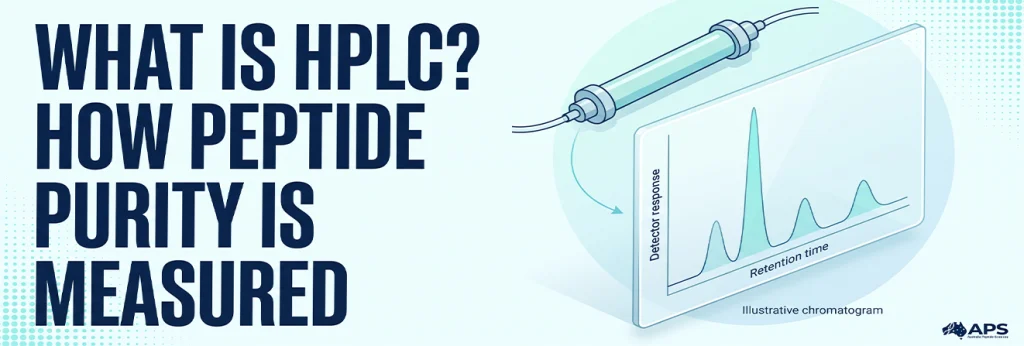
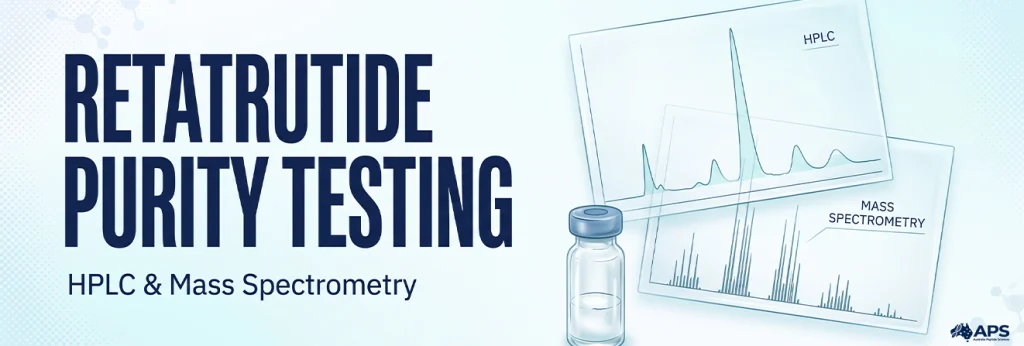
Mass spectrometry can assess molecular mass; chromatography estimates purity under a specified method. Sequence or terminal modifications may require additional analysis.
A chromatographic purity percentage is not a complete measure of sample composition or activity. See the guide to peptide purity for context.
A certificate of analysis describes the tested sample; review its methods, identifiers and limitations.
Thymosin Alpha 1 Australia: Regulatory and Research Context
For readers researching thymosin alpha 1 Australia, it is important to distinguish scientific publication, overseas approvals and the status of a particular product under Australian law.
The TGA regulates therapeutic goods; the ARTG is its public register of included products.
An overseas medicine approval does not establish Australian approval. Check the specific product and current ARTG information before making regulatory claims.
TGA guidance says a “research use only” label alone does not determine whether a product is a therapeutic good. Composition, presentation, promotion and intended use also matter.
For more on research-only positioning, see APS’s guide to research-use-only peptides. Materials discussed by Australia Peptide Sciences are intended for laboratory and scientific research, not human or veterinary use.
Laboratory Handling and Stability Considerations
Stability depends on the material, formulation, physical state and laboratory conditions; use compound-specific documentation.
Temperature, moisture, container compatibility and storage duration may matter. One preparation’s conditions do not establish a universal shelf life.
The peptide storage guide discusses why compound-specific documentation matters for stability.
What Are the Limits of Thymosin Alpha 1 Research?
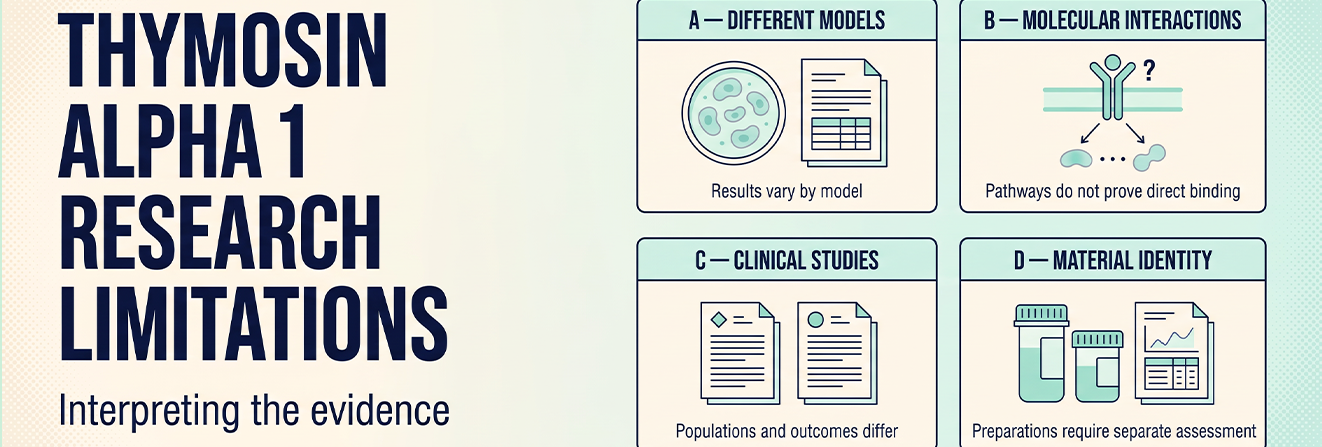
Key limitations remain:
- Reported effects vary by cell type and model, and may not reproduce under different conditions.
- Molecular interactions remain under investigation; pathway association is not proof of direct receptor binding.
- Clinical studies differ in populations and outcomes, so findings may not generalise.
- Evidence on a pharmaceutical preparation does not establish the identity or properties of a separately supplied research material.
Related Research Catalogue
Related laboratory materials are grouped under the Cellular Research Peptides category; that catalogue grouping is organisational and does not imply shared structure, mechanism or evidence.
BPC-157 is a separate research material and does not provide evidence about thymosin alpha 1 or act as a substitute for it.
KPV is another distinct catalogue compound; its listing should be considered independently of Tα1 research.
Conclusion
Thymosin alpha 1 is a 28-amino-acid peptide with a long history of research into immune-cell activity. Studies have explored its structure, signalling pathways and clinical outcomes, but findings vary by model and setting. Accurate interpretation requires attention to molecular identity, study design and the limits of the available evidence.
Visit Australia Peptide Sciences
Frequently Asked Questions About Thymosin Alpha 1
What does research on thymosin alpha 1 examine?
Studies investigate immune signalling; thymosin alpha 1 findings vary by model, and thymalfasin has also been clinically studied.
Is thymosin alpha 1 the same as TB-500?
No. Thymosin alpha 1 is a 28-amino-acid peptide; TB-500 is associated with a fragment of thymosin beta 4.
What safety questions remain in thymosin alpha 1 research?
Safety evidence depends on the tested preparation and study context;
research materials are not for human or veterinary use.
What do studies report about thymosin alpha 1?
Clinical findings vary by population and outcome; the hepatitis B trial discussed above did not reach conventional statistical significance, and a later systematic review judged most evidence very uncertain.
How is thymosin alpha 1 addressed under Australian regulation?
Check current TGA guidance and the specific product’s ARTG status; overseas approval does not establish Australian status.
What inflammatory pathways has thymosin alpha 1 research examined?
Studies have measured inflammatory signalling, but these observations do not establish a consistent clinical effect.
What do studies show about thymosin alpha 1 and tumours?
Evidence varies and does not establish that thymosin alpha 1 alone reliably reduces tumours.
What safety evidence exists for thymosin alpha 1?
Across the available clinical evidence, reporting and follow-up vary; results for one pharmaceutical preparation do not establish the safety of separately supplied research materials.
Why is N-terminal acetylation relevant to thymosin alpha 1 research?
N-terminal acetylation is part of the peptide’s molecular identity and is relevant when comparing research materials.
What immune-related outcomes have researchers measured with thymosin alpha 1?
Researchers have measured cell-surface markers, cytokines, gene expression and signalling proteins; interpretation depends on the model, assay and study design.
References
- Thymosin alpha1: Isolation and sequence analysis of an immunologically active thymic polypeptide.
- NMR structure of human thymosin alpha-1.
- Thymosin alpha 1 activates dendritic cells for antifungal Th1 resistance through Toll-like receptor signalling.
- Thymosin alpha1 activates TLR9/MyD88/IRF7-dependent murine cytomegalovirus sensing.
- Thymosin alpha1 treatment of chronic hepatitis B: A phase III randomised study.
Naing C, et al. Thymosin-α1 for people with chronic hepatitis B. Cochrane Database of Systematic Reviews. 2026;9:CD014610.
- The efficacy and safety of thymosin α1 for sepsis: TESTS phase 3 trial, including the published correction.
BMJ. Correction to the TESTS phase 3 trial of thymosin α1 for sepsis. 2025;389:r1098.
- Structural study of thymosin beta 4 and monomeric actin.
- Analytical identification of a thymosin beta 4 fragment in a TB-500 product.
- Therapeutic Goods Administration: How therapeutic peptide products are regulated.
- Therapeutic Goods Administration: About the Australian Register of Therapeutic Goods.
Australia Peptide Sciences research articles
Australia Peptide Sciences. Peptide Purity Explained.
Australia Peptide Sciences. Peptide Storage Guide.
Australia Peptide Sciences. Research Use Only Peptides.