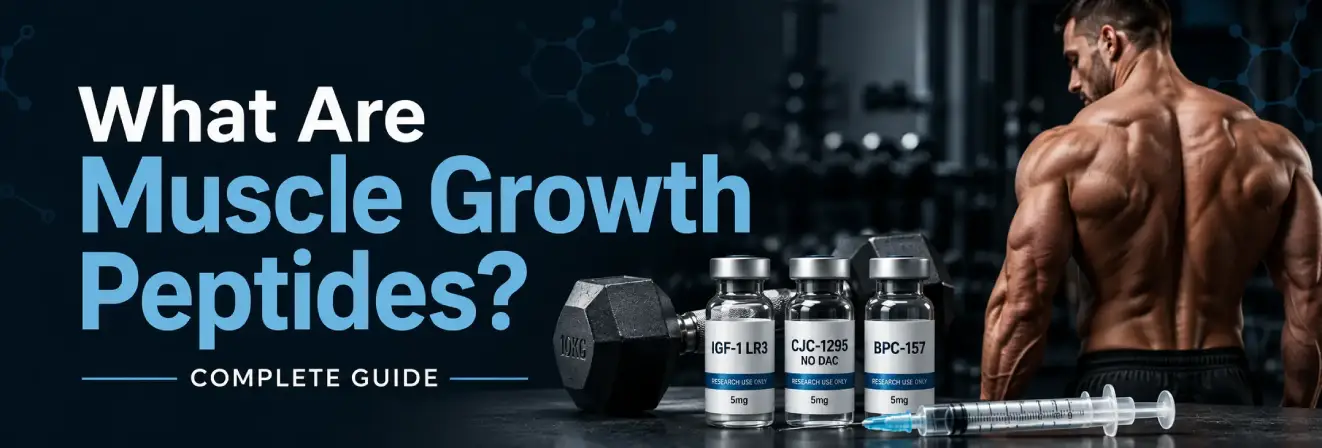
Whether you’re looking to know more about muscle growth peptides, training for performance, or simply trying to understand how the body builds lean mass, the foundation is always the same:
Your body needs the right signals to grow muscle.
Many people assume muscle growth happens in the gym. In reality, muscles grow after training, during recovery, when your body repairs microscopic muscle damage and adapts to become stronger.
How Does Muscle Growth Work?
Muscle growth happens when training creates small amounts of muscle stress, which triggers repair processes involving protein synthesis, growth hormone, IGF-1, recovery, sleep, and nutrition.
Over time, this process leads to larger, stronger muscle fibers.
What Is Muscle Growth?
Muscle growth is scientifically called muscle hypertrophy.
It refers to:
The increase in size of muscle fibers through repair, adaptation, and protein synthesis.
Your body builds muscle as a response to challenge.
When muscles experience resistance training or mechanical stress:
- Small muscle fibers experience controlled damage
- Repair signals are activated
- Protein synthesis increases
- Muscles rebuild stronger than before
This is why progressive resistance training matters.
Muscle growth is an adaptation process, your body becomes stronger because it is forced to adapt.
Shop Research Peptides in Australia
How Muscle Growth Actually Works
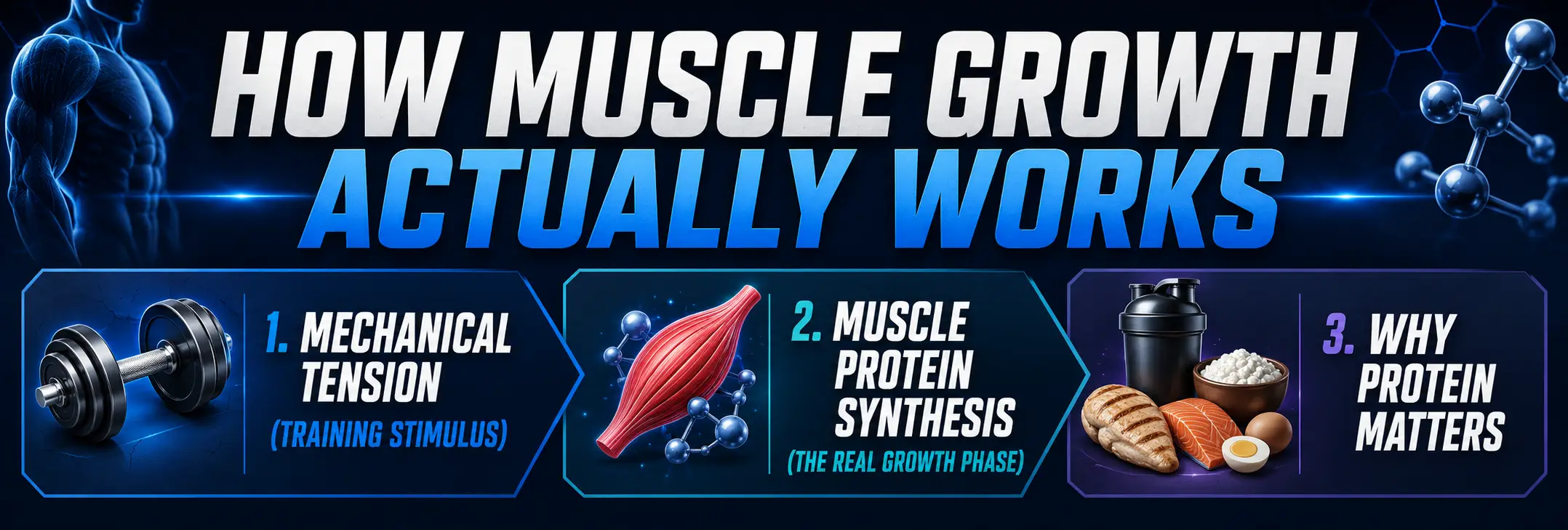
Many people think lifting weights automatically builds muscle. But training is only the trigger. The actual muscle-building process depends on several systems working together:
1. Mechanical Tension (Training Stimulus)
Muscles need stress to grow.
This usually comes from:
- Weight training
- Progressive overload
- Resistance exercises
When muscles are challenged repeatedly, the body receives a signal:
“We need to become stronger.”
Without this stimulus, muscle growth is limited.
2. Muscle Protein Synthesis (The Real Growth Phase)
This is where most of the actual progress happens.
What is protein synthesis?
Protein synthesis is:
The biological process where the body repairs and builds new muscle proteins after exercise.
After training, your body starts rebuilding damaged muscle fibers.
If protein synthesis exceeds muscle breakdown:
✅ Muscle growth occurs
If muscle breakdown exceeds repair:
❌ Recovery suffers
Why Protein Matters
Protein provides the amino acids needed for repair.
Without enough protein:
- Recovery slows
- Muscle growth decreases
- Training becomes less effective
This is one reason why people training the same way often get very different results.
For product specifications and research-use information, view our IGF-1 LR3 peptide in Australia for research.
Protein Synthesis Explained
Think of muscle protein synthesis like construction work.
Training = Damage Signal
You stress muscle tissue.
Protein = Building Materials
The body uses amino acids to rebuild tissue.
Recovery = Construction Window
Growth happens while resting.
Result = Bigger, Stronger Muscle Fibers
This process continues repeatedly over weeks and months.
Muscles do not grow during training, they grow during recovery.
The Role of Growth Hormone in Muscle Growth
One of the most discussed topics in muscle growth peptides research is growth hormone signaling.
Growth hormone (GH) is naturally produced by the body and plays a role in:
- Tissue repair
- Recovery
- Protein synthesis
- Body composition
Growth hormone is released mainly:
- During deep sleep
- After intense exercise
- During recovery periods
Why This Matters
Better recovery → better training quality → greater muscle adaptation.
This is one reason why research into peptides for muscle growth often focuses on pathways related to growth hormone signaling.
IGF-1: The Muscle Growth Messenger
Another important factor is:
What is IGF-1?
IGF-1 stands for:
Insulin-like Growth Factor 1
It acts as one of the body’s major muscle-building messengers.
Role of IGF-1 in Muscle Growth
IGF-1 helps support:
- Muscle cell repair
- Protein synthesis
- Recovery signaling
- Muscle adaptation
Simple Explanation:
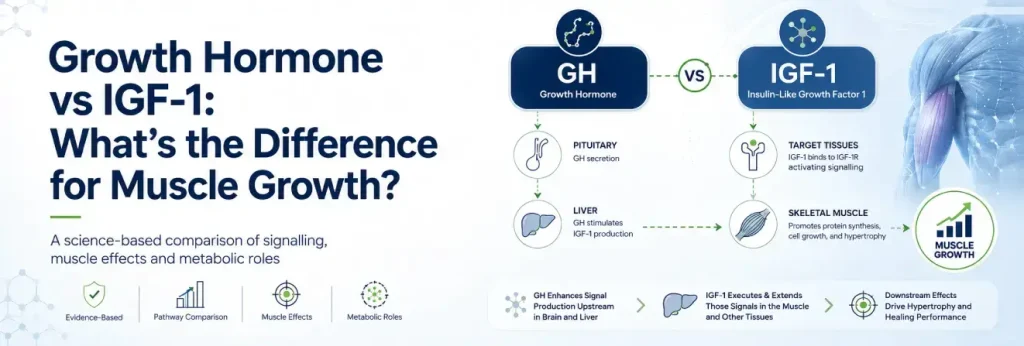
Growth hormone sends signals.
IGF-1 helps execute those signals.
Think of GH as the manager and IGF-1 as the worker getting things done.
This relationship is one reason why discussions around peptides for muscle growth Australia often focus on growth hormone-related pathways.
Why Sleep Is Critical for Muscle Growth
Most people underestimate sleep.
But if you’re serious about muscle growth:
Sleep is non-negotiable.
Why?
Because this is when your body performs most of its recovery work.
During deep sleep:
- Growth hormone naturally increases
- Muscle repair accelerates
- Protein synthesis improves
- Nervous system recovery happens
Poor sleep can lead to:
❌ Slower recovery
❌ Reduced training performance
❌ Poor muscle adaptation
Bad sleep can reduce muscle-building potential, even if training and nutrition are perfect.
Why Some People Build Muscle Faster Than Others
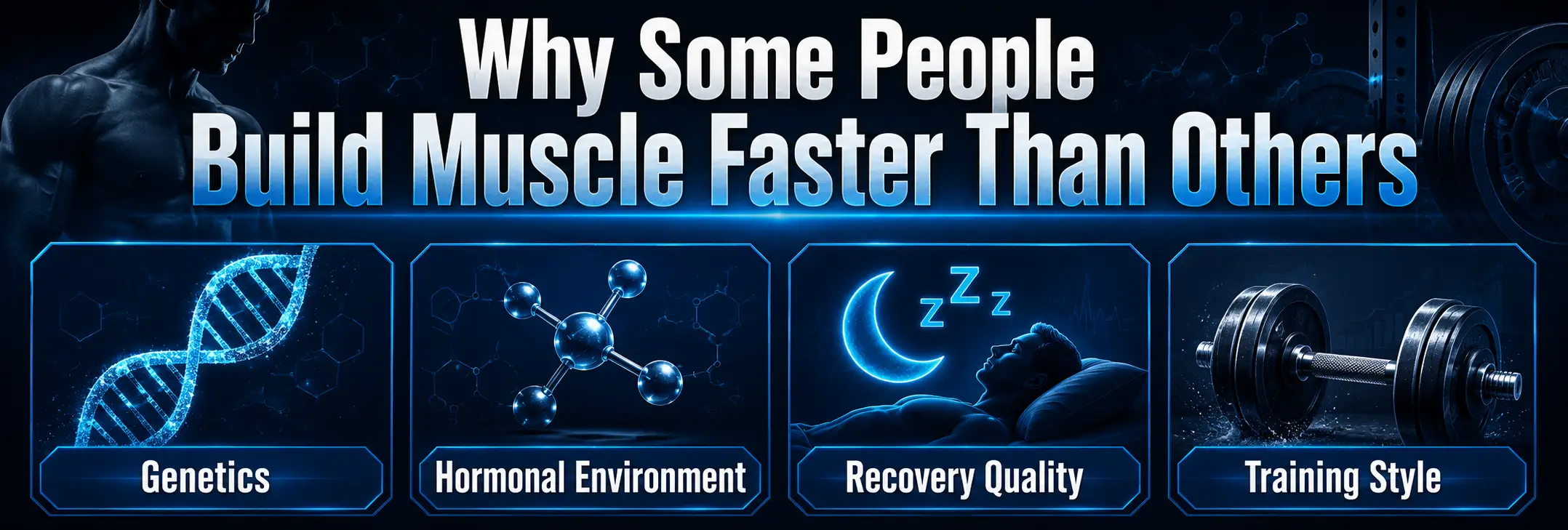
A common question people ask is: Why do some people gain muscle faster?
The answer comes down to several biological factors:
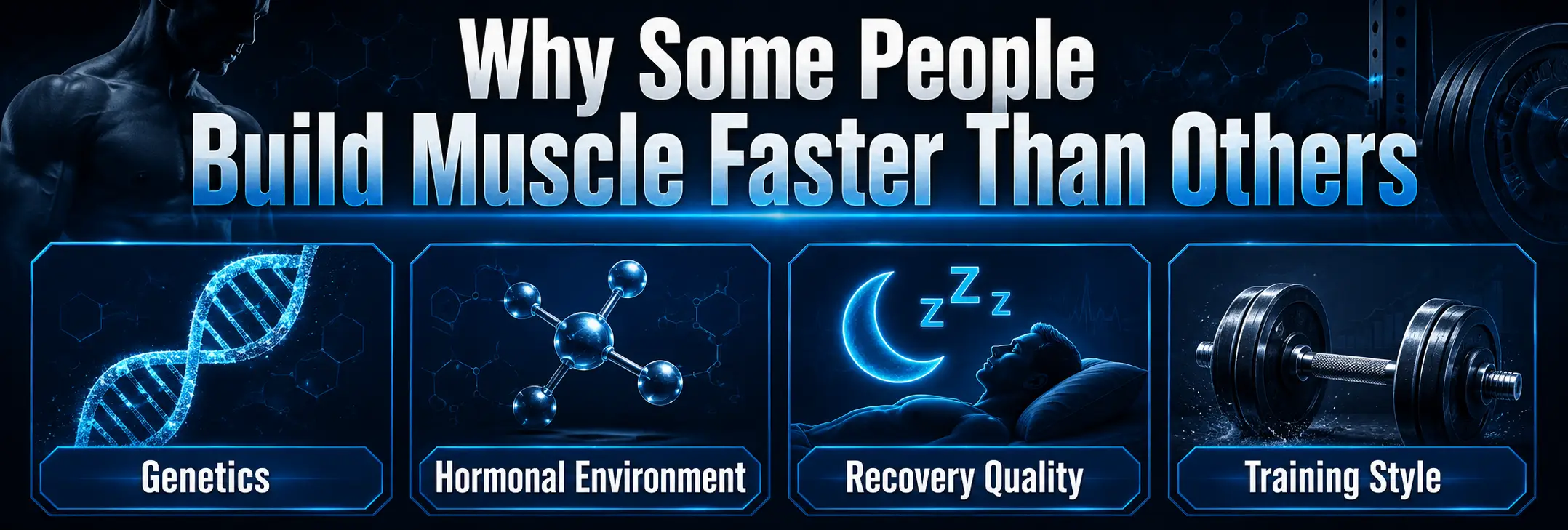
1. Genetics
Some people naturally respond better to training.
Genetics influence:
- Muscle fiber composition
- Hormone levels
- Recovery speed
- Protein synthesis efficiency
This doesn’t mean others can’t build muscle.
It simply means results vary.
2. Hormonal Environment
People with better hormonal balance often recover faster.
This includes:
- Testosterone
- Growth hormone
- IGF-1 signaling
Hormones help regulate recovery and muscle repair.
3. Recovery Quality
Many people overtrain and under-recover.
Muscle growth depends on:
- Sleep
- Nutrition
- Stress management
- Training balance
Recovery is often the missing piece.
4. Training Style
Progressive overload matters.
Lifting the same weight repeatedly with no progression limits muscle adaptation.
Muscle Recovery vs Muscle Growth
Many people confuse recovery with muscle growth.
But they are not identical.
| Muscle Recovery | Muscle Growth |
| Repairs training damage | Increases muscle size |
| Happens after workouts | Happens gradually over time |
| Focuses on restoring function | Focuses on adaptation |
| Influenced by sleep & nutrition | Influenced by training + recovery |
Recovery allows growth to happen.
Without recovery:
❌ No consistent muscle growth
Fat Loss vs Muscle Growth: Can You Do Both?
Another common question in fitness and muscle growth peptides discussions: Can you lose fat and gain muscle at the same time?
Yes, but it depends.
This is called: Body Recomposition
Where the body:
- Loses fat
- Builds muscle simultaneously
It tends to happen more easily in:
- Beginners
- People returning to training
- Higher body-fat individuals
Why It’s Hard
Fat loss requires: Energy deficit
Muscle growth prefers: Energy surplus
This creates a biological balancing act.
The better your recovery, nutrition, and metabolic efficiency, the easier recomposition becomes.
Natural Ways to Support Muscle Growth
Before discussing muscle growth peptides, it’s worth pausing on something that often gets overlooked:
No compound, supplement, or research pathway can fully compensate for poor fundamentals.
This matters because many people researching peptides for muscle growth or searching for peptides for muscle growth Australia are often looking for ways to build muscle faster, recover better, or improve body composition.
But muscle growth does not begin with peptides.
It starts with biology.
Your body already has built-in systems responsible for muscle growth:
- Muscle protein synthesis
- Hormonal signaling
- Recovery pathways
- Sleep cycles
- Cellular energy production
When these systems are functioning well, muscle growth becomes more efficient.
When they are neglected, progress slows — regardless of training intensity.
Think of it this way:
Muscle growth is like building a house. Training creates the blueprint, nutrition provides materials, recovery does the construction, and consistency determines the final result.
Below are the natural foundations that support muscle development long before people start exploring muscle growth peptides.
1. Progressive Resistance Training: Why Muscles Need Challenge
Muscles grow because they are forced to adapt.
Without challenge, the body has no reason to build additional muscle tissue.
This principle is known as: Progressive Overload.
It simply means:
Gradually increasing the demand placed on muscles over time.
That challenge can come from:
- Heavier weights
- More repetitions
- Better training intensity
- Improved exercise volume
- More advanced movement patterns
Why does this matter?
When muscles experience resistance training, microscopic stress occurs inside muscle fibers.
This stress sends a signal:
“We need to become stronger.”
The body responds through repair and adaptation.
Over time:
Small adaptations → bigger muscles → greater strength.
What happens if training never progresses?
Many people hit plateaus because they repeat the same routine for months.
The body adapts quickly.
If there is no new challenge:
❌ Muscle stimulation decreases
❌ Growth slows
❌ Progress stalls
Examples of Progressive Overload
| Method | Example |
| Increase weight | Moving from 20kg to 25kg |
| More reps | 8 reps → 12 reps |
| Better form | Improved muscle activation |
| More training volume | Extra sets or sessions |
| Reduced rest periods | Increased workout intensity |
Best Training Principles for Muscle Growth
For most people, muscle growth improves when training includes:
✅ Compound exercises
✅ Progressive overload
✅ Recovery time
✅ Consistency over intensity
Compound exercises include:
- Squats
- Deadlifts
- Bench press
- Rows
- Pull-ups
- Shoulder press
These exercises recruit multiple muscle groups and generally create stronger muscle-building signals.
The gym creates the stimulus. Muscle growth happens afterward.
2. Prioritize Protein Intake: The Building Blocks of Muscle
Training creates the signal for growth.
Protein provides the materials.
Without adequate protein intake, muscle repair becomes slower and less effective.
This is because muscles are made primarily from proteins.
What happens during training?
Resistance exercise causes:
- Small muscle breakdown
- Tissue stress
- Muscle fiber disruption
Your body responds through:
Muscle Protein Synthesis
This is the process where new muscle proteins are built.
Simple explanation:
Training damages.
Protein repairs.
Recovery rebuilds.
Why Protein Matters for Muscle Growth
Protein contains amino acids, which are essential for:
- Repairing muscle tissue
- Building lean muscle mass
- Supporting recovery
- Reducing muscle breakdown
Without enough protein:
You may experience:
❌ Slower recovery
❌ Reduced muscle growth
❌ Increased soreness
❌ Less training adaptation
High-Protein Foods for Muscle Growth
| Food | Protein Content (Approx.) |
| Chicken breast | 30g per serving |
| Eggs | 6g each |
| Greek yogurt | 15–20g |
| Salmon | 25g |
| Lean beef | 25–30g |
| Tofu | 10–15g |
| Whey protein | 20–30g |
Common Protein Mistakes
Many people:
❌ Under eat protein
❌ Eat most protein at one meal only
❌ Ignore recovery nutrition
Instead:
Try spreading protein throughout the day.
Example:
- Breakfast → protein source
- Lunch → lean protein
- Post-workout → protein support
- Dinner → balanced recovery meal
Muscles cannot grow without materials to rebuild themselves.
3. Sleep 7–9 Hours: The Most Underrated Muscle Builder
Sleep is often ignored in muscle-building conversations.
Yet it may be one of the most important factors.
Why?
Because recovery happens while you sleep.
This is when the body performs:
- Tissue repair
- Hormonal regulation
- Nervous system recovery
- Muscle rebuilding
Growth Hormone and Sleep
One of the body’s most important recovery signals, growth hormone (GH), is naturally released during deep sleep.
Growth hormone supports:
- Recovery
- Protein synthesis
- Tissue repair
- Muscle adaptation
Poor sleep may reduce:
- Training performance
- Recovery efficiency
- Hormonal balance
What Poor Sleep Can Do
| Poor Sleep Effects | Impact on Muscle Growth |
| Reduced recovery | Slower progress |
| Higher cortisol | Increased stress |
| Less growth hormone | Reduced adaptation |
| Lower training performance | Less muscle stimulus |
Signs Recovery Is Being Affected by Sleep
You may notice:
- Constant soreness
- Low motivation
- Fatigue
- Plateaued progress
- Poor strength gains
Better sleep habits:
✅ Consistent sleep schedule
✅ Dark room
✅ Reduced screen exposure
✅ Recovery-friendly routine
You don’t build muscle while training. You build muscle while recovering.
4. Manage Stress: The Hidden Muscle Growth Blocker
Most people underestimate stress.
But chronic stress can directly affect recovery.
When stress remains high, the body produces more:
Cortisol (Stress Hormone)
Cortisol plays an important role in survival.
But when elevated for long periods, it may interfere with recovery.
High stress may contribute to:
- Poor sleep
- Reduced recovery
- Increased fatigue
- Reduced training quality
Common Sources of High Stress
- Poor sleep
- Overtraining
- Work pressure
- Low calorie intake
- Emotional stress
Signs Stress May Be Affecting Muscle Growth
| Sign | Possible Effect |
| Low energy | Poor performance |
| Bad sleep | Reduced recovery |
| Irritability | Nervous system fatigue |
| Plateau | Reduced adaptation |
Stress Management for Better Recovery
Simple things help:
- Walking
- Breathing exercises
- Proper recovery days
- Sleep improvement
- Balanced training
Recovery is not only physical, it is also hormonal and neurological.
5. Recovery Matters: Rest Days Are Productive Days
A common mistake:
Thinking more training always means better results.
In reality:
Too much training without recovery often slows progress.
This happens because:
Muscles grow during recovery.
Not training.
Muscle Recovery vs Muscle Growth
These are related, but different.
| Muscle Recovery | Muscle Growth |
| Repairs damage | Increases size |
| Happens after training | Happens gradually |
| Restores performance | Builds adaptation |
| Immediate process | Long-term process |
Why Recovery Days Matter
Rest allows:
- Tissue repair
- Nervous system reset
- Reduced inflammation
- Better future performance
Signs You Need More Recovery
- Persistent soreness
- Fatigue
- Sleep disruption
- Reduced motivation
- Plateaued performance
Sometimes the smartest thing for muscle growth is: Taking a day off.
6. Support Metabolic Health
Metabolism plays a major role in muscle growth.
Your metabolic health determines:
- Energy production
- Nutrient usage
- Recovery efficiency
- Training performance
Why Metabolic Health Matters
To build muscle, the body needs:
Energy.
That energy comes from cellular systems, especially mitochondria.
Healthy metabolism supports:
✅ Better energy output
✅ Better training sessions
✅ Faster recovery
✅ Improved adaptation
Habits That Support Metabolic Health
| Habit | Benefit |
| Resistance training | Better insulin sensitivity |
| Sleep | Hormonal balance |
| Protein intake | Recovery |
| Whole foods | Energy production |
| Hydration | Performance |
Explore more: How to improve metabolic health naturally
Why Muscle Growth Science Matters Before Peptides
Many people search for:
- muscle growth peptides
- peptides for muscle growth
- peptides for muscle growth Australia
And it makes sense.
People want faster recovery, better muscle development, and more efficient training outcomes.
But there is something important to understand:
Peptides are not the foundation.
The body must already have:
✅ Training stimulus
✅ Recovery systems
✅ Proper nutrition
✅ Sleep quality
✅ Metabolic support
Without these foundations:
Results become limited.
Even the most promising research pathways cannot replace poor recovery or inconsistent training.
Think of it this way: Peptides are often studied as part of understanding muscle-building biology.
But biology still comes first.
Muscle growth starts with physiology before pathways.
- Training provides the signal.
- Nutrition provides the materials.
- Recovery does the rebuilding.
- Sleep supports hormonal balance.
- Metabolism powers the process.
Then, and only then, does research into muscle growth peptides, peptides for muscle growth, and peptides for muscle growth Australia begin to make more sense in the broader conversation around muscle development.
Peptides for Muscle Growth: What Researchers Are Studying
Once the fundamentals of muscle growth are in place — training, nutrition, recovery, sleep, and metabolic health — many people begin looking into muscle growth peptides.
Searches for terms like:
- muscle growth peptides
- peptides for muscle growth
- best peptides for muscle growth
- peptides for muscle growth Australia
- growth hormone peptides for muscle growth
have increased significantly as interest in recovery, body composition, and muscle-support research continues to grow.
But here is where confusion often happens.
Many online discussions mix scientific research with gym myths, making it difficult to understand:
What exactly are researchers studying?
The peptides discussed below are generally explored for their relationship with:
- Growth hormone signaling
- Recovery pathways
- Muscle repair mechanisms
- Protein synthesis pathways
- Metabolic efficiency
- Body composition regulation
These compounds are supplied by Australia Peptide Sciences strictly for:
- Laboratory research
- Scientific investigation
- Educational purposes
They are not intended for human consumption or medical use.
Instead, researchers study how these compounds interact with biological systems involved in muscle growth and recovery.
Shop Research Peptides in Australia
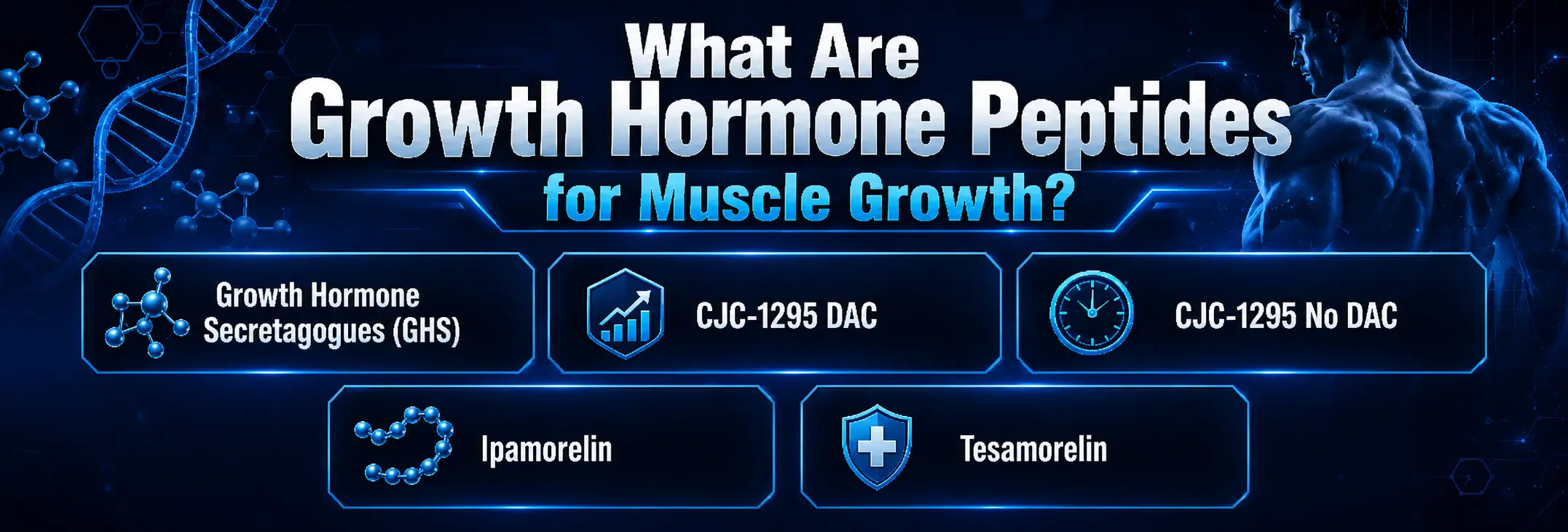
What Are Growth Hormone Peptides for Muscle Growth?
Many peptides for muscle growth fall under one broad term:
Growth Hormone Secretagogues (GHS)
These are compounds studied for how they interact with pathways related to:
- Growth hormone release
- Recovery signaling
- IGF-1 activity
- Tissue repair
Instead of replacing growth hormone directly, many compounds are studied for how they may influence the body’s own signaling systems.
This distinction matters.
Researchers are often interested in:
How does the body naturally regulate recovery and adaptation?
That is why growth hormone peptides for muscle growth remain one of the most discussed research areas.
CJC-1295 (DAC vs No DAC)
One of the most recognized muscle growth peptides in research discussions is: CJC-1295 peptide for research
CJC-1295 is generally studied for how it interacts with growth hormone-releasing hormone (GHRH) pathways.
Simple Mechanism of Action
Think of CJC-1295 as:
A signal amplifier for growth hormone release.
Researchers study how it influences:
- Growth hormone pulses
- IGF-1 signaling
- Recovery-related pathways
Instead of acting like growth hormone itself, CJC-1295 is explored for how it may encourage the body’s natural release patterns.
CJC-1295 DAC vs No DAC: What’s the Difference?
This is one of the biggest questions in CJC-1295 DAC vs No DAC discussions.
CJC-1295 DAC
DAC stands for: Drug Affinity Complex
The main difference: Longer activity window
Researchers study DAC versions because they remain active longer.
Potential research focus includes:
- Sustained growth hormone signaling
- Long-duration pathway interaction
- Recovery-related signaling
CJC-1295 No DAC
No DAC versions are studied differently. They tend to be associated with, Shorter signaling activity
This makes researchers interested in:
- More natural pulsatile release patterns
- Timing-related pathway studies
CJC-1295 DAC vs No DAC
| Feature | CJC-1295 DAC | CJC-1295 No DAC |
| Duration studied | Longer | Shorter |
| Research focus | Sustained signaling | Pulsed signaling |
| Growth hormone pathway | Yes | Yes |
| Common discussion | Recovery & anabolic pathways | More natural timing patterns |
Ipamorelin
Another commonly discussed peptide in muscle recovery peptides research is Ipamorelin Peptide
Ipamorelin belongs to a category called: Growth Hormone Secretagogues
Researchers study it for how it interacts with: Ghrelin receptor pathways
Ghrelin is often called: The hunger hormone. But its signaling system is also associated with growth hormone release.
Mechanism of Action
Ipamorelin is explored for its ability to:
- Stimulate GH-related pathways
- Support recovery signaling
- Interact with anabolic signaling systems
Compared with older compounds, Ipamorelin is often discussed in research due to its more selective pathway interaction.
Researchers may study Ipamorelin in relation to:
- Recovery signaling
- Muscle growth and recovery
- Growth hormone pathway modulation
- Tissue repair pathways
CJC-1295 vs Ipamorelin
This is one of the most searched comparisons in peptides for muscle growth Australia.
CJC-1295:
Acts more through GHRH pathways
Ipamorelin:
Acts through ghrelin receptor pathways
Researchers often explore how these pathways differ — and sometimes how they may complement each other.
CJC-1295 vs Ipamorelin
| Feature | CJC-1295 | Ipamorelin |
| Main pathway | GHRH signaling | Ghrelin receptor |
| Research interest | GH pulse amplification | GH stimulation |
| Focus area | Recovery & signaling | Muscle recovery pathways |
| Common discussion | Growth support | Recovery support |
GHRP-2 vs GHRP-6
Another category often discussed among best peptides for muscle growth is GHRP (Growth Hormone Releasing Peptides)
Two of the most recognized include: GHRP-2, and GHRP-6
These compounds are explored for how they interact with:
Growth hormone secretagogue receptors
Researchers investigate their role in:
- Recovery signaling
- Hormonal response pathways
- Anabolic signaling
GHRP-2
GHRP-2 is commonly discussed for:
Stronger GH pathway interaction
Research interest includes:
- Recovery studies
- Tissue adaptation pathways
- Growth-related signaling
GHRP-6
GHRP-6 is studied similarly, but discussions often mention Appetite-related signaling, because it interacts with ghrelin-related systems, researchers sometimes study:
- Hunger pathways
- Recovery signaling
- Hormonal interaction
GHRP-2 vs GHRP-6
| Feature | GHRP-2 | GHRP-6 |
| Main focus | GH signaling | GH + appetite signaling |
| Research interest | Recovery pathways | Recovery + ghrelin interaction |
| Common discussion | Muscle support | Recovery + food signaling |
Tesamorelin
Another peptide often discussed in Tesamorelin muscle growth conversations is Tesamorelin Peptide.
Researchers study Tesamorelin because it interacts with GHRH pathways
Similar to CJC-1295, but with different signaling characteristics.
Mechanism of Action
Tesamorelin is explored for:
- Growth hormone signaling
- IGF-1-related pathways
- Body composition studies
Researchers investigate:
- Fat metabolism pathways
- Muscle preservation signaling
- Hormonal response mechanisms
This is one reason Tesamorelin discussions often overlap with: Body composition research rather than purely muscle growth.
HGH Fragment (AOD): Why It’s More About Fat Loss Than Muscle
Many people assume: HGH Fragment = Muscle Growth
But researchers often discuss it differently.
HGH Fragment (often AOD-9604) is more commonly explored for: Fat metabolism pathways rather than muscle-building pathways.
Mechanism of Action
Researchers study HGH Fragment for:
- Lipolysis signaling (fat breakdown)
- Energy balance pathways
- Body composition research
Unlike other growth hormone peptides for muscle growth, HGH Fragment is generally discussed more in relation to: Fat loss and body composition rather than direct anabolic signaling.
Muscle Growth Peptides Comparison
| Peptide | Main Pathway | Research Focus |
| CJC-1295 DAC | GHRH | Sustained GH signaling |
| CJC-1295 No DAC | GHRH | Pulsatile signaling |
| Ipamorelin | Ghrelin receptor | Recovery pathways |
| GHRP-2 | GHS receptor | GH signaling |
| GHRP-6 | GHS receptor | GH + appetite pathways |
| Tesamorelin | GHRH | Body composition |
| HGH Fragment (AOD) | Fat metabolism | Body composition |
FAQs
How Much Protein Do I Need for Muscle Growth?
For muscle growth, most research suggests consuming approximately 1.6–2.2 grams of protein per kilogram of body weight per day, depending on training intensity and goals. Protein supports muscle protein synthesis, the process responsible for repairing and building muscle tissue after resistance training. Spreading protein intake across multiple meals may support better recovery and muscle adaptation.
What Is the Best Peptide for Muscle Growth?
There is no single “best” peptide for muscle growth because researchers study different compounds for different pathways. Commonly discussed muscle growth peptides include CJC-1295, Ipamorelin, GHRP-2, and GHRP-6, which are explored for their relationship with growth hormone and recovery signaling. Research interest often depends on whether the focus is recovery, anabolic signaling, or body composition.
Do Energy Drinks Stop Muscle Growth?
Energy drinks do not directly stop muscle growth, but excessive intake may affect sleep quality, hydration, and recovery, all of which are essential for building muscle. High caffeine intake late in the day may reduce deep sleep, which is when growth hormone release and recovery processes naturally occur.
How Important Is Sleep for Muscle Growth?
Sleep is extremely important for muscle growth because this is when the body performs most of its repair work. During deep sleep, growth hormone release increases, protein synthesis improves, and muscle tissue recovery accelerates. Poor sleep may reduce recovery, training performance, and long-term muscle development, even with good nutrition and exercise.
What Protein Is Best for Muscle Growth?
High-quality proteins containing all essential amino acids are generally considered best for muscle growth. Popular options include whey protein, lean meat, eggs, dairy, fish, and plant-based blends. Whey protein is often discussed because it contains leucine, an amino acid strongly associated with muscle protein synthesis and recovery.
What Supplements Should I Take for Muscle Growth?
Common supplements discussed for muscle growth include protein powder, creatine, omega-3 fatty acids, and vitamin D, depending on nutritional needs. Supplements may support recovery and training performance, but they work best alongside proper training, sleep, and nutrition. No supplement replaces consistent resistance training and adequate recovery.
Do Muscle Growth Peptides Work?
Researchers study muscle growth peptides to better understand pathways related to recovery, growth hormone signaling, and anabolic processes. However, outcomes depend on many factors, including training, nutrition, sleep, and recovery. Research compounds are explored in scientific settings to study biological mechanisms rather than replace foundational muscle-building habits.
Do Muscles Have to Get Bigger to Get Stronger?
No, muscles do not always need to get bigger to become stronger. Strength improvements can happen through neurological adaptations, meaning the nervous system becomes better at activating muscle fibers. However, over time, muscle growth (hypertrophy) often contributes to greater strength potential.
Do Some People’s Muscles Grow Faster?
Yes, some people build muscle faster due to differences in genetics, hormone levels, recovery capacity, muscle fiber composition, and training response. Factors like sleep, protein intake, consistency, and metabolism also influence how quickly someone gains muscle mass and strength.
Does Muscle Growth Affect Height?
Muscle growth does not increase height. Height is primarily determined by genetics, growth plates, hormones, and nutrition during development. Strength training and muscle growth may improve posture and body composition, which can make someone appear taller, but they do not change bone length.
Does Muscle Growth Cause Stretch Marks?
Yes, rapid muscle growth can contribute to stretch marks in some people. When muscles grow quickly, the skin may stretch faster than it can adapt, especially around the shoulders, chest, arms, or thighs. Genetics, skin elasticity, and growth speed all play a role in whether stretch marks develop.
Does Muscle Growth Cause Weight Gain?
Yes, muscle growth can cause weight gain because muscle tissue has mass. However, this type of weight gain differs from fat gain because muscle contributes to strength, metabolism, and body composition. Some people may notice improved physique even if the scale increases.
Does Muscle Growth Happen During Sleep?
Yes, much of muscle growth happens during sleep. Recovery processes, growth hormone release, and muscle protein synthesis increase during deep sleep, helping repair tissue damaged during training. This is why poor sleep can slow muscle recovery and reduce long-term muscle development.
How Many Sets Should I Do for Muscle Growth?
For most people, research suggests around 10–20 working sets per muscle group per week may support muscle growth, depending on training level and recovery ability. Beginners may need fewer sets, while advanced lifters often tolerate higher volume. Recovery quality is just as important as training volume.
What Are Muscle Growth Peptides?
Muscle growth peptides are research compounds studied for how they interact with biological pathways related to growth hormone signaling, recovery, muscle repair, and anabolic processes. Commonly discussed examples include CJC-1295, Ipamorelin, GHRP-2, and GHRP-6. At Australia Peptide Sciences, these compounds are supplied strictly for research purposes only.
Shop Research Peptides in Australia
Sources:
Building Better Muscles | Harvard Health Publishing