If you’ve ever wondered how does oxidative stress affect the body, the answer goes far beyond simple aging. It’s one of the key processes happening inside your body every single day, quietly influencing how your cells function, how you age, and how your overall health evolves over time.
Oxidative stress affects the body by damaging cells, proteins, and DNA through excess free radicals, leading to faster aging, reduced cellular efficiency, and increased risk of chronic diseases.
This process is natural, but when it becomes unbalanced, it can have long-term effects on nearly every system in your body.
Shop Research Peptides Australia
What Is Oxidative Stress?
To understand the impact, you first need to understand what oxidative stress actually is.
Your body constantly produces free radicals, unstable molecules created during normal processes like energy production, as well as from external factors like pollution, smoking, or UV exposure.
At the same time, your body produces antioxidants, which neutralize these free radicals.
When there’s a balance, everything works normally.
When free radicals outnumber antioxidants, oxidative stress occurs.
Think of it as internal wear and tear happening at a cellular level.
How Does Oxidative Stress Damage Cells?
A common question is how does oxidative stress damage cells, and the answer lies in how free radicals behave.
Free radicals are unstable, which means they try to “steal” electrons from other molecules. This process damages important structures in the body.
What gets affected?
- Cell membranes→ lose integrity and function
- Proteins→ become damaged and less effective
- DNA→ mutations may occur
- Mitochondria→ energy production becomes less efficient
Over time, this damage accumulates and reduces how well cells perform.
Why this matters:
Your body depends on billions of cells working efficiently. When enough of them are damaged, you begin to see the effects externally, and internally.
Oxidative Stress and Ageing
The connection between oxidative stress and ageing is one of the most important areas in health research.
As oxidative stress increases, it accelerates the natural aging process.
What happens during aging?
- Collagen production decreases
- Skin loses elasticity
- Cellular repair slows down
- Energy levels drop
This is why aging is not just about time, it’s about how much damage your cells accumulate.
The rate at which you age is strongly influenced by how well your body manages oxidative stress.
You may also like: Why are some people’s metabolism faster than others?
Oxidative Stress, Aging and Diseases
When oxidative stress becomes chronic, it is linked to a wide range of health conditions. This is why the topic of oxidative stress aging and diseases is so important.
Conditions associated with oxidative stress include:
- Cardiovascular disease
- Type 2 diabetes
- Neurodegenerative diseases (like Alzheimer’s)
- Chronic inflammation
- Weakened immune function
This doesn’t mean oxidative stress directly causes these diseases alone, but it plays a major role in creating the conditions where they develop.
Why Does Oxidative Stress Increase Over Time?
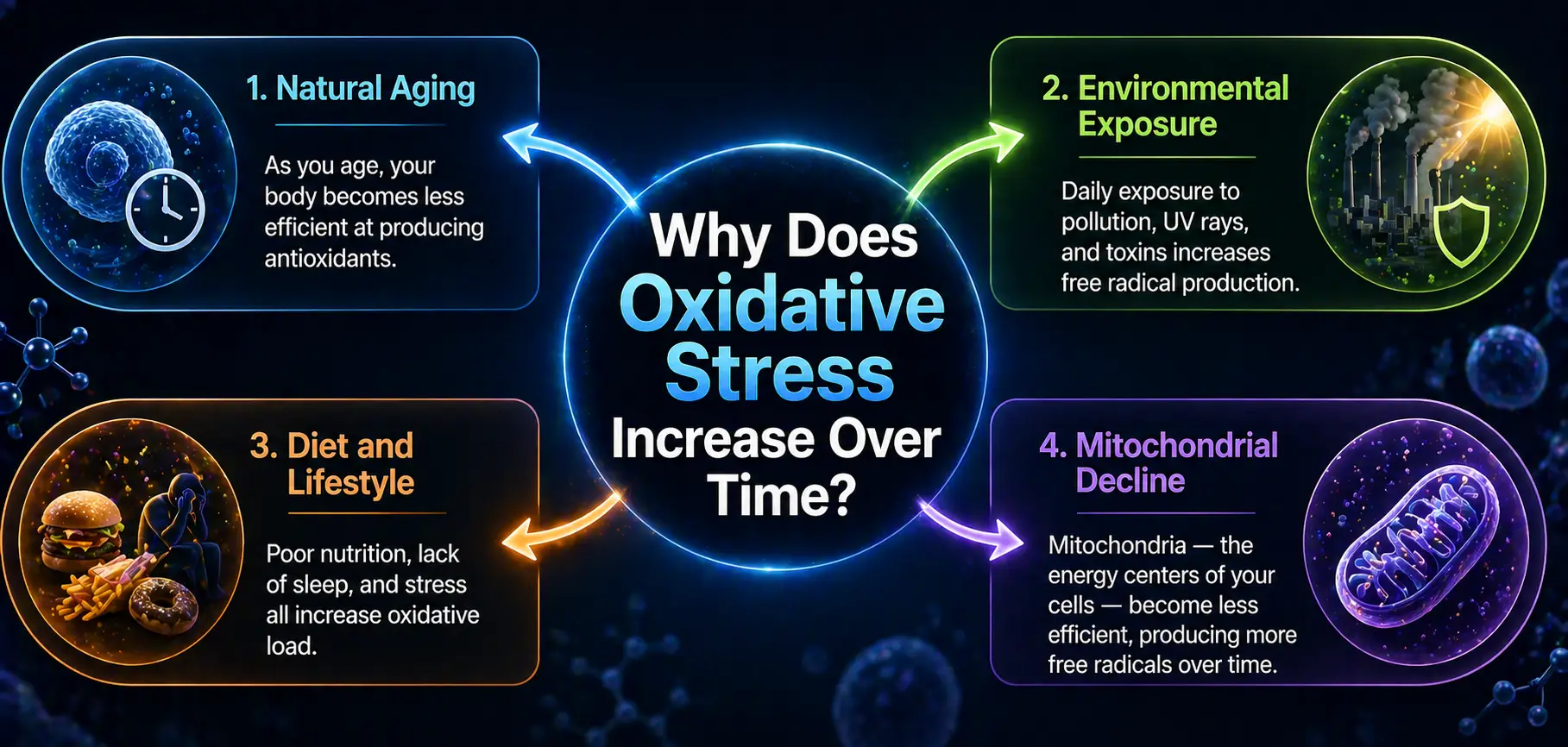
You might be wondering why oxidative stress becomes more of a problem as you get older.
Several factors contribute to this:
1. Natural Aging
As you age, your body becomes less efficient at producing antioxidants.
2. Environmental Exposure
Daily exposure to pollution, UV rays, and toxins increases free radical production.
3. Diet and Lifestyle
Poor nutrition, lack of sleep, and stress all increase oxidative load.
4. Mitochondrial Decline
Mitochondria — the energy centers of your cells — become less efficient, producing more free radicals over time.
Shop Research Peptides Australia
How to Reduce Oxidative Stress Naturally
While oxidative stress is unavoidable, you can support your body’s ability to manage it.
1. Eat Antioxidant-Rich Foods
Fruits, vegetables, and whole foods help neutralize free radicals.
2. Improve Sleep
Sleep is when your body repairs cellular damage.
3. Manage Stress
Lower stress reduces cortisol and internal damage.
4. Stay Physically Active
Exercise supports better cellular function and resilience.
5. Avoid Excess Toxins
Reducing exposure to pollutants and processed foods helps lower oxidative stress.
The Role of Cellular Research in Oxidative Stress
As awareness grows, researchers are focusing more on how oxidative stress affects the body at a deeper biological level.
Instead of just managing symptoms, research now explores:
- Cellular repair mechanisms
- Energy production systems
- Antioxidant pathways
This has led to increased interest in compounds studied for their role in cellular health.
Research Compounds Studied for Oxidative Stress
At Australia Peptide Sciences, research focuses on understanding how biological systems respond to oxidative stress.
Glutathione (Research Compound)
Glutathione for research is often referred to as one of the body’s most important antioxidants.
It is studied for its role in:
- Protecting cells from oxidative damage
- Supporting detoxification processes
- Maintaining cellular balance
NAD+ (Research Compound)
NAD+ is a dinucleotide coenzyme involved in cellular redox reactions and energy metabolism. Product specifications are available on the NAD+ 500mg laboratory research compound page.
It is studied for:
- Supporting mitochondrial function
- Enhancing cellular repair processes
- Maintaining energy efficiency
Note: All compounds mentioned are provided strictly for laboratory research, scientific investigation, and educational purposes.They are not intended for human consumption or medical use.
Why Understanding Oxidative Stress Matters
Understanding how does oxidative stress affect the body changes how you think about health.
Instead of focusing only on symptoms, you start to look at:
- Cellular health
- Long-term balance
- Prevention rather than reaction
Your body is constantly balancing damage and repair, and oxidative stress is a key part of that equation.
FAQs
How does oxidative stress affect the body?
Oxidative stress damages cells, proteins, and DNA, contributing to aging and increasing the risk of chronic diseases.
How does oxidative stress damage cells?
It damages cell membranes, proteins, and DNA by causing molecular instability, leading to reduced cell function.
What is oxidative stress and ageing?
Oxidative stress accelerates ageing by increasing cellular damage and slowing repair processes.
What diseases are linked to oxidative stress?
It is associated with heart disease, diabetes, neurodegenerative disorders, and chronic inflammation.
How can oxidative stress be reduced?
It can be reduced through antioxidants, healthy diet, sleep, stress management, and lifestyle improvements.
Shop Research Peptides Australia
Sources: