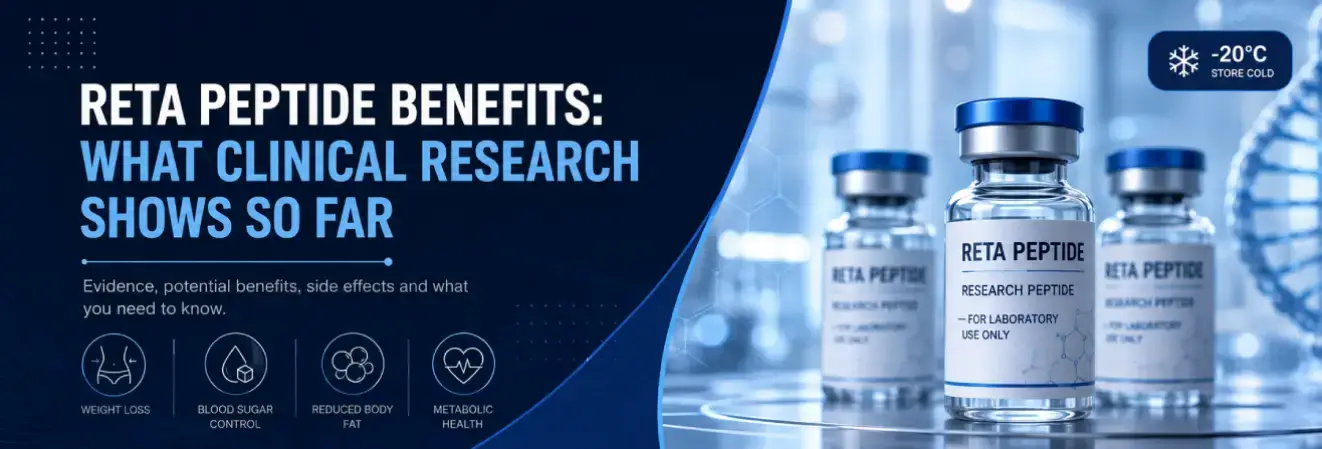
Reta peptide benefits are being investigated across obesity, type 2 diabetes and several weight-related conditions. Reta peptide is an informal name for retatrutide, an experimental molecule that activates the GIP, GLP-1 and glucagon receptors.
The strongest evidence currently relates to body-weight reduction, appetite regulation and improvements in selected glucose and cardiometabolic measurements. Newer Phase 3 results have strengthened some findings, although several remain available only as topline announcements rather than complete peer-reviewed reports. Retatrutide is still investigational, has not been approved by any regulatory agency and is not included in the Australian Register of Therapeutic Goods.
Reta Peptide Benefits at a Glance
Current research suggests that potential benefits of reta peptide may include:
- Substantial average body-weight reduction in controlled trials.
- Reduced hunger, smaller portions and earlier fullness.
- Improvements in HbA1c and other glucose-related measurements.
- Reductions in waist circumference and body-fat mass.
- Improvements in triglycerides, blood pressure and other risk markers.
- Possible reductions in liver fat.
- Better mobility, energy and daily function reported by some participants.
- Improvements in knee osteoarthritis pain and obstructive sleep apnoea severity in selected Phase 3 populations.
These findings do not mean every participant experienced the same result. They also do not establish permanent weight loss, long-term cardiovascular protection or a fully defined safety profile.
| Potential benefit | Current evidence | Important limitation |
| Body-weight reduction | Phase 2 and Phase 3 trials | Individual results vary, and maintenance is still being studied |
| Appetite and eating behaviour | Participant reports and clinical findings | Qualitative reports cannot predict individual responses |
| Glucose control | Trials involving people with type 2 diabetes | Results depend on the population and background treatment |
| Liver-fat reduction | Encouraging exploratory evidence | Reduced liver fat does not prove prevention of advanced liver disease |
| Cardiometabolic markers | Improved blood pressure, triglycerides and waist circumference | Fewer cardiovascular events have not been proven |
| Mobility and wellbeing
|
Participant reports and complication-focused studies
|
Some changes may result mainly from weight reduction |
What Is Reta Peptide and What Does It Do?
Reta Peptide Refers to Retatrutide
Retatrutide, also identified as LY3437943, is a synthetic triple hormone receptor agonist. It is being studied as a once-weekly injection in registered clinical trials but is not approved for routine public use.
The informal label “GLP-3” is sometimes used online, but it is scientifically inaccurate. Retatrutide does not activate a receptor called GLP-3. It acts on three separate receptors: GIP, GLP-1 and glucagon.
Mazdutide peptide is another research compound that targets overlapping metabolic pathways through GLP-1 and glucagon receptor activity.
How the Triple Receptor Mechanism Works
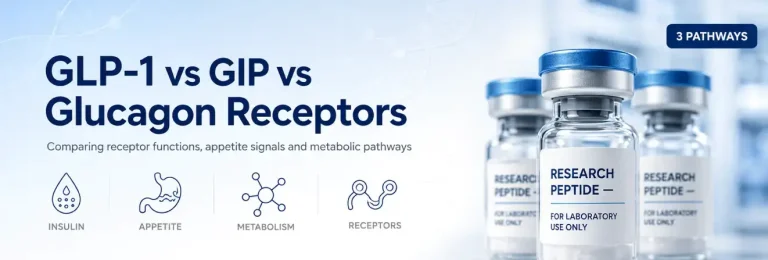
The three pathways have overlapping metabolic roles:
- GLP-1 receptor activation supports glucose-dependent insulin release, reduces appetite and can slow gastric emptying.
- GIP receptor activation contributes to insulin signalling after food intake and influences nutrient metabolism.
- Glucagon receptor activation affects liver metabolism, glucose mobilisation and energy expenditure.
Tirzepatide peptide is a related research compound that combines GIP and GLP-1 receptor activity, providing a useful comparison with retatrutide’s triple-receptor mechanism.
Their combined activity is intended to influence appetite, glucose regulation and energy balance simultaneously.
Although the mechanism is biologically plausible, evidence for each potential benefit ultimately depends on the outcomes observed in controlled human trials.
Does Reta Peptide Work?
Clinical trials show that retatrutide can produce substantial changes in body weight and glucose control, although the magnitude of these effects varies by population, treatment duration and individual response.
Published Phase 2 Results
A 48-week randomised Phase 2 trial included adults with obesity or overweight and a weight-related condition, but without diabetes. At the highest studied dose, mean weight reduction reached 17.5% at 24 weeks and 24.2% at 48 weeks.
Weight loss had not clearly plateaued by the end of the trial, supporting further Phase 3 investigation. Gastrointestinal adverse events were common, especially during dose escalation.
Newer Phase 3 Results
By July 2026, Phase 3 data had been disclosed from several trials. In TRIUMPH-1, adults with obesity or overweight without diabetes lost an average of up to 28.3% of baseline body weight over 80 weeks.
In the peer-reviewed TRANSCEND-T2D-1 trial, adults with type 2 diabetes had average HbA1c reductions of 1.7 to 2.0 percentage points, while the highest-dose group lost up to an average of 16.8% using the efficacy estimand at 40 weeks.
Topline TRIUMPH-2 results reported average weight reduction of up to 20.8% at 80 weeks in adults with type 2 diabetes and obesity or overweight. TRIUMPH-3 reported up to 22.6% in adults with severe obesity and established cardiovascular disease.
Complete peer-reviewed reports are still needed to assess the full methods, safety findings and subgroup results.
Potential Reta Peptide Benefits Supported by Current Research

Substantial Body-Weight Reduction
Body-weight reduction is the most consistently supported benefit of reta peptide. Phase 2 and Phase 3 research has shown clinically substantial average changes in selected trial populations.
The percentages are group averages measured under controlled conditions, not guaranteed personal outcomes. Participants were screened, monitored regularly and followed for defined periods. Results may differ according to baseline weight, diabetes status, adherence and tolerability.
Evidence also remains limited on what happens several years later or after treatment is withdrawn. The TRIUMPH-6 trial (NCT06859268) is examining weight maintenance after initial weight reduction, including continued retatrutide treatment and withdrawal.
Reduced Hunger and Changes in Eating Behaviour
Interviews conducted after the Phase 2 obesity trial provide useful detail on how retatrutide may affect appetite and eating behaviour.
For a broader overview of the compound, see our Reta Peptide Explained guide.
Most retatrutide-treated interviewees reported changes such as:
- Smaller portions.
- Less frequent hunger.
- Earlier fullness.
- Less eating between meals.
- Greater control over eating.
- Changes in food preferences.
Many noticed changes during the first eight weeks. These reports help explain how reduced energy intake may contribute to weight loss, but they came from a small qualitative sample and cannot predict every person’s experience.
Improved Blood Glucose Control
Retatrutide has produced meaningful HbA1c and weight changes among participants with type 2 diabetes. The published TRANSCEND-T2D-1 findings provide stronger evidence than earlier exploratory reports because the study was a randomised Phase 3 trial.
These findings still apply to a defined population. Effects may differ when retatrutide is combined with insulin, sulfonylureas or other glucose-lowering medicines. Improved HbA1c also does not prove that diabetes has permanently resolved.
Waist Circumference and Body Composition
Studies have reported reductions in waist circumference and body-fat mass. A body-composition analysis in adults with type 2 diabetes found greater total fat-mass reduction with retatrutide than with placebo and an active comparator.
The available findings indicate that weight reduction can involve both fat and lean tissue, rather than fat loss alone or complete preservation of muscle.
Potential Liver-Fat Reduction
Early research has shown large reductions in measured liver fat in some participants, especially at higher study doses. This may be relevant to metabolic dysfunction-associated steatotic liver disease.
Liver-fat percentage is a surrogate measurement. A reduction does not by itself prove prevention of fibrosis, liver failure or other long-term complications. Dedicated liver-outcome studies remain necessary.
Cardiometabolic Risk Markers
Reta peptide results have included reductions in systolic blood pressure, triglycerides, waist circumference and inflammatory markers. These changes may indicate an improved cardiometabolic risk profile.
They are not proof of cardiovascular protection. TRIUMPH-3 did not demonstrate a statistically conclusive reduction in major cardiovascular events, and a separate long-term outcomes trial is examining serious cardiovascular and kidney outcomes.
Mobility, Joint Pain and Daily Function
In qualitative interviews, many participants reported improved mobility, greater energy and an increased ability to exercise or complete daily activities.
Phase 3 trials have also reported improvements in knee osteoarthritis pain among participants with obesity or overweight.
It remains unclear how much of the improvement reflects a direct effect on pain and how much results from lower body weight and improved mobility.
Obstructive Sleep Apnoea
TRIUMPH-1 included participants with moderate-to-severe obstructive sleep apnoea.
Retatrutide Phase 3 results have reported fewer breathing interruptions during sleep alongside substantial weight loss in selected trial populations.
The result applies to a selected trial population and does not make retatrutide an approved sleep apnoea treatment. Full peer-reviewed reporting is still needed for complete assessment.
Energy, Confidence and Quality of Life
A qualitative study of 40 people leaving the Phase 2 obesity trial examined experiences not captured by weight alone. Participants commonly described better mobility, higher energy, increased confidence and more participation in exercise, leisure and social activities.
Not every experience was positive. Some reported frustration with lower-than-expected weight loss, concern about regain, social limitations caused by adverse effects, excess skin or loss of strength.
Together, these experiences provide a broader picture of how retatrutide may affect daily life. A separate review of Reta peptide side effects examines the safety findings reported across clinical trials in greater detail.
Potential Benefits That Remain Unconfirmed
Kidney protection and long-term cardiovascular protection remain research questions.
It is not yet known whether improvements in kidney markers or cardiovascular risk factors will lead to fewer cases of kidney failure, heart attack or stroke.
The ongoing TRIUMPH-Outcomes trial (NCT06383390) is evaluating serious cardiovascular events and the progression of kidney disease over a period of approximately five years.
Retatrutide has also not established benefits for polycystic ovary syndrome, fertility, acne, excess hair growth, muscle building, anti-ageing, cognitive enhancement or athletic performance.
Evidence for these proposed uses will depend on clinical trials that evaluate retatrutide specifically in each condition.
Researchers exploring related metabolic pathways can also review our range of GLP-1 peptides for metabolic and appetite research.
What Current Reta Peptide Results Do Not Prove
Current results do not establish that:
- Weight loss will continue indefinitely.
- Benefits will remain after treatment stops.
- Retatrutide is superior to every approved weight-management medicine.
- Risk-marker improvements will prevent major cardiovascular or kidney events.
- Every online product labelled “retatrutide” contains the studied molecule.
- Shorter trials exclude rare or long-term risks.
- Findings apply to pregnancy, breastfeeding, children or people excluded from the trials.
Comparisons across separate trials are unreliable because the populations, study durations, endpoints and analysis methods may differ. More dependable comparisons would come from direct head-to-head studies.
Reta Peptide Benefits and Side Effects

The most common adverse events in retatrutide trials have been nausea, diarrhoea, constipation and vomiting. Reduced appetite is part of the intended metabolic effect but can also become an adverse event when it interferes with adequate intake.
Recent Phase 3 topline results continued to show gastrointestinal events as the most frequent side effects.
Some Phase 3 studies also reported dysesthesia, meaning altered sensations such as tingling, burning or skin sensitivity. Complete publications are needed to understand its pattern and significance.
Other safety questions include:
- Increased resting heart rate observed in earlier studies.
- Dehydration after persistent vomiting or diarrhoea.
- Hypoglycaemia when combined with certain diabetes medicines.
- Gallbladder problems associated with rapid weight loss.
- Loss of strength or lean tissue during major weight reduction.
- Delayed gastric emptying and possible effects on oral medicines.
- Rare or long-term adverse effects that shorter trials may not detect.
The long-term safety profile remains incomplete. Retatrutide does not yet have an approved product label defining indications, contraindications, warnings or routine prescribing requirements.
Is Reta Peptide Approved in Australia?
Retatrutide is not included in the Australian Register of Therapeutic Goods and is not TGA approved. The TGA specifically identifies retatrutide among unapproved peptide products promoted online and states that these products have not been evaluated for safety, quality or effectiveness.
Products labelled “research use only” are not equivalent to the retatrutide manufactured and monitored for controlled pharmaceutical trials.
The disclaimer does not change a product’s regulatory status or automatically make its importation, advertising or supply lawful.
Unapproved products may have inaccurate labels, unknown concentrations, substituted ingredients, contamination, inadequate sterility or unsuitable manufacturing and storage conditions.
Clinical trial results describe a defined investigational molecule produced and monitored under controlled study conditions. These findings cannot be applied to unapproved peptide products sold independently online, even when they are marketed under the same name.

The strongest current evidence for reta peptide benefits relates to substantial average body-weight reduction, reduced appetite and improved glucose control in selected clinical trial populations.
Research has also reported changes in waist circumference, body-fat mass, liver fat, blood pressure, triglycerides, mobility and some obesity-related complications.
Important uncertainties remain. Long-term weight maintenance, cardiovascular and kidney protection, rare adverse events and safety after extended exposure have not been fully established. Several recent Phase 3 findings are available only as topline results and require complete peer-reviewed publication.
Retatrutide remains investigational and is not TGA approved in Australia.
Results from regulated clinical trials do not assure that products sold online are authentic, safe or suitable for human use.
FAQs About Reta Peptide Benefits:
What Is Reta Peptide Good For?
Reta peptide, commonly known as retatrutide, is currently being studied for obesity, overweight and type 2 diabetes. Research has linked it to considerable average weight reduction, better blood glucose control and decreases in body-fat mass. Other possible reta peptide benefits are being examined in people with obesity-related health conditions, but retatrutide remains experimental and is not approved by the TGA in Australia.
Who Should Not Take Retatrutide?
Retatrutide should not be taken outside an authorised clinical trial because it has not yet received regulatory approval or an official prescribing label. As a result, no complete list of routine contraindications has been established. Trial eligibility is assessed individually based on factors such as pregnancy, medical history, existing health conditions and other medicines being used. Products sold online as retatrutide may also differ from the substance evaluated in controlled clinical studies.
Does Reta Burn Belly Fat?
Clinical research suggests that retatrutide can reduce overall body weight, waist circumference and total fat mass, which may include fat stored around the abdomen. However, it has not been shown to target belly fat alone or remove abdominal fat independently of general weight loss. Body-composition studies also indicate that some lean mass may be lost as total body weight decreases.
How Quickly Does Reta Peptide Work?
The timeframe for experiencing reta peptide benefits is not the same for every participant. In one qualitative study, many people reported changes in hunger, portion size and eating behaviour within the first eight weeks. In the Phase 2 obesity trial, weight loss continued to develop over several months and was formally evaluated at 24 and 48 weeks. The speed and extent of results can vary according to the individual, study conditions and tolerability.
Sources:
Triple-Hormone-Receptor Agonist Retatrutide for Obesity – A Phase 2 Trial
Efficacy and Safety of Retatrutide in People With Type 2 Diabetes: TRANSCEND-T2D-1 Phase 3 Trial
Effects of Retatrutide on Body Composition in People With Type 2 Diabetes
Retatrutide for Metabolic Dysfunction-Associated Steatotic Liver Disease: A Phase 2a Trial
Perceived Benefits of Retatrutide Treatment for Obesity: A Qualitative Study
Retatrutide for Obesity, Obstructive Sleep Apnoea and Knee Osteoarthritis: TRIUMPH Trial Design