
GLP-1 vs GIP vs glucagon receptors are three related signalling systems involved in blood glucose regulation, appetite, nutrient handling and energy balance.
GLP-1R primarily supports glucose-dependent insulin secretion, satiety and slower gastric emptying, while GIPR contributes to meal-related insulin release and nutrient processing. GCGR has a distinct role, helping the liver maintain glucose availability and contributing to energy metabolism.
Understanding these differences is particularly important when comparing single, dual and triple receptor agonists.
GLP-1 vs GIP vs Glucagon Receptors at a Glance
| Comparison point | GLP-1 receptor | GIP receptor | Glucagon receptor |
| Abbreviation | GLP-1R | GIPR | GCGR |
| Natural activating hormone | Glucagon-like peptide-1 | Glucose-dependent insulinotropic polypeptide | Glucagon |
| Main hormone source | Intestinal L cells | Intestinal K cells | Pancreatic alpha cells |
| Receptor family | Class B G-protein-coupled receptor | Class B G-protein-coupled receptor | Class B G-protein-coupled receptor |
| Main metabolic role | Insulin secretion, appetite and gastric regulation | Meal-related insulin secretion and nutrient handling | Hepatic glucose availability and energy regulation |
| Effect on insulin | Supports glucose-dependent secretion | Supports glucose-dependent secretion | Mainly indirect and context dependent |
| Effect on glucagon | Generally suppresses secretion when glucose is elevated | May support secretion under some conditions | Mediates glucagon activity |
| Gastric emptying | Can slow it | Little direct effect | Not a primary function |
| Appetite relevance | Strong | Variable and context dependent | More relevant within combined metabolic signalling |
| Energy-expenditure relevance | Mostly indirect | Context dependent | Direct research interest |
In practical terms:
- GLP-1R helps coordinate insulin release, satiety and the rate at which food leaves the stomach.
- GIPR supports the insulin response to meals and contributes to nutrient processing in several tissues.
- GCGR helps the liver maintain circulating glucose and may also affect energy expenditure and fat metabolism.
Hormones, Receptors and Agonists
GLP-1, GIP and glucagon are hormones. GLP-1R, GIPR and GCGR are receptors. An agonist is a substance that activates a receptor.
A Hormone Carries a Biological Signal
A hormone is released from one tissue and travels locally or through the circulation to influence another tissue.
GLP-1 and GIP are released after nutrient intake. Glucagon becomes especially important when circulating glucose is falling or when the body needs additional fuel.
A Receptor Receives the Signal
These three receptors are located on cell membranes. When the correct hormone binds, the receptor changes shape and activates intracellular signalling.
All three belong to the class B G-protein-coupled receptor family. Their activation commonly increases cyclic adenosine monophosphate, or cAMP, but the final biological response depends on the receptor, tissue and metabolic state.
An Agonist Activates the Receptor
An agonist may be a natural hormone, a modified peptide or a non-peptide molecule. A simplified signalling sequence is:
- The hormone or agonist binds to the receptor.
- The receptor activates intracellular G proteins.
- Second messengers such as cAMP increase.
- Enzymes, ion channels and signalling proteins respond.
- The cell changes hormone secretion, metabolism or neural activity.
Long-acting agonists may behave differently from natural hormones because structure, potency, exposure and half-life can change the response.
What Are Incretin Hormones?
GLP-1 and GIP are the two main incretin hormones. They are released from the intestine after food is consumed and amplify insulin secretion in response to rising glucose.
This helps explain why oral glucose can produce a stronger insulin response than glucose exposure that bypasses the gut.
Where GLP-1 and GIP Are Released
GIP is secreted mainly from K cells in the upper small intestine. GLP-1 is secreted mainly from L cells located further along the intestine.
Both hormones signal that nutrients are arriving. Their receptors then help pancreatic beta cells release insulin in a glucose-dependent manner.
Natural Incretins Are Rapidly Degraded
GLP-1 and GIP are broken down by dipeptidyl peptidase-4, commonly called DPP-4. Natural GLP-1 has a particularly short period of biological activity in circulation.
Modified agonists may resist degradation or remain in circulation for longer, which means their effects can differ substantially from those of endogenous incretins.
Glucagon is not an incretin. It is a pancreatic hormone with a different role in maintaining fuel availability.
Explore Research Peptides from Australia Peptide Sciences
What Is the GLP-1 Receptor and What Does It Do?
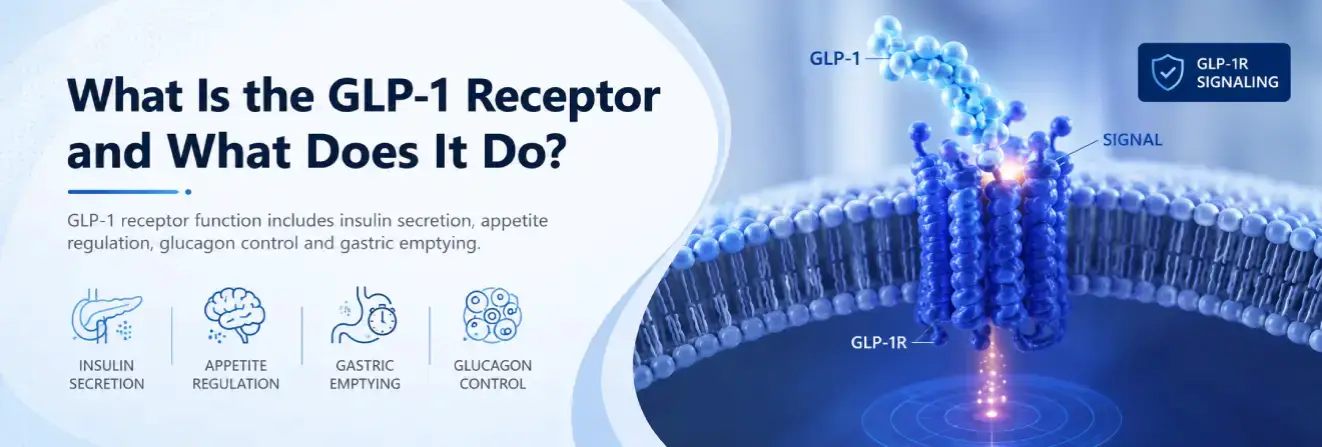
The main GLP-1 receptor function is to connect nutrient intake with glucose-dependent insulin secretion, glucagon regulation, gastrointestinal activity and appetite signalling.
GLP-1R Supports Glucose-Dependent Insulin Secretion
GLP-1 binds to GLP-1R on pancreatic beta cells and increases intracellular cAMP. This activates pathways involving protein kinase A and EPAC2.
These signals influence ion channels, increase intracellular calcium and support the release of insulin-containing granules. Because this effect depends partly on the presence of glucose, GLP-1R activation amplifies insulin secretion mainly when glucose is available.
GLP-1R Helps Regulate Glucagon
GLP-1 generally suppresses glucagon secretion when glucose is above fasting levels. This reduces the signal for the liver to release additional glucose after a meal.
The mechanism is not limited to a direct action on pancreatic alpha cells. Insulin released from beta cells and somatostatin released from delta cells may also contribute through local pancreatic signalling.
GLP-1R Influences Appetite and Gastric Emptying
GLP-1R participates in gut-brain signalling and is active in neural pathways involved in hunger, satiety and food intake.
Activation of the pathway can increase fullness and reduce food intake. It can also slow gastric emptying, especially during earlier exposure, reducing the speed at which nutrients move from the stomach into the small intestine.
GLP-1R Has Wider Biological Roles
GLP-1 receptor signalling is also studied in cardiovascular, hepatic, inflammatory and neurological contexts.
Evidence varies across tissues and models, and experimental findings do not necessarily translate into established human outcomes.
What Is the GIP Receptor and What Does It Do?
GIPR is another incretin receptor, but it is not simply a second version of GLP-1R.
GIPR Supports Meal-Related Insulin Release
GIP binds to receptors on pancreatic beta cells and activates cAMP-related signalling. Like GLP-1, it supports glucose-dependent insulin secretion after nutrients are consumed.
In normal physiology, GLP-1 and GIP both contribute to the incretin effect and may produce additive insulin-supporting responses.
GIPR Can Affect Glucagon Differently
One important difference between GIP and GLP-1 involves their effects on glucagon secretion.
GLP-1 generally suppresses glucagon when glucose is elevated. GIP may stimulate glucagon secretion during normal or lower glucose conditions.
This effect is not inherently contradictory. Glucagon may help maintain glucose availability when additional fuel is needed. The response therefore depends on glucose concentration and metabolic context.
GIPR Is Active Beyond the Pancreas
GIP receptors are found in tissues including adipose tissue, bone and parts of the brain.
GIP signalling has been associated with nutrient storage and lipid handling in adipose tissue. It also has recognised roles in bone physiology and is being investigated in neural and appetite-related pathways.
Describing GIP only as a fat-storage hormone is misleading. Its effects vary by tissue, nutritional state and interaction with other metabolic signals.
GIP Responses May Change in Type 2 Diabetes
The insulin-supporting response to GIP may be reduced in some people with type 2 diabetes, while responsiveness to GLP-1 can remain more substantially preserved.
Modified dual agonists can have receptor activity and pharmacology that differ from naturally released GIP.
What Is the Glucagon Receptor and What Does It Do?
The glucagon receptor is most strongly associated with the liver and the maintenance of circulating glucose between meals and during fasting.
GCGR Supports Hepatic Glucose Availability
When glucagon binds to GCGR, the liver receives a signal to increase glucose availability through two major processes:
- Glycogenolysis: the breakdown of stored glycogen.
- Gluconeogenesis: the production of glucose from non-carbohydrate substrates.
These processes help prevent circulating glucose from falling too far when nutrients are not entering the body.
Why Glucagon Can Raise Blood Glucose
An increase in hepatic glucose output is a normal physiological response. It becomes problematic when glucose production is excessive or poorly balanced with insulin action.
This explains why both GCGR inhibition and balanced activation have been investigated for different metabolic purposes.
GCGR May Affect Energy Expenditure
Glucagon receptor activation is also associated with changes in energy use, lipid mobilisation, amino acid metabolism and thermogenic pathways in experimental research.
However, because GCGR can increase hepatic glucose production, its activity must be balanced carefully with pathways that support insulin secretion, appetite regulation and glucose control.
GIP Receptor vs GLP-1 Receptor
GIPR and GLP-1R share several pancreatic signalling functions but differ in glucagon regulation, appetite, digestion and tissue activity.
| Feature | GLP-1R | GIPR |
| Natural hormone | GLP-1 | GIP |
| Main intestinal source | L cells | K cells |
| Insulin effect | Supports glucose-dependent secretion | Supports glucose-dependent secretion |
| Glucagon effect | Generally suppressive when glucose is elevated | May be stimulatory in some glucose conditions |
| Gastric emptying | Can slow it | Little direct effect |
| Appetite effect | Stronger established role | More variable |
| Adipose relevance | Mainly indirect | More direct nutrient-handling relevance |
| Bone relevance | Studied in bone metabolism | Well described in physiological and experimental research |
| Response in type 2 diabetes | Often relatively preserved | May be reduced |
What GLP-1R and GIPR Share
Both receptors:
- belong to the class B GPCR family;
- activate cAMP-related signalling;
- support glucose-dependent insulin release;
- influence pancreatic beta-cell activity;
- have biological effects outside the pancreas.
Why Neither Receptor Is Universally Better
GLP-1R and GIPR serve different physiological functions.
GLP-1R has stronger established effects on appetite and gastric emptying. GIPR contributes to meal-related insulin signalling and broader nutrient handling.
Their value depends on the biological outcome being examined. A comparison based only on glucose or body weight overlooks differences in tissue distribution, receptor potency and interaction with other pathways.

How GLP-1, GIP and Glucagon Receptors Work Together
Together, GLP-1R, GIPR and GCGR help coordinate the transition between fed and fasting states.
After a Meal
Nutrients stimulate GLP-1 and GIP release. Their receptors support insulin secretion, promoting glucose uptake and storage.
GLP-1R also helps limit excessive glucagon release, influences gastric emptying and communicates satiety. GIPR strengthens the meal-related insulin response and contributes to nutrient processing.
Between Meals and During Fasting
As incoming nutrients decline, glucagon becomes more important. GCGR signalling instructs the liver to maintain circulating glucose through glycogen breakdown and gluconeogenesis.
Metabolic Balance Matters
The three pathways form a connected system:
- GLP-1R helps regulate intake and post-meal glucose.
- GIPR coordinates the response to incoming nutrients.
- GCGR maintains fuel availability and may increase energy use.
Their effects depend on timing, tissue, glucose level and signal strength.
Single, Dual and Triple Receptor Agonists
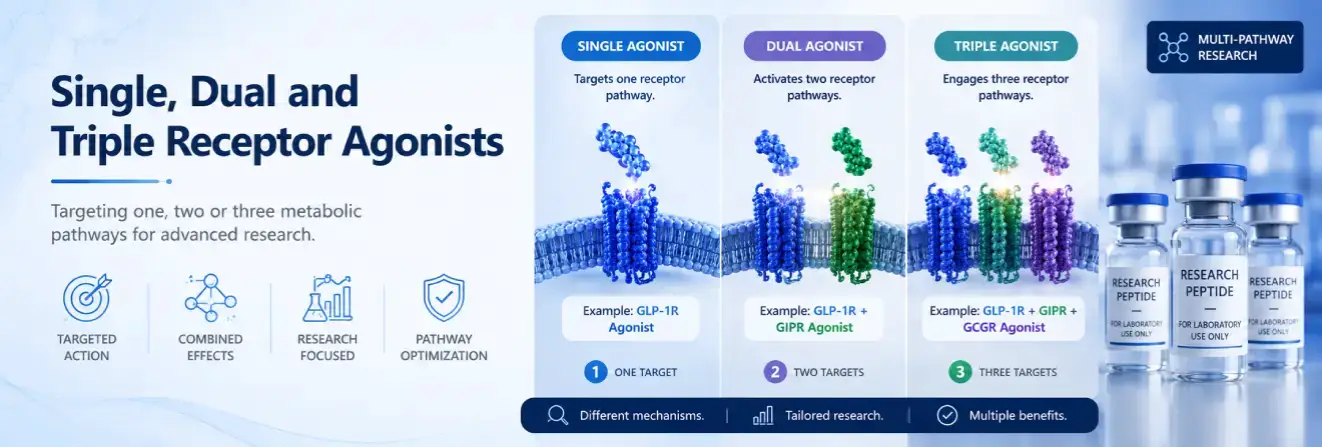
Receptor agonists can be designed to target one pathway or activate several receptors within one molecule.
| Agonist model | Receptors targeted | Main rationale | Biological complexity |
| Single agonist | One receptor, commonly GLP-1R | Focus on one main pathway | Lower |
| Dual incretin agonist | GLP-1R and GIPR | Combine complementary incretin signals | Moderate |
| GLP-1/glucagon co-agonist | GLP-1R and GCGR | Combine appetite and glucose regulation with energy-use pathways | Moderate to high |
| Triple agonist | GLP-1R, GIPR and GCGR | Coordinate intake, nutrient handling and energy expenditure | High |
Single GLP-1R Agonists
Single agonists primarily activate GLP-1R. Compounds in this category can still differ in structure, potency, duration, receptor signalling and tissue exposure.
GLP-1R and GIPR Dual Agonists
Dual incretin agonists activate both GLP-1R and GIPR.
For a closer look at this dual-receptor mechanism, see our Tirzepatide peptide research guide.
The pathways may complement one another in glucose regulation, appetite and nutrient metabolism.
Tirzepatide peptide is an example of a compound designed to activate both GLP-1R and GIPR.
GLP-1R and GCGR Co-Agonists
These compounds combine GLP-1R activity with glucagon receptor activation.
Mazdutide peptide is an example of a research compound designed to activate both GLP-1 and glucagon receptors.
GLP-1R contributes appetite and glucose regulation, while GCGR contributes hepatic and energy-use effects. GCGR’s glucose-raising potential makes receptor balance especially important.
Triple Agonists
Triple agonists are designed to activate GLP-1R, GIPR and GCGR.
Retatrutide is an example of a compound studied with this receptor profile. A triple agonist is generally a single engineered molecule rather than three unrelated compounds combined together.
Its overall effect depends on how strongly and how long it activates each receptor.
More Receptors Do Not Automatically Mean Better Results
Increasing receptor count also increases biological complexity. Outcomes depend on:
- potency at each receptor;
- maximum receptor response;
- relative receptor balance;
- half-life and exposure;
- tissue distribution;
- study population;
- tolerability;
- interactions among the pathways.
Two compounds that target the same receptors may therefore produce different results.
How Receptor Activity Is Compared
A receptor profile provides useful mechanistic information but does not fully describe compound behaviour.
| Term | Meaning | Why it matters |
| Affinity | How strongly a ligand binds to a receptor | Strong binding does not guarantee a strong functional response |
| Potency | The concentration needed to produce an effect | Useful only when assays are directly comparable |
| Efficacy | The maximum response a compound can produce | A potent compound may not produce the greatest maximum effect |
| Selectivity | Preference for one receptor over another | Important for single and multi-receptor compounds |
| Receptor balance | Relative activity across several targets | Central to dual- and triple-agonist behaviour |
| Half-life | How long meaningful exposure may continue | Influences duration rather than receptor function alone |
Experimental Models Can Produce Different Results
Measured receptor activity may vary according to:
- human or animal receptor sequence;
- receptor-expression level;
- cell-based or whole-organism model;
- assay method and measured endpoint;
- concentration and exposure period;
- metabolic healthof the study population.
One assay cannot fully predict human biological or clinical effects.
Visit our shop to explore research peptides and related compounds.
Common Misconceptions
- GLP-1 is not glucagon. Both are produced from the proglucagon precursor, but they activate different receptors and have different functions.
- GIPR is not another name for GLP-1R. They are separate receptors activated by different hormones.
- GIP does more than stimulate insulin. It also participates in glucagon regulation, nutrient handling, adipose biology, bone physiology and neural signalling.
- Glucagon receptor activation is not studied only for raising glucose. It may also influence energy expenditure and lipid metabolism.
- A triple agonist is not automatically superior. Receptor balance, exposure, tolerability and supporting evidence matter more than receptor count.
- Receptor activity does not prove safety or approval. Laboratory activity, clinical evidence, product quality and regulatory status are separate considerations.
Australian Research and Compliance Context
Regulatory approval applies to a specific product, formulation, indication and sponsor. An entire receptor category cannot be described as approved or unapproved as one group.
Research-use-only materials are intended for controlled laboratory or analytical work. This designation does not establish that a product has been evaluated by the Therapeutic Goods Administration, included in the Australian Register of Therapeutic Goods or authorised for human or veterinary administration.
A receptor profile also cannot establish product quality. Identity, purity, concentration, stability, contamination controls, batch documentation and manufacturing standards require separate assessment.
The Australian regulatory status of individual agonists depends on current TGA and ARTG information.
Key Takeaways: GLP-1R vs GIPR vs GCGR
GLP-1R, GIPR and GCGR are related receptors with distinct but connected roles in metabolic regulation.
GLP-1R links nutrient intake with glucose-dependent insulin secretion, glucagon regulation, gastric emptying and satiety. GIPR supports meal-related insulin release and influences glucagon responses, nutrient handling, adipose tissue and bone. GCGR helps the liver maintain glucose availability and is also studied for effects on energy expenditure and lipid metabolism.
Dual and triple agonists attempt to combine these pathways, but receptor count alone does not determine the outcome. Potency, efficacy, receptor balance, exposure, tissue distribution and the quality of supporting evidence all affect how a compound should be interpreted.
FAQs About GLP-1 vs GIP vs Glucagon Receptors:
Which Is Better, GIP or GLP-1?
GIP and GLP-1 should not be ranked as universally better or worse because each hormone has a distinct role. Both enhance glucose-dependent insulin secretion, while GLP-1 has more established effects on slowing gastric emptying, increasing satiety and reducing glucagon release when glucose levels are elevated. GIP contributes to the insulin response after meals and also affects nutrient metabolism and glucagon signalling in certain conditions.
What Can Mimic GLP-1 and GIP?
Receptor agonists can imitate selected effects of natural GLP-1 and GIP. A GLP-1 receptor agonist activates GLP-1R, whereas a dual GIP and GLP-1 receptor agonist targets both GIPR and GLP-1R. These compounds are usually engineered to remain active for longer than the natural hormones, so their duration and overall activity may differ from endogenous GLP-1 and GIP.
What Are GLP-1, GIP and Glucagon Receptors?
GLP-1R, GIPR and GCGR are class B G-protein-coupled receptors that respond to different metabolic hormones. GLP-1R and GIPR are incretin receptors involved in glucose-dependent insulin secretion. GCGR is activated by glucagon and mainly helps regulate glucose production and release from the liver. Together, GLP-1, GIP and glucagon receptors influence blood glucose, appetite, nutrient processing and energy balance.
What Is the Difference Between Glucagon and GLP-1?
Glucagon and GLP-1 are both derived from the proglucagon precursor, but they are produced mainly in different tissues and act through separate receptors. Glucagon is released primarily by pancreatic alpha cells and increases circulating glucose by stimulating the liver. GLP-1 is released mainly from intestinal L cells after eating and supports insulin secretion, reduces glucagon release when glucose is elevated, slows gastric emptying and promotes fullness.
Do Dual GIP and GLP-1 Receptor Agonists Work?
Yes. Evidence from approved dual GIP and GLP-1 receptor agonist therapies shows that activating both receptors can improve blood glucose control and support body-weight reduction for approved indications. Results still vary according to the specific compound, dose exposure, treatment purpose, individual response and tolerability. Evidence supporting one approved therapy should not be applied automatically to every experimental compound that targets GIPR and GLP-1R.
Sources:
GIP and GLP-1, the Two Incretin Hormones: Similarities and Differences
Class B G-Protein-Coupled Receptors
Physiology and Pharmacology of GLP-1-Based Therapies
Glucagon Physiology and Metabolic Regulation
Tirzepatide Prescribing Information