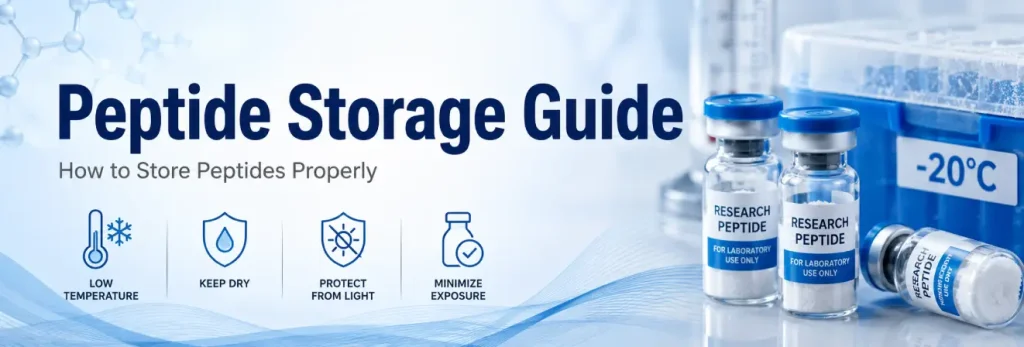
Peptide Storage Guide for Laboratory Research
Peptide storage is one of the most important factors affecting peptide stability, handling consistency, and long-term research reliability. Whether peptides are stored in dry…

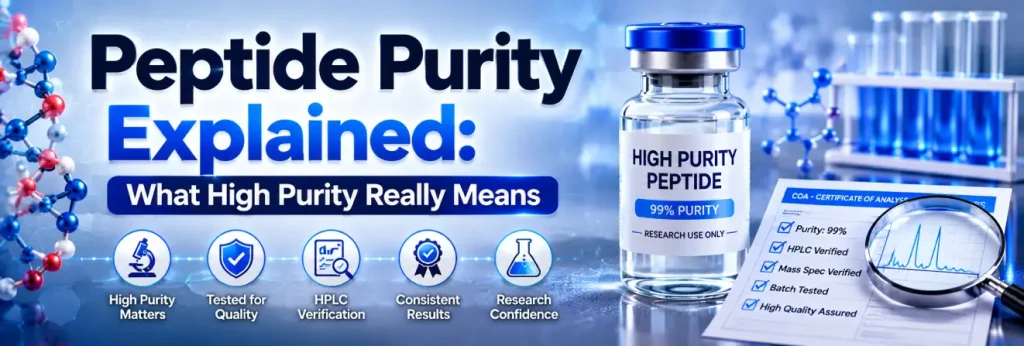
As interest in research peptides continues to grow, many researchers come across the term Peptide reconstitution. Understanding peptide reconstitution is relevant to laboratory workflows…
Peptide purity is an important analytical characteristic when evaluating research materials. Laboratories may review chromatographic purity, molecular identity, batch documentation and analytical methods to…
Bacteriostatic water is a laboratory preparation material used in suitable peptide-research workflows involving dilution, reconstitution and controlled solution preparation. Researchers may use bacteriostatic water…
A peptide Certificate of Analysis (COA) reports analytical results for a defined batch and should be interpreted alongside the stated test methods and product…
Laboratories sourcing research peptides in Australia should evaluate suppliers according to compound identity, analytical documentation, purity data, storage information, transparent specifications and research-use-only positioning.…