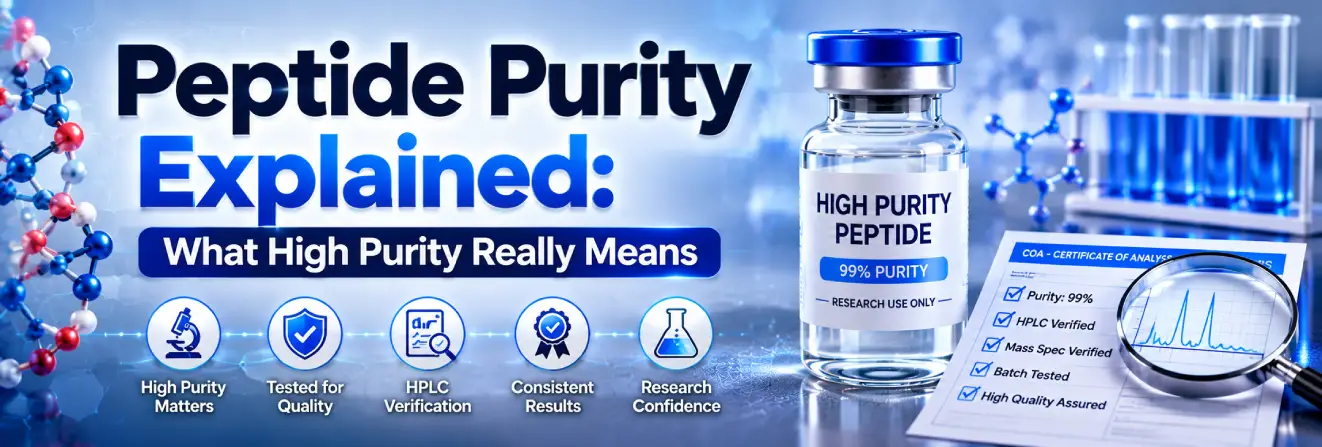
Peptide purity is an important analytical characteristic when evaluating research materials. Laboratories may review chromatographic purity, molecular identity, batch documentation and analytical methods to understand the characteristics of a specific peptide lot. Purity data should be interpreted together with the method used rather than treated as a complete measure of research quality.
Peptide purity describes the relative proportion of the target compound detected using a specified analytical method. When reported as an HPLC peak-area percentage, it reflects the share of the integrated chromatographic signal attributed to the main peak, not necessarily the percentage of peptide by mass in the sample.
What Does Peptide Purity Mean?
Peptide purity commonly refers to the proportion of detected peptide-related material attributed to the target compound under a specified analytical method and set of conditions. The reported value should not automatically be interpreted as the absolute mass percentage of every component in the vial.
The remaining integrated signal may come from detectable synthesis impurities, degradation products or other components separated by the method. Substances that are not detected under the test conditions may not be reflected in the reported percentage.
For example:
| Purity Level | What It Means |
| Reported 99% chromatographic purity | Approximately 99% of the detected chromatographic signal is attributed to the principal component under the stated method conditions. |
| Remaining detected signal | May include related impurities, synthesis byproducts or other detected components, depending on the analytical method. |
Purity results help researchers evaluate the composition detected by an analytical method, but they should be interpreted alongside molecular identity, detector response and the limits of the test.
Broader information about research materials, quality documentation and supplier evaluation is available in the Research Peptides Australia guide.
Why Analytical Purity Is Not Absolute
A reported purity result is method-dependent. Analytical methods have defined detection limits, separation conditions and measurement uncertainty, so a purity result should be interpreted according to the specific method and specification rather than as proof that every possible impurity has been excluded.
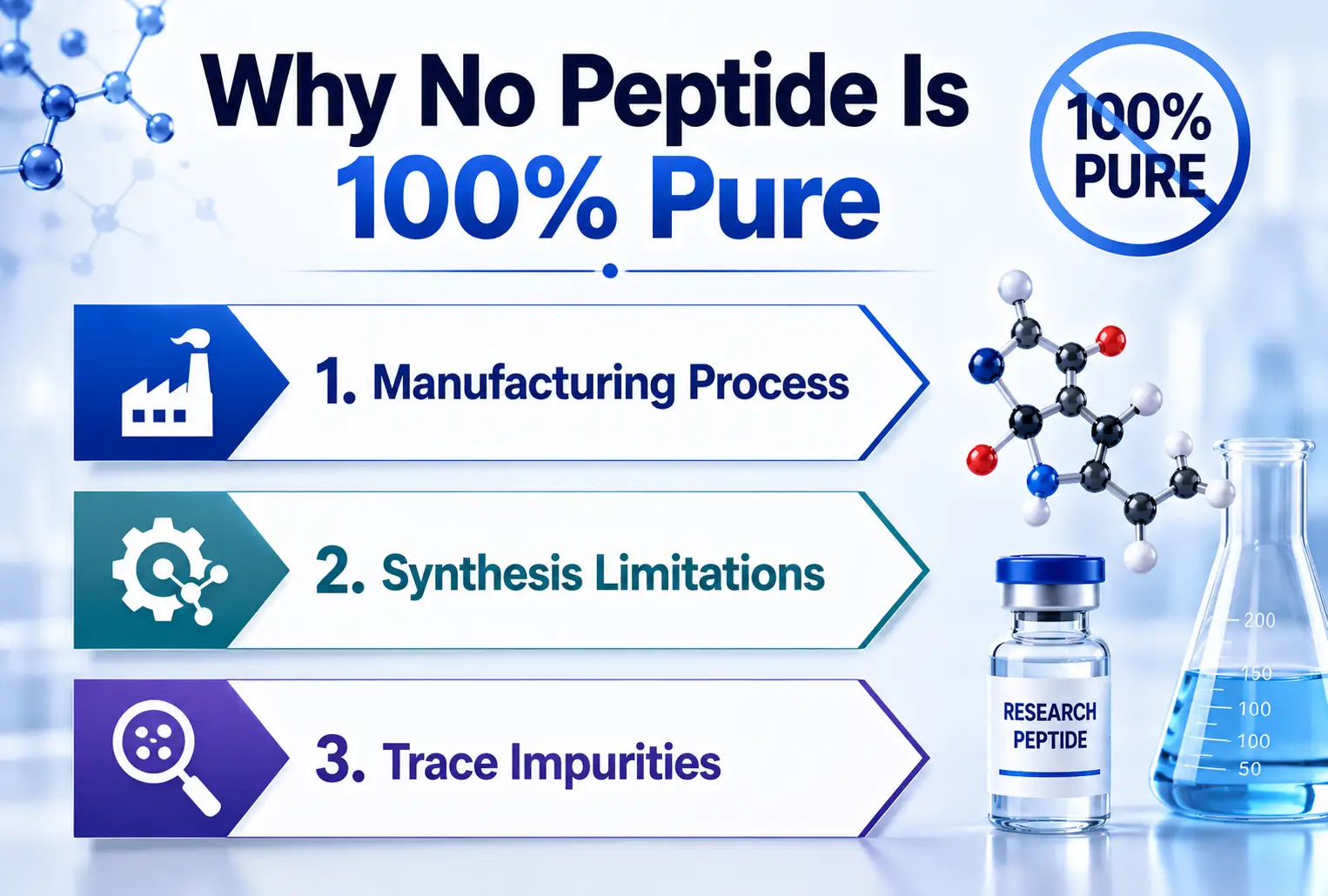
Manufacturing Process
Peptide synthesis involves assembling amino acids into a defined sequence. Incomplete reactions and subsequent processing can introduce impurities or byproducts, even under controlled manufacturing conditions.
Synthesis Limitations
The peptide production process is highly advanced, but like most scientific manufacturing methods, it still has limitations. Tiny variations can occur during synthesis, purification, or handling, which is why researchers commonly evaluate peptide quality using purity percentages rather than expecting absolute perfection.
Synthesis-related impurities can arise during peptide assembly, cleavage and purification. These processes are described further in the Peptide Synthesis guide.
Trace Impurities
Even high purity peptides may contain extremely small amounts of:
- Synthesis byproducts
- Residual compounds
- Oxidised or deamidated peptide variants
A reported value near 99% may indicate high chromatographic purity under the stated test conditions, but the number alone does not establish molecular identity, total composition or suitability for a particular experiment.
Laboratory materials should be evaluated using compound identity, batch-specific analytical documentation and the requirements of the intended research protocol.
Why Peptide Purity Matters in Laboratory Research
Analytical purity can influence interpretation, reproducibility and comparison between experimental materials. Laboratories may evaluate purity together with compound identity, batch consistency, storage conditions and the analytical methods used. Purity should therefore be treated as one component of material characterisation rather than as a standalone indicator of experimental quality.
Research Consistency
Purity measurements can help laboratories compare the analytical characteristics of materials used across experiments. However, differences in testing methods, sample preparation and handling can affect reported results, so meaningful comparisons require consistent analytical conditions.
Laboratory Preparation
Purity information can support experimental planning, particularly when detectable impurities may influence assay results. Researchers should consider the reported purity alongside compound identity and other relevant material specifications.
Batch Reliability
Reported purity may differ between production batches. Comparing results obtained using suitable and consistent analytical methods helps researchers identify variation that could affect experimental reproducibility.
Confidence in Testing
Analytical methods provide complementary information about research materials. HPLC peptide purity results describe detected chromatographic components, while mass spectrometry can support molecular identity assessment. These findings should be interpreted together when evaluating experimental materials.
How to Interpret a Reported 99% Peptide Purity Result
One of the most common questions researchers ask is:
What does 99% peptide purity actually mean?
A reported 99% purity value should be interpreted according to the analytical method used. For chromatographic testing, it generally indicates that the principal detected peak accounts for approximately 99% of the integrated signal under the stated method conditions. Additional analytical evidence is required to support molecular identity and broader composition.
For example:
| Chromatographic Signal | Example of a Reported 99% HPLC Area Result |
| Main assigned peak | Approximately 99% of the integrated chromatographic signal |
| Other integrated peaks | Approximately 1% of the integrated chromatographic signal |
A reported 99% HPLC peak-area result does not mean that 99% of the sample’s total mass is the intended peptide. Water, counter-ions and other substances may not be represented by the chromatographic measurement.
Is 99% Peptide Purity Considered High?
A reported 99% HPLC peak-area result indicates that the main detected component accounts for nearly all of the integrated signal under the stated method. Whether this level is suitable depends on the analytical specification and the requirements of the intended research application.
Reported purity values should not be converted into universal quality grades. Interpretation should consider the analytical method, specification, chromatogram, identity data and requirements of the intended laboratory experiment.
However, researchers often look beyond purity percentages alone. Testing transparency, batch consistency, and supplier quality standards also matter when evaluating peptide quality.
Batch-specific analytical results can be reviewed through the Peptide Certificates of Analysis (COAs).
How Is Peptide Purity Tested?
Peptide purity is assessed using analytical methods suited to the compound and the impurities being investigated. HPLC is commonly used to estimate chromatographic purity, while complementary methods such as mass spectrometry provide additional information about molecular identity.
Among the most common testing approaches are HPLC peptide purity testing, mass spectrometry, and batch testing procedures.
HPLC Peptide Purity Testing
One of the most widely used methods for evaluating peptide purity is:
HPLC (High-Performance Liquid Chromatography)
HPLC can separate components within a peptide sample and provide a chromatographic purity estimate under defined analytical conditions. Peak-area results can indicate the relative abundance of detected components, but HPLC alone does not establish complete molecular identity or absolute sample composition.
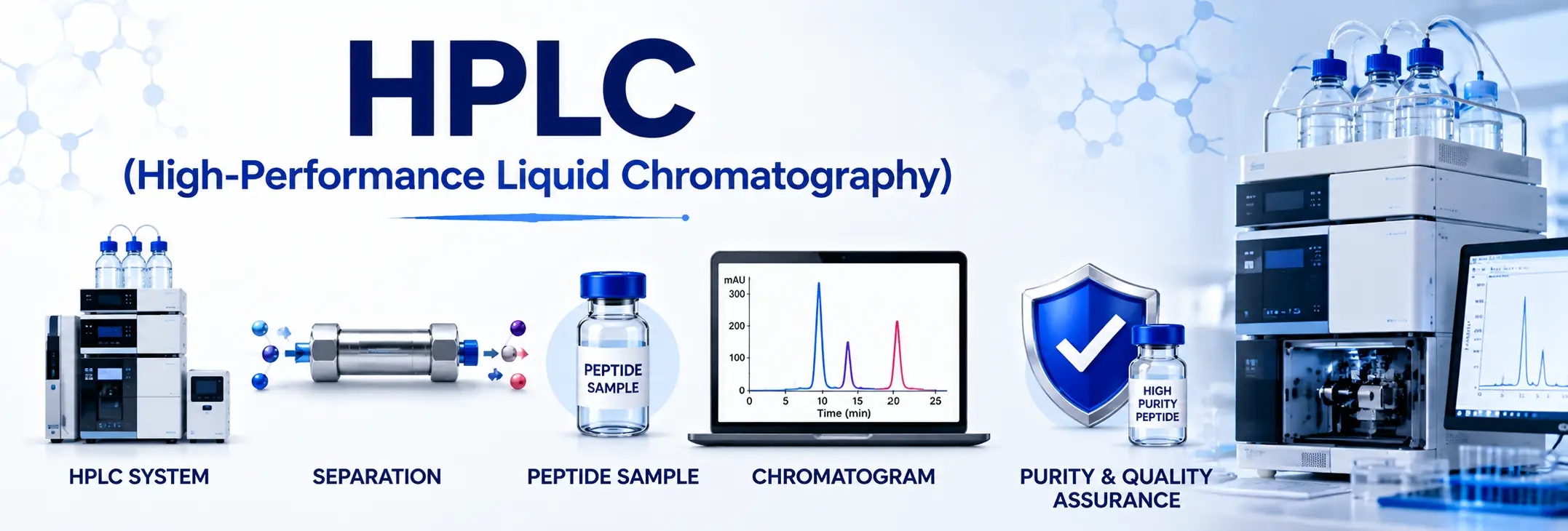
How Does HPLC Work?
In HPLC, components of a peptide sample are separated as they pass through a column and are detected under defined analytical conditions. The resulting data can be used to assess:
- The relative detector response from resolved components
- Presence of impurities
- Chromatographic purity under the stated method conditions
Results are displayed in a chromatogram showing detector response over time.
A chromatogram is essentially a visual representation showing how different compounds appear during testing.
Researchers commonly review chromatograms because they may help indicate:
- Compound purity
- Consistency
- Impurity levels
This is one reason HPLC peptide purity testing is widely trusted and frequently included in a peptide certificate of analysis.
Mass Spectrometry (MS)
Mass spectrometry measures ion mass-to-charge ratios and can provide evidence about the molecular mass and identity of a peptide.
While HPLC focuses mainly on purity, mass spectrometry is commonly used to help verify the molecular identity of a peptide compound.
In simple terms, researchers use MS to help answer the question:
Is this actually the intended peptide?
Mass spectrometry helps support:
- Peptide identity verification
- Molecular confirmation
- Additional testing transparency
HPLC and mass spectrometry answer different analytical questions and are often used together to characterise peptide materials.
HPLC and mass spectrometry provide complementary analytical information. Chromatography can characterise detected components and relative purity, while mass spectrometry can provide evidence about molecular mass and identity. Neither method alone establishes every aspect of material quality.
Laboratory Research Materials and Purity Documentation
Terms such as “lab grade” do not replace analytical specifications. Laboratories should review compound identity, reported purity, batch information, analytical methods and supporting documentation rather than relying on a general grade label alone.
For guidance on interpreting batch documentation, including reported analytical methods and test results, see the Certificate of Analysis Peptides Guide.
Not all peptide products are manufactured or tested to the same standards. Researchers often compare research compound purity because consistency may matter when evaluating laboratory preparation and quality expectations.
Comparing Peptide Purity Data
When comparing research materials, laboratories should examine the reported purity value together with the analytical method, identity evidence, batch documentation, chromatographic data and experimental requirements. A higher numerical purity value does not automatically establish better suitability for every research application.
Common Misunderstandings about Peptide Purity
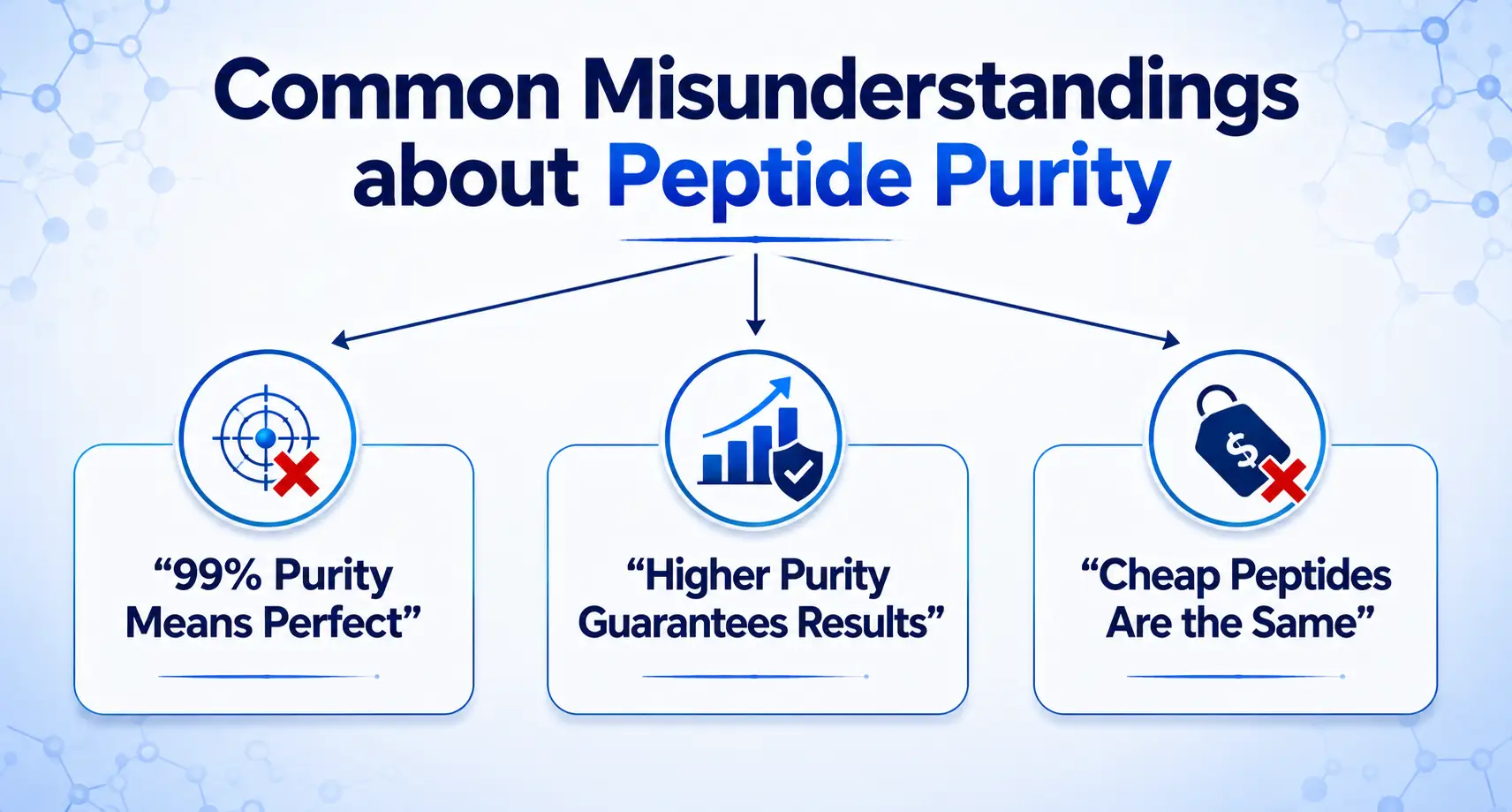
Chromatographic purity results can be misunderstood when they are treated as measurements of total sample composition or guarantees of experimental performance.
“99% Purity Means Perfect”
No. A reported 99% HPLC purity value means the principal peak accounts for approximately 99% of the integrated signal under the stated method. It does not establish that every possible impurity has been detected or excluded.
“Higher Purity Guarantees Results”
Higher purity may support better consistency, but it does not guarantee outcomes in research settings. Researchers typically evaluate compounds alongside preparation methods, research goals, and testing transparency.
Peptide Purity and Supporting Documentation
A reported purity percentage should be interpreted alongside the analytical method, sample identity and relevant material specifications. These details help researchers understand what the measurement establishes and which questions require additional testing.
Broader supplier criteria are covered in the Where to Buy Research Peptides in Australia guide.
Does Higher Peptide Purity Always Mean Better Research Material?
Not necessarily. Higher analytical purity can reduce certain detectable impurities, but suitability also depends on correct molecular identity, formulation, stability, analytical method, batch consistency and the requirements of the specific experiment.
Analytical purity does not establish therapeutic approval, safety or suitability for personal use. The distinction is explained further in the Research Use Only Peptides guide.
FAQs About Peptide Purity
What does peptide purity mean?
Peptide purity is an analytical measurement describing the relative amount of the principal peptide component detected under specified test conditions. Its interpretation depends on the analytical method used.
What does a reported 99% peptide purity result mean?
In chromatographic analysis, a reported value near 99% generally indicates that the principal detected peak represents approximately 99% of the integrated signal under the stated method conditions. It should not automatically be interpreted as absolute mass composition.
Does higher purity always mean better research material?
No. Purity is only one characteristic. Molecular identity, analytical methodology, formulation, stability, batch consistency and experimental requirements should also be considered.
How is peptide purity commonly evaluated?
High-performance liquid chromatography is commonly used to assess chromatographic purity. Mass spectrometry may provide complementary information about molecular mass and identity.
Can HPLC confirm peptide identity by itself?
Not completely. HPLC provides chromatographic information about detected components, while additional analytical methods such as mass spectrometry can provide supporting evidence about molecular identity.
Why does batch-specific purity documentation matter?
Batch-specific documentation allows laboratories to link analytical results to the material actually being evaluated and helps identify differences between production lots.
What information should a peptide COA contain?
Relevant information may include compound identity, batch or lot number, analytical result, testing method and test date. The reported data should correspond to the specific batch being supplied.
Can a peptide be proven to be absolutely 100% pure?
Analytical results are limited by the methods and detection conditions used. A reported purity value therefore should not be interpreted as proof that every possible impurity is absent.
Is purity alone enough to establish peptide quality?
No. Laboratories should consider purity together with molecular identity, analytical methods, storage conditions, formulation, batch traceability and experimental requirements.