
Laboratory peptide research examines molecular structure, receptor interactions, cellular signalling and enzyme activity. The choice of compound and method depends on the experimental question.
In laboratory settings, research peptides are commonly investigated because they can interact with highly specific biological pathways under controlled scientific conditions.
Unlike dietary supplements or approved medications, many research-only peptides are experimental compounds intended for laboratory investigation only. Peptides not for human use are commonly labeled for research purposes because scientists continue studying their biological properties, mechanisms, and potential applications in controlled environments.
What Are Peptides?
Peptides are chains of amino-acid residues connected through peptide bonds.
The peptide sequence records the order of those residues. Sequence, length and chemical modifications contribute to the properties examined in laboratory research.
Peptide properties vary with chain length, residue composition and chemical modifications. These differences can influence charge, solubility, stability and interactions with experimental targets. Research materials may be obtained from natural sources or produced synthetically.
Research compounds such as synthetic peptides are commonly explored because they may help researchers analyze highly targeted biological interactions instead of broad systemic effects.
Research Peptides Meaning Explained
Research peptides meaning refers to peptides used in laboratory and scientific research rather than approved therapeutic or consumer applications. These peptides are commonly synthesized for experimental investigation involving cells, tissues, receptors, enzymes, and signaling pathways.
Research-only peptides are valuable because they allow scientists to study specific biological mechanisms under controlled conditions. Researchers may investigate how certain peptides influence metabolic signaling, cellular repair pathways, endocrine communication, inflammatory responses, or tissue-related processes.
In many cases, research use peptides are studied in preclinical environments such as:
- Cell culture studies
- Molecular biology research
- Laboratory pathway analysis
- Experimental biological models
- Protein interaction studies
Many peptides for laboratory research are labeled as not intended for human consumption. This distinction is important because experimental compounds may still require additional safety evaluation, regulatory review, and scientific investigation.
The Research Peptides Australia guide explains Australian sourcing considerations and the supplier documentation needed to evaluate a batch.
What Does “Research-Only Peptides” Mean?
Research-only peptides are compounds intended strictly for scientific investigation and laboratory analysis. They are not approved medications and are not intended to diagnose, treat, cure, or prevent disease.
The term peptides not for human use indicates that these compounds are supplied for laboratory purposes only. Researchers use these materials to investigate biological activity, receptor interaction, cellular communication, and experimental mechanisms under controlled research conditions.
How Are Peptides Studied in Research?

Laboratory peptide research can examine receptor binding, enzyme interaction, intracellular signalling, structure–activity relationships and other compound-specific mechanisms. Functional assays may measure changes following exposure to a defined peptide, while analytical methods address questions such as molecular identity, purity and composition. These evidence types answer different questions and should not be treated as interchangeable.
Peptides as Biological Signaling Molecules
Many peptides function as signaling molecules inside the body. Signaling molecules help cells communicate and coordinate biological activity.
Researchers investigate peptide signaling because it may provide insight into:
- Cellular repair mechanisms
- Hormonal communication
- Appetite signaling
- Metabolic pathways
- Tissue regeneration pathways
- Inflammatory responses
Understanding these interactions may help scientists better understand how biological systems function under different experimental conditions.
Why Researchers Study Peptide Signaling
Researchers study peptide signaling because peptides can target highly specific pathways with precision. Unlike broader compounds, peptides may interact with selective receptors and signaling systems.
This specificity makes lab peptides valuable in research involving:
- Mechanism analysis
- Pathway investigation
- Cellular response studies
- Molecular communication
- Experimental biological models
Laboratory Applications of Research Peptides
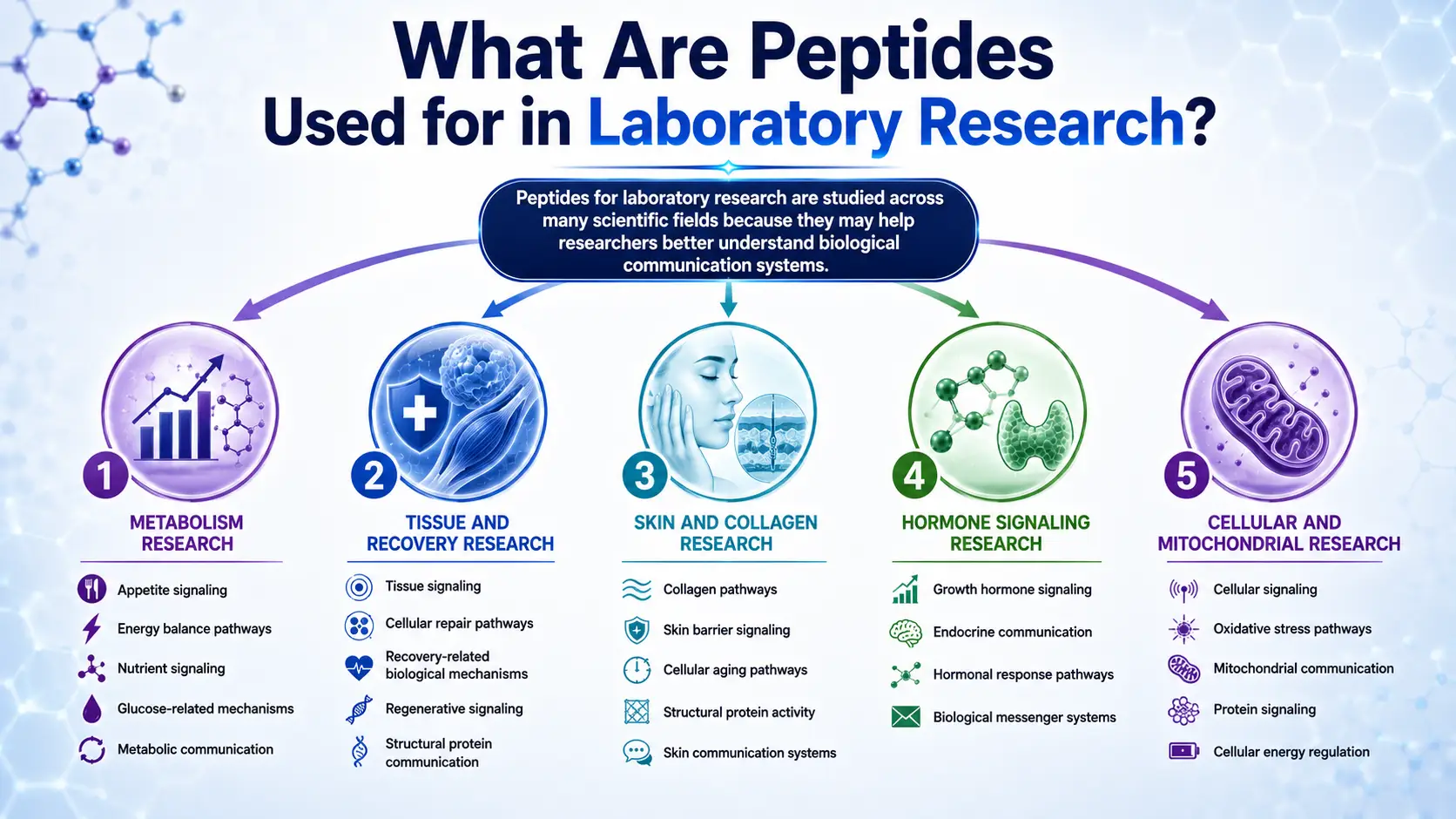
Research peptides can be examined across receptor pharmacology, cellular signalling, peptide chemistry, mitochondrial biology, endocrine signalling and structure–activity research. Experimental endpoints may include receptor potency, intracellular signalling, molecular stability, enzyme interactions, mitochondrial measurements and changes in defined cellular markers. Each compound requires its own experimental design, controls and evidence interpretation.
In multi-receptor pharmacology research, Tirzepatide can be examined through GIPR- and GLP-1R-related assays under controlled experimental conditions.
BPC-157 can be examined in compound-specific cellular and signalling models. Experimental observations should remain distinct from claims about recovery, treatment or personal use.
Peptides vs Proteins: What Is the Difference?
Peptides and proteins are both made from amino acids, but peptides are significantly smaller.
| Peptides | Generally shorter amino-acid chains | Defined sequence and molecular properties | Studied using analytical, biochemical, receptor and cellular methods |
| Proteins | Generally larger amino-acid polymers | More complex structural organisation | Studied through structural, biochemical and functional methods |
Because peptides are smaller, researchers often investigate them for targeted biological interaction and signaling analysis.
Common Research Categories
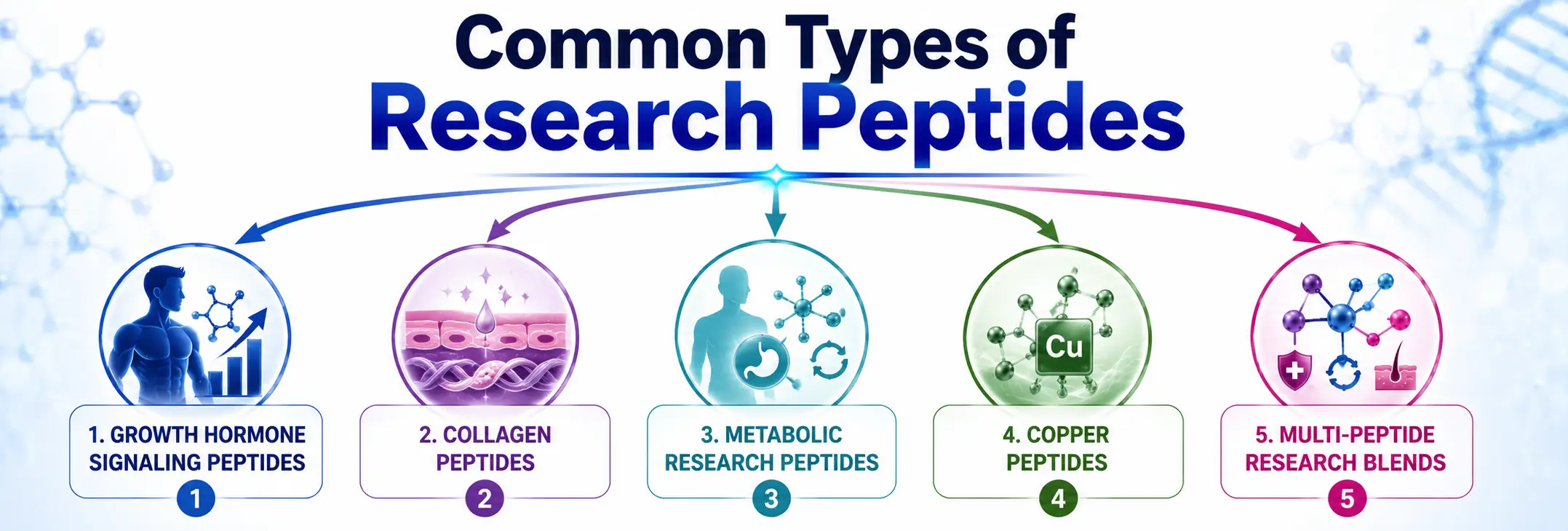
Research peptides can be grouped according to the experimental system being investigated, including receptor-signalling peptides, endocrine-signalling compounds, neuropeptides, copper-binding peptides, mitochondrial research compounds and multi-compound blends. These categories describe research context rather than therapeutic effect or suitability for personal use.
Why Are Research Peptides Important in Scientific Studies?
Research peptides are important because they allow scientists to investigate highly targeted biological mechanisms with precision.
Peptides may help researchers:
- Analyze receptor interaction
- Study signaling pathways
- Investigate hormonal communication
- Understand cellular responses
- Explore tissue-related mechanisms
Many biological systems rely on signaling molecules to coordinate activity. Because peptides often function within these signaling networks, they remain important research tools in modern laboratory science.
Researchers also value peptides because synthetic peptides can be designed with highly specific amino acid sequences for targeted experimental investigation.
How Are Peptides Produced for Research?
Many laboratory peptides are produced through controlled synthetic methods in which amino acids are assembled in a defined sequence, followed by cleavage, purification and analytical characterisation. The underlying chemistry and common production methods are explained in the Peptide Synthesis guide.
Laboratory peptide production may involve:
- Amino acid sequencing
- Peptide synthesis
- Purification processes
- Lyophilization
- Laboratory quality testing
Purity and consistency are important in peptide research because experimental accuracy depends on controlled laboratory standards.
What Researchers Evaluate Before Using Peptide Materials
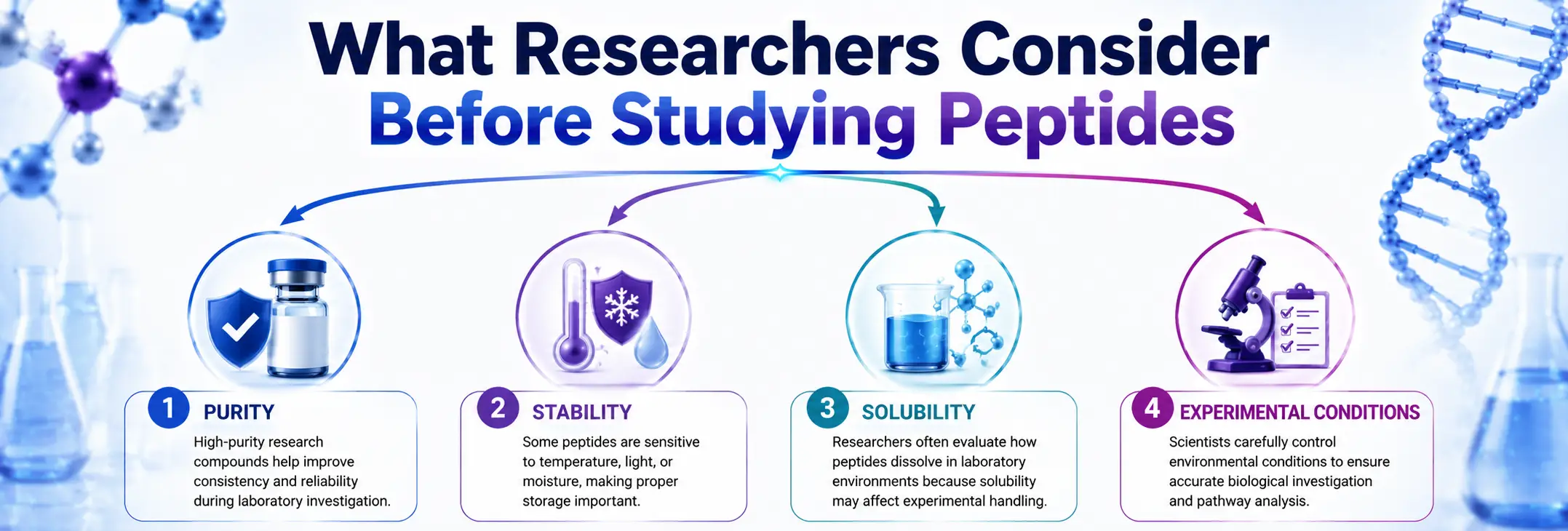
Laboratory evaluation may include molecular identity, purity, stability, solubility, storage requirements, batch consistency and compatibility with the intended experimental system. Batch-specific analytical information should be reviewed through an appropriate Peptide Certificate of Analysis (COA).
Research Use and Regulatory Distinction
Research-use peptides are supplied for laboratory or scientific investigation and should not be represented as approved therapeutic products. The distinction between research material and approved medicines is explained further in the Research Use Only Peptides guide. Research-use materials are not represented for human or veterinary consumption.
Researchers continue investigating many peptide compounds to better understand their biological activity, mechanisms, and potential scientific relevance.
Final Thoughts – What are peptides?
Research peptides are defined amino-acid compounds used to investigate molecular properties and biological mechanisms under controlled experimental conditions. Reliable interpretation depends on compound identity, sequence, purity, experimental design and the analytical or functional methods used. Laboratory findings should remain distinct from therapeutic claims, clinical effectiveness or personal use.
The Research Peptide Guides cover analytical documentation, preparation and storage.
The Peptide Comparison Guides compare compound-specific research questions and receptor profiles.
FAQs About Research Peptides
What are peptides in simple terms?
Peptides are short chains of amino acids that help regulate biological communication and signaling processes.
What is the research peptide definition?
The research peptide definition refers to peptides studied in scientific and laboratory environments for biological investigation.
What are research-only peptides?
Research-only peptides are experimental peptide compounds intended strictly for laboratory use and scientific analysis.
Are peptides proteins?
Peptides and proteins are both made of amino acids, but peptides are much smaller than proteins.
Why are peptides studied in laboratories?
Research peptides can be used to investigate receptor interactions, molecular signalling, enzyme activity, structure–activity relationships, stability and other defined experimental questions.
Are research-use peptides intended for human use?
No. Materials supplied as research-use peptides are intended for laboratory or scientific investigation and are not represented for human or veterinary consumption.
How are synthetic peptides made?
Synthetic peptides are produced through controlled laboratory synthesis using specific amino acid sequences.