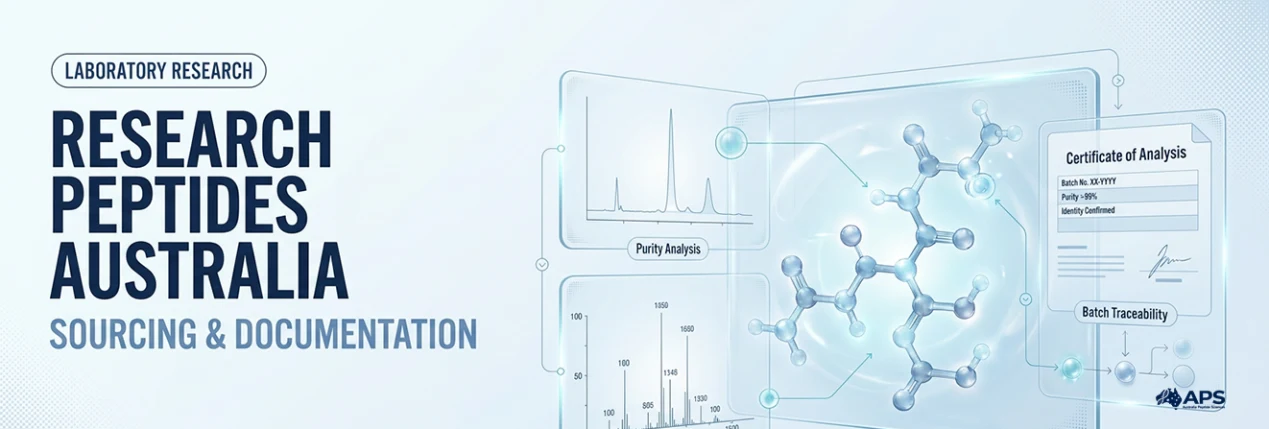
When sourcing research peptides in Australia, laboratories need to evaluate the material specification and supporting documentation. This guide focuses on batch identity, analytical evidence, supplier information, and handling requirements. A peptide’s name or a research-use label does not establish the composition of a particular sample or its regulatory status.
Quick Answer: How Should Laboratories Evaluate Research Peptides in Australia?
Research peptides Australia: laboratories should verify molecular identity, batch-specific analytical evidence, traceability, and handling requirements before accepting materials for research.
Supplier location or commercial availability alone does not establish quality or suitability for an experiment.
What Are Research Peptides?
Research peptides are compounds studied under controlled experimental conditions. Their amino-acid sequences and molecular modifications influence their properties and biological interactions.
Researchers examine natural and synthetic peptides using analytical chemistry, receptor assays, and cellular models. The term research peptide does not establish purity, safety, or regulatory approval.
Peptides vs Proteins: What’s the Difference?
Peptides and proteins consist of amino-acid residues connected by peptide bonds. They generally differ in chain length and structural complexity, although no universally accepted length threshold separates them.
| Feature | Peptides | Proteins |
| Structure | Usually shorter amino-acid chains | Generally larger amino-acid polymers |
| Primary structure | Defined residue sequence | Defined residue sequence |
| Research methods | Sequence analysis, mass spectrometry and biochemical assays | Structural, biochemical and functional analyses |
| Research focus | Molecular properties and specific interactions | Structure, function and larger biological systems |
Both peptides and proteins can participate in cellular signalling, structural and regulatory processes.
A peptide’s sequence describes the order of its amino-acid residues. However, chemical modifications must also be considered when identifying a compound.
Why Are Peptides Studied?

Peptide research investigates molecular recognition, receptor pharmacology, intracellular signalling, enzyme interactions, stability, and structure-activity relationships.
The experimental approach depends on the compound and research question. Findings from one peptide or laboratory model should not automatically be applied to another compound or clinical setting.
Common Research Areas Involving Peptides
Research peptides are commonly grouped according to their experimental focus.
| Research Area | Experimental Focus |
| Receptor pharmacology | Ligand binding, potency and signalling |
| Peptide chemistry | Sequence, mass, purity and stability |
| Cellular signalling | Pathway-specific responses |
| Mitochondrial research | Membrane function, respiration and cellular-energy assays |
| Neuropeptide research | Receptor interactions and neurological signalling |
| Multi-receptor compounds | Comparative receptor activity and signalling profiles |
These research areas use biochemical, cellular, analytical and appropriately validated animal models. Their findings do not independently establish clinical effectiveness.
The research peptide catalogue contains laboratory materials supplied for controlled research use.
Research Peptides vs Approved Therapeutic Peptides

A peptide’s chemical classification does not establish therapeutic approval, safety or effectiveness.
Research materials and approved medicines serve different purposes, as explained in the Research Use Only Peptides guide.
Approved therapeutic products are assessed under applicable quality, safety and efficacy requirements. As the TGA’s peptide-products guidance explains, a Research Use Only disclaimer does not automatically exempt a product from Australian rules governing therapeutic goods. Laboratories must assess analytical suitability and regulatory status separately.
The TGA’s peptide-products guidance explains that regulatory requirements depend on a product’s contents, presentation, promotion and intended use.
In Australia, a Research Use Only disclaimer does not automatically exempt a product from requirements governing the importation, manufacture, advertising or supply of therapeutic goods.
Laboratories must therefore distinguish analytical suitability from regulatory status. Both require independent evaluation.
Reading Laboratory Evidence When Sourcing Materials
Laboratory evidence helps verify peptide specifications. Chromatography assesses purity, mass spectrometry supports molecular identity, and receptor or cell-based assays evaluate biological responses. Purity alone does not establish biological activity.
Understanding Peptide Purity
Chromatographic purity is method-dependent: a reported percentage generally reflects the relative detector signal under specified conditions, not necessarily the component’s proportion by mass. Results depend on sample preparation and analytical settings.
Results depend on the detection method, sample preparation, and analytical conditions.
Even a high reported purity percentage does not independently establish:
- Complete molecular identity or the absence of every contaminant.
- Sterility, endotoxin status, or biological activity.
- Stability during transport and storage.
- Suitability for human or veterinary administration.
Laboratories should interpret purity alongside compound-specific identity testing and other relevant quality attributes.
Understanding the Peptide Certificate of Analysis (COA)
A Peptide Certificate of Analysis (COA) reports findings for an identified material or batch, potentially including molecular identity, chromatographic purity, methods, and specifications. Without a matching batch identifier and clear analytical methods, it provides limited evidence about the supplied material.
Analytical Methods and Their Limitations
| Method | What It Can Establish | Main Limitation |
| HPLC or UPLC | Chromatographic separation and reported purity | Cannot independently establish complete molecular identity |
| Mass spectrometry | Molecular mass and identity-related evidence | May not resolve every structural feature |
| Sequence analysis | Amino-acid sequence information | May not identify every modification or impurity |
| Receptor assays | Activity at a specified receptor system | Does not establish clinical effectiveness |
| Cell-based assays | Responses under defined conditions | May not predict whole-organism outcomes |
Selecting suitable peptide analytical methods depends on molecular structure and research purpose. Modified peptides may require complementary tests to characterise identity and relevant impurities.
Laboratory Product Specifications and Batch Traceability
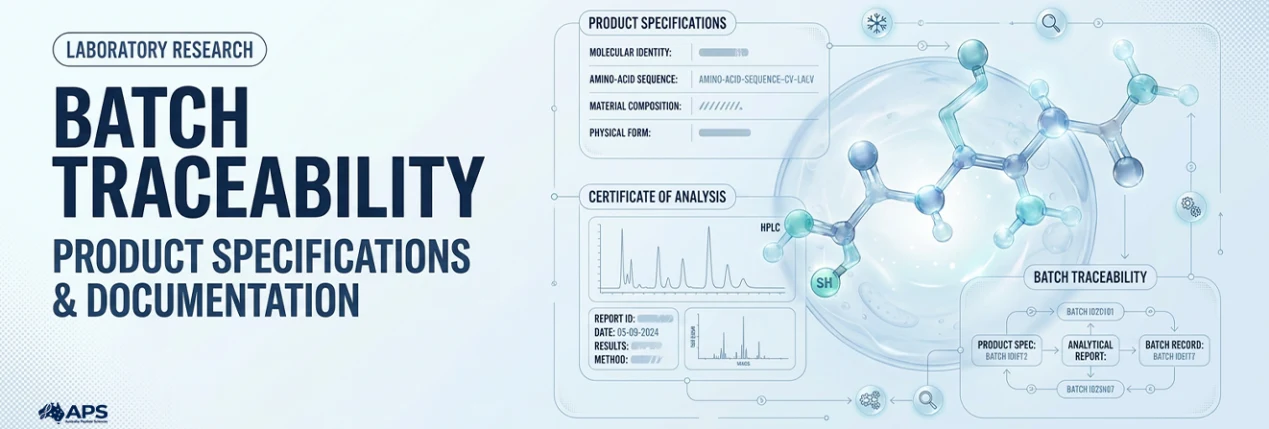
Before procurement, laboratories should compare peptide product specifications with experimental requirements. A product name may not distinguish molecular forms, modifications, or formulations that affect suitability.
What Information Should a Peptide Product Page Provide?
A research peptide product page should present relevant laboratory information, including:
- Compound identity: Name, sequence and molecular modifications where relevant.
- Material specification: Physical form, stated quantity and composition.
- Analytical evidence: Reported purity, testing methods and available results.
- Batch documentation: Lot identifier and corresponding analytical records.
- Handling requirements: Compound-specific storage and transport information.
- Intended use: Research category and applicable restrictions.
For modified compounds such as IGF-1 LR3, the molecular form matters because structural modifications may influence receptor interactions and experimental interpretation.
Why Batch Traceability Matters
Accurate peptide batch traceability links each supplied lot to its analytical records. Differences in synthesis, purification, formulation, or storage may affect reproducibility. Laboratories should confirm that batch identifiers match across the material and its reports before acceptance.
For a closer look at laboratory peptide testing, watch this scientific overview of peptide characterization and its key analytical methods.
Examples of Peptides in Cellular and Molecular Research
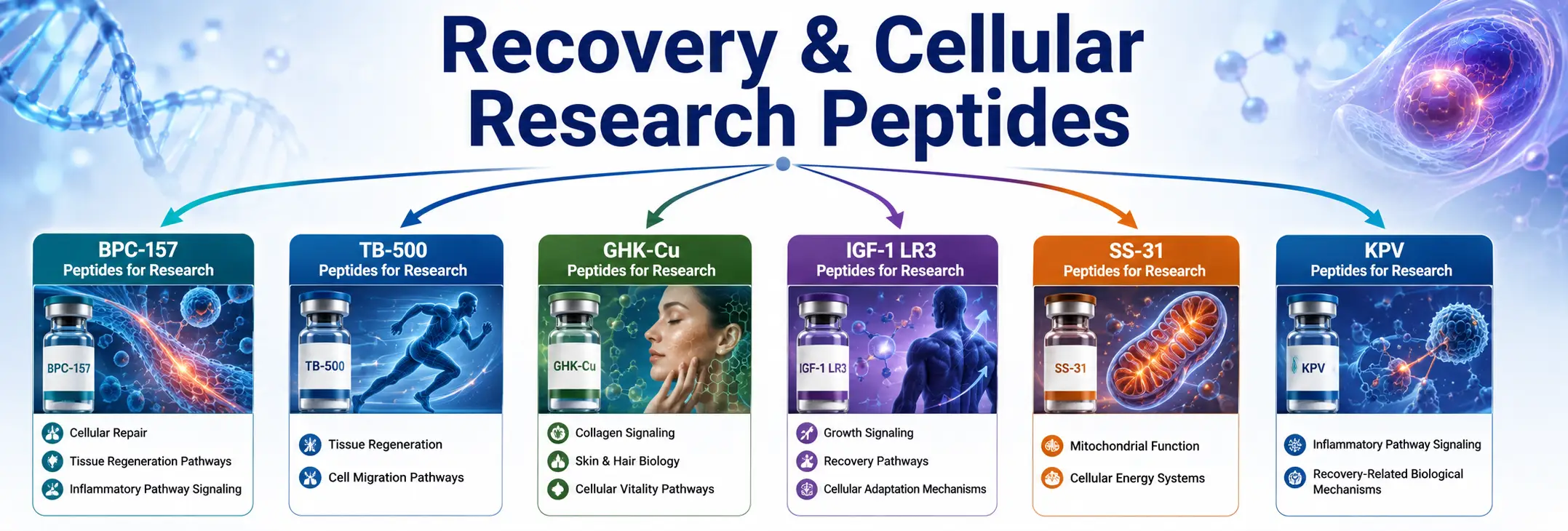
Research peptides differ in molecular structure, receptor targets, and experimental applications. Each compound requires its own supporting evidence and appropriate experimental controls.
Examples of research contexts include:
- Cellular and extracellular-matrix research: BPC-157 is examined in cellular signalling models, while TB-500 is studied in actin-associated biology and cellular migration. GHK-Cu is investigated in extracellular matrix and signalling models.
- Growth-factor signalling: IGF-1 LR3 is studied through IGF-related receptor systems.
- Mitochondrial research: SS-31 is investigated in mitochondrial membrane models, while MOTS-C is examined in mitochondrial-derived peptide and cellular-energy research.
- Inflammatory signalling: KPV is studied in selected cellular models involving inflammatory pathways.
Findings for full-length thymosin beta-4 should not be attributed automatically to TB-500, nor should results from one molecular form or model be generalised to another. These examples describe research contexts, not therapeutic outcomes.
Growth-Hormone Signalling Research Peptides

Some research peptides are examined through growth-hormone-related receptor systems.
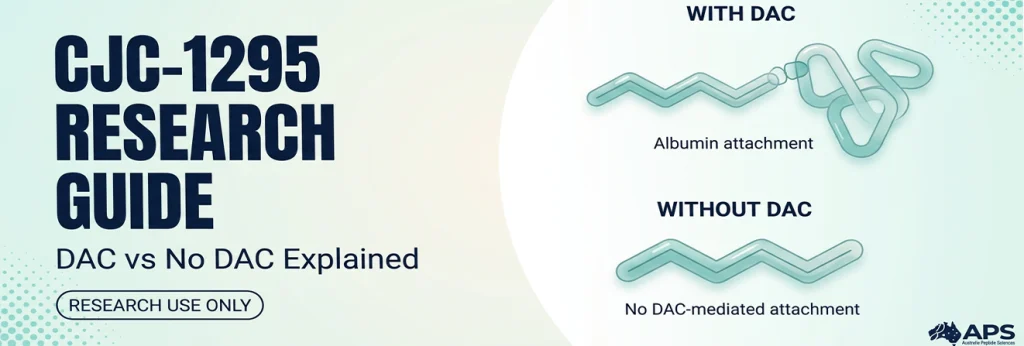
CJC-1295 compounds are investigated through GHRH-receptor pathways, while Ipamorelin and GHRP compounds are examined through ghrelin-receptor or growth-hormone-secretagogue receptor systems.
Tesamorelin is also associated with GHRH-receptor research.
Experimental comparisons should focus on molecular structure, receptor targets, signalling duration, and assay conditions rather than personal-use or performance-related claims.
GLP-1 and Multi-Receptor Peptide Research
Retatrutide is investigated at GIPR, GLP-1R, and GCGR, while Tirzepatide targets GIPR and GLP-1R.
Although these compounds share certain receptor targets, they are not interchangeable in experimental assays.
The GLP-1 Peptide Research Guide examines this research category in greater detail, including relevant laboratory methods and receptor signalling.
Neuropeptide and Cellular Signalling Research
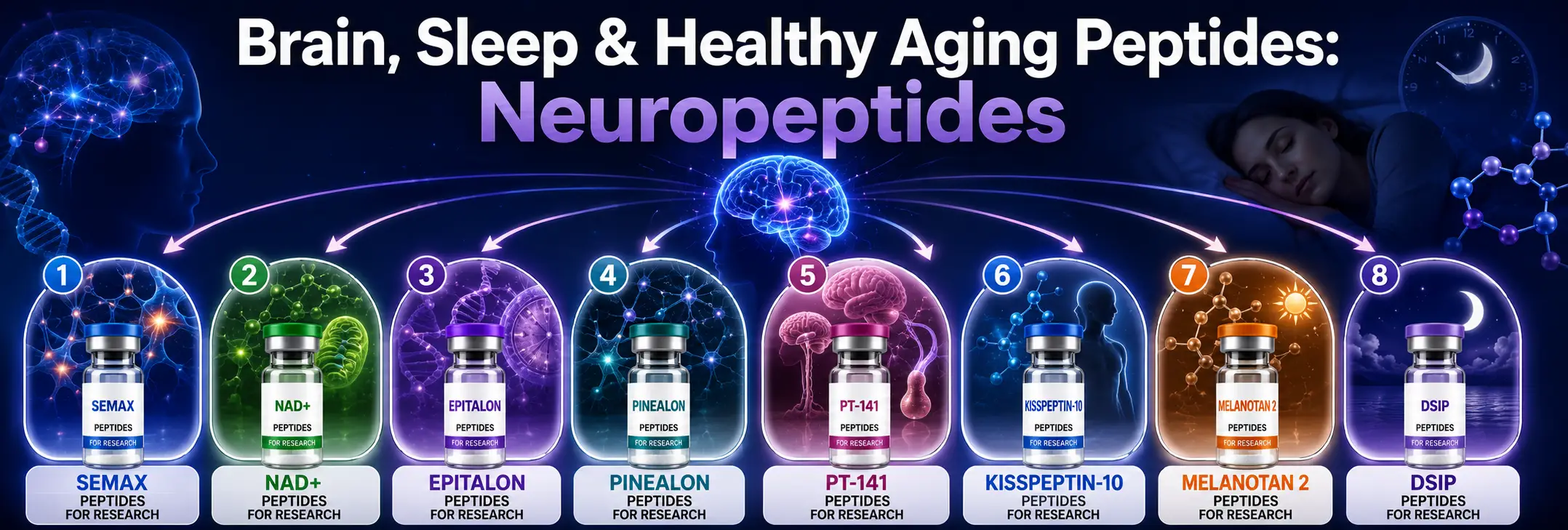
Neuropeptide research examines receptor interactions, neural communication, neuroendocrine pathways and related cellular processes.
Compounds such as Semax, Pinealon, Kisspeptin-10 and melanocortin-related peptides differ in molecular structure, receptor targets and supporting evidence.
Although some experimental models investigate signalling associated with cognition, sleep or ageing, laboratory findings should not be interpreted automatically as improvements in human health or neurological function.
Visit our Shop.
Research Peptide Blends
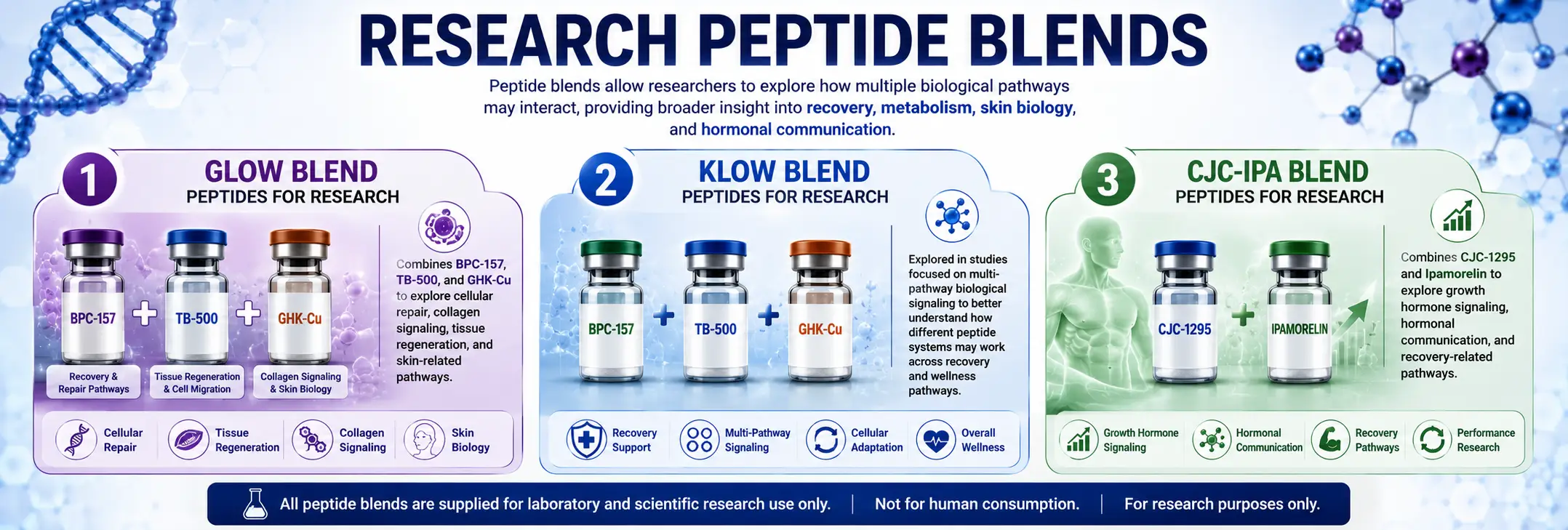
Peptide blends require verification of each component’s identity, quantity, and potential effects on the assay. Findings for individual compounds cannot automatically be applied to mixtures. Analytical methods should distinguish the components, with batch documentation and suitable experimental controls.
Laboratory Diluent Materials
Bacteriostatic water is used as a laboratory preparation material in suitable research workflows.
Diluent selection depends on formulation compatibility, documented material requirements, and the intended experimental procedure.
Differences between common diluent formulations are discussed in Bacteriostatic Water vs Saline.
The presence of a preservative does not establish compatibility with every peptide. Researchers should consider whether the selected vehicle influences stability, analytical performance, or biological responses.
Storage and handling conditions should be based on compound-specific evidence rather than universal recommendations.
How to Evaluate a Research Peptide Supplier in Australia

For laboratory peptide sourcing, evaluate molecular identity, batch-specific analytical evidence, product specifications, storage requirements, and research-use-only restrictions before accepting materials.
Supplier Transparency and Documentation
Suppliers should document compound identity, specifications, available analytical results, and procedures for resolving missing information. Claims such as high purity or laboratory grade need supporting evidence; website presentation alone cannot establish research peptide quality.
Australian Laboratory Logistics and Material Handling
Australian fulfilment may shorten transit times, but it does not establish analytical quality. Laboratories should verify packaging, material identity, and peptide storage requirements for each compound.
Relevant considerations include:
- Packaging appropriate to the material’s specifications.
- Consistent batch identification across supplied documents.
- Protection against known environmental stability risks.
- Storage information for transport and laboratory receipt.
- Procedures for assessing damaged or incorrectly identified materials.
Lyophilised and solution-based formulations may require different conditions. Assess temperature, moisture, oxidation, and container interactions using compound-specific evidence; shorter transit does not guarantee suitable handling.
Common Procurement Risks in Research Peptide Sourcing
Procurement risks include unclear compound identity, unsupported purity claims, missing batch identifiers, and inconsistent records. Price or supplier reputation cannot replace analytical evidence. Resolve documentation discrepancies before accepting material into a controlled experiment.
Research Peptide Supplier Verification Checklist
| Verification Point | Why It Matters |
| Compound identity | Confirms the specified molecular material |
| Purity documentation | Provides method-dependent composition data |
| COA availability | Supports batch-specific analytical review |
| Batch consistency | Helps identify differences relevant to reproducibility |
| Product specifications | Clarifies physical form, composition and relevant properties |
| Storage information | Supports appropriate material handling |
| Packaging and transport | Helps assess material condition |
| Research-only positioning | Clarifies intended use without independently establishing legal compliance |
These checks support laboratory material evaluation but do not establish therapeutic approval, clinical suitability or biological effectiveness.
Australia Peptide Sciences as a Research Supplier
Australia Peptide Sciences supplies peptide compounds and laboratory materials for research and development. Laboratories should compare listed specifications and available batch-specific analytical documentation with their experimental requirements. Materials are described for laboratory research, not human or veterinary consumption.
Additional information about molecular mechanisms and compound differences is available in the Peptide Comparison Guides.
The broader Research Peptide Guides provide information about individual compounds, analytical considerations and laboratory research contexts.
Key Takeaways on Research Peptides Australia
Research peptides Australia: laboratory sourcing decisions should prioritise molecular identity, analytical evidence, batch traceability and compound-specific handling requirements.
Documented suitability matters more than supplier location or commercial claims. Research-only positioning does not independently establish regulatory compliance or therapeutic safety.
Explore Australia Peptide Sciences
FAQs About Sourcing Research Peptides in Australia
What documents should a laboratory request from a supplier?
Request the material specification, batch identifier, analytical documentation, and handling information relevant to the intended experiment.
Does Australian fulfilment establish analytical quality?
No. Fulfilment location and analytical quality are separate matters. Evaluate the batch documentation and methods rather than using location as a quality measure.
What does a Certificate of Analysis establish?
It reports the results and specifications stated for the identified batch. Its value depends on the methods, traceability, and information actually included.
Does a high purity percentage confirm molecular identity?
Not by itself. Purity and identity answer different analytical questions and should be supported by appropriate methods.
Why should the batch number match across documents?
Matching identifiers help link the supplied material to the analytical report. A report for a different batch does not characterise the sample received.
What if handling information is missing?
Resolve the missing specification before incorporating the material into a validated laboratory workflow. Conditions should not be inferred from an unrelated peptide.
Does a research-use label establish regulatory approval?
No. The intended use and applicable regulatory requirements require separate consideration.
Where can laboratories find APS batch documentation?
Review the documentation associated with the supplied batch and check it against the laboratory’s material specification.
Does high purity alone establish research quality?
No. Purity should be considered alongside molecular identity, analytical methods, storage conditions, and experimental suitability.
What information should a peptide product page provide?
It should identify the compound, relevant specifications, physical form, handling requirements, and available batch-specific analytical documentation.
Sources
- Zheng B, Wang X, Guo M, Tzeng CM. Therapeutic Peptides: Recent Advances in Discovery, Synthesis, and Clinical Translation. International Journal of Molecular Sciences. 2025;26(11):5131. DOI: 10.3390/ijms26115131.
- Wang L, et al. Therapeutic peptides: current applications and future directions. Signal Transduction and Targeted Therapy. 2022;7:48. DOI: 10.1038/s41392-022-00904-4.
- Therapeutic Goods Administration. Peptide products: Australian regulatory guidance. Australian Government.
- Therapeutic Goods Administration. How we regulate therapeutic peptide products. Australian Government.