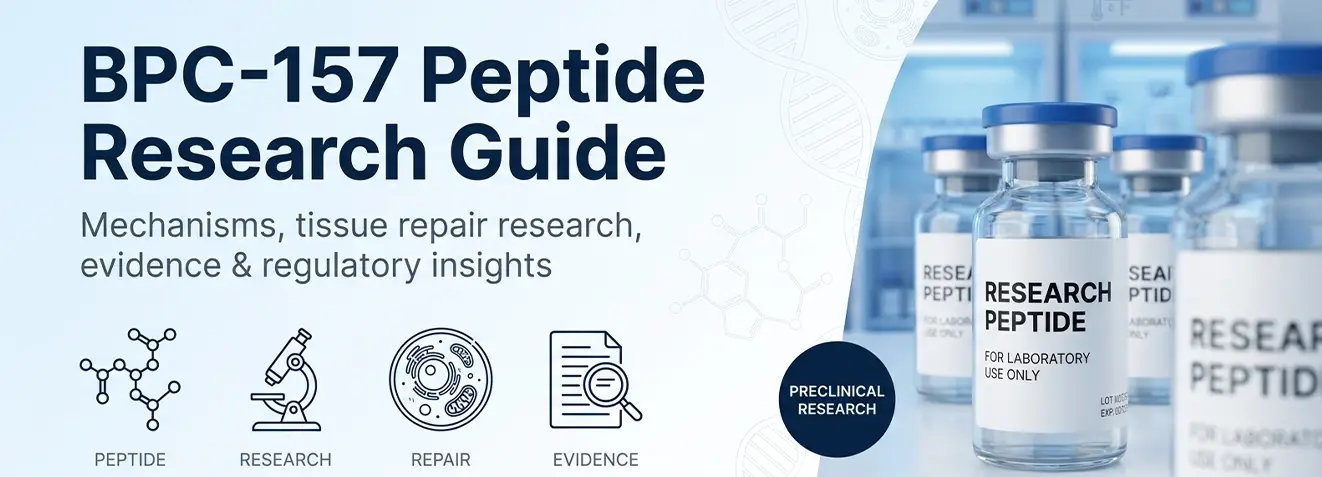
BPC-157 peptide has been investigated across a broad range of preclinical models and is frequently discussed in regenerative research.
This The BPC-157 peptide is one of the most heavily investigated research compounds in regenerative science, and one of the most consistently misrepresented outside the laboratory. covers what the molecule actually is, which mechanisms have been characterised in controlled settings, what the tissue repair and inflammation literature genuinely demonstrate, where the evidence stops, and how BPC-157 is classified under Australian regulation.
It is written for researchers and laboratory personnel who want the primary-literature picture rather than the marketing version.
Important: BPC-157 is not registered with the Therapeutic Goods Administration and is not approved for human therapeutic use in Australia.
What Is the BPC-157 Peptide?
BPC-157 stands for Body Protection Compound 157, named after a patented family of gastroprotective peptides of 8 to 15 residues and 900 to 1,600 daltons. It is the 15-residue member that attracted sustained research attention.
The same molecule appears under several designations, which is a practical problem for anyone reviewing the literature:
| Designation | Context in which it appears |
| BPC-157 / BPC 157 | Dominant designation; hyphenation varies across journals |
| PL-10 | Early pharmaceutical development designation |
| PL 14736 | Used in inflammatory bowel disease research |
| PLD-116 | Alternative development code |
| Bepecin | Proposed non-proprietary name |
A search on “BPC-157” alone will miss part of the corpus, particularly the earlier inflammatory bowel work published under PL 14736. Any serious BPC-157 peptide research review needs to search all designations.
1. The Amino Acid Sequence
For broader context, see our guide on therapeutic peptides.
BPC-157 is a linear chain of fifteen residues:
Gly-Glu-Pro-Pro-Pro-Gly-Lys-Pro-Ala-Asp-Asp-Ala-Gly-Leu-Val
Four structural features explain much of its experimental behaviour:
- Three consecutive proline residuesnear the N-terminus impose conformational rigidity and resist enzymatic cleavage, which accounts for its unusual stability relative to most short peptides.
- No cysteine residues, so no disulfide bridging or oxidative crosslinking during handling.
- Multiple charged residues(Glu, Lys, two Asp) giving good aqueous solubility across a normal pH range.
- Molecular weightof approximately 1,419 daltons.
2. Is BPC-157 Naturally Occurring or Synthetic?
The parent protein occurs in human gastric juice. The specific fifteen-residue sequence used in research is not known to occur independently in nature and is produced synthetically.
“Derived from a naturally occurring protein” is accurate; “a naturally occurring peptide” is not.
The distinction affects how the compound is classified by regulators and how its safety profile should be weighted. A synthetic fragment with no established endogenous role does not inherit the safety assumptions attaching to an endogenous molecule.
3. BPC-157 Structural Uniqueness and Receptor Gap
BPC-157 does not share meaningful homology with other known gastric peptides, with at least one analysis reporting no matches in the Protein BLAST database. No specific high-affinity receptor has been identified, meaning all described mechanisms are pathway-level observations rather than receptor-ligand characterisations.
That gap sits underneath every mechanistic claim made about the compound.
4. BPC-157 Physicochemical Properties
| Property | Detail |
| Class | Synthetic pentadecapeptide |
| Residues | 15 |
| Sequence | Gly-Glu-Pro-Pro-Pro-Gly-Lys-Pro-Ala-Asp-Asp-Ala-Gly-Leu-Val |
| Approximate molecular weight | ~1,419 Da |
| Solubility | Freely soluble in water at normal pH |
| Reported gastric acid stability | Resistant to degradation in gastric fluid ex vivo for extended periods |
| Reported plasma stability | Roughly one third of intact peptide remaining after 60 minutes ex vivo |
| Typical research form | Lyophilised powder |
| Regulatory status (Australia) | Schedule 4, not on the ARTG |
| WADA status | Prohibited |
Acid stability is the property that generated most downstream interest, though resistance to degradation in an ex vivo assay is not the same as demonstrated oral bioavailability in a living organism.
A Short History of BPC-157 Research

The origin of this compound explains a great deal about the shape of the current evidence base, including its weaknesses.
1. 1990s: gastroenterology origins
BPC-157 emerged from Croatian gastroenterology research in the early 1990s, when investigators studying gastric secretions identified a peptide sequence with apparent protective effects on the gastrointestinal lining.
The framing was entirely gastroprotective, and the early papers drew modest attention as an unremarkable line of enquiry into mucosal protection.
2. Expansion beyond the gut
Through the late 1990s and 2000s, the same group widened the scope progressively from gastric mucosa to intestinal tissue, surgical wounds, tendon and nerve, producing a corpus extremely broad in tissue types but narrow in research groups.
A large proportion of published BPC-157 research traces back to a small number of affiliated investigators, and this literature has less independent replication than the raw publication count suggests.
3. The clinical pathway that stalled
During the 2000s, under the designation PL 14736, the compound entered early-stage clinical development for inflammatory bowel disease, but those trials never reached published Phase III outcomes, with studies appearing to have been discontinued without conclusions reaching the literature.
The absence of published outcomes limits assessment of the programme, although it does not by itself establish whether the trials succeeded or failed.
4. 2015 onward: the divergence
From roughly 2015, academic work continued accumulating preclinical papers, including valuable mechanistic research on VEGFR2 signalling published in 2017, while the compound simultaneously entered popular consciousness through podcasts, forums and online retail, where rodent findings were compressed into confident claims.
Regulatory attention followed, and the current situation in which BPC-157 is simultaneously a legitimate research compound and a heavily marketed unapproved substance is the direct result of that divergence.
How the BPC-157 Peptide Works: Mechanisms of Action
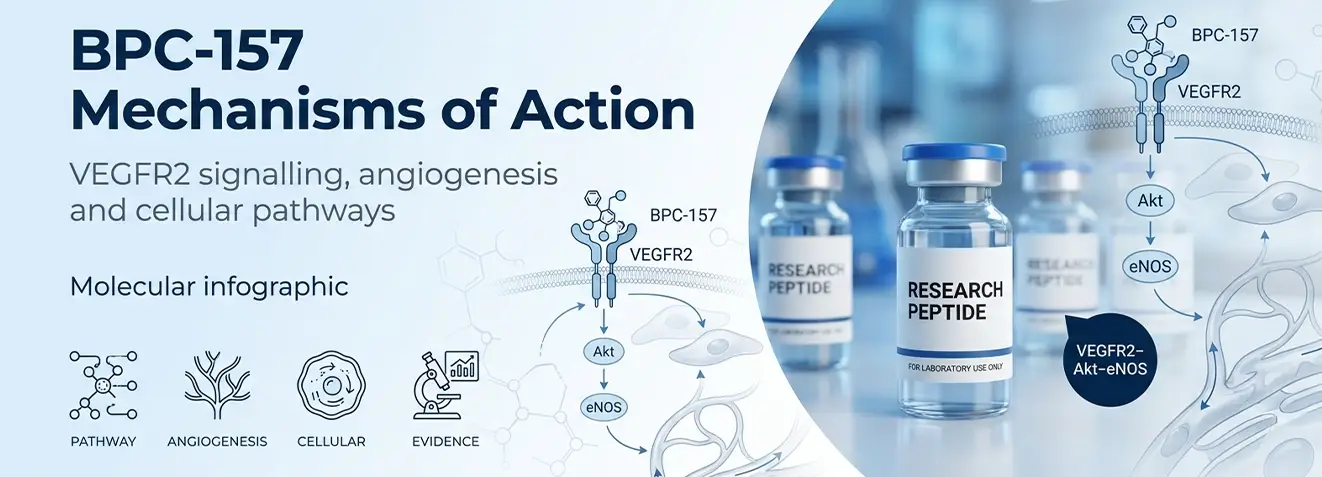
This is the heart of any serious BPC-157 guide, and the strongest part of the evidence base.
The mechanisms fall into four categories: vascular (angiogenesis and perfusion), matrix and cellular (collagen, fibroblasts, cell migration), protective (antioxidant and cytoprotective), and neuromodulatory (dopaminergic and serotonergic).
The vascular mechanism is by far the best characterised and probably underpins several of the others.
1. Angiogenesis and the VEGFR2–Akt–eNOS pathway
The pro-angiogenic work is the most rigorous mechanistic research on the compound.
| Experiment | Model | Key finding |
| Chorioallantoic membrane assay | Chick embryo CAM | Blood vessel formation increased ~129–152% over control at 0.01–0.1 μg |
| Human endothelial confirmation | HUVECs in vitro | Tube formation increased at 0.1–1 μg/mL; 1 μg/mL optimal |
| In vivo correlation | Rat limb injury | Greater vascular density in damaged tissue after one week |
| Receptor mechanism | Cell culture | VEGF-A unaffected; VEGFR2 increased intracellularly, activating VEGFR2–Akt–eNOS cascade |
| Inhibition experiment | HUVECs + dynasore | Pathway blocked, tube formation ceased; strongest causal evidence in the corpus. |
2. Nitric oxide signalling
Endothelial nitric oxide synthase sits at the end of the pathway above, placing nitric oxide at the centre of the proposed vascular activity.
In an injury context, it acts as a potent vasodilator, inhibits platelet aggregation, modulates leukocyte adhesion, and contributes to mucosal integrity in the gastrointestinal tract.
Two tools have probed this dependency directly: L-NAME, a nitric oxide synthase inhibitor, worsened outcomes across several injury models, and BPC-157 ameliorated that impairment; L-arginine served as a positive comparator in the same designs.
The precise point of interaction remains unresolved, but the pattern suggests BPC-157 acts within or alongside the nitric oxide system rather than through a separate route.
3. Growth factor modulation
In intestinal epithelial cell lines, BPC-157 stimulated mRNA for EGR-1, with the related protein NAB2 increasing shortly afterwards and EGR-1 protein content also rising.
Both changes paralleled PDGF-BB, an endogenous growth factor, though considerably higher peptide concentrations were required for comparable responses.
EGR-1 is a transcription factor involved in wound response, extracellular matrix production and cell proliferation, which is consistent with the granulation and collagen findings in the tissue repair section below.
The concentration requirement is worth flagging: effects appearing only well above comparator growth factor levels raise legitimate questions about physiological relevance.
4. Collagen synthesis and fibroblast behaviour
Tendon fibroblasts exposed to BPC-157 at 2 μg/mL and then explanted grew faster than untreated fibroblasts within two days, with the effect accompanied by increased oxidative stress resistance, concentration-dependent increases in FAK and paxillin, and markedly increased F-actin formation changes that describe a cell more capable of migrating into a wound site.
The critical caveat is that fibroblasts in isolation ex vivo were unaffected; only explanted cells responded, and a separate study found cultured tendocytes similarly unresponsive to BPC-157 alone.
This suggests the peptide does not act as a simple growth stimulus but either requires signalling partners present in the tissue environment, or removes an inhibitory influence, supported by the finding that the growth-inhibitory effect of 4-hydroxynonenal was negated by BPC-157 in these cells.
5. Cytoprotective and antioxidant activity
Proposed cytoprotective activity includes neutralisation of reactive oxygen species, reduction of lipid peroxidation products, preservation of cellular integrity under toxic challenge, and attenuation of inflammatory mediator activity.
This effect appears across otherwise unrelated models, from gastric lesion studies to neurotoxin work, which partly explains the breadth of settings in which the compound has been tested.
That generality cuts both ways: broad protective activity can indicate a fundamental cellular mechanism, or a non-specific effect difficult to translate into a targeted intervention.
6. Neurotransmitter system interactions
Dopaminergic. BPC-157 attenuated stereotyped amphetamine-induced behaviours in rodents at the higher of two tested doses, and mitigated heightened sensitivity in animals previously exposed to haloperidol. No binding to dopamine receptors has been reported, and the mechanism remains unresolved.
Serotonergic. Subcutaneous administration produced region-specific changes in serotonin synthesis within 40 minutes.
Increases in the substantia nigra reticulata and medial anterior olfactory nucleus, decreases in the hypothalamus, hippocampus, and dorsal thalamus, with the substantia nigra increase persisting after a week while the decreases did not.
These changes form the basis of the brain–gut axis hypothesis advanced for BPC-157, given serotonin’s substantial presence in the gastrointestinal tract.
7. Mechanism summary
| Mechanism | Evidence quality | Key experimental support |
| VEGFR2–Akt–eNOS angiogenesis | Strong | CAM assay, HUVEC tube formation, dynasore inhibition |
| Nitric oxide system interaction | Moderate to strong | L-NAME antagonism across multiple models |
| EGR-1 growth factor signalling | Moderate | Intestinal cell line mRNA and protein data |
| Fibroblast migration via FAK/paxillin/F-actin | Moderate | Explant studies with negative controls |
| Cytoprotection and antioxidant activity | Moderate | Consistent across many models, mechanism non-specific |
| Dopaminergic modulation | Limited | Behavioural rodent data, no receptor binding identified |
| Serotonergic modulation | Limited | Regional synthesis measurement, interpretation unclear |
| Specific receptor identification | Absent | No high-affinity receptor identified |
Researchers comparing peptide research profiles across different compound classes may also find the Epitalon peptide a useful reference.
A necessary caution: a plausible mechanism demonstrated in vitro is not evidence of a clinical outcome.
BPC-157 Tissue Repair Research
BPC-157 tissue repair research is the largest driver of scientific interest in this peptide, although the gap between preclinical findings and clinical evidence remains substantial.
1. Why connective tissue is a research target
Tendon and ligament repair remains a genuine unsolved problem, which is why any compound with pro-angiogenic activity attracts attention here. The core challenges are:
- Hypovascularitylimited blood supply slows delivery of oxygen, nutrients and repair cells
- Low metabolic turnovermatrix remodelling takes considerably longer than in other tissues
- Poor spontaneous repair qualityhealing tendon frequently forms disorganised scar tissue with inferior mechanical properties
- Limited pharmacological optionsstandard management is largely loading modification, physiotherapy and time
2. Tendon models
Achilles tendon transection. The most cited work involved complete surgical transection of the rat Achilles tendon, with reported accelerated healing and visually confirmed reduction in injury dimensions relative to controls.
The same programme reported stimulation of tendocyte growth in vitro.
Tendon-to-bone detachment. A more demanding model, requiring reconstitution of the enthesis, the specialised transitional zone between tendon and bone with graded mineralisation. Reattachment and healing were reported with BPC-157 treatment.
Explant outgrowth. The fibroblast work above provides the cellular counterpart: increased outgrowth, migration capacity and survival under oxidative stress.
3. Ligament models
Medial collateral ligament transection in rats tested BPC-157 across topical, oral and injected routes within a single design, with healing effects reported for all three.
That route comparison is the notable element. A compound working topically, orally and systemically in one model either has unusually good distribution properties, or produces its effect through a mechanism less dependent on local concentration than would normally be assumed.
Neither interpretation has been resolved experimentally.
4. Muscle models
Two injury types have been studied, representing different repair challenges.
Transection, such as surgical cuts to the quadriceps, is a clean disruption of tissue continuity.
Crush injury to calf musculature produces diffuse damage across a volume of tissue with intact but compromised structures, more inflammation, and different clearance requirements.
Accelerated healing was reported in both, by injection and topically.
5. Bone and osteogenic models
Rabbit bone defect research reported improved healing with BPC-157 administration.
Bone repair runs through haematoma formation, inflammatory signalling, soft callus formation, hard callus mineralisation and remodelling, so an effect across that sequence is more complex than accelerating a single phase, worth noting despite the small dataset.
Osteoblast activity enhancement has also been described.
6. Wound healing and collagen organisation
Surgical sponge implantation studies showed BPC-157 initially outperforming platelet-derived growth factor at four days and roughly equipotent by eight days, suggesting an effect on the early phase of repair rather than a uniformly greater total effect.
7. Tissue repair research summary
| Tissue | Model | Species | Reported finding | Evidence tier |
| Achilles tendon | Complete transection | Rat | Accelerated healing | Preclinical in vivo |
| Achilles enthesis | Detachment from bone | Rat | Reattachment and healing | Preclinical in vivo |
| Medial collateral ligament | Transection | Rat | Healing across topical, oral and injected routes | Preclinical in vivo |
| Skeletal muscle | Transection | Rat | Accelerated repair | Preclinical in vivo |
| Skeletal muscle | Crush | Rat | Accelerated repair | Preclinical in vivo |
| Bone | Defect model | Rabbit | Defect healing | Preclinical in vivo |
| Tendon fibroblast | Explant and culture | Rat | Increased outgrowth and migration | In vitro |
| Granulation tissue | Surgical sponge | Rat | Improved collagen organisation | Preclinical in vivo |
8. Critical appraisal: why these results do not transfer directly
- Model design
surgical transection is clean and acute; human tendinopathy is chronic, degenerative and characterised by accumulated inflammatory changes. A compound accelerating repair of a clean cut has not been shown to reverse chronic degeneration.
1. Dose scaling
Rodent doses are frequently high relative to body weight, and allometric scaling to humans is not straightforward.
2. No comparator arms
Very few studies test BPC-157 against interventions with existing human evidence.
3. Outcome measures
histological scoring and gross visual assessment are not functional outcomes; a histologically improved tendon is not automatically a mechanically stronger one.
4. Publication concentration
A substantial share of this work originates from a limited number of affiliated groups.
5. Natural history confounding
Many of these injuries improve over time regardless of intervention, which anecdotal human reports online do not control for.
BPC-157 Inflammation Research
BPC-157 inflammation research is, by volume and consistency, the strongest part of the preclinical evidence base, and the part receiving the least public attention despite representing the compound’s original research application.
1. Gastrointestinal inflammation models
TNBS-induced colitis
BPC-157 reduced colonic damage with improvements in both inflammatory biomarkers and visible tissue damage.
Cysteamine-induced lesions
BPC-157 attenuated duodenal and colonic ulceration across multiple published studies, though established agents including ranitidine and omeprazole showed efficacy in the same models.
The argument advanced was breadth rather than superiority: activity across a wider range of intestinal complications, anastomotic healing, short bowel syndrome, and fistula models where conventional agents do not act. That is defensible, but it is not a demonstration of superiority.
2. Anastomosis and fistula research
Anastomosis and fistula research is the most extensive and least discussed portion of the BPC-157 corpus and the most methodologically interesting, since surgical healing produces objective, quantifiable endpoints rather than subjective scoring.
Both are hard endpoints; the connection either holds or it does not.
| Model | Anatomical site | Reported outcome |
| Colon-colon anastomosis | Large bowel | Improved healing |
| Ileoileal anastomosis | Small bowel | Improved healing |
| Esophagogastric anastomosis | Upper GI | Improved healing, with L-NAME antagonism reversed |
| Abdominal aortic anastomosis | Vascular | Improved healing, prophylactic and therapeutic |
| Colovesical fistula | Colon to bladder | Healing reported |
| Rectovaginal fistula | Rectum to vagina | Healing reported |
The aortic work is particularly notable given the mechanical demands of vascular anastomosis, and nitric oxide dependency was confirmed directly: L-NAME worsened healing, and BPC-157 ameliorated that worsening, tying these findings back to the angiogenic pathway above.
3. Short bowel syndrome models
Short bowel syndrome results from extensive intestinal resection leaving insufficient absorptive surface. Rat models reported amelioration with BPC-157 injection, including designs where the condition was deliberately worsened with L-NAME and diclofenac.
Intestinal adaptation, in which remaining bowel increases absorptive capacity through mucosal hyperplasia and villous lengthening, depends heavily on perfusion and growth factor signalling, offering a plausible link to the peptide’s characterised mechanisms.
4. Agent-induced gastric lesion models
- Cyclophosphamide, a cytotoxic agent producing stomach and duodenal lesions, where the damage was framed as a nitric oxide system disturbance
- Haloperidol, producing stomach lesions in mice, with BPC-157 showing attenuation alongside omeprazole and bromocriptine while several other agents did not
- NSAID-type damage, relevant since non-steroidal anti-inflammatory drugs are among the most common causes of gastric mucosal injury
The proposed mechanism combines increased mucosal perfusion with direct cytoprotection, consistent with the broader mechanistic picture.
5. The receptor antagonist findings
Gastroprotective effects in stress-induced ulceration models were blocked by haloperidol (alpha-1A and dopamine receptor antagonist), phentolamine (non-selective alpha-adrenergic antagonist) and clonidine (alpha-2A adrenergic agent), but were not affected by prazosin, domperidone or yohimbine.
This selective pattern indicates the protective effect is not autonomous but depends on intact adrenergic and dopaminergic signalling, and it constrains the possible mechanisms considerably, since the blocking and non-blocking agents have overlapping but distinguishable receptor profiles.
For anyone designing BPC-157 lab research, the implication is direct: co-administered compounds acting on these systems may confound results.
6. Systemic anti-inflammatory activity
Systemic anti-inflammatory activity has been described across multiple models, with reported reductions in inflammatory mediators and tissue-level inflammatory changes.
Characterisation here is thinner than the GI work; specific cytokine profiling, dose-response relationships for anti-inflammatory endpoints, and comparison against established anti-inflammatory agents are all under-developed in the published record.
Neurological and Neuroprotective Research

The neurological findings are simultaneously the most striking and the least translatable in the literature.
1. Ischaemic brain injury models
Rodent studies inducing cerebral ischaemia by interrupting blood supply reported substantial rather than incremental neurological recovery in BPC-157-treated animals.
The mechanistic rationale is straightforward: an ischaemic model is precisely where a compound promoting angiogenesis and perfusion would be expected to produce its largest effect, since restoring blood flow to marginally perfused penumbral tissue is the single most important determinant of outcome.
2. Traumatic brain injury models
Weight-drop models producing closed head injury in rats reported improved neurological outcomes and survival with BPC-157 administration.
3. Peripheral nerve and spinal cord models
Sciatic nerve transection studies reported accelerated healing, and improved recovery has been reported in spinal cord injury designs, though that dataset is smaller.
Peripheral nerve regeneration is a genuinely different biological process to central nervous system repair, involving Schwann cell proliferation, axonal sprouting and guidance along the endoneurial tube.
Peripheral findings therefore do not automatically support central findings, or vice versa.
4. Cuprizone demyelination
Cuprizone is a copper-chelating toxin used to model demyelination, with relevance to multiple sclerosis research and, in some formulations, to schizophrenia research.
BPC-157 administered alongside cuprizone, either in drinking water or intragastrically, reduced brain damage and clinical abnormalities compared with untreated controls, with oral exposures producing effects comparable to injection.
The primary literature carries an important qualification: cuprizone can induce demyelination without necessarily requiring central penetration, so protection against cuprizone toxicity does not conclusively demonstrate that BPC-157 acts within the central nervous system.
The effect may be intestinal or systemic.
5. MPTP and Parkinsonian models
MPTP produces dopaminergic neuron damage resembling aspects of Parkinson’s disease in rodents.
Intraperitoneal BPC-157 mitigated some of that damage in behavioural studies, alongside protection against MPTP-associated gastric lesions.
6. Behavioural and mood models
In the forced swim test, a standard rodent behavioural despair paradigm, BPC-157 at two dose levels performed comparably to active antidepressant controls including imipramine and nialamide, with all outperforming untreated controls.
Effects were also reported in a chronic unpredictable stress model, comparable to imipramine.
These are useful screening tools with well-documented limitations. Compounds performing well in forced swim tests frequently fail as clinical antidepressants, and the paradigm measures behavioural adaptation rather than mood in any meaningful sense.
7. Why neurological translation is especially uncertain
Human neurological outcomes depend on variables rodent models cannot capture:
- Extent, location and type of initial injury
- Age and pre-existing cerebrovascular health
- Time from injury to intervention
- Comorbid conditions and concurrent medication
- Quality, intensity and duration of rehabilitation
- Individual variation in neuroplastic capacity
Rodent models control almost all of these by design, which is what makes them useful experimentally and what limits their predictive value clinically.
Stroke research in particular has an extensive history of compounds producing dramatic rodent results and no human benefit.
BPC-157 Gastrointestinal Research: The Original Application

This is where the compound came from, where the evidence is densest, and where the mechanistic story is most internally consistent.
1. Acid stability and why it matters
BPC-157 has been reported as stable in gastric fluid ex vivo for extended periods, on the order of 24 hours in reported assays, while most peptides are degraded rapidly under gastric conditions by pepsin and acid hydrolysis.
Two consequences follow:
- The peptide remains structurally intact long enough to interact with mucosal tissue locally.
- Oral administration becomes theoretically viable in a way it is not for most peptides.
The second point needs careful handling. Survival in gastric conditions is necessary for oral activity but not sufficient systemic oral bioavailability additionally requires intestinal absorption across the epithelium, survival of first-pass metabolism, and distribution to target tissue, none of which have been characterised for BPC-157.
2. Local versus systemic oral activity
In esophagogastric anastomosis research, BPC-157 delivered in drinking water produced benefit, with no significant efficacy difference between two dose levels tested and statistically comparable results to injection.
The reasonable interpretation is that BPC-157 may be orally active within the alimentary canal, acting on tissues it directly contacts along the digestive tract.
Whether meaningful quantities reach systemic circulation remains unestablished which means an oral result in a gut model says little about oral efficacy in a tendon model.
3. Metabolism and stability
Plasma incubation studies found a large proportion of detected peptide registering as metabolites within 60 minutes, with roughly one third of intact peptide remaining at that point and the intact fraction then relatively stable out to 240 minutes.
What those metabolites are, and whether any are biologically active, has not been determined. If active metabolites exist, the pharmacology of the parent compound is not the whole story.
4. Mucosal integrity and barrier research
Preclinical work on intestinal barrier function and mucosal integrity proposes mechanisms combining perfusion effects with direct cytoprotection and reduced inflammatory damage.
Extrapolation from these models to irritable bowel syndrome or intestinal permeability disorders in humans is common online and unsupported by data.
Irritable bowel syndrome is heterogeneous in aetiology and presentation, intestinal permeability as a standalone clinical entity remains contested, and neither has been studied with BPC-157 in controlled human research.
What BPC-157 Research Does Not Show
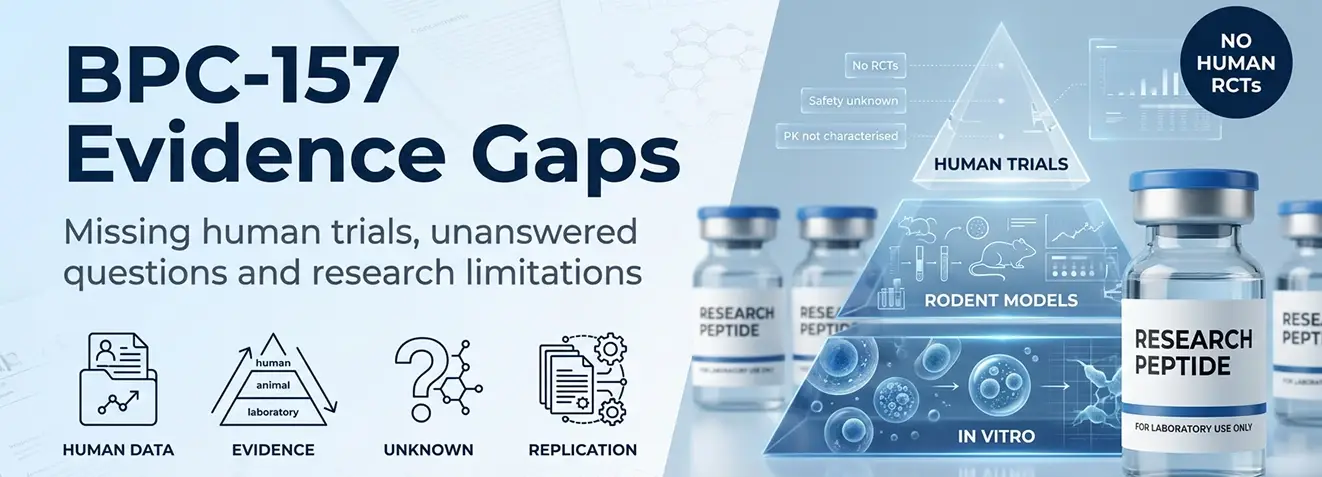
Any credible BPC-157 peptide research review has to include an explicit inventory of absent evidence.
1. No randomised controlled trials in humans
There are no published randomised controlled trials of BPC-157 in human populations. This is the single most important fact in this guide.
Without randomisation, blinding and control, a treatment effect cannot be distinguished from natural history, regression to the mean, placebo response, or concurrent changes in behaviour.
2. The one small human report
A frequently cited report involved 16 participants with knee pain, of whom 12 received injections and rated their pain lower at follow-up between six months and a year later.
The methodological problems are considerable:
- No control group
- No validated outcome measurement instruments
- Small sample size
- Many participants had ligament sprains and tendon issues, conditions that frequently resolve without intervention over that timeframe
- The authors were affiliated with a clinic supplying the injections, creating a clear conflict of interest
A report with this design cannot support causal inference. It is a case series and should be described as one.
3. The full inventory of missing evidence
| Evidence type | Status |
| Randomised controlled trials in humans | None published |
| Phase III data | None |
| Systematic reviews of human outcomes | Not possible, no primary data |
| Human pharmacokinetic profile | Not characterised |
| Absorption, distribution, metabolism, excretion in humans | Unknown |
| Validated exposure levels for human use | None established |
| Optimal administration route in humans | Not determined |
| Treatment duration parameters | Not established |
| Long-term safety data | Absent |
| Head-to-head comparison with established interventions | Not conducted |
| Identified receptor target | Not identified |
| Identity and activity of metabolites | Unknown |
| Regulatory approval (TGA, FDA, EMA) | None for any indication |
| Independent replication across unaffiliated laboratories | Limited |
4. Evidence strength by research domain
| Domain | In vitro | Rodent | Human | Overall confidence |
| Angiogenesis mechanism | Strong | Strong | None | Moderate, mechanistic only |
| Gastrointestinal protection | Moderate | Strong | None | Low to moderate |
| Anastomotic and fistula healing | Limited | Strong | None | Low to moderate |
| Tendon and ligament repair | Moderate | Strong | None | Low |
| Muscle repair | Limited | Moderate | None | Low |
| Bone healing | Limited | Limited | None | Very low |
| Neurological protection | Limited | Moderate | None | Very low |
| Mood and behaviour | None | Limited | None | Very low |
| Safety profile | Not applicable | Limited | None | Insufficient |
5. The structural problem with the corpus
Three structural features of the BPC-157 literature warrant attention:
1. Publication concentration
A large proportion of published work originates from a small network of affiliated investigators, reducing the independence of the evidence base.
2. Positive result density
near-universal positive results across a wide range of models should prompt questions about unpublished negative findings.
3. The stalled clinical programme
Early human development did not produce published outcomes, and the absence of that data is itself a form of data.
None of this means the preclinical findings are wrong it means they should be treated as hypothesis-generating rather than conclusion-supporting.
BPC-157 Australia: Regulatory and Legal Status
Anyone working with BPC-157 in Australia needs to understand its regulatory status, as it differs from that of several other jurisdictions and is frequently misstated online.
1. Therapeutic Goods Administration position
BPC-157 is not registered with the Therapeutic Goods Administration and does not appear on the Australian Register of Therapeutic Goods.
Practically, this means:
- It cannot lawfully be supplied as a therapeutic good
- It cannot be promoted for any therapeutic purpose
- It has not been assessed by the TGA for quality, safety or efficacy
- No approved product information or consumer medicine information exists
2. Schedule 4 classification
BPC-157 is a Schedule 4 (Prescription Only Medicine) substance under the Poisons Standard meaning possession without a valid prescription is unlawful in Australia regardless of any “for research purposes only” labelling at point of sale.
| Regulatory element | Status in Australia |
| ARTG registration | Not registered |
| Poisons Standard schedule | Schedule 4 |
| Approved therapeutic indications | None |
| Lawful therapeutic supply | Not permitted |
| Therapeutic advertising | Prohibited |
| Legitimate research supply | Permitted for in vitro laboratory use, subject to conditions |
3. Importation
Importation of Schedule 4 substances is controlled under the Customs (Prohibited Imports) Regulations and TGA requirements.
Personal importation provisions applying to some medicines carry specific conditions and do not create a general pathway for unapproved substances.
Laboratories and research organisations sourcing BPC-157 as a research reagent operate under a different framework to individuals, with documentation requirements around intended use, institutional approvals and record keeping.
4. Anti-doping status
BPC-157 is prohibited by the World Anti-Doping Agency under the category covering substances with no current approval by any governmental regulatory health authority for human therapeutic use, which are prohibited at all times, in and out of competition.
For athletes under Sport Integrity Australia jurisdiction this is unambiguous: no permitted level, no in-competition-only exemption, and no therapeutic use exemption pathway for an unapproved substance.
5. Advertising and promotion
The Therapeutic Goods Act imposes strict controls on advertising, and making therapeutic claims about an unapproved substance is a serious compliance breach.
Compliant Australian suppliers therefore describe products in research terms, avoid any statement or implication of therapeutic benefit, and state clearly that materials are for laboratory use only.
Suppliers making healing, recovery or performance claims about BPC-157 in the Australian market are operating outside the regulatory framework.
6. International comparison
| Jurisdiction | Status |
| Australia (TGA) | Not registered, Schedule 4 |
| United States (FDA) | Not approved; placed in the category of bulk substances excluded from compounding |
| European Union (EMA) | No marketing authorisation |
| WADA | Prohibited at all times |
No major regulator has approved BPC-157 for any indication.
7. Research supply compliance statement
The BPC-157 research compound supplied for laboratory purposes is intended for in vitro research only.
It is not for human use, not for veterinary use, not for diagnostic or therapeutic application, and not for consumption.
Researchers looking to source verified material can review where to buy BPC-157 peptide in Australia before placing an order.
Purchasers are responsible for ensuring compliance with all applicable laws and institutional requirements in their jurisdiction.
BPC-157 Lab Research: Handling, Storage and Study Design
1. Supplied form and specifications
Research-grade BPC-157 peptide is supplied as a lyophilised powder. It is typically supplied in sealed glass vials under an inert atmosphere.
Specifications worth verifying before purchase:
| Specification | What to look for |
| Purity | Typically stated at 98 per cent or higher by HPLC |
| Analytical method | HPLC for purity, mass spectrometry for identity confirmation |
| Certificate of Analysis | Batch-specific, ideally third-party verified |
| Net peptide content | Distinct from gross vial weight; salts and residual water contribute mass |
| Counter-ion | Commonly acetate or trifluoroacetate; TFA can affect some cell assays |
| Vial quantity | Stated in milligrams, verified against the CoA |
| Appearance | White to off-white powder, free of discolouration |
Net peptide content and counter-ion type both affect working concentration: gross vial weight overstates actual peptide content, and trifluoroacetate residues can confound cell viability and proliferation results at higher concentrations.
2. Storage
| Parameter | Lyophilised powder | Reconstituted solution |
| Temperature | Freezer for long-term; brief ambient exposure tolerated during shipping | Refrigerated |
| Light | Protect from light | Protect from light |
| Moisture | Keep sealed and dry; desiccant recommended | Not applicable |
| Practical stability | Extended under correct conditions | Considerably shorter |
| Freeze-thaw cycles | Minimise | Avoid; aliquot instead |
Aliquoting is the single most effective practice for preserving reconstituted material, eliminating repeated freeze-thaw exposure and reducing contamination risk from repeated vial entry.
3. Reconstitution for laboratory assays
| Step | Instruction |
| Diluent selection | Sterile water or appropriate buffer, matched to the experimental system rather than a default. |
| Equilibrate before opening | Allow vials to reach ambient temperature before breaking the seal, avoiding condensation on cold powder. |
| Add diluent gently | Direct the stream down the vial wall rather than onto the powder, since peptides are susceptible to shear and interfacial denaturation. |
| Do not vortex | Swirl gently and allow dissolution to complete; foaming indicates surface denaturation. |
| Account for surface adsorption | Peptides adsorb to glass and plastic, substantially reducing effective concentration in low-concentration work. Carrier protein such as BSA mitigates this where the assay permits. |
| Record everything | Reconstitution date, diluent, concentration, batch number and storage location. Reproducibility problems are frequently traceable to inadequate record keeping. |
4. Stability considerations in experimental design
If a substantial proportion of parent peptide converts to unidentified metabolites within an hour in plasma ex vivo, several design consequences follow:
- Time-course design matters considerably
- Single-timepoint measurements may miss the effect window entirely
- Analytical methods separating metabolites from parent compound give a very different picture to those that do not
- Effects in longer experiments may be attributable to metabolites rather than the parent molecule
5. Designing defensible BPC-157 research
Studies avoiding these recurring design weaknesses will be considerably more valuable:
1. Include appropriate controls
vehicle control matched for diluent and counter-ion, untreated control, positive control, and where relevant a pathway inhibitor arm.
2. Blind assessment
Histological scoring and behavioural assessment are both susceptible to observer expectation; blinding is inexpensive and substantially improves credibility.
3. Use validated, quantitative endpoints
biomechanical testing and quantitative histomorphometry produce far more useful data than gross visual assessment.
4. Report full dose-response relationships
Two-dose designs are common and provide limited information.
5. Report negative findings
The most direct contribution to correcting the positive-result density in this field.
6. Characterise the material used
supplier, batch, purity, analytical method and counter-ion; variation in research-grade material is a plausible contributor to inconsistent findings.
BPC-157 and Related Research Compounds
The compounds below are frequently discussed alongside BPC-157 but have distinct mechanisms and separate literatures.
1. BPC-157 and TB-500
TB-500 peptide is a synthetic fragment of thymosin beta-4, a peptide found throughout the body with high concentrations in platelets and wound fluid.
The mechanisms are fundamentally different:
| Feature | BPC-157 | TB-500 |
| Structure | 15-residue synthetic pentadecapeptide | Synthetic fragment of thymosin beta-4 |
| Origin | Sequence from gastric protein | Fragment of an endogenous peptide |
| Primary mechanism | VEGFR2-mediated angiogenesis, nitric oxide signalling | Actin sequestration and polymerisation regulation, cell migration |
| Secondary mechanisms | Cytoprotection, growth factor modulation, neurotransmitter interaction | Stem cell migration, scar reduction, angiogenic support |
| Strongest research area | Gastrointestinal protection and healing | Wound healing and cardiac repair (parent peptide) |
| Human trial data | None published | Parent peptide only, not the fragment |
| Regulatory status (AU) | Not approved | Not approved |
The critical distinction on the TB-500 side is that human trial data relates to native thymosin beta-4, not to the synthetic fragment sold as TB-500.
Extrapolation between the two is not straightforward, and the distinction is routinely collapsed in general discussion.
2. BPC-157 and GHK-Cu
GHK-Cu peptide is a copper-binding tripeptide with a research lineage centred on skin, matrix remodelling and topical application.
Its mechanism involves copper delivery and modulation of matrix metalloproteinase activity, sharing essentially nothing with the BPC-157 pathway beyond a broad association with tissue repair.
3. BPC-157 and KPV
KPV is a tripeptide derived from alpha-melanocyte stimulating hormone, researched primarily for anti-inflammatory activity via NF-κB pathway modulation with a focus on gastrointestinal inflammation.
It overlaps with BPC-157 in research application area but not in mechanism.
4. Comparative overview
| Compound | Class | Primary researched mechanism | Main research focus | Published human RCTs |
| BPC-157 | Pentadecapeptide | VEGFR2 angiogenesis, NO signalling | GI protection, tissue repair | None |
| TB-500 | Tβ4 fragment | Actin regulation, cell migration | Wound healing, cardiac | Parent peptide only |
| GHK-Cu | Copper tripeptide | Matrix remodelling, copper delivery | Skin, topical | Limited, topical |
| KPV | Tripeptide | NF-κB modulation | GI inflammation | None |
BPC-157 Reported Adverse Effects and Theoretical Risks
This section describes what has been reported and raised as theoretical concern in the published record.
It is not a safety guide, and the absence of formal safety data means no reassurance can be drawn from a short list of reported effects.
1. Effects described in the literature and practitioner reports
Drawn from case reports, compounding pharmacy data and practitioner accounts rather than controlled trials:
- Gastrointestinal discomfort and nausea, particularly with oral administration
- Dizziness or light-headedness
- Injection site reactions including redness, warmth, swelling and localised pain
- Headache
- Fatigue or somnolence in some individuals
Without systematic pharmacovigilance, effects that are rare, delayed or cumulative would not appear in this list even if they occur.
A short list of mild reported effects reflects the absence of surveillance, not the absence of risk.
2. The angiogenesis question
Any compound promoting new blood vessel formation raises a theoretical concern in the context of malignancy.
Tumour growth beyond a small volume requires neovascularisation, which is precisely why angiogenesis inhibitors constitute an established class of cancer therapeutics.
The concern is theoretical and unproven in humans, but it is not dismissible on current evidence, since undiagnosed or pre-malignant lesions would by definition not be known about at the time of exposure.
3. Endocrine and neurotransmitter modulation
The dopaminergic and serotonergic interactions described above are, from a safety perspective, an open question.
Sustained modulation of monoaminergic systems has recognised implications for mood, hormonal regulation and neurological function, and the long-term consequences of chronic exposure have not been formally investigated in any species.
Endogenous regulation
Exogenous peptides can in principle trigger downregulation of endogenous production through feedback mechanisms, as is well documented with hormonal therapies.
Whether this occurs with BPC-157 is unknown, and the question is harder to frame given that the specific 15-residue sequence is not known to occur endogenously.
4. Product quality in unregulated supply
Arguably the most immediate practical risk and the least discussed. Material sourced outside verified supply chains carries documented risks:
- Concentration differing substantially from the label
- Incorrect or substituted compound
- Bacterial or endotoxin contamination
- Residual solvents or synthesis by-products
- Non-sterile preparation
- Degraded material from improper storage or transport
Anti-doping and public health authorities have consistently noted that products purchased online frequently do not match their labelling.
For research applications this is a data integrity problem; outside research applications it is considerably more serious.
5. Interaction potential
Because the peptide interacts with vascular, inflammatory and neurological pathways, interaction with the following is plausible but essentially unstudied:
- Anticoagulants and antiplatelet agents, given the effects on nitric oxide and platelet aggregation
- Non-steroidal anti-inflammatory drugs
- Immunosuppressants
- Psychoactive medications acting on dopaminergic or serotonergic systems
- Angiogenesis inhibitors, where the mechanisms are directly opposed
The receptor antagonist findings above provide direct experimental support for the concern about dopaminergic and adrenergic agents specifically.
Where BPC-157 Research Is Heading
1. What a credible clinical programme would need first
Several foundational gaps would need closing before any meaningful human efficacy work could be designed:
- Receptor or binding target identification.Pathway-level observation is not target characterisation, and without a target, dose selection and safety prediction remain guesswork.
- Human pharmacokinetics.Absorption, distribution, metabolism and excretion across whichever routes are being considered.
- Metabolite identification.Determining what the parent compound becomes and whether those products are active.
- Formal toxicology.Standard preclinical packages including repeat-dose studies, genotoxicity and carcinogenicity assessment, given the angiogenesis question.
- Indication selection.The breadth of preclinical activity is a liability rather than an asset here. A clinical programme needs one indication with a defined population and a measurable endpoint, and the anastomotic healing and inflammatory bowel work are the strongest candidates on current evidence.
2. Independent replication
The most valuable contribution to this field would be replication of key findings by laboratories with no connection to the original research groups, using pre-registered protocols and blinded assessment.
3. Standardised endpoints
Tendon and gastrointestinal research both suffer from endpoint heterogeneity.
Agreement on validated, quantitative measures would make results comparable across studies in a way they currently are not.
4. The funding problem
BPC-157 is a short peptide with long-expired foundational patent protection and a well-known sequence, so the commercial incentive to fund a full clinical development programme with substantial cost, no exclusivity at the end- is weak.
This is a recognised problem across repurposed and off-patent compounds generally, and it means promising preclinical findings can sit unexamined for decades, not because they were disproven but because nobody had reason to test them properly.
Academic and publicly funded research is the realistic pathway, and it is slower and more competitive for resources.
5. Emerging research directions
- Oral formulation science, building on the acid stability findings to characterise whether systemic absorption is achievable
- Localised delivery systems, including scaffolds and sustained-release matrices for connective tissue applications
- Combination models, examining BPC-157 alongside established regenerative approaches
- Structure-activity relationships, testing sequence variants to identify which residues are essential for activity
- Analytical method development, driven substantially by anti-doping detection requirements
What BPC-157 Research Tells Us
BPC-157 has shown potentially relevant effects across several preclinical models, particularly in gastrointestinal protection, angiogenesis and tissue repair.
However, the absence of robust human clinical data means these findings remain experimental and should not be interpreted as evidence of therapeutic safety or efficacy.
All research should follow applicable Australian regulations and established laboratory standards.
FAQs about BPC-157 peptide
Is BPC-157 Legal in Australia?
No. BPC-157 is not approved by the TGA, is classified as a Schedule 4 substance, and is only permitted for legitimate laboratory research under applicable regulations.
Does BPC-157 work immediately?
No. Current evidence comes from preclinical studies, and there is no published human evidence demonstrating immediate effects.
What happens when you stop taking BPC-157?
There are no controlled human studies describing what happens after stopping BPC-157, so its effects following discontinuation remain unknown.
What organ repair is BPC-157?
Preclinical research has investigated BPC-157 in gastrointestinal tissues, tendons, ligaments, muscles, bone, nerves, and vascular healing, but no organ repair has been confirmed in humans.
Is BPC-157 worth it?
For research purposes, BPC-157 remains scientifically interesting, but there is currently insufficient human clinical evidence to support therapeutic use.
Is BPC-157 approved by the TGA?
No. BPC-157 is not approved by the Therapeutic Goods Administration (TGA) for any therapeutic indication in Australia.
Is BPC-157 a naturally occurring peptide?
No. BPC-157 is a synthetic peptide derived from a naturally occurring gastric protein fragment rather than a naturally occurring peptide itself.
Has BPC-157 been tested in human clinical trials?
No. There are currently no published randomised controlled trials evaluating BPC-157 in humans.
How does BPC-157 work according to current research?
Preclinical research suggests BPC-157 may influence angiogenesis, nitric oxide signalling, and tissue repair pathways, although its exact receptor remains unidentified.
Is BPC-157 banned in professional sports?
Yes. BPC-157 is prohibited by the World Anti-Doping Agency (WADA) at all times because it has no approved therapeutic use by any major regulatory authority.
Sources:
https://www.fda.gov/drugs/development-approval-process-drugs
https://pubmed.ncbi.nlm.nih.gov/40789979/
https://pubmed.ncbi.nlm.nih.gov/42198317/