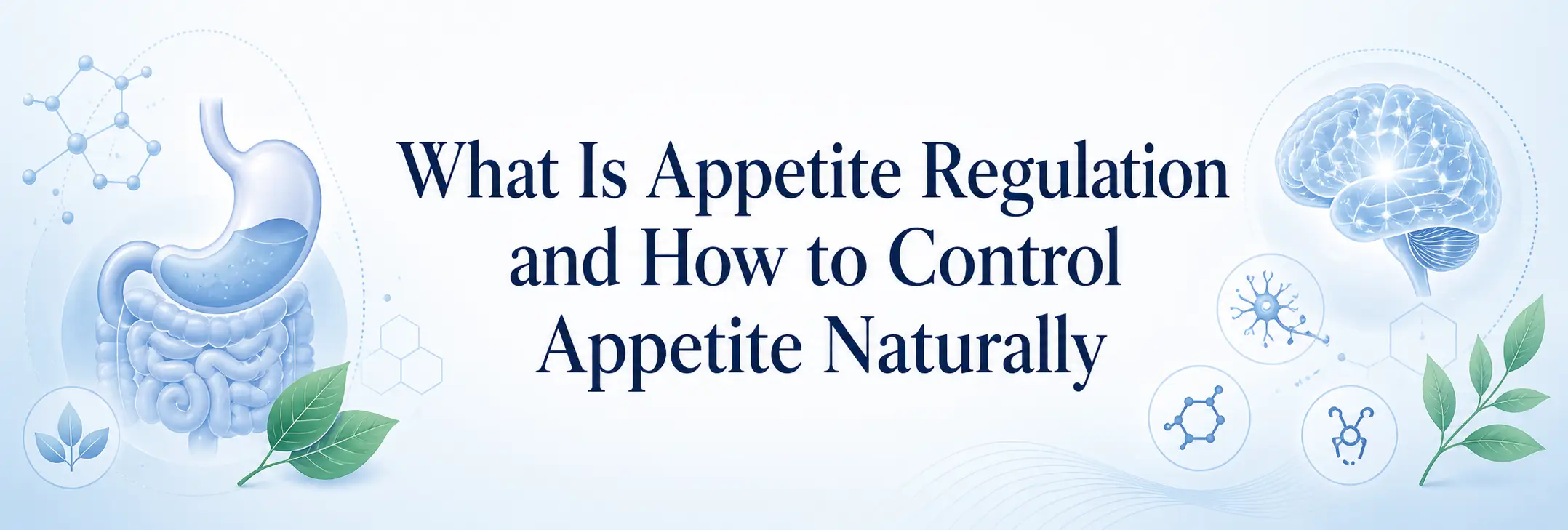
Appetite regulation refers to the body’s ability to control hunger, fullness, and food intake through a complex system of hormones, brain signals, and biological processes.
If you’ve ever wondered what is appetite regulation and how to control appetite naturally, the simple answer is:
Appetite regulation is how your body decides when you feel hungry, when to eat, and when to stop eating.
This system is essential for maintaining:
- Energy balance
- Body weight
- Metabolic health
When appetite regulation works properly, your body naturally signals when you need food and when you’ve had enough.
Browse Metabolic Research Compounds
How Does Appetite Regulation Work?
The regulation of appetite is controlled by communication between:
- The brain (especially the hypothalamus)
- Hormones
- The digestive system
Key Hormones Involved
Ghrelin (The Hunger Hormone)
- Signals when you’re hungry
- Increases before meals
Leptin (The Fullness Hormone)
- Signals when you’re full
- Helps stop eating
Insulin
- Regulates blood sugar
- Influences hunger and energy use
Appetite is not just about willpower, it’s controlled by biology.
Why Appetite Regulation Gets Disrupted
Many people struggle with appetite control because the system becomes imbalanced.
Common reasons include:
Poor Diet Choices
Highly processed foods can disrupt hunger signals.
Lack of Sleep
Sleep deprivation increases hunger hormones.
Chronic Stress
Stress can increase cravings and appetite.
Blood Sugar Fluctuations
Spikes and crashes lead to increased hunger.
Hormonal Imbalances
These can interfere with natural appetite regulation.
How to Control Appetite Naturally
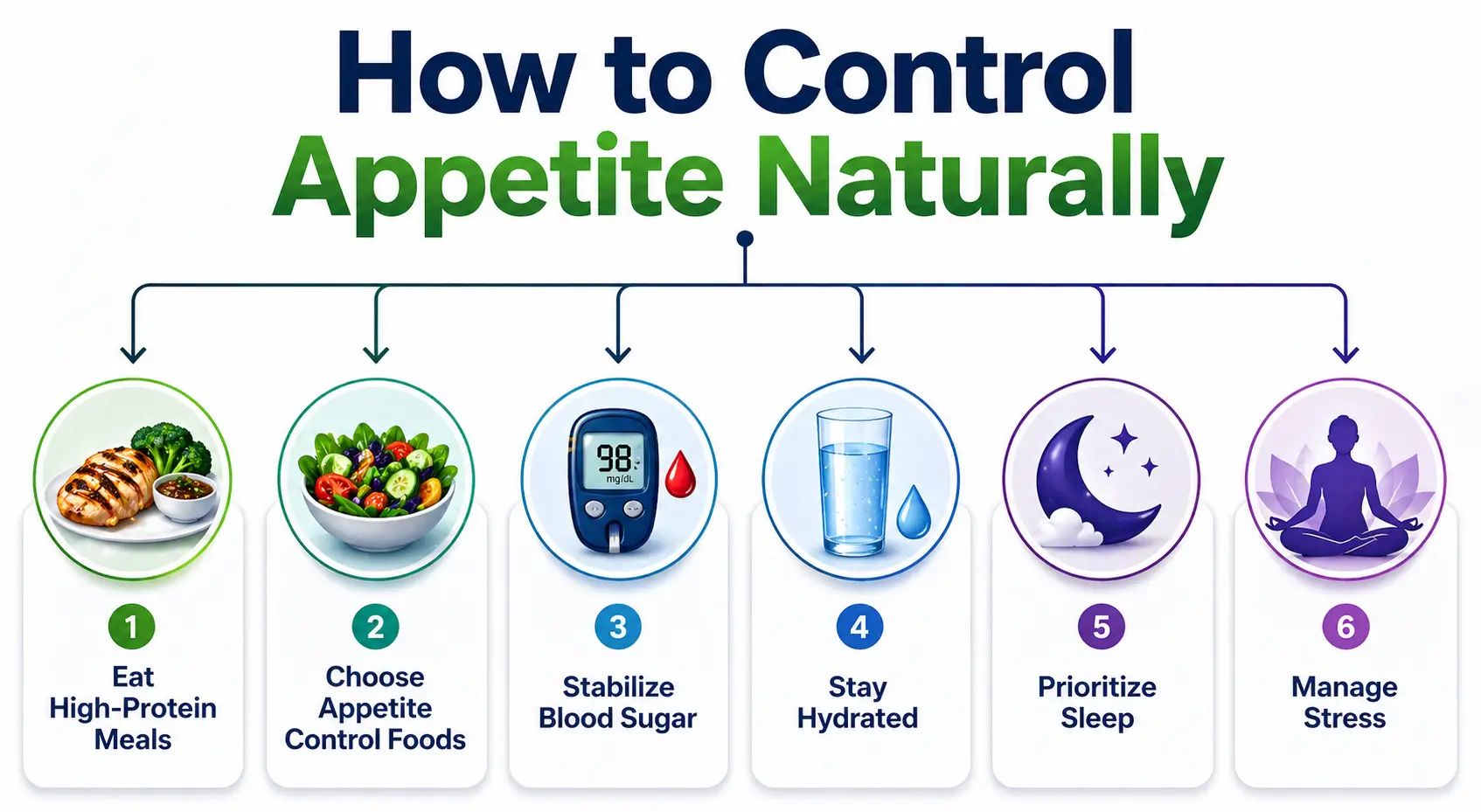
If you’re looking for ways to control appetite, the goal is to support your body’s natural regulation system, not fight against it.
1. Eat High-Protein Meals
Protein helps increase satiety and reduce hunger.
This is one of the most effective appetite control strategies.
2. Choose Appetite Control Foods
Certain foods help regulate appetite better than others.
Best appetite control food choices:
- Fiber-rich vegetables
- Whole grains
- Lean protein
- Healthy fats
These foods slow digestion and keep you feeling full longer.
3. Stabilize Blood Sugar
Balanced meals prevent energy crashes that trigger hunger.
Tips:
- Avoid excessive sugar
- Combine protein + carbs
- Eat regularly
4. Stay Hydrated
Dehydration is often mistaken for hunger.
Drinking enough water helps support appetite control.
5. Prioritize Sleep
Sleep affects hunger hormones directly.
Poor sleep → increased ghrelin (hunger)
Good sleep → balanced appetite signals
6. Manage Stress
Stress can override normal appetite regulation and lead to overeating.
Techniques:
- Movement
- Breathing exercises
- Consistent routine
Explore more: What is Metabolic Health | Complete Guide
Appetite Regulation vs Appetite Control
These two terms are often confused.
| Appetite Regulation | Appetite Control |
| Internal biological system | External behavior |
| Hormones + brain signals | Lifestyle choices |
| Automatic | Intentional |
| Long-term balance | Short-term actions |
Support regulation, not just control.
The Role of Metabolism in Appetite
Appetite regulation is closely linked to metabolism.
People with faster metabolism may:
- Feel hungry more often
- Burn energy faster
While slower metabolism may lead to:
- Lower hunger signals
- Easier fat storage
This is why appetite and metabolism are deeply connected.
The Role of Research in Appetite Regulation
As more people search for ways to control appetite, scientific research is exploring how biological pathways influence hunger and satiety.
Researchers study compounds that interact with:
- Hunger hormones
- Energy balance
- Metabolic signaling
Appetite-Related Research Compounds
At Australia Peptide Sciences, we provide research-grade compounds used in scientific environments to study appetite and metabolism.
Common Compounds Studied:
Trizepatide research compound is studied for its interaction with pathways related to appetite and metabolic regulation.
Retatrutide (Research Compound) is explored for broader interaction with hunger and energy-related pathways.
Mazdutide (Research Compound) is an emerging compound in appetite and metabolic research.
MOTS-C (Research Peptide) is associated with cellular energy and metabolic signaling.
Research Use Only
All compounds mentioned are supplied strictly for:
- Laboratory research
- Scientific investigation
- Educational purposes
They are not intended for human consumption or use as appetite control products.
Why Understanding Appetite Regulation Matters
Understanding appetite regulation helps you:
- Make better food choices
- Avoid overeating
- Maintain a healthy weight
- Improve long-term metabolic health
Instead of relying on willpower alone, you can support your body’s natural systems.
Explore Appetite and Metabolic Research
At Australia Peptide Sciences, we support researchers studying appetite and metabolism through high-purity research compounds.
Our products are:
- Laboratory tested
- High purity
- Designed for scientific use
FAQs
What is appetite regulation?
Appetite regulation is the biological process that controls hunger and fullness through the interaction of the brain, digestive system, and hormones like ghrelin and leptin. It helps the body maintain energy balance by signaling when to eat, how much to eat, and when to stop.
How can I control appetite naturally?
You can control appetite naturally by eating protein-rich and fiber-dense foods, stabilizing blood sugar levels, staying hydrated, getting enough sleep, and managing stress. These habits help regulate hunger hormones and improve your body’s natural appetite regulation system over time.
What foods help with appetite control?
Foods that help with appetite control include high-protein options like eggs and lean meat, fiber-rich foods like vegetables and whole grains, and healthy fats like nuts and avocados. These foods slow digestion, increase fullness, and reduce hunger signals between meals.
Why am I always hungry?
Constant hunger can be caused by poor diet quality, lack of protein or fiber, sleep deprivation, stress, or unstable blood sugar levels. Hormonal imbalances, especially involving ghrelin and leptin, can also disrupt appetite regulation and increase frequent hunger signals.
Is appetite controlled by hormones?
Yes, appetite is primarily controlled by hormones. Ghrelin increases hunger, while leptin signals fullness. Other hormones like insulin and cortisol also influence appetite by affecting energy balance, stress response, and how the body processes food and nutrients.
Shop Research Peptides Australia
Sources: