Oxidative stress describes a disruption in cellular redox balance in which reactive species exceed the capacity of antioxidant, repair and removal systems. In experimental models, excessive reactive species can modify lipids, proteins and nucleic acids, alter mitochondrial function and affect redox-sensitive signalling pathways.
What Is Oxidative Stress?
To understand the impact, you first need to understand what oxidative stress actually is.
Reactive oxygen and nitrogen species can arise during mitochondrial metabolism, enzymatic reactions and environmental or experimental exposures. Cellular antioxidant and redox systems normally regulate these species. Oxidative stress occurs when reactive-species generation exceeds the capacity of those regulatory systems, producing measurable changes in cellular molecules and signalling.
How Does Oxidative Stress Damage Cells?
A common question is how does oxidative stress damage cells, and the answer lies in how free radicals behave.
Reactive species can oxidise membrane lipids, modify proteins, alter nucleic acids and disrupt mitochondrial processes. The extent of oxidative damage depends on reactive-species identity, concentration, exposure duration, cell type and experimental conditions. Related changes in energy production, membrane potential and redox signalling are examined further in mitochondrial dysfunction.
Oxidative Stress in Cellular Aging Research
Oxidative stress is studied as one component of the broader network of age-associated cellular changes. Research examines its relationship with DNA damage, mitochondrial dysfunction, proteostasis, senescence and altered redox signalling. These mechanisms are explored further in Cellular Aging. Oxidative stress should not be treated as a single explanation for biological ageing or as evidence of a personal anti-ageing outcome.
Oxidative Stress Across Experimental Models
Oxidative stress is investigated across many cellular and disease-associated research models. Its presence may reflect altered redox regulation, mitochondrial activity, inflammatory signalling or impaired molecular repair. Association with a biological condition does not by itself establish causation, clinical significance or therapeutic relevance.
Factors That Influence Oxidative Stress in Experimental Systems
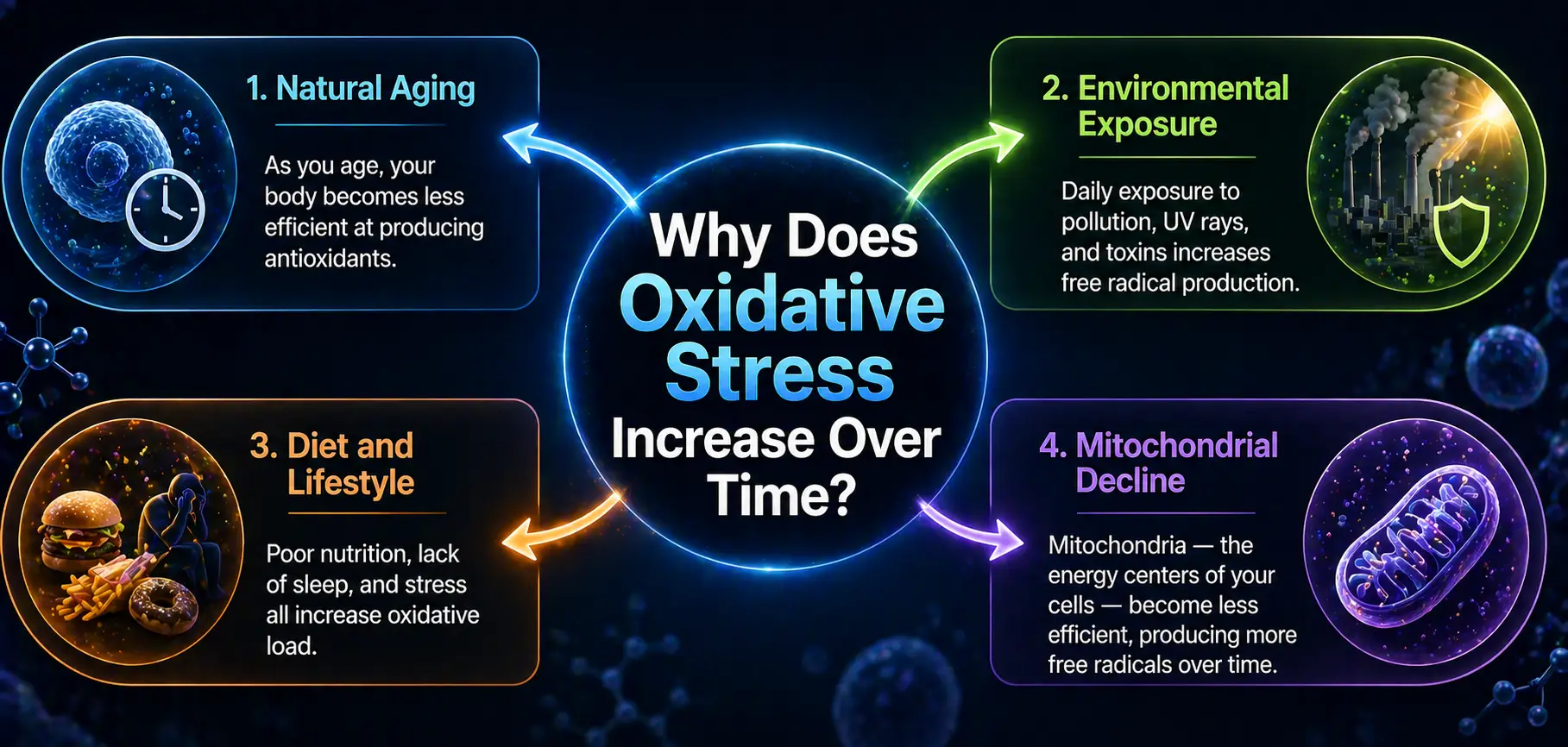
Measured oxidative stress can vary with mitochondrial activity, antioxidant-enzyme capacity, nutrient conditions, oxygen availability, ultraviolet or chemical exposure, inflammatory signalling and other experimental stressors. The resulting response depends on dose, duration, cell type and analytical method.
How Oxidative Stress Is Studied Experimentally
While oxidative stress is unavoidable, you can support your body’s ability to manage it.
Experimental assessment of oxidative stress commonly combines several endpoints. These may include reactive-species measurements, glutathione redox status, lipid-peroxidation products, oxidised proteins, oxidative DNA markers, antioxidant-enzyme activity, mitochondrial respiration and redox-sensitive signalling. No single measurement provides a complete assessment across all experimental models.
The Role of Cellular Research in Oxidative Stress
As awareness grows, researchers are focusing more on how oxidative stress affects the body at a deeper biological level.
Instead of just managing symptoms, research now explores:
- Cellular repair mechanisms
- Energy production systems
- Antioxidant pathways
This has led to increased interest in compounds studied for their role in cellular health.
Research Compounds Studied for Oxidative Stress
Laboratory research can examine defined compounds alongside appropriate controls to investigate redox chemistry, oxidative challenge, mitochondrial processes and related cellular pathways.
Glutathione (Research Compound)
Glutathione is a redox-active tripeptide examined in laboratory studies of glutathione redox state, oxidative challenge, antioxidant-enzyme systems and related cellular pathways.
NAD+ (Research Compound)
NAD+ is a redox-active coenzyme involved in metabolic reactions and the NAD+/NADH system. Laboratory studies may examine its relationship with mitochondrial metabolism, redox regulation and NAD+-dependent enzymatic pathways.
Research-use materials should be evaluated according to defined identity, purity, batch composition and analytical methodology. Batch-specific documentation is available through the Peptide Certificates of Analysis (COAs). Research materials are not represented for human or veterinary use.
Why Experimental Context Matters
Oxidative stress is not a single measurement or universal biological state. Interpretation depends on the experimental model, reactive species involved, exposure conditions, antioxidant capacity and analytical method. Evidence of oxidative modification should therefore be distinguished from broader claims about health, disease prevention or personal use.
FAQs
How does oxidative stress affect cells?
Oxidative stress can modify lipids, proteins and nucleic acids, alter mitochondrial processes and affect redox-sensitive signalling when reactive species exceed cellular regulatory capacity.
How does redox signalling differ from oxidative damage?
Redox signalling involves regulated changes that modify cellular responses. Oxidative damage involves chemical alteration of molecules such as lipids, proteins or nucleic acids. Measuring one does not automatically demonstrate the other.
How is oxidative stress studied in cellular ageing research?
Researchers examine oxidative stress alongside DNA damage, mitochondrial changes, senescence, proteostasis and other age-associated cellular processes. Oxidative stress alone does not define biological ageing.
How is oxidative stress assessed in research?
Assessment may combine reactive-species measurements, glutathione redox status, lipid or protein oxidation markers, oxidative DNA markers, antioxidant-enzyme activity and mitochondrial measurements.
Can a single antioxidant measurement establish lower oxidative stress?
No. Oxidative stress is a dynamic redox condition, and defensible interpretation generally requires multiple complementary measurements under defined experimental conditions.
Sources: