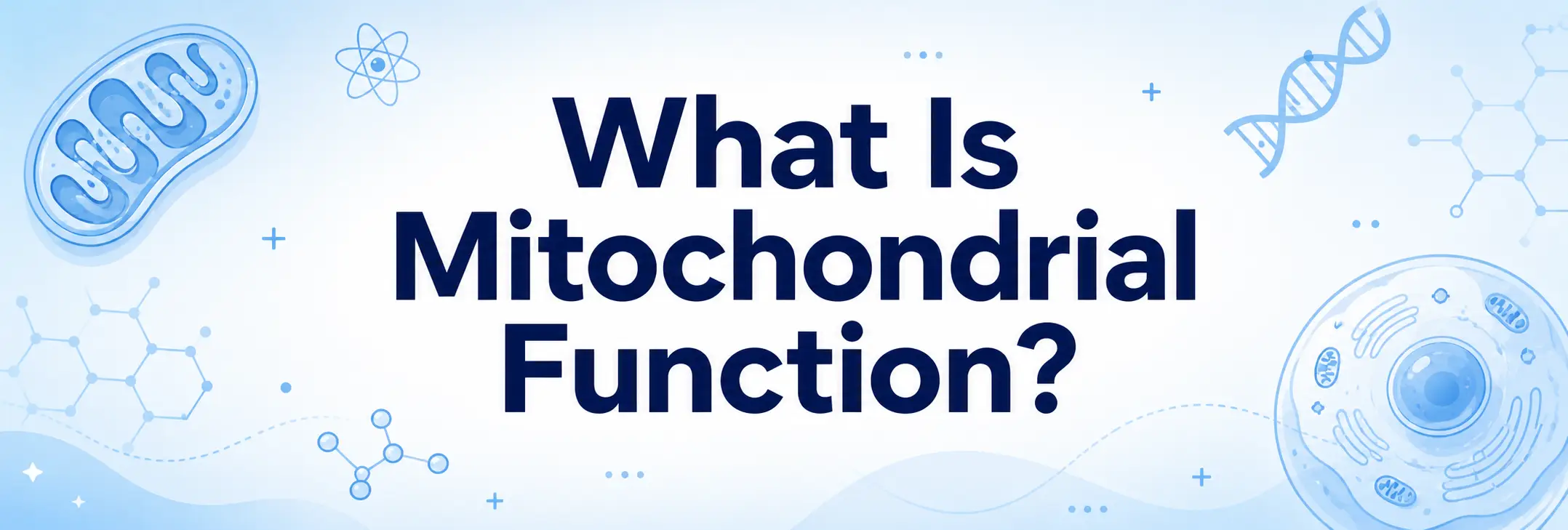
What is mitochondrial function? It is the process by which mitochondria help cells produce energy, regulate metabolism, support cell survival, and maintain many essential biological activities throughout the body.
Mitochondrial function is one of the most important processes in human biology because every organ, tissue, and system depends on cellular energy. Your brain needs energy to think, your muscles need energy to move, your heart needs energy to beat, and your cells need energy to repair, communicate, and survive.
Although mitochondria are often described as the “powerhouses of the cell,” their role is much broader than energy production alone. They also help regulate oxidative stress, cell signaling, calcium balance, programmed cell death, metabolism, and healthy aging.
This guide explains what mitochondria are, how mitochondria function, why they matter for health, and what mitochondrial dysfunction means.
What Is Mitochondria?
To understand mitochondrial function, it is important to first answer a basic question: what is mitochondria?
Mitochondria are small structures inside cells known as organelles. Organelles are specialized parts of a cell that perform specific jobs, similar to how organs perform specific roles in the body.
Mitochondria are found in almost all human cells. Their main role is to convert nutrients from food and oxygen from breathing into usable energy. This energy is stored in a molecule called ATP, or adenosine triphosphate.
ATP acts like the body’s cellular energy currency. Cells use ATP to power essential processes such as:
- Muscle contraction
- Brain signaling
- Hormone production
- Cell repair
- Protein synthesis
- Detoxification processes
- Immune system activity
- Organ function
Different cells contain different numbers of mitochondria depending on how much energy they need.
| Cell or Tissue Type | Why It Needs Many Mitochondria |
| Heart cells | The heart contracts continuously and needs constant energy |
| Muscle cells | Muscles require energy for movement and strength |
| Brain cells | Neurons need energy for communication and signaling |
| Liver cells | The liver manages metabolism, detoxification, and nutrient processing |
| Kidney cells | Kidneys need energy for filtration and fluid balance |
This is why mitochondrial health is closely connected to physical performance, mental clarity, metabolism, and overall vitality.
What Is Mitochondrial Function?
What is mitochondrial function? In simple terms, mitochondrial function is the ability of mitochondria to produce energy and support the biological processes that keep cells working properly.
The most important part of mitochondria function is ATP production. However, mitochondria also support several other key cellular activities.
The main functions of mitochondria include:
- Producing ATP for cellular energy
- Supporting metabolism
- Helping regulate oxidative stress
- Controlling calcium balance
- Supporting cell signaling
- Helping remove damaged cells through apoptosis
- Contributing to heat production
- Supporting healthy aging and cellular repair
When people ask, “mitochondria what is the function?”, the simplest answer is: mitochondria help cells turn food and oxygen into energy. But a more complete answer is that mitochondria act as energy producers, metabolic regulators, and cellular control centers.
How Mitochondria Produce Energy
The primary role of mitochondria is energy production. This process happens through several connected steps.
1. Nutrients Are Broken Down
The body breaks down carbohydrates, fats, and proteins from food into smaller molecules. These molecules are then used as fuel.
For example:
- Carbohydrates break down into glucose
- Fats break down into fatty acids
- Proteins break down into amino acids
These fuel sources eventually enter energy pathways that support ATP production.
2. The Krebs Cycle Produces Energy Carriers
Inside the mitochondria, a process called the Krebs cycle, also known as the citric acid cycle, helps generate energy-carrying molecules.
These energy carriers include:
- NADH
- FADH2
They do not directly power the cell yet. Instead, they carry electrons to the next stage of energy production.
This is also why NAD is widely discussed in cellular energy research, because NAD-related pathways are closely connected to mitochondrial metabolism and ATP production.
3. The Electron Transport Chain Creates ATP
The electron transport chain is located in the inner mitochondrial membrane. This is where most ATP is produced.
During this process:
- Electrons move through protein complexes
- Oxygen acts as the final electron acceptor
- A proton gradient is created
- ATP synthase uses this gradient to produce ATP
This process is called oxidative phosphorylation.
4. ATP Powers Cell Activity
Once ATP is produced, cells use it to perform work. Without ATP, cells cannot maintain normal function.
| Stage | What Happens | Main Result |
| Nutrient breakdown | Food is converted into usable fuel | Glucose, fatty acids, amino acids |
| Krebs cycle | Fuel is processed inside mitochondria | NADH and FADH2 are produced |
| Electron transport chain | Electrons move through mitochondrial proteins | ATP production increases |
| ATP use | Cells use ATP for biological work | Energy supports cell function |
This process explains why mitochondrial function is essential for life.
Structure of Mitochondria and Why It Matters
Mitochondria have a unique structure that allows them to produce energy efficiently. They are not simple containers inside cells. Their design is directly connected to their function.
| Mitochondrial Structure | Function |
| Outer membrane | Protects mitochondria and controls movement of molecules |
| Inner membrane | Contains the electron transport chain and supports ATP production |
| Cristae | Folded structures that increase surface area for energy production |
| Matrix | Inner space where the Krebs cycle occurs |
| Mitochondrial DNA | Provides instructions for some mitochondrial proteins |
The inner membrane is especially important because it contains the machinery needed for ATP production. Its folds, called cristae, increase surface area, allowing mitochondria to produce more energy.
Mitochondria also contain their own DNA, known as mitochondrial DNA or mtDNA. This makes them different from many other organelles. Mitochondrial DNA plays an important role in producing some of the proteins required for energy metabolism.
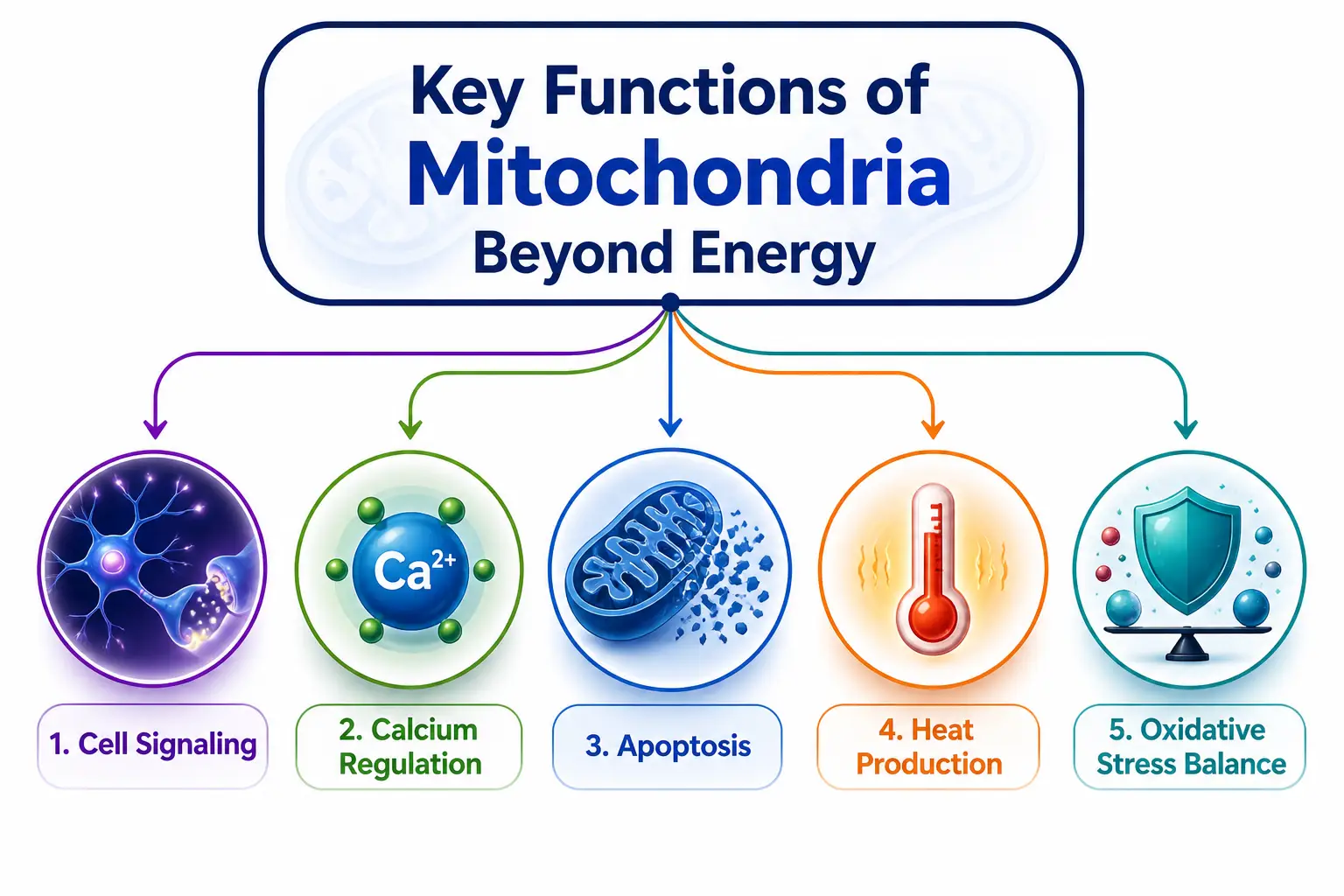
Key Functions of Mitochondria Beyond Energy
Energy production is the best-known mitochondria function, but it is not the only one. Mitochondria influence many other biological processes that affect health.
1. Cell Signaling
Mitochondria help cells communicate and respond to changes in their environment. They can influence signals related to stress, inflammation, metabolism, and survival.
2. Calcium Regulation
Calcium is essential for muscle contraction, nerve signaling, hormone release, and many cellular reactions. Mitochondria help store and regulate calcium levels inside cells.
3. Apoptosis
Apoptosis is programmed cell death. This is a normal and necessary process that helps the body remove damaged or unwanted cells.
Mitochondria help control apoptosis by releasing certain molecules that activate cell death pathways. This function is important for tissue maintenance and may also be relevant in diseases where damaged cells survive when they should not.
4. Heat Production
Mitochondria can also help produce heat. This process is especially important in brown fat tissue, where mitochondria help the body maintain temperature.
5. Oxidative Stress Balance
During energy production, mitochondria can generate reactive oxygen species. In controlled amounts, these molecules can help with signaling. In excess, they may contribute to oxidative stress and cellular damage.
Healthy mitochondrial function helps maintain balance between energy production and oxidative stress.
To understand this topic in more detail, read our guide on How does oxidative stress affect the body, where we explain how oxidative stress contributes to cellular damage, aging, and long-term health changes.
Why Mitochondrial Function Is Important for Health
Mitochondrial function affects nearly every major system in the body. When mitochondria work efficiently, cells have the energy they need to perform well. When mitochondria function poorly, energy production declines and cellular stress may increase.
Healthy mitochondrial function supports:
- Stable energy levels
- Brain performance
- Muscle strength
- Metabolic health
- Heart function
- Cellular repair
- Healthy aging
- Exercise capacity
- Immune response
Because mitochondria are especially important in high-energy organs, poor mitochondrial function may affect the brain, muscles, heart, liver, and nervous system more noticeably.
What Is Mitochondrial Dysfunction?
What is mitochondrial dysfunction? It refers to a state where mitochondria do not work properly and cannot produce enough energy for the needs of the cell.
Mitochondrial dysfunction may involve:
- Reduced ATP production
- Increased oxidative stress
- Damage to mitochondrial DNA
- Impaired nutrient metabolism
- Poor mitochondrial repair
- Abnormal cell signaling
- Reduced ability to manage cellular stress
When mitochondria cannot produce enough energy, cells may struggle to perform their normal roles. Over time, this can affect tissue function and contribute to symptoms such as fatigue, weakness, poor concentration, and reduced physical performance.
Mitochondrial dysfunction can be primary or secondary.
| Type | Meaning |
| Primary mitochondrial dysfunction | Usually linked to inherited genetic mutations affecting mitochondria |
| Secondary mitochondrial dysfunction | Develops due to other factors such as aging, disease, lifestyle, toxins, or chronic stress |
This distinction is important because not every case of mitochondrial dysfunction is caused by a genetic mitochondrial disease.
In mitochondrial research, the ss-31 peptide is commonly discussed for its relevance to mitochondrial function, oxidative stress, and cellular energy studies.
Causes of Mitochondrial Dysfunction
Mitochondrial dysfunction can develop for many reasons. Some causes are inherited, while others are influenced by lifestyle, environment, or health conditions.
1. Genetic Mutations
Some mitochondrial diseases are caused by mutations in mitochondrial DNA or nuclear DNA. These mutations can affect how mitochondria produce energy.
2. Aging
Mitochondrial function often declines with age. Over time, mitochondria may become less efficient, and damaged mitochondria may accumulate.
3. Poor Diet Quality
A diet high in added sugar and low in essential nutrients may negatively affect metabolic health and mitochondrial performance.
Mitochondria need several nutrients to function properly, including:
- B vitamins
- Magnesium
- Coenzyme Q10
- Iron
- Amino acids
- Healthy fats
- Antioxidants
4. Chronic Stress
Long-term stress may affect metabolism, inflammation, hormone balance, and cellular energy demand. This can place additional pressure on mitochondria.
5. Lack of Physical Activity
Exercise stimulates mitochondrial adaptation. A sedentary lifestyle may reduce mitochondrial efficiency and energy capacity over time.
6. Poor Sleep
Sleep supports cellular repair and metabolic regulation. Poor sleep may interfere with the body’s ability to maintain healthy mitochondrial function.
7. Chronic Disease
Mitochondrial dysfunction has been studied in relation to several chronic conditions, including metabolic, neurological, cardiovascular, and inflammatory disorders.
Symptoms of Poor Mitochondria Function
Symptoms of poor mitochondria function can vary widely because mitochondria exist throughout the body. The symptoms often appear in areas with high energy demand.
Common signs associated with poor mitochondrial function may include:
- Persistent fatigue
- Muscle weakness
- Poor exercise tolerance
- Brain fog
- Difficulty concentrating
- Slow recovery after physical activity
- Muscle pain
- Low stamina
- Neurological symptoms
- Metabolic imbalance
These symptoms are not specific to mitochondrial dysfunction alone. Many health conditions can cause similar symptoms, so medical evaluation is important when symptoms are persistent, severe, or unexplained.
You can also explore our peptide blends category for research-focused combinations used in different areas of laboratory and biological study.
Mitochondrial Function and the Brain
The brain uses a large amount of energy. Neurons require constant ATP to send signals, maintain electrical activity, and support neurotransmitter function.
Healthy mitochondrial function supports:
- Focus
- Memory
- Mood regulation
- Cognitive processing
- Nerve signaling
- Brain repair mechanisms
When mitochondrial function declines, brain cells may become more vulnerable to stress. This is one reason researchers study mitochondrial dysfunction in relation to neurological conditions and age-related cognitive decline.
Mitochondrial Function and Muscles
Muscles rely heavily on mitochondria, especially during movement and exercise. During physical activity, muscles need rapid ATP production to contract and recover.
Healthy mitochondria support:
- Strength
- Endurance
- Exercise performance
- Muscle recovery
- Reduced fatigue
This is why exercise is one of the most important lifestyle factors for mitochondrial health. Regular movement encourages the body to produce more mitochondria and improve mitochondrial efficiency.
Mitochondrial Function and Aging
Mitochondrial function is closely connected to aging because mitochondria influence energy production, oxidative stress, cellular repair, and inflammation.
As people age, mitochondria may:
- Produce less ATP
- Generate more oxidative stress
- Accumulate DNA damage
- Become less efficient
- Decline in number or quality
This does not mean mitochondrial decline is the only cause of aging. However, mitochondrial health is an important part of how cells maintain function over time.
Supporting mitochondrial function may help promote better energy, resilience, and metabolic health during aging.
For a broader explanation of how cells change over time, you can also read our guide on what is cellular aging and how cellular damage may influence the aging process.
How to Support Healthy Mitochondrial Function
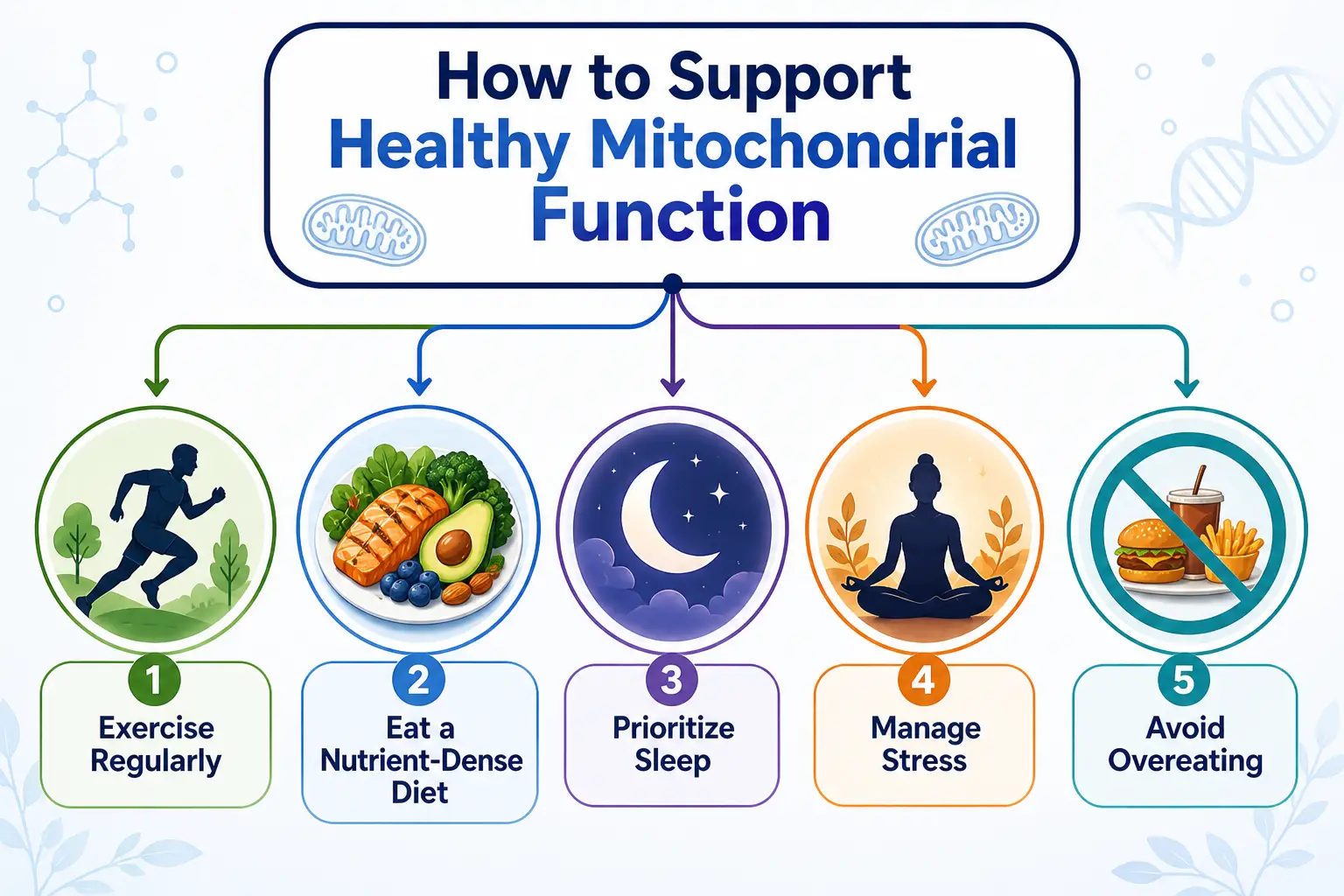
While genetics and medical conditions can influence mitochondria, lifestyle also plays an important role in supporting mitochondrial health.
1. Exercise Regularly
Exercise is one of the strongest natural signals for mitochondrial improvement. Both aerobic exercise and resistance training can support mitochondrial function.
Helpful activities may include:
- Walking
- Cycling
- Swimming
- Strength training
- Interval training
- Hiking
- Bodyweight exercises
2. Eat a Nutrient-Dense Diet
Mitochondria need nutrients to produce energy efficiently. A balanced diet can support metabolic health and reduce excessive oxidative stress.
Focus on:
- Whole foods
- High-quality protein
- Healthy fats
- Colorful vegetables
- Low-glycemic carbohydrates
- Antioxidant-rich foods
- Adequate minerals
Limit:
- Excess added sugar
- Highly processed foods
- Excessive alcohol
- Very low nutrient diets
3. Prioritize Sleep
Sleep supports repair, energy balance, hormone regulation, and cellular maintenance. Poor sleep may place stress on mitochondrial function.
4. Manage Stress
Chronic stress can increase energy demand and affect inflammation. Stress management may help support cellular resilience.
Useful strategies include:
- Breathing exercises
- Light movement
- Time outdoors
- Meditation
- Better work-rest balance
- Consistent sleep routine
5. Avoid Overeating
Excessive calorie intake, especially from processed foods, may increase metabolic stress. Balanced nutrition helps mitochondria function more efficiently.
Mitochondrial Function vs Mitochondrial Health
These two terms are related but not exactly the same.
| Term | Meaning |
| Mitochondrial function | How well mitochondria perform tasks such as ATP production and signaling |
| Mitochondrial health | The overall quality, number, efficiency, and resilience of mitochondria |
| Mitochondrial dysfunction | A state where mitochondria fail to perform properly |
In simple terms, mitochondrial function is part of mitochondrial health. Healthy mitochondria usually function efficiently, adapt to stress, and support cellular energy needs.
For readers interested in mitochondrial-related research compounds, MOTS-C peptide is one example often studied in connection with cellular metabolism and energy regulation.
Research Interest in Mitochondrial Function
Mitochondrial research continues to grow because mitochondria are involved in many areas of biology and medicine.
Researchers study mitochondrial function in relation to:
- Aging
- Metabolism
- Exercise science
- Neurological health
- Cardiovascular health
- Cellular repair
- Chronic fatigue
- Oxidative stress
- Longevity research
Because mitochondria influence so many systems, they are an important topic in modern health science.
For readers exploring cellular repair and peptide-related studies, our BPC peptides research category provides additional resources related to cell-focused research compounds.
The answer to what is mitochondria begins with the idea of a cellular powerhouse, but the full picture is much more advanced. Mitochondria function as essential biological regulators that influence nearly every part of health.
When mitochondrial function is strong, cells can produce energy efficiently and respond better to physical and metabolic demands. When mitochondrial dysfunction occurs, cells may struggle to meet energy needs, which can affect fatigue, performance, cognition, and long-term health.
For this reason, mitochondrial function remains a major focus in modern health, aging, metabolism, and cellular research.
FAQs About Mitochondrial Function
How can I improve my mitochondrial function?
You can support mitochondrial function through regular exercise, quality sleep, a nutrient-dense diet, stress management, and reducing excess added sugar. Exercise is especially important because it can improve mitochondrial efficiency and stimulate mitochondrial biogenesis, which means the body creates more mitochondria.
What are the symptoms of mitochondrial dysfunction in adults?
Symptoms of mitochondrial dysfunction in adults may include persistent fatigue, muscle weakness, poor exercise tolerance, brain fog, neurological symptoms, vision or hearing issues, digestive problems, and heart, liver, or kidney complications. Symptoms vary because mitochondria are found throughout the body and affect many organs.
What is the main function of mitochondria?
The main function of mitochondria is to produce ATP, the main energy molecule cells use to power biological processes. Mitochondria also help regulate metabolism, calcium balance, oxidative stress, cell signaling, and programmed cell death.
What foods are bad for your mitochondria?
Foods that may negatively affect mitochondrial health include foods high in added sugar, ultra-processed foods, excessive alcohol, and diets low in essential nutrients. Overeating and frequent high-sugar intake may increase metabolic stress and make mitochondrial function less efficient over time.
What foods are high in mitochondria?
Foods are not usually described as “high in mitochondria” in a useful nutritional sense. Instead, the better question is which foods support mitochondria. Nutrient-dense foods such as fatty fish, eggs, lean meats, leafy greens, berries, nuts, seeds, legumes, and whole grains provide nutrients that help support mitochondrial energy production.
What vitamin is best for mitochondria?
There is no single “best” vitamin for mitochondria, but B vitamins are especially important because they help convert food into cellular energy. Thiamine, riboflavin, niacin, vitamin B6, vitamin B12, and folate are all involved in energy metabolism and mitochondrial support.
Which organ has a lot of mitochondria?
The heart has a very high number of mitochondria because it needs constant energy to beat continuously. Muscles, the brain, liver, and kidneys also contain many mitochondria because they have high energy demands.
What diseases are linked to mitochondria?
Mitochondrial dysfunction has been linked to mitochondrial diseases, neurodegenerative disorders, diabetes, heart disease, liver disease, chronic fatigue-related conditions, and some metabolic disorders. In genetic mitochondrial diseases, symptoms can affect the brain, muscles, heart, liver, eyes, ears, and kidneys.
Are blueberries good for mitochondria?
Blueberries may support mitochondrial health because they contain antioxidants and polyphenols that help reduce oxidative stress. They should be seen as part of a balanced, nutrient-rich diet rather than a direct treatment for mitochondrial dysfunction.
Is coffee bad for mitochondria?
Coffee is not necessarily bad for mitochondria when consumed in moderate amounts. Some compounds in coffee may have antioxidant effects, but excessive caffeine can affect sleep, stress levels, and recovery, which may indirectly harm mitochondrial health.
What are the top 3 foods to avoid?
For better mitochondrial health, the top three food categories to limit are:
| Food Category | Why Limit It |
| Added sugar | May increase metabolic stress |
| Ultra-processed foods | Often low in nutrients and high in refined oils, sugar, or additives |
| Excessive alcohol | Can increase oxidative stress and affect metabolism |
How to tell if your mitochondria are healthy?
There is no simple at-home way to directly measure mitochondrial health. Signs that may suggest better mitochondrial function include stable energy, good exercise tolerance, clear thinking, normal recovery after activity, and healthy metabolic markers. Persistent fatigue, weakness, and poor recovery may require medical evaluation.
How do I repair my mitochondria naturally?
You cannot instantly “repair” mitochondria, but you can support mitochondrial quality and function naturally through exercise, sleep, balanced nutrition, stress reduction, and avoiding excess sugar or alcohol. The body also uses quality-control processes to remove damaged mitochondria and maintain healthier ones.
What are 5 symptoms of mitochondrial disease?
Five common symptoms of mitochondrial disease include:
| Symptom | Explanation |
| Muscle weakness | Muscles may not receive enough cellular energy |
| Poor growth or developmental issues | More common in children but can vary by condition |
| Vision or hearing problems | High-energy sensory tissues may be affected |
| Seizures or neurological symptoms | The brain has high energy demand |
| Heart, liver, or kidney problems | Energy-demanding organs may be affected |
Mitochondrial disease symptoms vary widely and can affect multiple organ systems.
Which magnesium supplement is best for mitochondria?
Magnesium supports ATP production and mitochondrial function, but there is no single magnesium form proven to be the best for everyone. Common well-absorbed forms include magnesium glycinate, citrate, malate, and taurate. Anyone with kidney disease, heart conditions, or medication use should speak with a healthcare professional before taking magnesium supplements.
What boosts mitochondria?
The strongest natural mitochondrial boosters are regular exercise, adequate sleep, nutrient-dense food, balanced calorie intake, and good metabolic health. Exercise is one of the most studied ways to improve mitochondrial function and increase mitochondrial biogenesis.
Can exercise boost mitochondria?
Yes. Exercise can boost mitochondria by improving mitochondrial efficiency and stimulating mitochondrial biogenesis. Both aerobic training and resistance training can support mitochondrial function, especially when done consistently.
What minerals support the mitochondria?
Key minerals that support mitochondrial function include magnesium, iron, zinc, copper, selenium, and manganese. Magnesium is especially important because it supports ATP-related processes, while iron and copper are involved in electron transport and energy production.