


How to improve metabolic health starts with building daily habits that support blood sugar control, insulin sensitivity, body composition, energy production, sleep quality, and long-term wellness.
Metabolic health is not only about having a fast metabolism or losing weight. It refers to how well your body converts food into energy, manages blood glucose, uses insulin, stores fat, maintains muscle, regulates blood pressure, and supports healthy cellular function.
The good news is that improving metabolic health does not require extreme dieting or unrealistic routines. Many of the most effective strategies are natural, practical, and built around consistent lifestyle habits.
This guide explains how to improve metabolic health naturally using nutrition, exercise, sleep, stress management, hydration, and daily movement.
What Is Metabolic Health?
Metabolic health describes how efficiently the body processes, stores, and uses energy. It involves several connected systems, including:
- Blood sugar regulation
- Insulin sensitivity
- Fat metabolism
- Muscle function
- Blood pressure control
- Cholesterol and triglyceride balance
- Hormonal regulation
- Cellular energy production
- Inflammation balance
A person can appear healthy on the outside but still have poor metabolic markers. This is why metabolic health is not only about body weight. Waist circumference, blood glucose, blood pressure, blood lipids, energy levels, sleep, and fitness all matter.
In simple terms, good metabolic health means your body can handle food, movement, rest, and energy demands in a balanced way. For a deeper explanation of what is metabolic health, you can read our complete guide on why it matters beyond body weight.
Why Metabolic Health Matters
Metabolic health affects many areas of daily life and long-term wellness. When your metabolism works efficiently, your body can better manage energy and maintain internal balance.
Healthy metabolic function may support:
- More stable energy throughout the day
- Better blood sugar control
- Healthier insulin response
- Easier appetite regulation
- Better exercise performance
- Improved body composition
- Healthier blood pressure
- Better cardiovascular wellness
- Support for healthy aging
- Reduced energy crashes after meals
Poor metabolic health may be linked with issues such as increased abdominal fat, high blood sugar, insulin resistance, elevated triglycerides, low HDL cholesterol, high blood pressure, fatigue, and difficulty managing weight.
These signs do not automatically mean someone has a medical condition, but they can indicate that metabolic habits need support.
Key Markers of Metabolic Health
To understand metabolic health properly, it helps to know the main markers commonly used to assess it.
| Marker | Why It Matters |
| Fasting blood glucose | Shows how well the body manages blood sugar after fasting |
| HbA1c | Gives an average picture of blood sugar over several months |
| Insulin sensitivity | Reflects how well cells respond to insulin |
| Waist circumference | Helps estimate abdominal fat and metabolic risk |
| Blood pressure | Important for cardiovascular and metabolic wellness |
| Triglycerides | High levels may reflect poor metabolic balance |
| HDL cholesterol | Often considered a protective cholesterol marker |
| Body composition | Muscle and fat distribution matter more than weight alone |
If you want to track improved metabolic health, it is better to monitor several markers together rather than focusing only on body weight.
How to Improve Metabolic Health Naturally
Learning how to improve metabolic health naturally means focusing on the lifestyle factors that influence glucose control, insulin sensitivity, muscle mass, body fat, inflammation, and energy production.
The most effective ways to improve metabolic health usually include:
- Eating more nutrient-dense whole foods
- Prioritising protein and fibre
- Strength training regularly
- Walking more throughout the day
- Improving sleep quality
- Managing stress
- Reducing added sugar and ultra-processed foods
- Staying hydrated
- Avoiding extreme dieting
- Tracking progress through health markers
The following sections explain each strategy in detail.
1. Prioritise Protein at Every Meal
Protein is one of the most important nutrients for improving metabolic health. It supports muscle repair, satiety, tissue maintenance, and healthy body composition.
Muscle is metabolically active tissue, meaning it uses energy even at rest. The more lean muscle mass you maintain, the better your body may be able to use glucose and support metabolic function.
Protein can also help you feel full for longer, which may reduce unnecessary snacking and support better appetite control.
Good protein sources include:
- Eggs
- Fish
- Chicken
- Lean beef
- Greek yogurt
- Cottage cheese
- Tofu
- Tempeh
- Lentils
- Beans
- Protein-rich whole foods
A balanced meal should usually include a clear protein source, especially if your goal is to improve metabolic health naturally.
Simple Protein Meal Examples
| Meal | Protein Option |
| Breakfast | Eggs with vegetables or Greek yogurt with berries |
| Lunch | Chicken salad, tuna bowl, tofu stir-fry, or lentil soup |
| Dinner | Salmon, lean meat, beans, or grilled chicken with vegetables |
| Snack | Cottage cheese, boiled eggs, yogurt, or nuts in moderation |
2. Build Muscle With Strength Training
Strength training is one of the most powerful ways to improve metabolic health. It helps build and maintain muscle, supports insulin sensitivity, improves body composition, and may help maintain a healthier metabolic rate over time.
As people age, they naturally lose muscle if they do not train or eat enough protein. This can reduce strength, lower daily energy use, and make glucose management less efficient.
Strength training can include:
- Weight lifting
- Resistance bands
- Bodyweight exercises
- Squats
- Lunges
- Push-ups
- Rows
- Deadlifts
- Planks
- Glute bridges
You do not need to train like an athlete. Even two to four sessions per week can make a difference when done consistently.
Beginner Strength Training Plan
| Day | Focus |
| Monday | Full-body strength training |
| Wednesday | Lower body and core |
| Friday | Upper body and full-body movement |
| Sunday | Light mobility or active recovery |
The goal is not only to burn calories during the workout. The bigger benefit is building muscle that supports long-term metabolic function.
3. Move More Throughout the Day

Formal exercise is important, but daily movement also plays a major role in metabolic health. Many people exercise for 30 minutes but then sit for most of the day. This can reduce total daily energy use and may affect blood sugar control.
Daily movement includes non-exercise activity such as:
- Walking around the house
- Taking stairs
- Standing while working
- Gardening
- Cleaning
- Stretching
- Walking during phone calls
- Short movement breaks
- Light activity after meals
These small movements add up. One of the easiest ways to improve metabolic health is to reduce long sitting periods and increase total daily movement.
Practical Daily Movement Targets
| Habit | Simple Goal |
| Sitting breaks | Stand or walk for 2-5 minutes every hour |
| Walking | Aim for regular daily steps |
| Stairs | Use stairs when possible |
| Work breaks | Take short walking breaks between tasks |
| After meals | Walk for 10-20 minutes after eating |
4. Walk After Meals to Support Blood Sugar Balance
Walking after meals is one of the most practical habits for improving metabolic health. After you eat, blood glucose naturally rises. Light movement helps active muscles use some of that glucose for energy.
A short walk after meals may support:
- Better post-meal blood sugar control
- Improved digestion
- Reduced energy crashes
- Better daily movement levels
- Healthier insulin response
You do not need intense exercise after eating. A simple 10 to 20-minute walk after your largest meal can be a useful starting point.
This habit is especially helpful after meals that contain carbohydrates, such as rice, bread, potatoes, pasta, fruit, oats, or grains.
5. Eat More Fibre-Rich Foods
Fibre is essential for metabolic health because it slows digestion, supports fullness, helps regulate blood sugar, and supports gut health.
High-fibre foods can help reduce rapid glucose spikes after meals, especially when combined with protein and healthy fats.
Best fibre-rich foods include:
- Leafy greens
- Broccoli
- Cauliflower
- Carrots
- Beans
- Lentils
- Chickpeas
- Oats
- Berries
- Apples
- Chia seeds
- Flaxseeds
- Whole grains
- Psyllium husk
Best Fibre Foods for Improving Metabolic Health
| Food Group | Examples |
| Vegetables | Broccoli, spinach, cabbage, green beans |
| Legumes | Lentils, chickpeas, black beans |
| Fruits | Berries, apples, pears |
| Seeds | Chia seeds, flaxseeds, pumpkin seeds |
| Whole grains | Oats, quinoa, brown rice |
A simple rule is to include vegetables or another fibre-rich food with most meals.
6. Choose Better Carbohydrates
Carbohydrates are not automatically bad for metabolic health. The type, portion size, and food combination matter.
Refined carbohydrates and added sugars can raise blood glucose quickly and may make appetite control harder. Whole-food carbohydrates usually come with fibre, vitamins, minerals, and slower digestion.
Better carbohydrate choices include:
- Oats
- Sweet potatoes
- Brown rice
- Quinoa
- Lentils
- Beans
- Berries
- Whole grains
- Vegetables
- Fruit in moderate portions
Foods to limit include:
- Sugary drinks
- Candy
- White bread
- Sweet pastries
- Refined cereals
- Highly processed snack foods
- Large portions of refined carbohydrates
For better metabolic balance, pair carbohydrates with protein, fibre, and healthy fats.
Example:
| Less Balanced Meal | Better Balanced Meal |
| White toast with jam | Eggs with whole-grain toast and vegetables |
| Sugary cereal | Oats with Greek yogurt and berries |
| Pasta alone | Pasta with chicken, vegetables, and olive oil |
| Sweet snack | Apple with nuts or Greek yogurt |
7. Include Healthy Fats
Healthy fats support satiety, hormone function, cell structure, and absorption of fat-soluble vitamins. They can also help make meals more satisfying, which may reduce cravings.
Healthy fat sources include:
- Olive oil
- Avocado
- Nuts
- Seeds
- Eggs
- Salmon
- Sardines
- Natural nut butters
The goal is not to add unlimited fat. Healthy fats are calorie-dense, so portion size still matters. Use them as part of balanced meals with protein and fibre.

8. Reduce Ultra-Processed Foods and Added Sugar
Reducing ultra-processed foods is one of the most effective ways to improve metabolic health naturally. These foods are often high in added sugar, refined starches, unhealthy fats, salt, and calories while being low in fibre and protein.
They may also make overeating easier because they are designed to be highly palatable.
Common foods to reduce include:
- Sugary drinks
- Packaged sweets
- Fast food
- Chips
- Processed pastries
- Refined breakfast cereals
- Sweetened coffee drinks
- Highly processed frozen meals
Simple Food Swaps
| Instead Of | Choose |
| Soft drinks | Water, sparkling water, unsweetened tea |
| Candy | Berries or Greek yogurt |
| White bread | Whole-grain or higher-fibre bread |
| Chips | Nuts, boiled eggs, or vegetable sticks |
| Sugary cereal | Oats with protein |
| Fast food meal | Homemade protein bowl |
Small swaps can lead to improved metabolic health when repeated consistently.
9. Improve Sleep Quality
Sleep is often overlooked, but it is one of the most important ways to improve metabolic health. Poor sleep can affect hunger hormones, cravings, insulin sensitivity, energy levels, and exercise motivation.
When sleep is poor, people are more likely to:
- Crave high-sugar foods
- Feel hungrier during the day
- Have lower motivation to exercise
- Experience energy crashes
- Struggle with appetite control
- Make less consistent food choices
Better sleep habits include:
- Aim for 7-9 hours of sleep when possible
- Keep a consistent sleep schedule
- Avoid caffeine late in the day
- Reduce screen exposure before bed
- Keep the room dark and cool
- Get sunlight in the morning
- Avoid very heavy meals close to bedtime
Better sleep does not only help you feel rested. It supports the hormonal and metabolic systems that regulate energy balance.
10. Manage Stress and Cortisol
Chronic stress can affect metabolic health through appetite changes, sleep disruption, blood sugar changes, and increased cravings. Stress may also make it harder to stay consistent with nutrition and exercise.
Stress management does not need to be complicated. The goal is to create daily habits that calm the nervous system and support better decision-making.
Helpful stress management habits include:
- Walking outdoors
- Deep breathing
- Journaling
- Prayer or meditation
- Strength training
- Stretching
- Reducing unnecessary screen time
- Spending time with supportive people
- Creating better work-life boundaries
Managing stress is not only about feeling calmer. It can support the consistency needed for long-term metabolic improvement.
11. Stay Hydrated
Hydration supports digestion, circulation, exercise performance, appetite regulation, and overall cellular function. While drinking water alone will not dramatically change metabolism, replacing sugary drinks with water can make a meaningful difference.
Good hydration habits include:
- Drink water throughout the day
- Start the morning with water
- Drink before and after exercise
- Replace soft drinks with water or unsweetened drinks
- Increase fluid intake in hot weather or during training
If you often feel hungry, tired, or unfocused, dehydration may be one factor to consider.
12. Avoid Extreme Dieting
Extreme dieting may create short-term weight loss, but it is often difficult to sustain. Very low-calorie diets can increase hunger, reduce energy, lower training performance, and increase the risk of muscle loss.
For metabolic health, the better approach is usually:
- Moderate calorie control if weight loss is needed
- Enough protein
- Strength training
- High-fibre foods
- Whole-food meals
- Good sleep
- Long-term consistency
A crash diet may reduce weight quickly, but it does not always lead to improved metabolic health. Sustainable habits are more effective for long-term results.
13. Support Mitochondrial Function
Mitochondria are the energy-producing structures inside cells. They help convert nutrients into usable cellular energy. Because metabolism depends on energy production and energy use, mitochondrial function is closely connected to metabolic health and plays an important role in how cells produce usable energy.
You can support mitochondrial health through:
- Regular aerobic exercise
- Strength training
- Quality sleep
- Nutrient-dense foods
- Antioxidant-rich vegetables and fruits
- Stress management
- Avoiding excess alcohol
- Reducing ultra-processed foods
Exercise is especially important because it encourages the body to become more efficient at producing and using energy.
14. Improve Insulin Sensitivity
Insulin is a hormone that helps move glucose from the bloodstream into cells. When cells respond well to insulin, the body can manage blood sugar more effectively.
Poor insulin sensitivity can make it harder for the body to regulate glucose and store energy properly.
Ways to support insulin sensitivity include:
- Strength training
- Walking after meals
- Eating enough protein
- Increasing fibre intake
- Reducing added sugar
- Losing excess abdominal fat if needed
- Sleeping well
- Managing stress
- Staying active throughout the day
Improving insulin sensitivity is one of the most important goals when improving metabolic health.
In scientific research, categories such as GLP-1 peptides are also studied in relation to appetite regulation, glucose balance, insulin signalling, and metabolic pathways. These research areas help expand the understanding of how metabolic systems respond to different biological signals.
15. Maintain a Healthy Waist Circumference
Body weight does not tell the full story. Waist circumference can provide useful insight because excess abdominal fat is strongly connected with metabolic risk.
A person can lose fat, gain muscle, and improve metabolic markers without seeing a dramatic change on the scale. This is why body composition matters more than weight alone.
To support a healthier waist circumference:
- Build muscle through resistance training
- Reduce added sugar and ultra-processed foods
- Eat enough protein and fibre
- Walk daily
- Sleep well
- Manage stress
- Avoid frequent overeating
Progress should be measured through several signs, not only scale weight.
16. Use a Metabolically Friendly Meal Order
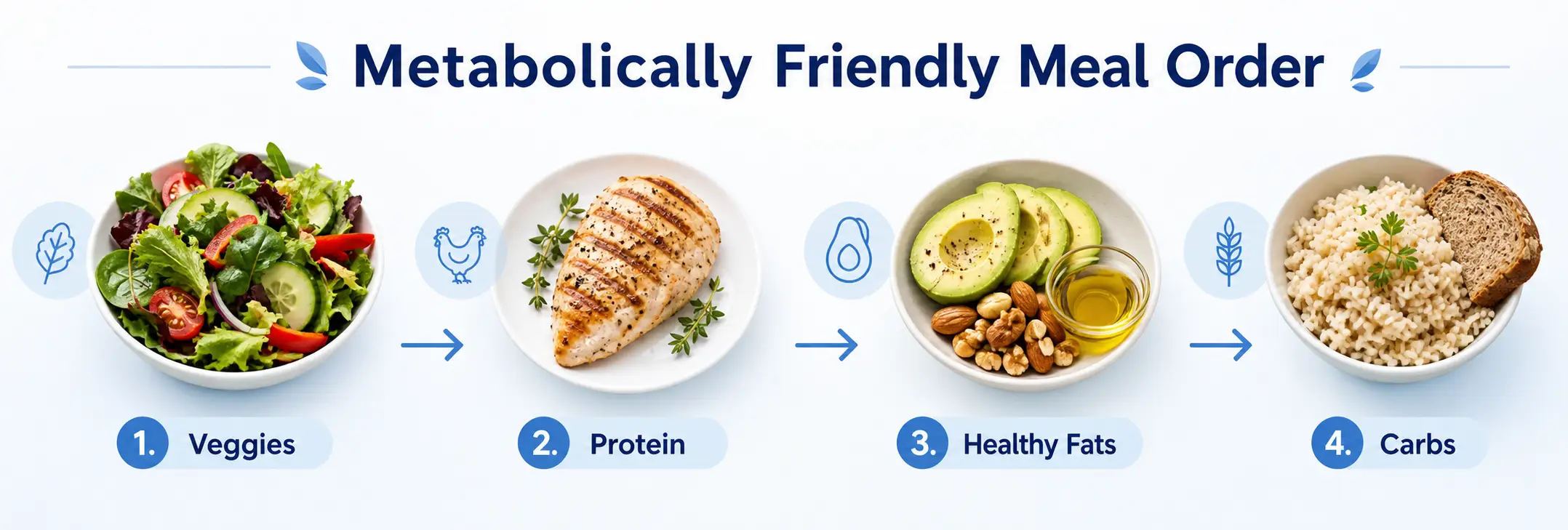
The order in which you eat foods may influence post-meal blood sugar response. Some people may benefit from eating fibre and protein before large portions of carbohydrates.
A simple meal order can be:
- Vegetables or salad
- Protein source
- Healthy fats
- Carbohydrate portion
Example:
- Start with salad
- Eat chicken, fish, eggs, tofu, or legumes
- Add olive oil, avocado, nuts, or seeds
- Finish with rice, potato, bread, oats, or fruit
This is not a strict rule, but it can be a useful tool for people focused on blood sugar balance.
17. Limit Alcohol Intake
Alcohol can affect metabolic health in several ways. It influences liver metabolism, sleep quality, appetite, food choices, and total calorie intake.
Frequent alcohol intake may make it harder to:
- Manage weight
- Sleep deeply
- Control cravings
- Maintain stable energy
- Support liver function
- Stay consistent with exercise
Limiting alcohol is a practical step for anyone serious about improving metabolic health.
18. Track Progress With Health Markers
If you want to know whether your metabolic health is improving, track more than body weight.
Useful markers include:
- Waist circumference
- Energy levels
- Hunger and cravings
- Sleep quality
- Strength and fitness
- Fasting glucose
- HbA1c
- Blood pressure
- Triglycerides
- HDL cholesterol
- Body composition
Testing should be done with guidance from a qualified healthcare professional, especially if you have existing health conditions or take medication.
Common Mistakes That Can Slow Metabolic Progress
Avoiding common mistakes can make your results more consistent.
| Mistake | Better Approach |
| Only doing cardio | Combine cardio with strength training |
| Eating too little protein | Include protein at each meal |
| Sitting all day | Add walking and movement breaks |
| Following crash diets | Build sustainable nutrition habits |
| Ignoring sleep | Create a consistent sleep routine |
| Drinking calories | Choose water or unsweetened drinks |
| Eating low-fibre meals | Add vegetables, legumes, seeds, or whole grains |
| Depending on supplements | Focus on food, movement, sleep, and consistency |
Best Foods to Improve Metabolic Health
A strong metabolic health diet is built around whole foods, protein, fibre, healthy fats, and smart carbohydrates.
| Category | Best Choices |
| Protein | Eggs, fish, chicken, Greek yogurt, tofu, lentils, beans |
| Fibre | Vegetables, oats, berries, chia seeds, flaxseeds, legumes |
| Healthy fats | Olive oil, avocado, nuts, seeds, salmon, sardines |
| Smart carbs | Sweet potato, quinoa, oats, brown rice, whole grains |
| Drinks | Water, unsweetened tea, black coffee in moderation |
The best diet for metabolic health is not based on one magic food. It is based on the overall pattern you repeat every day.
Weekly Routine for Improving Metabolic Health
Here is a simple weekly structure that combines the most effective habits.
| Day | Activity |
| Monday | Strength training and a 10-minute walk after dinner |
| Tuesday | Brisk walking or cycling |
| Wednesday | Strength training and high-protein meals |
| Thursday | Light cardio, stretching, and early bedtime |
| Friday | Strength training and reduced processed foods |
| Saturday | Long walk, swim, hike, or sport |
| Sunday | Meal preparation and active recovery |
This routine can be adjusted based on fitness level, schedule, and health status.
Daily Checklist to Improve Metabolic Health
Use this checklist as a simple daily guide:
- Eat protein with each main meal
- Add vegetables or fibre-rich foods
- Walk after at least one meal
- Drink enough water
- Avoid sugary drinks
- Reduce ultra-processed foods
- Move every hour if sitting for long periods
- Sleep 7-9 hours when possible
- Manage stress with a simple daily habit
- Stay consistent instead of chasing quick fixes
These small actions can lead to improved metabolic health over time.
How Long Does It Take to Improve Metabolic Health?
The timeline depends on your starting point, habits, health status, and consistency.
Some people may notice early improvements in:
- Energy levels
- Cravings
- Digestion
- Sleep quality
- Post-meal tiredness
- Exercise tolerance
These changes may appear within days or weeks.
Other changes may take longer, including:
- Body composition
- Waist circumference
- Insulin sensitivity
- Blood glucose markers
- Triglycerides
- Blood pressure
These usually require several weeks to months of consistent habits.
The goal is not perfection. The goal is repeated progress.
Can Supplements Improve Metabolic Health?
Supplements should not replace nutrition, exercise, sleep, and medical care. Many products marketed as “metabolism boosters” are overhyped and may not deliver meaningful results.
Some supplements may support general health when there is a deficiency, but they should be used carefully and with professional guidance.
The foundation of metabolic health remains:
- Whole foods
- Protein
- Fibre
- Strength training
- Daily movement
- Sleep
- Stress control
- Hydration
- Medical testing when needed
Always speak with a healthcare professional before using supplements, especially if you have a medical condition, take medication, or are trying to manage blood sugar, blood pressure, or hormones.
Research and Metabolic Health
Metabolic health is an important area of scientific research. Studies often explore glucose regulation, insulin signalling, mitochondrial function, inflammation, appetite, fat metabolism, and cellular energy pathways, including research interest around compounds such as MOTS-C peptide for research.
In metabolic research, compounds such as SLU-PP-332 peptide for research may also be studied in relation to energy balance, exercise-related pathways, and cellular metabolism.
However, research products should not be viewed as treatments, cures, or replacements for healthy lifestyle habits.
For personal health decisions, always rely on qualified medical guidance.
7-Day Starter Plan for Better Metabolic Health
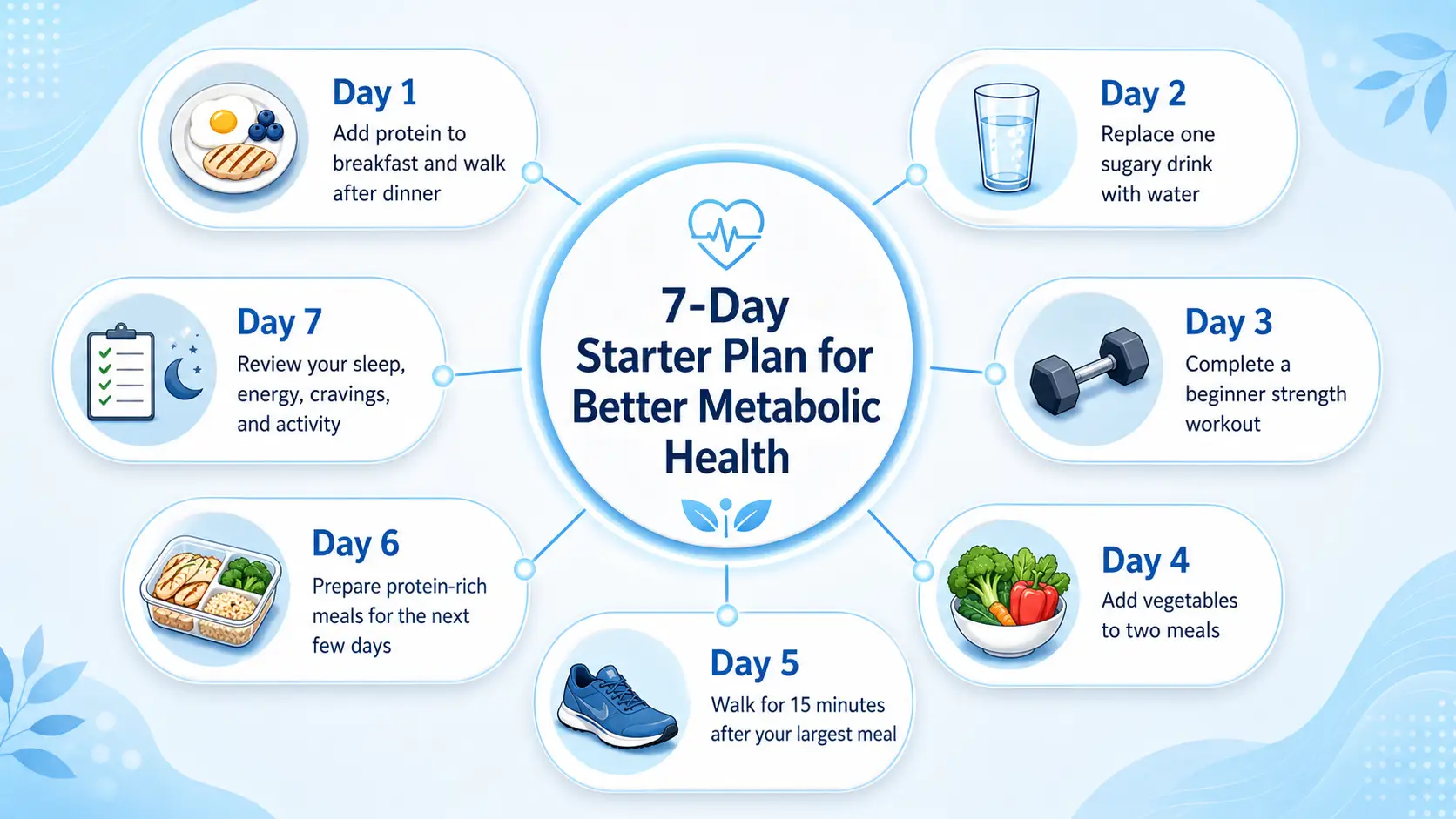
If you want a simple starting point, use this 7-day plan.
| Day | Action |
| Day 1 | Add protein to breakfast and walk after dinner |
| Day 2 | Replace one sugary drink with water |
| Day 3 | Complete a beginner strength workout |
| Day 4 | Add vegetables to two meals |
| Day 5 | Walk for 15 minutes after your largest meal |
| Day 6 | Prepare protein-rich meals for the next few days |
| Day 7 | Review your sleep, energy, cravings, and activity |
This plan is simple, but it targets several major areas of metabolic health.
Learning how to improve metabolic health is not about finding a quick fix. It is about building a lifestyle that supports energy balance, blood sugar control, insulin sensitivity, muscle health, sleep, and long-term wellness.
Improving metabolic health takes consistency, but small daily actions can create meaningful long-term results. By focusing on natural, sustainable habits, you can support better energy, healthier body composition, and improved metabolic health over time.
Explore Retatrutide for laboratory research → View specifications, pricing and Certificates of Analysis.
FAQs About How to Improve Metabolic Health
How can I boost my metabolism naturally?
You can support your metabolism naturally by building muscle through strength training, staying physically active, eating enough protein and fibre, sleeping well, managing stress, and reducing ultra-processed foods and added sugar. Metabolism is influenced by age, genetics, body composition, health status, physical activity, and hormone function, so the best approach is to focus on habits you can control.
What are the five metabolic superfoods?
There is no official list of “five metabolic superfoods,” but some foods can support metabolic health when included in a balanced diet. Good choices include eggs, fatty fish, leafy greens, legumes, and berries because they provide protein, fibre, healthy fats, vitamins, minerals, and nutrients that support blood sugar balance and overall wellness. A single food will not fix metabolism; the overall diet pattern matters more.
What are the 5 signs of metabolic health?
Five common signs of good metabolic health include stable blood sugar, healthy blood pressure, healthy triglyceride levels, healthy HDL cholesterol, and a healthy waist circumference. Metabolic syndrome is commonly linked with high blood sugar, high blood pressure, excess waist fat, high triglycerides, and low HDL cholesterol.
What should I drink first thing in the morning to boost metabolism?
Water is the best first drink in the morning. It supports hydration, digestion, and daily energy, but it does not magically boost metabolism or burn fat. Unsweetened tea or black coffee may also fit into a healthy routine, but they should not replace balanced meals, movement, sleep, and strength training.
What are the signs of a slow metabolism?
Possible signs people associate with a slow metabolism include fatigue, difficulty managing weight, low energy, feeling cold, constipation, dry skin, and changes in appetite. However, these symptoms can have many causes, including thyroid issues, sleep problems, low activity, stress, or diet. A healthcare professional can check relevant markers if symptoms persist.
What drink burns the most belly fat?
No drink directly burns belly fat. Fat loss happens when overall energy intake, activity, sleep, stress, and metabolic health habits support a sustainable calorie balance. Water, unsweetened tea, and black coffee can be better choices than sugary drinks because they reduce added sugar and liquid calories.
How do I trick my metabolism into burning fat?
You do not need to trick your metabolism. The better approach is to support fat loss and metabolic health through strength training, daily movement, enough protein, fibre-rich foods, quality sleep, and fewer ultra-processed foods. Physical activity can reduce the risk of metabolic syndrome and type 2 diabetes, while strength training helps build muscle.
What are the top 5 foods to boost metabolism?
The top foods to support metabolism are protein-rich foods, fibre-rich vegetables, legumes, whole grains, and healthy fat sources. Examples include eggs, fish, leafy greens, lentils, oats, berries, olive oil, avocado, nuts, and seeds. These foods support fullness, muscle maintenance, glucose control, and overall metabolic health.
Why is my metabolism so poor?
A poor metabolism may be linked to low muscle mass, low physical activity, poor sleep, chronic stress, high intake of ultra-processed foods, excess added sugar, hormonal issues, certain medications, aging, or genetics. Basal metabolic rate is influenced by genetics, sex, age, health, and weight, but daily habits such as exercise, diet quality, sleep, and stress management can still make a meaningful difference.
What vitamins boost your metabolism?
Vitamins and minerals help the body’s normal energy metabolism, but they do not “boost” metabolism unless you are correcting a deficiency. Key nutrients involved in energy processes include B vitamins, vitamin D, magnesium, iron, iodine, and zinc. It is best to get nutrients from a balanced diet and speak with a healthcare professional before taking supplements.
What snacks help burn fat?
No snack directly burns fat, but smart snacks can support appetite control and metabolic health. Good options include Greek yogurt with berries, boiled eggs, cottage cheese, nuts in moderate portions, hummus with vegetables, tuna, or apple slices with nut butter. Choose snacks that combine protein, fibre, or healthy fats.
What melts belly fat before bed?
Nothing melts belly fat before bed. However, better evening habits can support fat loss and metabolic health over time. Helpful habits include avoiding large sugary snacks late at night, choosing a protein-rich snack if needed, limiting alcohol, and getting quality sleep.
How to lose 5kg in 3 months?
To lose 5kg in 3 months, aim for a steady and sustainable approach with a moderate calorie deficit, high-protein meals, fibre-rich foods, regular walking, strength training, and good sleep. This timeline is realistic for many people, but results depend on body size, activity level, diet, health status, and consistency.
What foods burn visceral fat?
No food directly burns visceral fat, but some foods can support fat loss and metabolic health. Focus on lean protein, vegetables, legumes, whole grains, berries, nuts, seeds, olive oil, and fatty fish while reducing sugary drinks, refined carbohydrates, alcohol, and ultra-processed foods. Regular physical activity, healthy weight management, better sleep, and stress control are also important for reducing metabolic risk.
Sources:
The domino effect of being physically active, eating and sleeping well