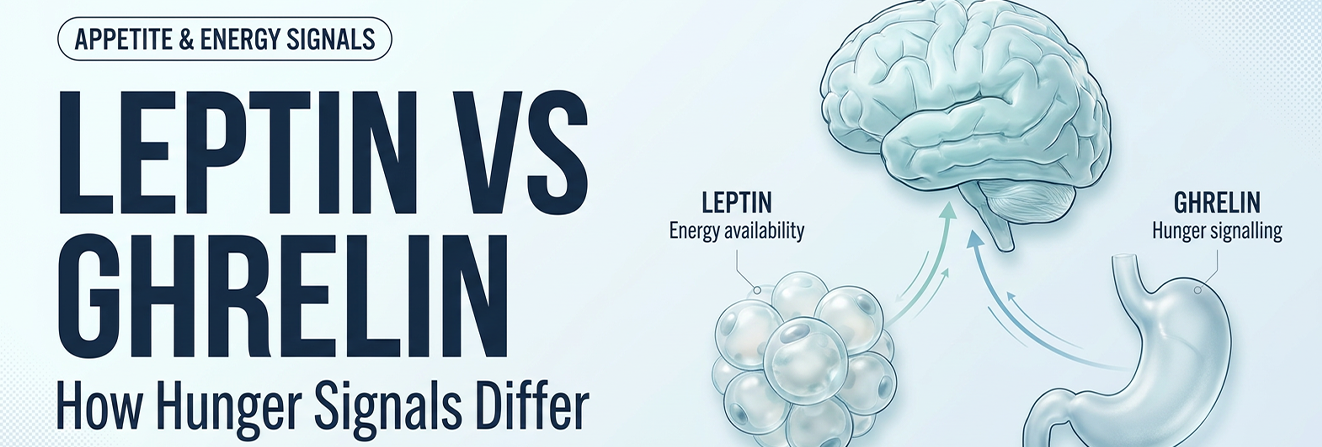
Understanding leptin vs ghrelin starts with the different information each hormone carries: leptin helps communicate the body’s energy reserves and availability, while ghrelin helps stimulate hunger and food intake.
Both are often called hunger hormones, but appetite involves more than an empty stomach or a single fullness signal. The brain combines hormonal messages with nutrients, digestive activity, food cues and previous experience.
These distinctions explain why someone can feel hungry despite substantial energy stores, why appetite may increase after weight loss, and why a blood hormone measurement cannot fully describe eating behaviour.
Leptin vs Ghrelin: The Quick Answer
Leptin is released mainly by fat cells and helps the brain assess stored energy and current energy availability. Ghrelin is produced mainly in the stomach and often rises before meals, promoting hunger. Leptin generally supports appetite suppression when signalling is effective; ghrelin promotes eating. Their effects overlap within a wider network rather than operating as independent on/off switches.
What Is the Difference Between Leptin and Ghrelin?
The main difference between leptin and ghrelin concerns their source, biological message and relationship to eating. Comparing ghrelin vs leptin also requires separating hormone concentration from the response it produces.
| Feature | Leptin | Ghrelin |
| Main source | Adipocytes, or fat cells | Endocrine cells mainly in the stomach |
| Main message | Energy reserves and availability | Signals that can promote eating |
| Typical appetite effect | Supports reduced appetite when signalling is effective | Stimulates hunger and can increase food intake |
| Relationship to meals | Not primarily an immediate meal-ending signal | Often rises before meals and falls afterwards |
| Relevant receptor | Leptin receptor, including its long signalling form | Growth hormone secretagogue receptor, GHS-R1a |
| Important measurement issue | Blood concentration does not directly show responsiveness | Total ghrelin and acylated ghrelin are different measurements |
A useful distinction is the difference between the background state of energy availability and changes surrounding a meal. However, these categories overlap: leptin can respond to short-term energy restriction, and ghrelin also changes during sustained weight loss.
Neither hormone operates on a fixed timetable in every person. A sample collected after an overnight fast answer a different question from repeated measurements before and after eating.
What Does Leptin Do Beyond Signalling Fullness?
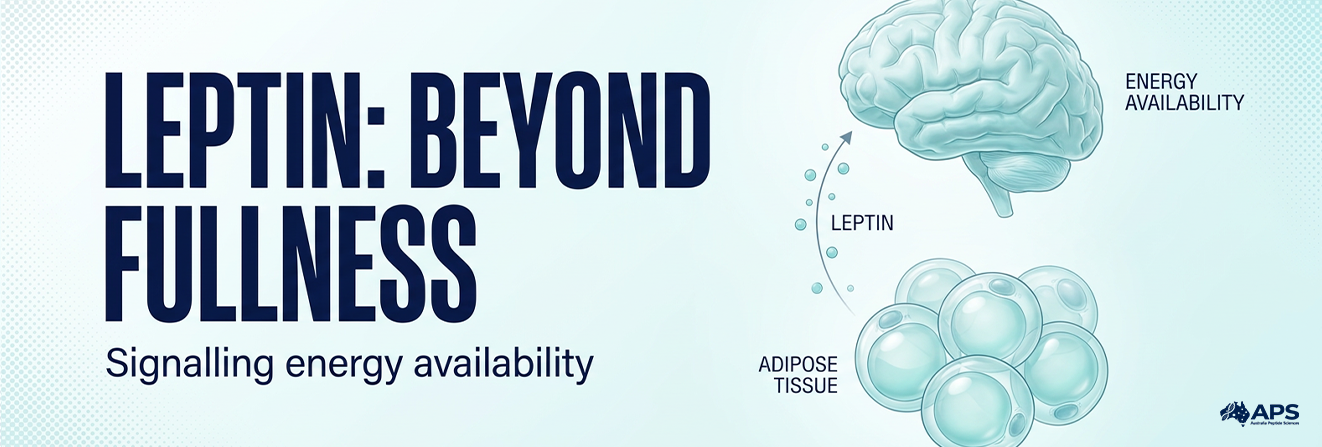
Leptin helps the brain coordinate appetite and other physiological processes with available energy. Its circulating concentration generally increases with greater fat mass, although recent food intake and other factors also influence secretion.
1. Why Energy Availability Matters
Leptin can fall during fasting before a large change in body fat occurs. This makes it more than a static measure of stored fat: it also participates in signalling reduced energy availability.
In a controlled fasting experiment in healthy men, Chan and colleagues investigated whether leptin replacement could modify neuroendocrine responses to short-term starvation. The findings supported a role for falling leptin in some of these responses, but did not establish replacement as a general weight-loss treatment.
2. Why the Satiety Label Is Incomplete
The phrase “leptin satiety hormone” reflects leptin’s role in appetite suppression, but can overstate its involvement in ending individual meals. Signals from the digestive tract and other hormones also help determine when eating stops.
Rare congenital leptin deficiency is a separate situation. A published clinical case reported reduced appetite and weight loss following leptin replacement in a child with this deficiency. That response does not establish the same benefit in people whose leptin is already abundant.
How Does Ghrelin Influence Hunger?
Ghrelin is a peptide hormone that can stimulate appetite and growth hormone release. The phrase “ghrelin hunger hormone” describes its appetite-related role, although hunger also depends on other hormonal signals, energy availability and food cues.
1. Before and After a Meal
Human studies have documented a rise in circulating ghrelin before eating and a fall afterwards. Research involving voluntarily initiated meals without usual time or food cues also supports its involvement in meal initiation.
These patterns are tendencies, not a requirement for every episode of hunger. Food anticipation, nutrient exposure and energy status contribute to the response. Ghrelin secretion does not simply switch off when the stomach becomes full.
2. Acylated and Des-Acyl Ghrelin
Acylated ghrelin carries a fatty acid modification needed for activation of the classical ghrelin receptor, GHS-R1a. Des-acyl ghrelin lacks this modification and should not be treated as an interchangeable measure of receptor activity.
The original discovery study identified ghrelin as a growth-hormone-releasing peptide. Appetite is therefore one part of its endocrine role, rather than its only function.
How Do Leptin and Ghrelin Work Together in the Brain?
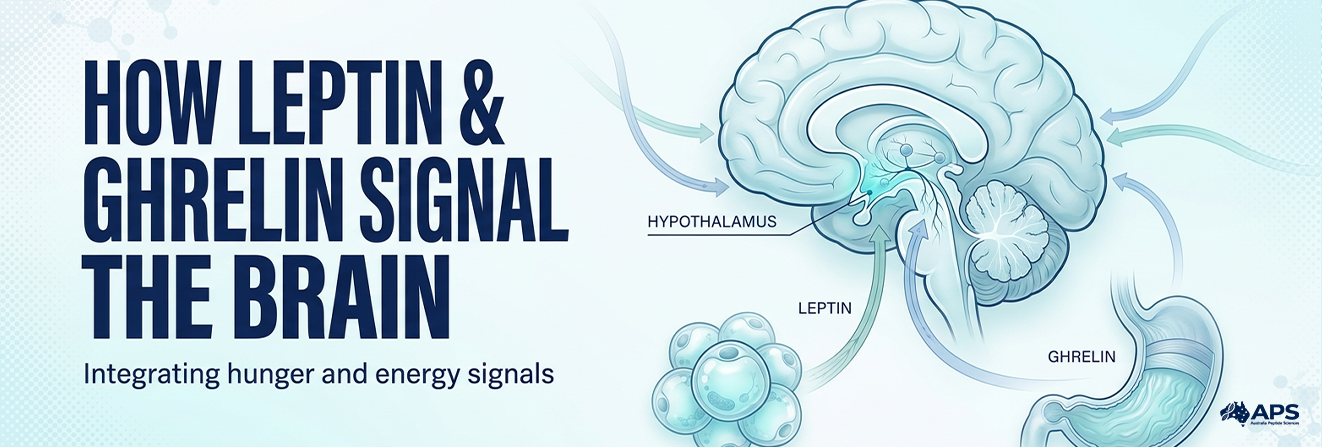
Leptin and ghrelin influence overlapping brain networks, including the hypothalamus, which integrates signals about energy needs and availability.
Two groups of neurons in the hypothalamus help explain this interaction: AgRP/NPY neurons promote feeding, while POMC neurons support appetite-suppressing melanocortin signalling. Leptin acts on these networks to help restrain food intake, whereas ghrelin can activate feeding-related AgRP/NPY pathways.
Animal experiments have helped establish these mechanisms, but their results do not directly predict an individual human’s appetite response
Other inputs include gastrointestinal stretch, insulin, GLP-1, peptide YY and cholecystokinin. Together, these contribute to satiation, which helps end a meal, and satiety, which reduces hunger between meals.
Studies involving GLP-1 research peptides examine another pathway contributing to hunger and fullness cues. This pathway helps place leptin and ghrelin within the wider network of digestive and brain signals.
Research compounds target different combinations of receptors:
Tirzepatide acts at GIP and GLP-1 receptors.
Mazdutide acts at GLP-1 and glucagon receptors.
These targets differ from leptin and ghrelin receptors. Food reward and learned routines also influence eating, so an appealing smell can trigger appetite even when energy stores are sufficient.
For a closer look at how these hormones influence appetite, this video explains where leptin and ghrelin are produced and how their signals act on the hypothalamus.
What Is Leptin Resistance?
Leptin resistance describes reduced responsiveness to leptin in a particular biological context. It is often discussed in obesity, where circulating leptin can be high without producing proportionate appetite suppression.
1. High Concentrations and Reduced Responsiveness
More leptin in the blood does not automatically mean a stronger effect in the brain. Potential explanations include altered hormone transport and changes within receptor-signalling pathways.
However, these mechanisms should not be assumed from body size or hunger symptoms alone. Experiments in animals, cell models and humans answer different questions, and resistance may vary across tissues and biological effects.
2. Why a Single Test Is Insufficient
An elevated result measures concentration, not whether a specific neural pathway is responding appropriately. Research discussions have highlighted the difficulty of defining a universal, quantitative measure of clinical leptin resistance.
A lower leptin result after weight loss is also not, by itself, proof that sensitivity has improved. Concentration and responsiveness must be interpreted separately.
This distinction matters when evaluating claims that a food, supplement or eating schedule can “reset” leptin. A change in a laboratory value does not establish restored signalling or lasting weight change.
Browse the Australia Peptide Sciences shop
What Happens to Leptin and Ghrelin During Weight Loss?
Studies examining leptin and ghrelin and weight loss track hormonal responses to reduced energy intake and declining body stores. Leptin commonly falls, while ghrelin may rise, increasing hunger and making weight maintenance more difficult.
In an Australian study, Sumithran and colleagues found that lower leptin, higher ghrelin and increased hunger persisted one year after a 10-week weight-loss programme. These findings support a biological contribution to appetite changes, but do not make weight regain inevitable.
Interpreting hormonal changes also requires distinguishing fat loss from weight loss. A lower scale reading can reflect changes in fat, lean tissue or water, so weight alone does not show how much stored fat has been lost.
Repeated measurements help distinguish ongoing energy restriction from a stable weight. Tracking the same participants over time also provides different information from comparing groups at different body weights.
How Does Sleep Affect Hunger Hormones?
The relationship between sleep and hunger hormones depends on study conditions. Sleep restriction can increase food intake, but leptin and ghrelin do not change consistently in every experiment.
In one randomised study, participants underwent eight days and nights of restricted or usual sleep. Sleep restriction increased energy intake without a significant group-related change in circulating leptin or ghrelin.
This finding illustrates why increased eating cannot always be attributed to a predictable two-hormone shift. Longer waking hours and changes in food reward may also contribute.
Differences between experiments include food availability, sleep duration, sampling times, and participant characteristics. Restricting sleep while controlling food intake creates a different energy balance from restricting sleep while allowing unrestricted eating.
For appetite regulation research, sleep should therefore be recorded as a relevant variable. Claims that every poor night produces a particular percentage change in either hormone go beyond what individual studies establish.
How Do Meals and Daily Routines Influence Appetite?
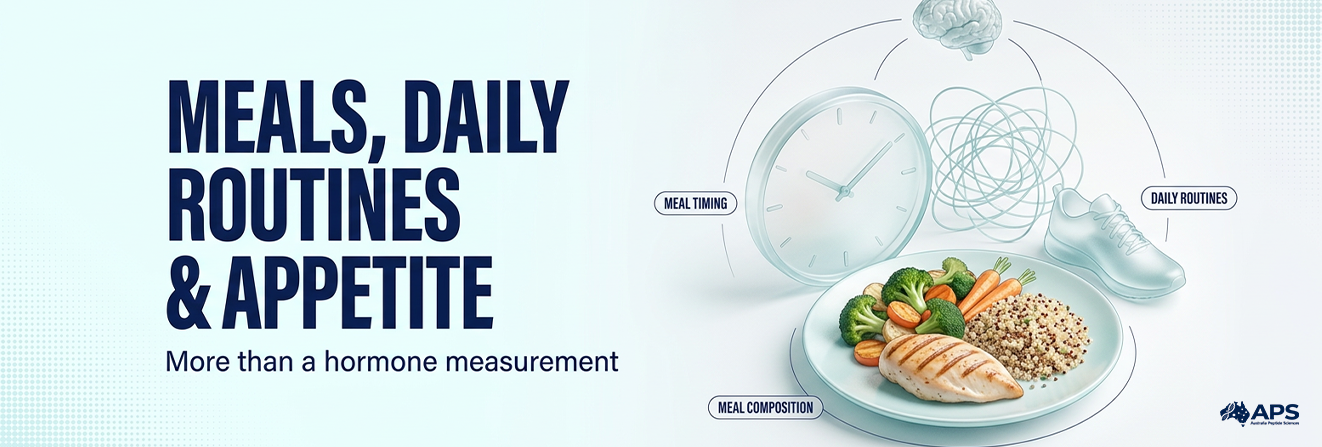
Meal composition affects fullness, but subjective appetite and measured hormone concentrations do not always move together.
A controlled human study compared responses to meal size, exercise and intravenous nutrient replacement. Under these conditions, hunger and fullness did not consistently track changes in leptin, ghrelin or insulin.
Protein, fibre, food texture and meal size can influence the eating experience through several pathways. A more satisfying meal does not necessarily demonstrate that leptin responsiveness has changed.
Meal timing also matters when interpreting results. Comparing a pre-breakfast fasting sample with an afternoon post-meal sample may capture normal variation rather than a meaningful difference between diets.
Exercise and stress add further context. Their relationships with appetite depend on the activity or stressor, its duration and the person’s energy availability. Neither should be described as a reliable way to move both hormones towards a universal ideal.
How Should Leptin and Ghrelin Research Be Interpreted?
Meaningful comparisons of leptin and ghrelin levels require attention to study design, sample handling and the outcome actually measured.
| Research detail | Why it matters |
| Human, animal or cell model | Determines how directly findings apply to human physiology |
| Fasting or post-meal collection | Changes the biological context of the result |
| Total or acylated ghrelin | Determines which molecular measurement is being compared |
| Sample processing | Can alter the amount of acylated ghrelin detected |
| Energy balance and weight stability | Helps distinguish acute restriction from a stable baseline |
| Appetite, intake or body weight | These are related but separate endpoints |
Acylated ghrelin can lose its fatty acid modification after collection. A methods chapter describes how collection, storage and assay conditions affect measured ghrelin values. Procedures should be validated for the assay rather than copied across all methods.
The same principle applies when interpreting experiments: receptor activation in cells does not establish a sustained effect on eating or body weight in humans. While tirzepatide research involves GIP and GLP-1 receptors, Retatrutide is investigated across GIP, GLP-1 and glucagon receptors. Neither receptor profile directly establishes an effect on leptin or ghrelin signalling.
Hormone measurements capture only part of metabolic health, which is assessed using several markers, including blood glucose, blood pressure and lipids.
Materials supplied for research use only are not intended for human use. Activity at a relevant receptor does not establish their suitability for clinical treatment.
Understanding Hunger Through Energy Signals
The useful distinction in leptin vs ghrelin is the information each signal contributes. Leptin helps communicate energy availability, while ghrelin can promote eating around meals and during changing energy conditions.
Neither concentration is a simple score of appetite control. Understanding a result requires knowing when it was measured, which molecular form was assessed and whether the relevant tissues responded. For research, the strongest conclusions connect a defined hormonal change with an appropriate measured outcome, while staying within the study’s limits.
Explore Australia Peptide Sciences
Frequently Asked Questions
Which hormone makes you hungry: leptin or ghrelin?
Ghrelin generally promotes hunger, while effective leptin signalling helps suppress appetite; neither acts independently of other physiological signals.
Does leptin make you feel full immediately after eating?
Leptin is not the main immediate meal-ending signal; digestive activity and other hormones contribute to satiation.
Can leptin and ghrelin both be high?
Yes. Their concentrations are regulated through different processes and are not required to move in opposite directions at every measurement.
Why can someone have high leptin and still feel hungry?
High circulating leptin does not guarantee strong responsiveness, and hunger also reflects energy availability, other hormones, food cues and learned behaviour.
Is ghrelin the same as growth hormone?
No. Ghrelin can stimulate growth hormone release, but the two are distinct hormones with different sources and functions.
Do changes in hunger hormones make weight regain inevitable?
No. Hormonal adaptations can increase appetite after weight loss, but they do not determine an individual’s eventual weight trajectory.
Does poor sleep always increase ghrelin?
No. Sleep restriction can increase food intake without a measurable ghrelin increase, and findings vary with experimental conditions.
Is GLP-1 the same as leptin?
No. GLP-1 and leptin are different hormones that act through different receptors, although both contribute to appetite-related signalling.
Does lowering leptin prove that leptin resistance has improved?
No. A lower circulating concentration does not directly demonstrate greater responsiveness in the brain or other tissues.
Can blood tests explain persistent hunger?
Hormone measurements alone cannot explain persistent hunger; clinical assessment may need to consider food intake, medicines, sleep and other possible causes.
References
- Chan JL et al. (2003). The role of falling leptin levels in the neuroendocrine and metabolic adaptation to short-term starvation in healthy men. Journal of Clinical Investigation.
- Farooqi IS et al. (1999). Effects of recombinant leptin therapy in a child with congenital leptin deficiency. New England Journal of Medicine.
- Cummings DE et al. (2004). Plasma ghrelin levels and hunger scores in humans initiating meals voluntarily without time- and food-related cues. American Journal of Physiology-Endocrinology and Metabolism.
- Kojima M et al. (1999). Ghrelin is a growth-hormone-releasing acylated peptide from stomach. Nature.
- van de Wall E et al. (2008). Collective and individual functions of leptin receptor modulated neurons controlling metabolism and ingestion. Endocrinology.
- Myers MG Jr et al. (2012). Challenges and opportunities of defining clinical leptin resistance. Cell Metabolism.
- Sumithran P et al. (2011). Long-term persistence of hormonal adaptations to weight loss. New England Journal of Medicine.
- Calvin AD et al. (2013). Effects of experimental sleep restriction on caloric intake and activity energy expenditure. Chest.
- Appetite responds to changes in meal content, whereas ghrelin, leptin, and insulin track changes in energy availability (2009). Journal of Clinical Endocrinology & Metabolism.
- Hosoda H et al. (2012). Standard sample collections for blood ghrelin measurements. Methods in Enzymology.