Description
AHK-Cu, also called AHK copper peptide, is a tripeptide-copper complex studied in controlled laboratory settings. Researchers examining AHK-Cu peptide in Australia should distinguish the established chemical description from the measured specifications of a particular 100mg product batch.
A published laboratory study evaluated AHK-Cu in isolated human hair follicles maintained in organ culture and in cultured dermal papilla cells. These findings describe experimental models, not demonstrated hair-growth or cosmetic benefits in people.
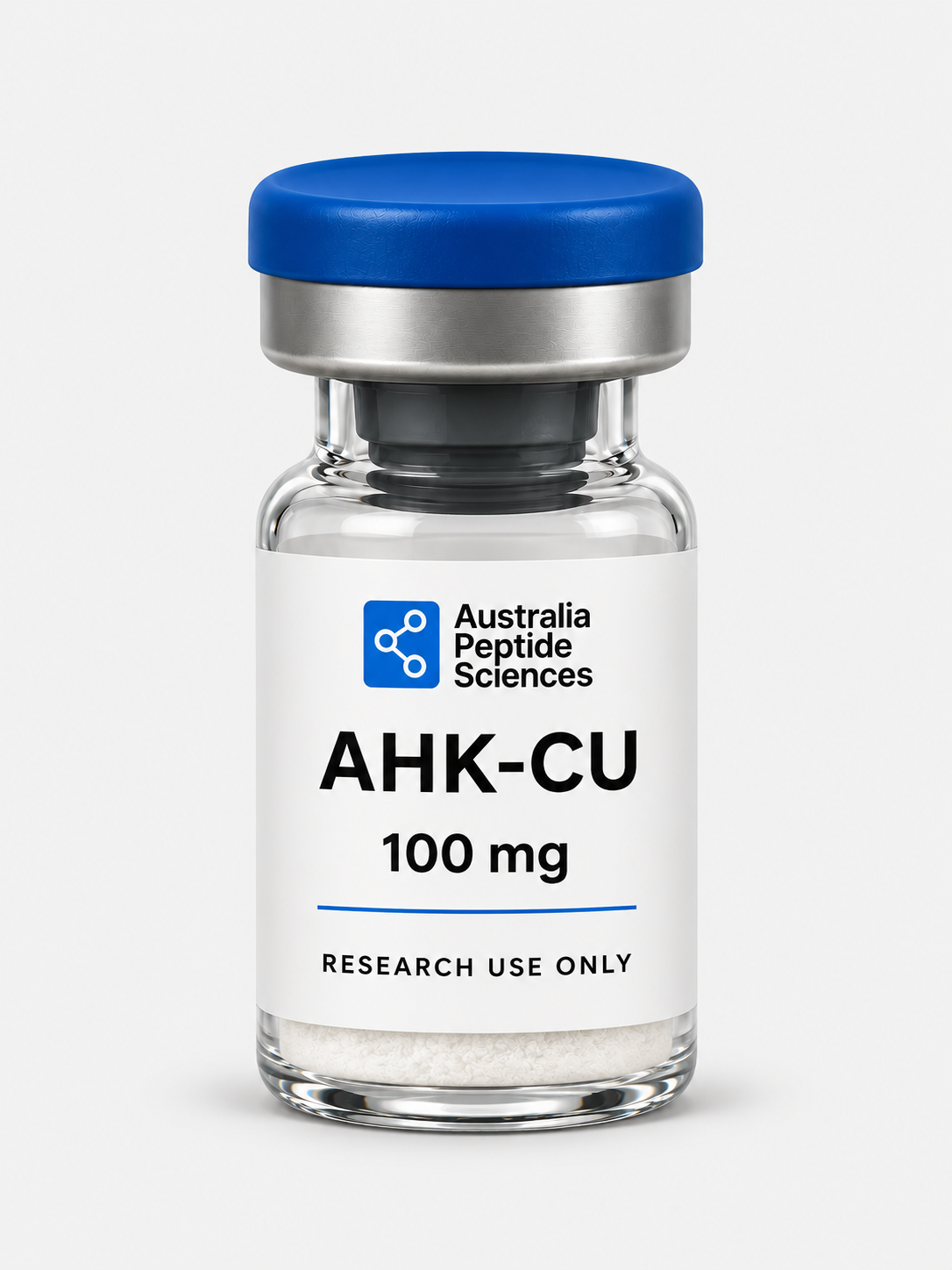
AHK-Cu 100mg Product Specifications
| Specification | Description |
| Product designation | AHK-Cu Peptide 100mg |
| Peptide sequence | Ala-His-Lys (AHK) |
| Complex class | Copper-binding tripeptide |
| Labelled quantity | 100mg |
| Form and purity | Batch-specific - form, copper content and purity are stated on the Certificate of Analysis (COA) |
| Research designation | For analytical and laboratory research only |
What Is AHK-Cu Copper Peptide?
AHK-Cu contains the amino-acid sequence alanine-histidine-lysine coordinated with copper. Copper coordination is central to its chemical identity, so a peptide sequence alone is not sufficient to document the nature or purity of the complete complex.
In a laboratory context, three distinctions matter:
- Peptide identity: confirmation of the AHK amino-acid sequence.
- Copper association: evidence that the intended copper-peptide material has been characterised.
- Batch specification: documentation of mass, analytical method, purity result and copper content where available.
What Has AHK-Cu Research Examined?
Hair-follicle organ culture and dermal papilla cells
A 2007 peer-reviewed study assessed AHK-Cu in cultured human hair follicles and dermal papilla cells. The study reported changes in follicle elongation and cellular endpoints under its experimental conditions. Its ex-vivo and in-vitro design does not establish outcomes in living people.
Research interpretation and evidence limitations
Experimental findings can vary with assay conditions, sample preparation, biological model and the identity of the test substance. The available AHK-Cu literature is relatively limited; broad claims about skin regeneration, hair restoration or clinical effectiveness are not supported by the cited research.
For researchers assessing AHK-Cu research peptides, useful evidence questions include:
- Was AHK-Cu directly tested, rather than a different copper peptide?
- Was the experiment performed in cell culture, organ culture, an animal model or humans?
- Were the tested compound and experimental endpoints adequately characterised?
- Does the publication support the specific claim being considered?
AHK-Cu vs GHK-Cu: Why the Difference Matters
AHK-Cu and GHK-Cu are different copper-binding tripeptides. AHK is alanine-histidine-lysine; GHK is glycine-histidine-lysine. The substitution of the first amino acid changes the molecular structure. They should not be treated as interchangeable analytical standards or sources of biological evidence.
| Research feature | AHK-Cu | GHK-Cu |
| Peptide sequence | Ala-His-Lys | Gly-His-Lys |
| Shared property | Both are copper-binding tripeptides |
| Evidence base | Distinct publications and experimental systems |
| Interpretation | AHK-Cu findings do not automatically validate GHK-Cu, or vice versa |
For related background, see the GHK-Cu Peptide Research Guide on the Australia Peptide Sciences website.
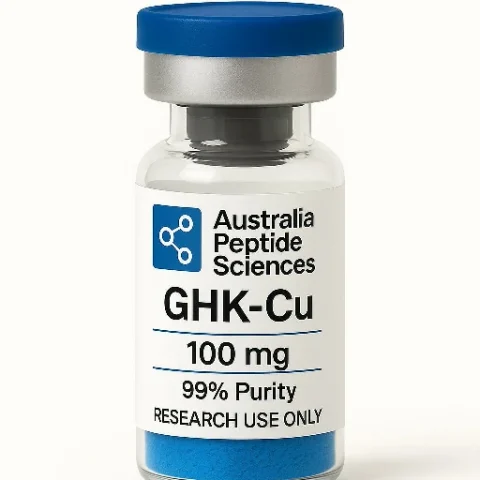
For comparison with a separate compound, review the GHK-Cu research product and its own batch documentation.
Analytical Documentation for AHK-Cu Peptide Australia
When evaluating an AHK-Cu 100mg research material, analytical documentation is more informative than a generic purity claim. The testing needed depends on the scientific question and the form of the supplied material.
Relevant batch checks may include:
- Identity assessment using suitable mass-spectrometric or complementary analytical methods.
- Chromatographic assessment, such as HPLC, with the method and result described.
- Copper content or complex-characterisation results when claimed in the specification.
- Batch number, testing date and traceability matching the actual material.
An HPLC area-purity percentage alone does not establish copper content, complete complex identity or absolute composition.
Review the Certificates of Analysis (COA) library for available reports. An existing GHK-Cu report cannot substantiate a new AHK-Cu batch.
Before You Buy AHK-Cu for Australian Laboratory Research
Searches such as “buy AHK Cu” and “AHK Cu Australia” frequently reflect product-sourcing intent. For research procurement, the necessary decision is whether a specific material has documented identity and can be lawfully supplied for its intended circumstances.
- Confirm that the item is AHK-Cu rather than GHK-Cu or an uncomplexed AHK peptide.
- Check whether “100mg” describes the complete complex, the peptide fraction or another labelled measurement.
- Request batch-matched documentation for identity, purity and relevant copper measurements.
- Verify the applicable Australian importation, supply and advertising requirements before procurement.
Research Use Only - Not for Human Use
AHK-Cu Peptide 100mg is described here exclusively for qualified analytical and controlled laboratory research. It is not intended for human or veterinary administration, cosmetic treatment, self-experimentation or therapeutic use. No efficacy or safety claims for use in people are made.
Conclusion
AHK-Cu Peptide 100mg is a distinct copper-binding tripeptide relevant to laboratory studies of peptide-copper chemistry and preclinical hair-follicle models. A useful research product description combines clear scientific context with transparent, batch-specific analytical information, while avoiding unsupported human-use conclusions.