Description
Researchers examining hCG hormone activity focus on receptor binding, intracellular signalling and biological responses in validated experimental models. Unlike short synthetic research peptides, human chorionic gonadotropin is a complex glycoprotein made up of alpha and beta subunits with carbohydrate modifications. Those structural features influence biological behaviour and analytical characterisation.
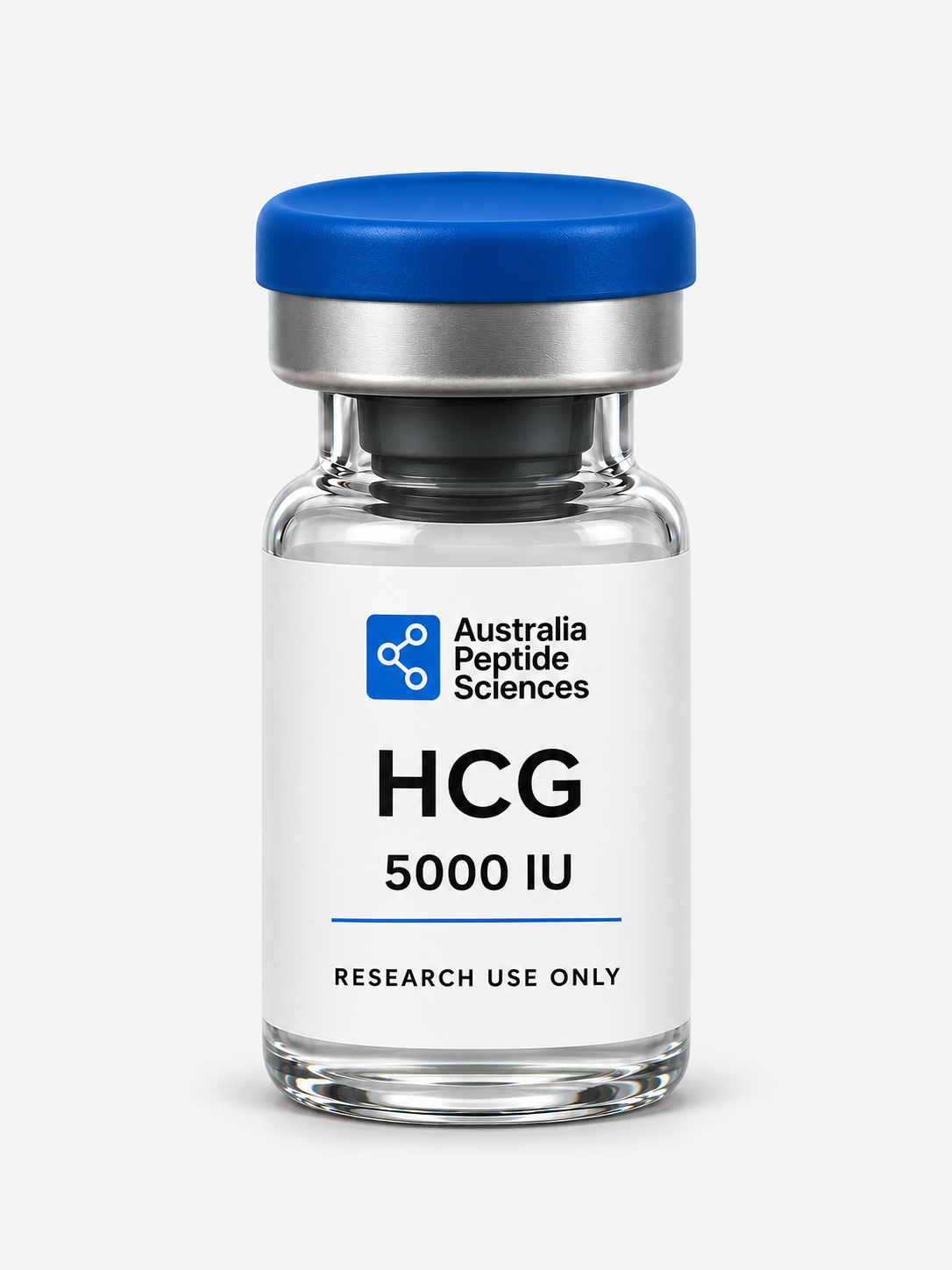
For an Australian laboratory evaluating an HCG 5000 IU listing, the following distinctions matter:
- HCG is a glycoprotein hormone, not a short peptide.
- 5000 IU represents declared biological activity, not 5000 mg or a recommended amount for administration.
- An activity claim requires an appropriate reference standard and validated assay, not an HPLC purity figure alone.
- A research-only label does not establish lawful supply, importation or advertising in Australia.
Product Specifications
| Product designation | HCG 5000 IU |
| Scientific name | Human chorionic gonadotropin (hCG) |
| Material classification | Glycoprotein hormone |
| Labelled strength | 5000 International Units (IU) - activity-based designation |
| Batch identity, assay and documentation | Batch-specific - source, formulation, assay and identity are stated on the Certificate of Analysis (COA) |
| Intended context | Controlled analytical / laboratory research only |
| Use restriction | Not for human or veterinary use |
What Is Human Chorionic Gonadotropin (hCG)?
Human chorionic gonadotropin belongs to the glycoprotein hormone family alongside luteinising hormone (LH), follicle-stimulating hormone (FSH) and thyroid-stimulating hormone (TSH). It consists of two subunits: an alpha subunit related to those of other glycoprotein hormones and a beta subunit that contributes to its distinctive biological identity.
In reproductive endocrinology, hCG is studied for its relationship with the luteinising hormone/chorionic gonadotropin receptor (LHCGR). The hormone’s glycosylation pattern and molecular heterogeneity are relevant when comparing preparations, receptor responses and assay results.
How HCG Works in Laboratory Research
hCG interacts with LHCGR, a G protein-coupled receptor. Studies show that receptor activation can engage multiple signalling routes rather than one uniform response.
- Receptor recognition and binding: studies examine how hCG and LH interact with LHCGR.
- cAMP-linked signalling: receptor activation can stimulate adenylyl cyclase and intracellular cyclic AMP pathways.
- Additional pathways: ERK-related and phospholipase-associated responses may depend on the cellular model.
- Hormone-specific signalling: hCG and LH share a receptor but can produce different response profiles under experimental conditions.
These are descriptions of experimental mechanisms, not evidence that a particular research-labelled 5000 IU product is appropriate for clinical administration.
Why 5000 IU Is Different From a Mass-Based Peptide Label
International Units are used to describe biological activity against a defined reference, rather than simply measuring the weight of material in a container. Two preparations cannot be assumed equivalent on the basis of vial appearance or total protein mass.
Laboratories reviewing an HCG 5000 IU specification should distinguish:
- Declared potency in IU and the method used to assign it.
- Protein identity and purity-related findings.
- Formulation components and potentially relevant variants or impurities.
- Batch-specific documentation and storage/stability information.
Analytical Documentation for HCG Research Materials
For a glycoprotein hormone, analytical evaluation may require complementary methods. A chromatographic result alone does not demonstrate biological potency or complete molecular identity.
- Identity: methods appropriate to intact protein and/or subunit characterisation.
- Activity: a validated potency or bioassay linked to an appropriate reference standard.
- Purity and related substances: orthogonal assays and their stated detection limits.
- Batch traceability: consistent batch number, declared potency, report date and specifications.
A useful starting point for understanding the limits of single-method testing is the APS Certificate of Analysis guide. The APS COA library can be used to inspect available reports, but a report for another product does not establish HCG batch identity or potency.
HCG Research in Australia: Regulatory Considerations
Human chorionic gonadotrophin is a Schedule 4 prescription-only substance in Australia. A research-use product description does not, on its own, make public advertising or supply lawful. Legal requirements depend on the substance, intended purpose, supply pathway and applicable federal, state and territory rules.
For Australian advertising requirements, see the TGA advertising decision tool
Research Use Only - Not for Human Use
This material is described only in the context of laboratory and analytical research. Not for human or veterinary use. No dosing, injection, reproductive-treatment, fertility, performance or therapeutic use is suggested. This description does not establish regulatory approval or legal availability.
Conclusion
HCG 5000 IU identifies an activity-labelled human chorionic gonadotropin research material, not a short peptide or a mass-based product strength. Sound interpretation of hCG research depends on receptor biology, appropriate potency measurements, reliable batch evidence and the applicable Australian regulatory framework.