Description
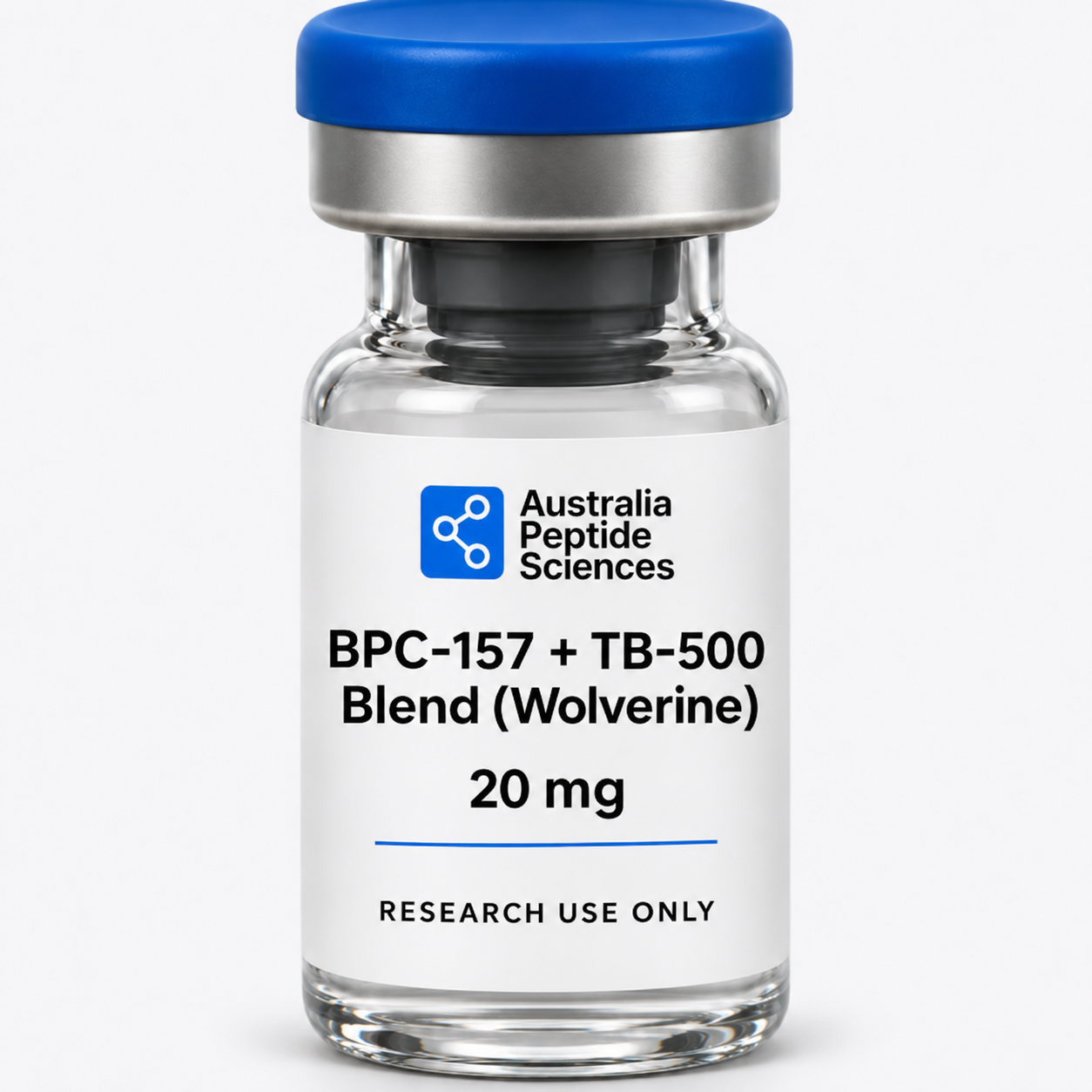
BPC-157 + TB-500 Blend (Wolverine) 20mg combines two named peptide materials in one research formulation. For Australian laboratories evaluating this pairing, a product name alone does not establish the identity, component ratio or analytical characteristics of an individual batch.
For researchers evaluating a BPC 157 TB 500 blend in Australia, the key considerations are clearly declared composition, compound-specific identity testing and suitable documentation. Published findings for either individual peptide should not be treated as proof of what the combined formulation will do in an experiment.
What Is the BPC-157 + TB-500 Wolverine Blend?
“Wolverine Blend” is a market name for a formulation containing two named peptide materials:
- BPC-157: A synthetic 15-amino-acid peptide examined principally in preclinical research models.
- TB-500: A less precise commercial label. Published analytical work has used this name for an N-terminally acetylated fragment of thymosin beta-4, while some listings use it for other thymosin-related materials.
Laboratory buyers should therefore confirm the TB-500 peptide sequence or an equivalent identity specification instead of relying on the name alone.
The 20mg label indicates the total labelled amount of the blend, not an experimental protocol or medical dose. It does not establish a 10mg/10mg split or any other component ratio; the individual quantities must be confirmed through product-specific batch documentation.
BPC-157 + TB-500 20mg: Product Information
| Product name | BPC-157 + TB-500 Blend (Wolverine) |
| Labelled size | 20mg |
| Named components | BPC-157 and TB-500 |
| Component breakdown | Individual component quantities and identities must be verified against the product-specific batch Certificate of Analysis (COA) and supporting analytical documentation. |
| Intended context | Analytical and preclinical laboratory research only |
| Human / veterinary use | Not intended for human or veterinary use |
Research Context: BPC-157 and TB-500 Are Not Interchangeable
BPC-157 in preclinical models
BPC-157 has been investigated in laboratory and animal models addressing cellular signalling, inflammatory-response pathways and tissue-associated processes. Much of the available evidence is preclinical.
Findings for the individual compound do not establish clinical benefit or the behaviour of a combined product. For a single-component comparison, see the standalone BPC-157 research product.
TB-500 and the thymosin beta-4 distinction
Research on full-length thymosin beta-4 has addressed actin-related biology, cell migration and tissue-response models. A short TB-500 fragment is not structurally identical to full-length thymosin beta-4, however, so the two should not be treated as interchangeable.
One analytical study identified a seven-residue, N-terminally acetylated fragment in material marketed as TB-500. For further comparison, see the TB-500 research guide.
Why study the two components together?
A two-peptide blend may be relevant to controlled analytical comparisons of component identity, separation and matrix effects.
Biological findings from a combined preparation cannot be attributed to one peptide without suitable experimental controls and separately characterised reference materials. There is insufficient evidence to claim that this particular blend has proven synergistic, therapeutic or performance-enhancing effects.
Analytical Quality Checks for a BPC-157 + TB-500 Blend
For a multi-component research peptide, meaningful batch documentation should address three separate checks:
- Identity: Confirm each named peptide using suitable methods, such as mass spectrometry, together with product-specific identity records.
- Chromatographic purity: Use an appropriate HPLC method to assess the chromatographic profile; one overall purity percentage does not establish the identity of both components.
- Component quantities: Verify the declared mass of BPC-157 and TB-500 individually using suitable quantitative measurements.
A Certificate of Analysis should be specific to the relevant product and batch. The Australia Peptide Sciences COA library contains reports for selected existing products, but a report for a different blend or batch cannot verify this Wolverine 20mg formulation.
For a more detailed explanation of the limits of HPLC, mass spectrometry and purity reporting, see the BPC-157 purity and COA testing guide.
Before You Buy BPC-157 + TB-500 in Australia for Research
For Australian research organisations evaluating BPC-157 + TB-500 20mg, the commercial name is only a starting point. Review the following information before considering procurement:
- Declared composition: Confirm the total labelled amount and individual quantity of each peptide.
- TB-500 identity: Obtain the specified sequence or other unambiguous identity information.
- Batch documentation: Match identity, purity and component-quantity records to the actual product batch.
- Australian requirements: Confirm applicable supply, import and advertising rules; a “Research Use Only” label does not establish legal permission.
Laboratories comparing individual ingredients can also review the TB-500 standalone research product as a separate material rather than assuming its specifications or research findings automatically apply to the blend.
Research Use Only - Not for Human Use
This product is described solely for controlled scientific and analytical research. It is not intended for human consumption, self-administration, clinical treatment, diagnostic use or veterinary use. No claim is made that the blend is suitable for treating or preventing any disease or injury.
BPC-157 + TB-500 Blend (Wolverine) 20mg brings two distinct peptide materials together in a single research formulation. For meaningful laboratory comparison, the primary requirements are a verified component breakdown, unambiguous TB-500 identity and documentation matched to the actual batch. Research-only positioning does not replace these checks or applicable Australian regulatory requirements.