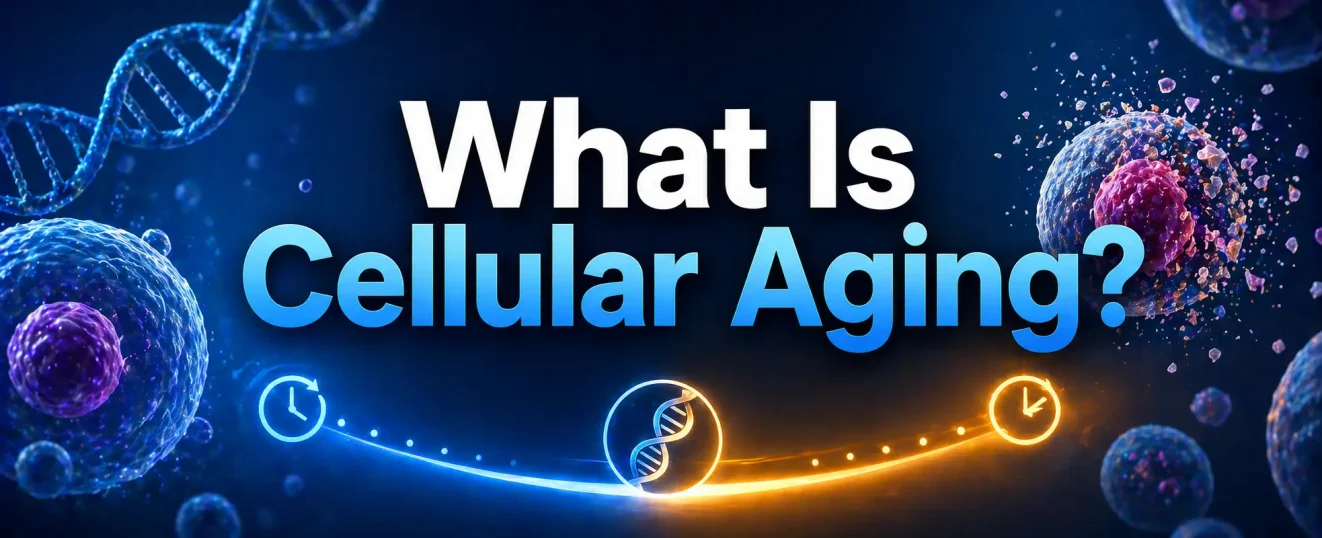
Cellular aging is the gradual change in cellular structure, function and regulatory capacity that occurs over time. Research examines these changes through processes such as DNA damage, telomere dynamics, mitochondrial function, oxidative stress, cellular senescence, autophagy and altered intercellular signalling.
Cellular Aging Definition: What Does It Mean?
The cellular aging definition refers to the progressive deterioration of cellular function caused by accumulated damage and reduced ability to repair and regenerate.
Cells follow a natural lifecycle:
- Growth
- Function
- Replication
- Decline or senescence
Over time, cells experience stress, damage, and reduced efficiency. Some cells stop dividing altogether, entering a state known as senescence, while others may lose their ability to perform essential tasks.
Cellular Aging vs. Cellular Senescence
To understand what is aging on a cellular level, it’s important to distinguish between two related concepts:
- Cellular aging: A gradual decline in cellular function over time.
- Cellular senescence: A state of stable cell-cycle arrest in which cells remain metabolically active and develop characteristic molecular changes.
Senescent cells can accumulate in tissues and influence surrounding cells, often contributing to inflammation and reduced tissue function.
What Happens to Cells as We Age? Key Biological Processes
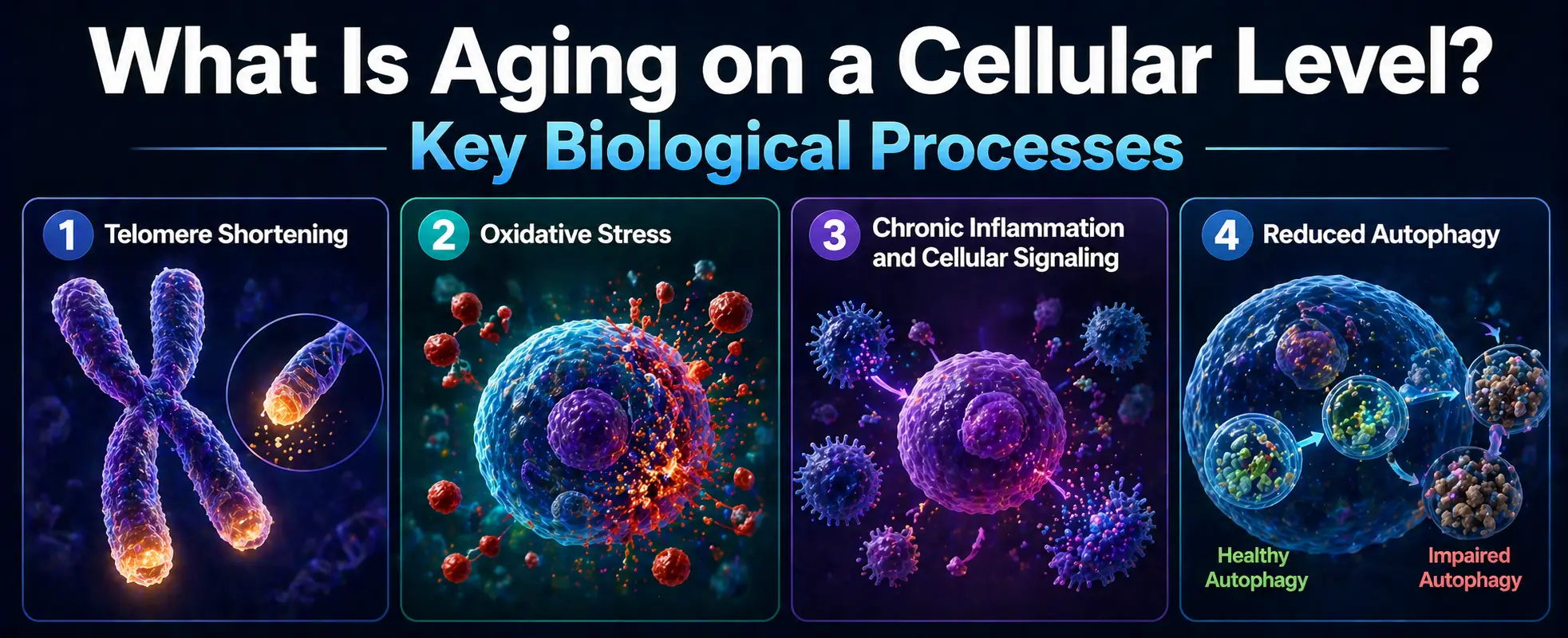
Ageing affects several cellular systems at the same time, including DNA repair, energy metabolism, cell division, protein quality control and communication between cells. These changes vary among cell types, but several interconnected processes contribute to age-related cellular decline.
-
DNA Damage and Telomere Shortening
DNA is continually exposed to damage from normal metabolic activity and environmental factors such as ultraviolet radiation and pollutants. Although cells have repair systems, some damage may remain and accumulate over time, potentially disrupting normal cellular function.
Telomeres, the protective structures at the ends of chromosomes, also tend to shorten when many types of cells divide. Critically short or damaged telomeres can trigger cellular senescence or cell death, although telomere behaviour differs among tissues and cell types.
-
Mitochondrial Changes and Oxidative Stress
Mitochondria generate much of the energy required for cellular activity. Age-related changes in mitochondrial function can affect cellular energy systems and redox regulation. Related mechanisms are examined further in research on mitochondrial dysfunction.
Oxidative stress occurs when reactive species exceed cellular antioxidant, repair and removal capacity. Under experimental conditions, this imbalance can alter proteins, lipids, DNA and redox-sensitive signalling pathways.
NAD+ is a coenzyme involved in cellular energy metabolism and signalling pathways. In laboratory ageing research, NAD+ research material can be examined in experimental models involving mitochondrial activity, redox metabolism and related cellular processes.
-
Changes in Cell Division and Repair
In tissues that rely on dividing cells, replication capacity and stem-cell function may decline with age. This can reduce the efficiency of tissue maintenance and repair. However, not all cells divide regularly, and the effects of ageing differ depending on the cell type and its role in the body.
-
Cellular Senescence and Chronic Inflammation
Some damaged or stressed cells enter a state called cellular senescence, in which they stop dividing but remain metabolically active. Senescent cells can release cytokines, growth factors and enzymes known collectively as the senescence-associated secretory phenotype, or SASP.
When these signals persist, they may contribute to chronic, low-grade inflammation, disrupt communication between cells and interfere with normal tissue repair.
-
Reduced Autophagy and Waste Accumulation
Autophagy supports cellular quality control by breaking down and recycling damaged proteins and organelles. Its efficiency may decline with age, allowing defective components to accumulate inside cells.
This buildup can interfere with energy production and other cellular processes, contributing to a gradual loss of cellular function.
Main Causes of Cellular Aging
Several factors contribute to what is cellular aging, including both internal biological processes and external influences.
Internal Causes
- Natural metabolic processes
- Genetic factors
- Hormonal changes
- Cellular replication limits
Environmental and Cellular Stressors Studied in Ageing Research
Cellular ageing research also examines external and physiological stressors that can influence oxidative damage, inflammatory signalling and repair capacity. Experimental variables may include ultraviolet exposure, tobacco-smoke components, nutrient conditions, persistent stress signalling, altered activity states and environmental pollutants. Their effects depend on exposure, cell type and experimental model.
Cellular Aging Markers and Research Findings
Although cellular ageing begins internally, certain signs may reflect these changes over time.
Cellular ageing is evaluated through measurable biological changes rather than outward symptoms alone. Common research endpoints include senescence markers, DNA-damage responses, telomere-related measurements, mitochondrial function, oxidative-stress markers, autophagy activity, protein-quality control and changes in cellular signalling. Skin ageing provides one experimental context in which structural and extracellular-matrix changes can also be examined, as discussed in What Causes Skin Aging?
GHK-Cu is investigated in laboratory models involving collagen signalling, extracellular-matrix biology, oxidative-stress pathways and other cellular processes relevant to skin research.
How Cellular Aging Is Studied Experimentally
While aging cannot be stopped, understanding how to slow cellular aging focuses on slowing its progression and supporting healthy cell function.
Experimental approaches to cellular ageing commonly combine multiple endpoints rather than relying on one marker. Research may examine senescence-associated proteins, DNA-damage signalling, telomere-related measures, mitochondrial respiration, reactive-oxygen-species balance, autophagy and proteostasis, gene-expression changes and cell viability. Interpretation depends on the cell type, model, exposure conditions and analytical methods used.
Cellular Aging and Investigational Research Models
Epitalon has been examined in cell-based ageing research.
Khavinson et al.’s fibroblast study reported telomerase activity and telomere elongation in cultured human fetal fibroblasts. Those cellular observations do not establish human anti-ageing or longevity effects.
Research endpoints may include cellular stress responses, inflammatory signalling, energy metabolism, senescence, repair pathways and other age-associated cellular processes. These models are used to investigate mechanisms rather than establish personal anti-ageing outcomes.
Use the Peptide Certificates of Analysis (COAs) to check the reported identity, purity and batch composition of research materials.
Experimental controls address a separate question: whether the measured cellular response can be attributed to the tested material under the stated conditions.
Conclusion: Why Cellular Aging Matters
Cellular aging describes interconnected changes in DNA maintenance, mitochondrial function, redox balance, senescence, autophagy and other cellular systems. No single marker defines the entire process, so ageing research generally relies on multiple complementary measurements and well-controlled experimental models. Findings from cellular research should remain distinct from claims about personal anti-ageing, clinical effectiveness or human use.
FAQs About Cellular Aging
Can cellular aging be fully reversed in experimental models?
No universal reversal of cellular aging has been established. Research instead examines whether specific age-associated cellular phenotypes can be modified under defined experimental conditions.
What is meant by cellular aging?
Cellular aging refers to the gradual decline in a cell’s ability to function, repair itself, and divide efficiently as time passes.
Which processes are studied as modulators of cellular aging?
Research commonly examines DNA repair, mitochondrial quality control, redox regulation, autophagy, proteostasis, telomere biology and senescence-associated signalling.
What markers are used to study cellular aging?
Researchers may assess senescence markers, DNA damage, telomere-related changes, mitochondrial function, oxidative stress, autophagy and alterations in cellular signalling.
Can a single nutrient or compound establish cellular regeneration?
No. Cellular regeneration and ageing involve multiple pathways, and evidence requires appropriate molecular, structural or functional measurements rather than one nutrient or compound alone.
Which stressors are commonly examined in cellular aging research?
Experimental studies may examine oxidative stress, DNA damage, inflammatory signalling, mitochondrial impairment, environmental exposures and disruptions in cellular quality-control pathways.
How is cellular aging assessed experimentally?
Cellular aging is assessed using combinations of molecular, biochemical and functional measurements. No single test provides a complete measure of cellular ageing across all tissues or models.
Sources:
- The Hallmarks of Aging
- Telomere Dysfunction in Ageing and Age-Related Diseases
- Mitochondrial Dysfunction and Oxidative Stress in Aging and Disease
- NAD+ Metabolism and Its Roles in Cellular Processes During Ageing
- Role of Cellular Senescence in Inflammation and Regeneration
- Molecular Mechanisms of Autophagy Decline During Aging
- GHK Peptide as a Natural Modulator of Multiple Cellular Pathways in Skin Regeneration