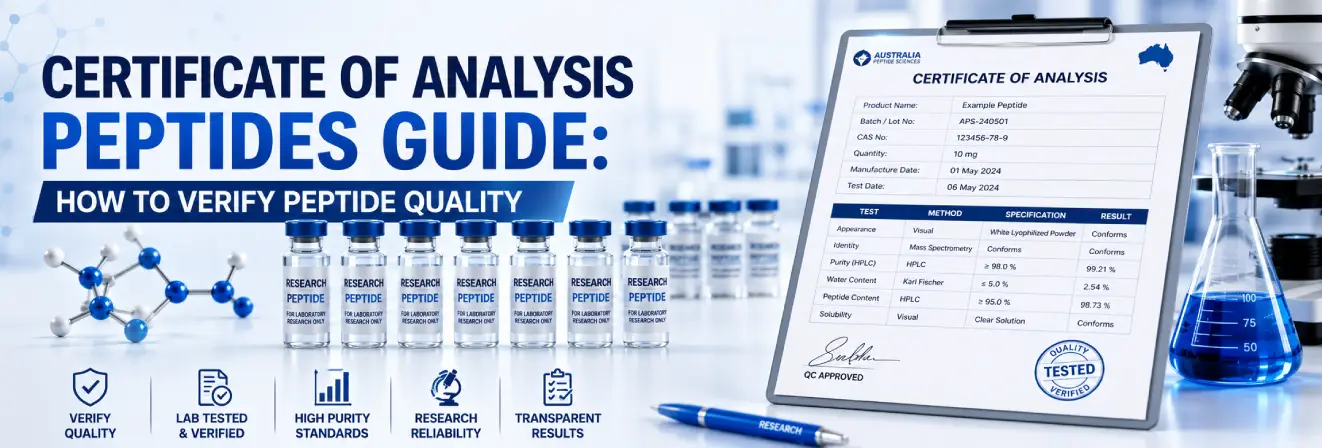
A peptide Certificate of Analysis (COA) reports analytical results for a defined batch and should be interpreted alongside the stated test methods and product specifications. COA data describe laboratory characteristics of the material and do not establish therapeutic effectiveness or suitability for human or veterinary use.
As demand for COA peptides and high-purity research compounds increases, researchers are becoming more selective about sourcing. In this guide, we’ll explain what a peptide certificate of analysis is, why it matters, how to read one, and what researchers should look for when evaluating COA research compounds.
What Is a Certificate of Analysis for Peptides?
A peptide Certificate of Analysis reports batch-specific analytical information such as compound identification, measured purity and the testing methods used. The meaning of those results depends on the analytical method, specification and batch referenced in the document.
Researchers commonly review a COA because it provides greater transparency around:
- Peptide identity
- Purity percentage
- Batch or lot number
- Testing methods used
- Quality verification
Rather than relying only on product descriptions or supplier claims, researchers often use COA peptides documentation to better evaluate consistency and reliability before compounds are used in laboratory settings.
Batch-specific analytical documentation is available through the Peptide Certificates of Analysis (COAs).
Why Do Researchers Check COA Peptides?
Researchers often prioritize COA peptides because quality and consistency matter in laboratory research. A peptide certificate of analysis may help researchers better understand whether a compound has undergone research peptide testing and if product details align with expected standards.
Many researchers check COAs to:
✅ Verify peptide purity
✅ Review batch testing peptides information
✅ Understand testing methods such as HPLC or mass spectrometry
✅ Improve confidence in peptide quality assurance
In research environments, even small inconsistencies may affect preparation, handling, or experimental reliability, which is why many researchers view a lab testing certificate as an important part of evaluating COA research compounds.
Broader laboratory-quality and supplier considerations are covered in the Research Peptides Australia guide.
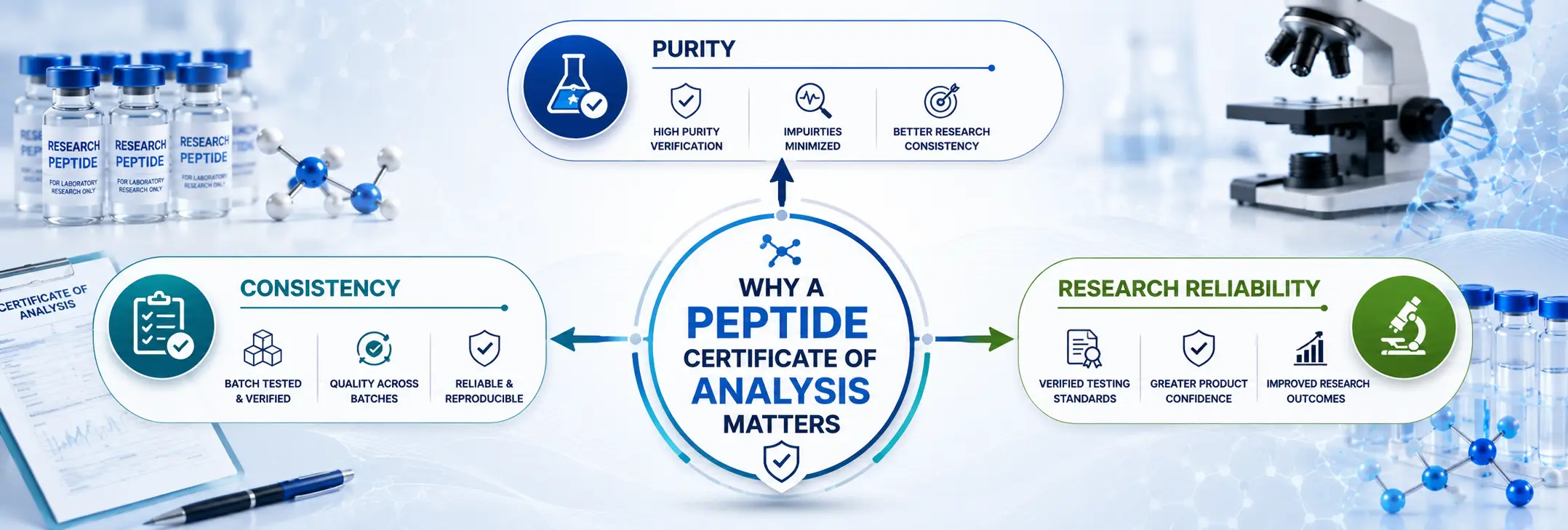
Why a Peptide Certificate of Analysis Matters
A COA provides a documented basis for evaluating a specific batch rather than relying solely on product descriptions or supplier claims. Relevant information may include identity, purity, lot number, analytical method and test date. These data can support material traceability and experimental reproducibility when interpreted with the laboratory protocol and product specifications.
Purity
One of the main reasons researchers review a peptide purity certificate is to evaluate Purity
Purity refers to how much of a sample contains the intended peptide compound compared to unwanted impurities or byproducts. In research settings, higher purity may support better consistency in preparation and laboratory handling.
For example, many researchers prioritize high-purity peptides because variations in compound quality may influence experimental reliability. This is why research peptide testing and transparent documentation often matter when evaluating COA peptides.
Consistency
Batch-specific testing is important because production lots may differ. Comparing analytical documentation between batches can help laboratories identify changes in purity, identity or other reported characteristics that may affect experimental consistency.
Researchers often review COAs to better understand:
- Whether a batch has been tested
- If quality remains consistent
- Whether compound information aligns with expected standards
Greater consistency can help support smoother laboratory workflows and better preparation reliability.
Research Reliability
In laboratory environments, reliable research often starts with reliable materials. A lab testing certificate may help researchers better understand how compounds have been verified and whether appropriate testing standards have been followed.
Researchers commonly value peptide quality assurance because transparency around testing may support:
- More dependable preparation
- Better product confidence
- Improved sourcing decisions
This is one reason many researchers prioritize suppliers offering transparent COA research compounds, helping provide greater clarity around purity, testing, and overall product quality.
What Information Should a Peptide COA Include?
A peptide COA may report the batch or lot identifier, compound identity, analytical result, testing method and test date. Additional information can vary by supplier and document type. Storage instructions and product-handling information should be reviewed from the applicable product documentation where provided.
Batch Number
A batch number (or lot number) is one of the most important details on a COA. It identifies the specific production run a peptide came from, helping researchers track consistency across different batches.
Why does this matter?
Because batch testing peptides helps support greater transparency and quality tracking. If researchers reorder the same compound, the batch number can help verify whether testing and documentation remain consistent.
Purity Percentage (%)
The purity percentage is often the first thing researcher’s check on a peptide purity certificate. This figure shows how much of the tested sample contains the intended peptide compound compared to impurities or byproducts.
For example:
Purity percentages should be interpreted according to the analytical method and specification used. A numerical purity result alone does not establish overall material quality, identity or suitability for a particular experiment.
Researchers often prioritize higher purity because consistency matters in laboratory environments and may help support more dependable handling and preparation.
Testing Method
A reliable lab testing certificate should also explain how the peptide was tested
Common testing methods used in research peptide testing include:
| Testing Method | Purpose |
| HPLC (High-Performance Liquid Chromatography) | Can evaluate chromatographic purity under the stated method conditions |
| Mass Spectrometry (MS) | Can support evaluation of molecular mass and compound identity |
These testing methods help support peptide quality assurance by providing greater transparency around how compounds are verified.
Storage Information
Some COA research compounds also include storage recommendations to help maintain stability and consistency.
Storage guidance may include:
- Recommended temperature
- Handling considerations
- Stability conditions
Proper storage can be important for supporting consistent laboratory workflows and research preparation.
Manufacturing or Testing Date
A peptide certificate of analysis should ideally include a manufacturing date or testing date, helping researchers understand when quality verification occurred.
Researchers often review this information to better understand:
- Product recency
- Batch timelines
- Quality tracking
The more transparent a supplier is about testing documentation, the easier it becomes for researchers to evaluate certificate of analysis peptides with greater confidence.
Laboratory materials supplied for controlled research use are listed in the research peptide catalogue.
How to Read a Peptide Certificate of Analysis
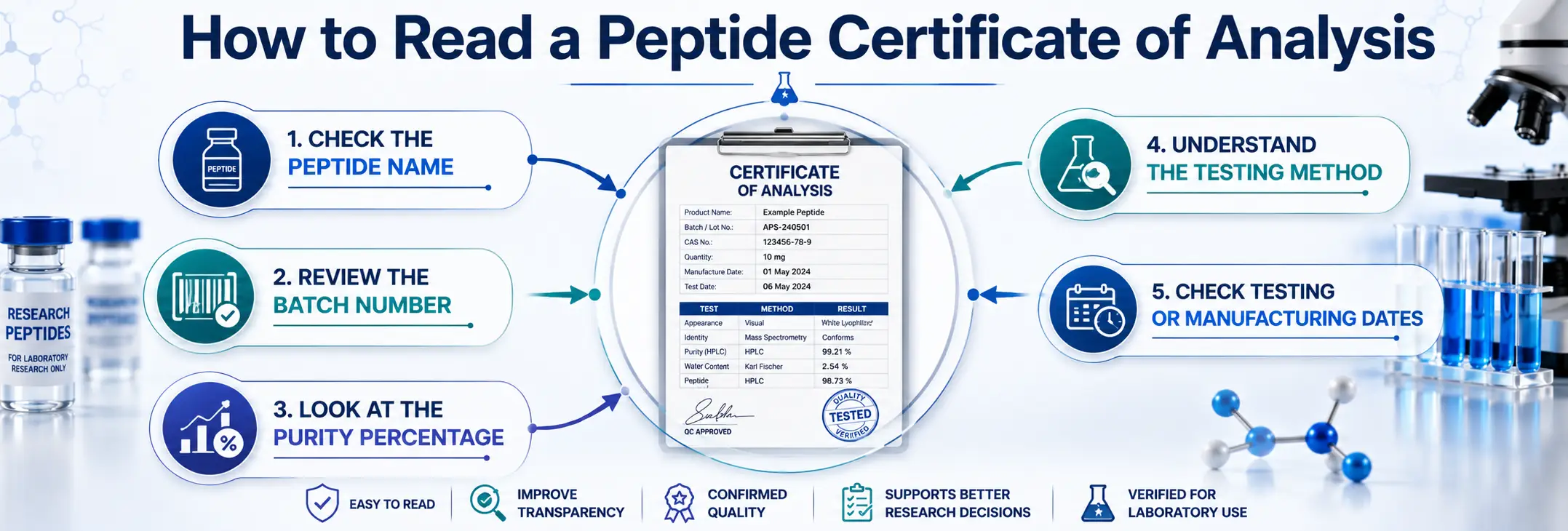
At first glance, a peptide certificate of analysis (COA) may look technical or difficult to understand, especially for researchers new to certificate of analysis peptides. However, most COAs follow a simple structure, and once you understand the key sections, it becomes much easier to evaluate COA peptides and assess product transparency.
A beginner-friendly way to read a lab testing certificate is to focus on five key areas:
1. Check the Peptide Name
Start by confirming the Peptide identity
The COA should clearly state the compound being tested. This helps ensure the document matches the specific peptide being sourced.
Researchers often use this section to verify that the peptide certificate of analysis corresponds to the intended compound.
2. Review the Batch Number
Next, look for the batch or lot number
This identifies the specific production run linked to the tested peptide.
Why does this matter?
Because batch testing peptides helps support consistency. A reliable supplier should be able to match a COA to a particular batch, helping researchers better track quality and product verification.
3. Look at the Purity Percentage
The purity percentage is often one of the most important sections of a peptide purity certificate.
Researchers commonly check Purity % to understand how much of the tested sample contains the intended peptide compound.
For example:
| Purity Level | What It Generally Means |
|---|---|
| Reported purity percentage | Should be interpreted with the analytical method, chromatogram, specification and intended experimental requirements. A percentage alone should not be used as a universal quality grade. |
Higher purity does not necessarily mean “better” in every context, but many researchers prioritize high-purity compounds because consistency matters in laboratory environments.
4. Understand the Testing Method
A reliable certificate of analysis peptides document should also explain how the compound was tested
Two of the most common methods in research peptide testing include:
| Testing Method | Purpose |
| HPLC (High-Performance Liquid Chromatography) | Measures peptide purity |
| Mass Spectrometry (MS) | Helps verify molecular identity |
Researchers often look for these methods because they support greater peptide quality assurance and transparency.
5. Check Testing or Manufacturing Dates
Finally, researchers often review testing date or manufacturing information
This helps provide context around:
- Batch timing
- Product verification
- Quality tracking
Transparent suppliers often make this information easy to identify, helping researchers better evaluate COA research compounds.
Understanding Peptide Purity Certificates
One of the most commonly misunderstood sections of a peptide certificate of analysis is Purity
Many researchers ask:
What does 98%+ purity actually mean?
A reported purity value represents the result obtained using the stated analytical method and conditions. It should not automatically be interpreted as the percentage of every possible component in the sample or as complete confirmation of molecular identity.
Analytical quality control is also connected to peptide production and purification, which are discussed in the Peptide Synthesis guide.
For example:
A peptide listed as 99% purity indicates that the tested sample was predominantly composed of the intended compound.
This is one reason researchers sourcing COA peptides often prioritize high-purity compounds.
Why Do Impurities Matter?
In laboratory settings, impurities may influence:
- Product consistency
- Preparation accuracy
- Research reliability
- Batch reproducibility
While no manufacturing process is completely perfect, peptide quality assurance helps researchers better understand how compounds are tested and verified before laboratory use.
This is why many researchers prefer suppliers that provide transparent peptide purity certificates, helping improve confidence in research peptide testing and product consistency.
Why Peptide Quality Assurance Matters
In peptide research, consistency matters. This is why peptide quality assurance plays such an important role when researchers source compounds for laboratory investigation. A reliable certificate of analysis peptides document may help improve confidence in product quality, preparation consistency, and batch verification.
Researchers often prioritize quality assurance because it may support:
- Greater confidence in product consistency
- More transparent sourcing decisions
- Better visibility into testing standards
- Improved research preparation
Supplier transparency matters as well. Researchers increasingly value suppliers that clearly explain product categories, testing information, biological pathways, and research focus rather than relying on vague descriptions.
Evaluating a Research Peptide Supplier
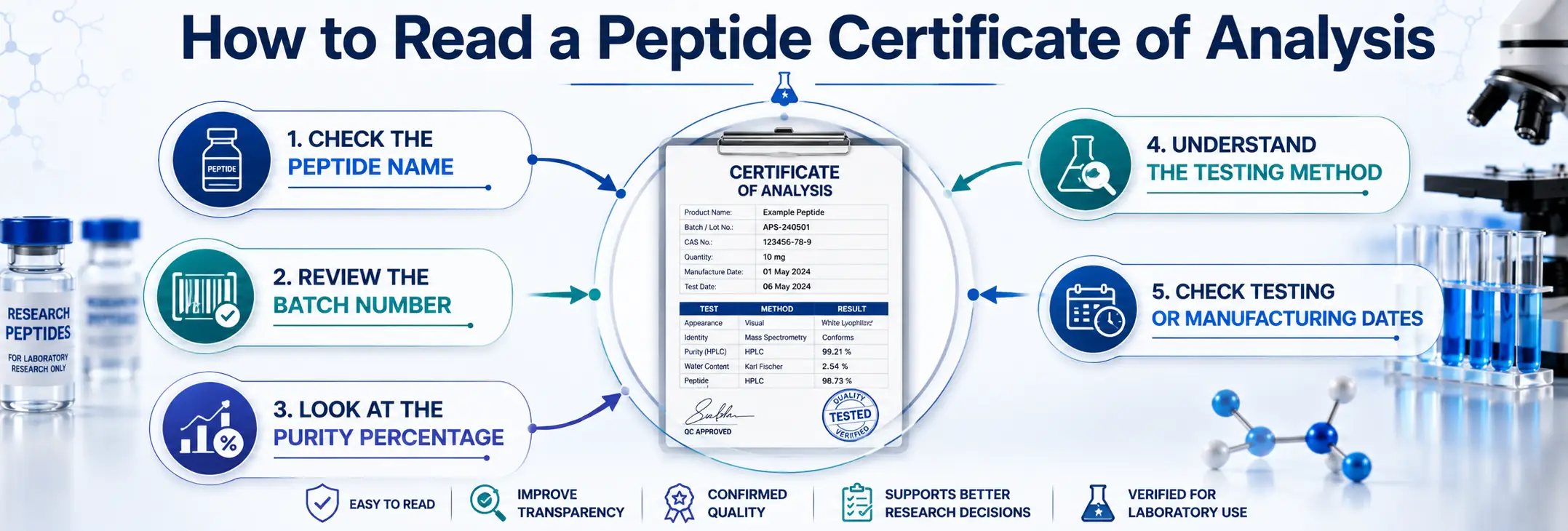 Laboratories can evaluate suppliers according to transparent compound identification, batch-specific analytical documentation, clearly stated testing methods, storage information, research-use-only positioning and consistency between product specifications and COA data. Unsupported biological claims should remain separate from analytical quality documentation.
Why Researchers Prioritize Transparency
As interest in research compounds online Australia continues to grow, transparency has become one of the biggest trust signals when evaluating suppliers. Researchers increasingly look for suppliers that clearly explain product information, testing methods, peptide categories, and intended research purpose.
Transparent suppliers make it easier to understand:
- What a compound is
- How it is commonly studied
- How product quality is verified
- Which biological pathways researchers commonly investigate
This is one reason many researchers prefer suppliers that prioritize educational content, clear research positioning, and transparent quality standards. At Australia Peptide Sciences, compounds are organized around biological systems and research categories, helping create a more informed and research-focused sourcing experience.
COA Interpretation Across Research Compounds
Batch-specific analytical documentation is relevant across peptide chemistry, receptor-pharmacology, cellular-signalling, mitochondrial, neuropeptide and multi-receptor research. The analytical principles used to evaluate identity, purity and batch traceability remain distinct from the biological pathway being investigated.
At Australia Peptide Sciences, researchers can explore clearly organized categories supported by educational information and research-focused positioning, including:
- Recovery & Cellular Research Peptides (bpc & cell) — commonly studied for tissue signaling, cellular repair, and recovery biology
- Growth Hormone & Recovery Peptides (GHRP for research) — researched for GH signaling and hormonal communication pathways
- Metabolic & Appetite Research Peptides (GLP1 Peptides)— commonly explored in studies involving energy balance and metabolic signaling
- Brain, Sleep & Healthy Aging Peptides (Neuropeptides) — studied for cognitive pathways, sleep biology, and longevity-related research
Why COA Transparency Matters for Research Compounds
Not every peptide category is researched for the same purpose, which is why COA research compounds and transparency often matter. Regardless of the peptide or research category, analytical documentation should correspond to the specific material and batch being evaluated. Evidence associated with one compound or lot should not be transferred automatically to another.
At Australia Peptide Sciences, product categories are supported by research-focused descriptions, high-purity positioning, and transparency around compound categories, helping researchers better understand how peptides are commonly studied across different biological systems.
COA data describe analytical characteristics and do not convert a research compound into an approved therapeutic product. The distinction is explained further in the Research Use Only Peptides guide.
Use the Research Peptide Guides to explore how analytical documentation relates to purity, storage and laboratory preparation.
FAQs about Certificate of Analysis Peptides
What is a certificate of analysis for peptides?
A certificate of analysis peptides document is a laboratory report that helps verify important details about a peptide compound, including purity, testing methods, batch number, and quality standards. Researchers commonly review COAs to better understand product transparency and consistency.
Why do researchers check COA peptides?
Researchers check COA peptides to better evaluate purity, batch consistency, testing methods, and product verification before laboratory use. A transparent peptide certificate of analysis may help support greater confidence in research preparation.
What does a reported 98% purity result mean on a peptide COA?
It indicates the purity result obtained using the stated analytical method and conditions. The value should be interpreted together with the testing method, chromatographic data, specification and identity information rather than as a universal measure of overall quality.
What is HPLC in peptide testing?
HPLC (High-Performance Liquid Chromatography) is a laboratory testing method commonly used in research peptide testing to evaluate peptide purity and identify impurities within a sample.
What is mass spectrometry in peptide testing?
Mass spectrometry is a laboratory method commonly used to help verify the molecular identity of a peptide compound and confirm whether the tested material matches the expected structure.
Why does batch testing matter for peptides?
Batch testing peptides helps researchers evaluate consistency between production runs and supports better transparency around product verification and quality standards.
What are common red flags in peptide COA documentation?
Potential concerns include a missing batch identifier, unsupported purity claims, unclear testing methods, COA data that cannot be linked to the relevant product batch or limited analytical transparency.
Why does peptide quality assurance matter?
Peptide quality assurance matters because research often depends on consistency, transparency, and reliable product verification. Researchers commonly prioritize suppliers that provide clearer testing information and stronger quality standards.
What should laboratories evaluate in a research peptide supplier?
Relevant factors include transparent compound identification, batch-specific analytical documentation, clearly stated test methods, consistent product specifications, storage information and research-use-only positioning.