

Tirzepatide is a synthetic peptide studied for activity at two receptor systems: the glucose-dependent insulinotropic polypeptide receptor (GIPR) and glucagon-like peptide-1 receptor (GLP-1R). Laboratory research can examine receptor binding, potency, signalling behaviour, pathway interactions and other defined pharmacological endpoints under controlled experimental conditions.
What Is Tirzepatide?
Tirzepatide is a synthetic dual-receptor agonist studied for activity at GIPR and GLP-1R. These receptor systems can be investigated individually or together using receptor-binding assays, functional signalling assays and other experimental models. Dual-receptor activity makes Tirzepatide useful for studying how one defined compound can produce measurable responses across two receptor systems.
Tirzepatide at a Glance
| Feature | Details |
| Compound | Tirzepatide |
| Receptor targets | GIPR and GLP-1R |
| Research context | Dual-receptor pharmacology |
| Example endpoints | Binding, potency, signalling and receptor-specific responses |
Tirzepatide for Research is supplied as a laboratory research material for controlled investigation of GIPR- and GLP-1R-related receptor pharmacology.
Tirzepatide Receptor Pharmacology and Signalling
Tirzepatide is investigated through its activity at GIPR and GLP-1R. Experimental work may compare receptor potency, signalling kinetics, pathway selectivity, receptor internalisation and responses produced under different assay conditions. Results depend on the model, exposure conditions and endpoints selected.
GLP-1R Research
GLP-1R is a defined receptor target used in biochemical, cellular and pharmacological research. Studies may examine ligand binding, receptor activation, downstream second-messenger responses, signalling kinetics and receptor regulation. Experimental design should distinguish GLP-1R-specific activity from responses contributed by Tirzepatide’s second receptor target.
Methods, controls and interpretation for GLP-1R signalling are covered further in the GLP-1 Peptide Research Guide.
GIPR Research
GIPR provides the second receptor component of Tirzepatide’s dual-agonist profile. Laboratory studies may evaluate GIPR binding and activation independently before examining combined receptor activity. Receptor-selective controls are useful when distinguishing GIPR-mediated responses from GLP-1R-mediated responses.
Studying Dual-Receptor Activity
Tirzepatide provides a model for examining how one ligand interacts with two receptor systems. Dual-receptor experiments may compare receptor-specific potency, signalling profiles, concentration–response relationships and pathway interactions using appropriate controls.
| Receptor | Research focus |
| GLP-1R | Receptor binding and functional signalling |
| GIPR | Receptor binding and functional signalling |
| Dual activity | Comparative and combined receptor-response analysis |
Why Tirzepatide Is Studied in Dual-Receptor Research

Tirzepatide has attracted research interest because a single molecular design engages both GIPR and GLP-1R. This allows investigators to examine receptor selectivity, combined signalling, structure–activity relationships and differences between single- and multi-receptor experimental systems.
The Research Peptide Guides cover the analytical and handling context that complements receptor pharmacology.
Published Tirzepatide Research and Evidence Types
Published Tirzepatide literature includes receptor pharmacology, preclinical models and regulated clinical research. For laboratory interpretation, the experimental model, compound formulation, endpoints, controls and study limitations should be considered separately. This research-use guide focuses on molecular and laboratory investigation rather than therapeutic dosing or personal outcomes.
Experimental Endpoints in Tirzepatide Research
Laboratory studies may examine receptor potency, concentration–response relationships, intracellular signalling, receptor-selective effects, pathway kinetics and comparative responses between GIPR and GLP-1R systems. Interpretation should remain specific to the model and endpoints used.
Tirzepatide Research Material and Laboratory Preparation
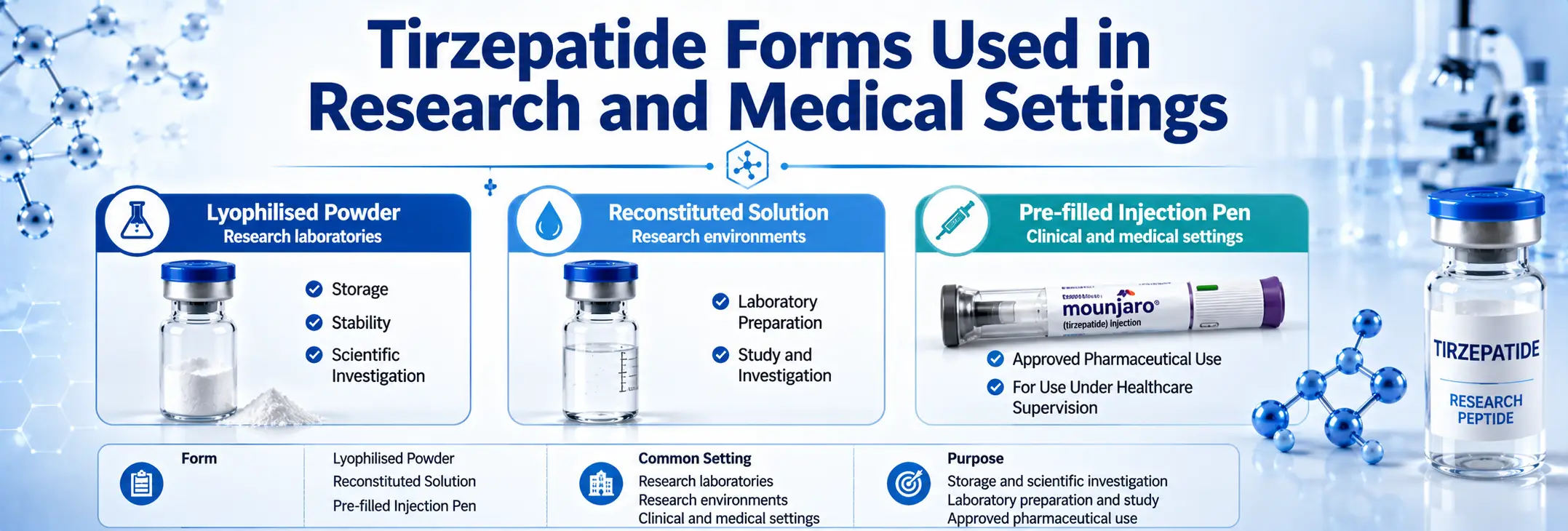
Tirzepatide research material may be supplied in lyophilised form for controlled laboratory investigation. When solution preparation is required for an experimental protocol, solvent compatibility, concentration, stability and handling conditions should be determined from compound-specific documentation and validated laboratory methods.
Laboratory preparation concepts are discussed further in the Peptide Reconstitution Guide.
Variables affecting peptide stability and storage are discussed in the Peptide Storage Guide.
Batch-specific analytical information is available through the Peptide Certificates of Analysis (COAs).
The interpretation of chromatographic purity and analytical identity is discussed further in Peptide Purity Explained.
Tirzepatide Compared with Other Multi-Receptor Research Compounds
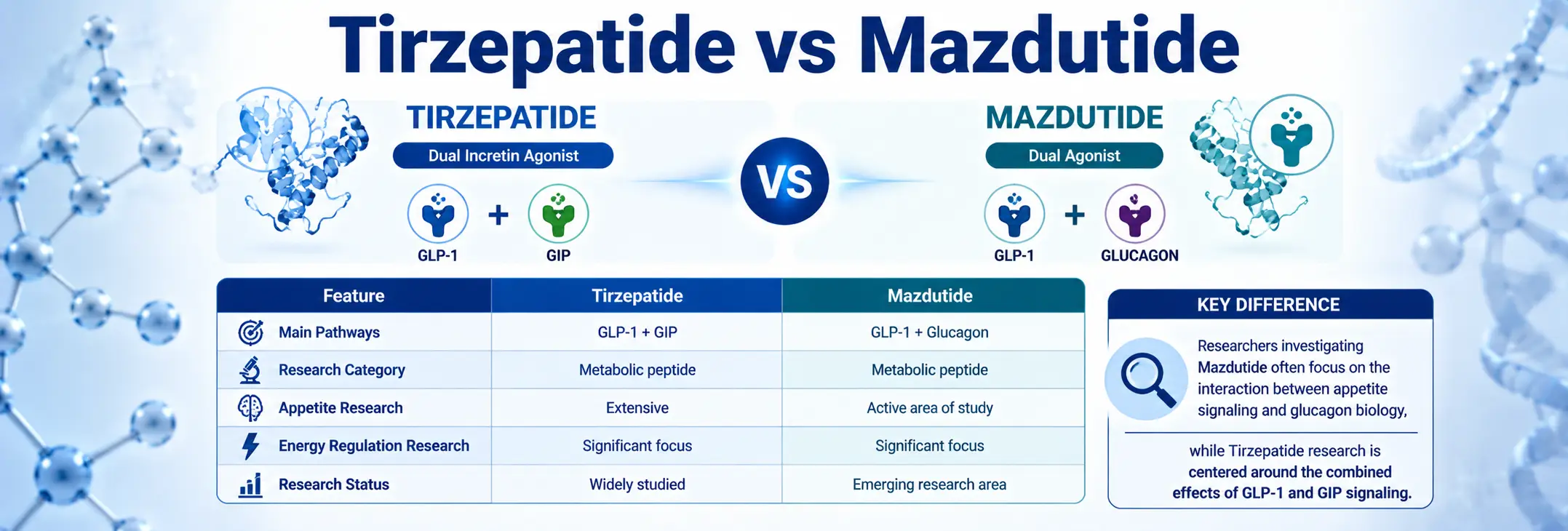
Research compounds can be compared according to molecular targets rather than claimed body outcomes. Tirzepatide activates GIPR and GLP-1R. Retatrutide is investigated across GIPR, GLP-1R and GCGR, while Mazdutide is studied through GLP-1R and GCGR. MOTS-C belongs to a different research category and is not an incretin-receptor agonist. These differences require compound-specific assays and controls.
| Compound | Receptor targets | Research context |
| Tirzepatide | GIPR + GLP-1R | Dual-receptor pharmacology |
| Retatrutide | GIPR + GLP-1R + GCGR | Triple-receptor pharmacology |
| Mazdutide | GLP-1R + GCGR | Dual-receptor pharmacology |
| MOTS-C | Non-incretin research compound | Distinct experimental category |
Additional receptor, structural and compound comparisons are available in the Peptide Comparison Guides.
Tirzepatide supplied by Australia Peptide Sciences is intended for controlled laboratory research only and is not represented for human or veterinary consumption, therapeutic use or clinical administration. Further context is available in the Research Use Only Peptides guide.
FAQs About Tirzepatide Research
What is Tirzepatide?
Tirzepatide is a synthetic peptide studied as a dual agonist at GIPR and GLP-1R.
Which receptors does Tirzepatide activate?
Tirzepatide is investigated for activity at the glucose-dependent insulinotropic polypeptide receptor (GIPR) and glucagon-like peptide-1 receptor (GLP-1R).
Why is Tirzepatide useful in receptor research?
Its dual-receptor profile allows researchers to compare activity across two receptor systems using one defined compound and to investigate receptor-specific and combined signalling responses.
How can Tirzepatide receptor activity be studied?
Experimental methods may include receptor-binding assays, concentration–response studies, functional signalling assays and receptor-selective controls.
How is Tirzepatide different from Retatrutide?
Tirzepatide targets GIPR and GLP-1R, while Retatrutide is investigated across GIPR, GLP-1R and the glucagon receptor.
Why does Tirzepatide purity matter in laboratory research?
Identity and purity can affect experimental interpretation and reproducibility. Analytical results should be reviewed using batch-specific documentation and the methods stated on the COA.
How should Tirzepatide storage and preparation conditions be determined?
Storage and preparation conditions should follow compound-specific documentation, stability information and the requirements of the validated laboratory protocol.
Is APS Tirzepatide intended for human use?
No. Australia Peptide Sciences supplies Tirzepatide strictly for controlled laboratory and scientific research and not for human or veterinary consumption, therapeutic use or clinical administration.