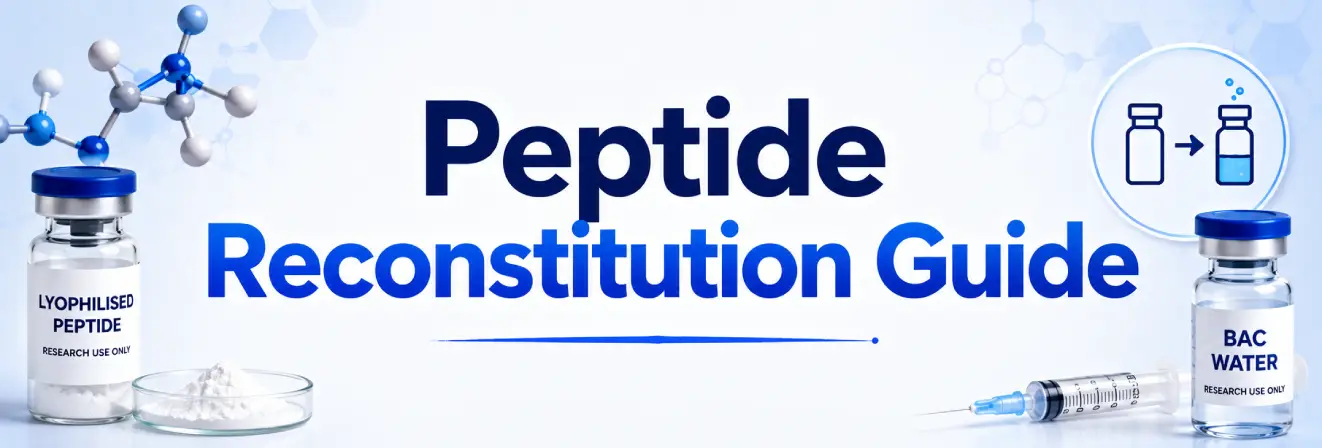
As interest in research peptides continues to grow, many researchers come across the term Peptide reconstitution.
Whether studying recovery pathways, metabolic signaling, hormonal communication, or healthy aging biology, understanding how peptides are prepared for laboratory settings has become an important part of peptide education.
Many research peptides are supplied in a lyophilised (freeze-dried) form, meaning they arrive as a dry powder rather than a liquid solution. Before laboratory investigation, researchers often explore peptide reconstitution to better understand how research compounds are commonly prepared in controlled settings.
In this guide, we’ll explain what peptide reconstitution means, why lyophilised peptides are used in research, the role of bacteriostatic water peptides, and what researchers commonly consider when preparing research compounds in laboratory environments.
What Is Peptide Reconstitution?
In simple terms, peptide reconstitution refers to the process of preparing a lyophilised peptide for research use by transforming it from a dry powder into a liquid solution suitable for laboratory handling.
Many researchers searching for peptide reconstitution meaning are often trying to understand:
Why peptides are supplied as powder instead of liquid.
The answer usually comes down to: Stability.
Many peptides are commonly supplied in a freeze-dried (lyophilised) form because it may help support better stability during storage and transport.
Instead of remaining in liquid form over time, lyophilised peptides are typically stored as dry compounds until laboratory preparation is required.
Researchers often discuss peptide solution research because some laboratory workflows involve preparing compounds in liquid form to support handling, measurement, or controlled research processes.
Explore more: Research Peptides Australia: Complete Guide
What Are Lyophilised Peptides?
Before understanding reconstituting lyophilised peptides, it helps to understand: What does lyophilised mean?
Lyophilisation (freeze-drying) is a scientific preservation process where moisture is removed from a peptide compound to help improve stability.
Researchers commonly encounter peptides supplied in this form because freeze-drying may help support:
- Better storage stability
- Reduced degradation risk
- Longer product consistency
- Easier transport and handling
Many categories of research peptides Australia are commonly supplied as lyophilised powders, including compounds studied in:
- Recovery & cellular biology
- Growth hormone signaling
- Metabolic pathways
- Healthy aging research
- Neurological signaling
Examples of commonly discussed research compounds include:
- BPC-157
- TB-500
- Tirzepatide
- Retatrutide
- CJC-1295
- Ipamorelin
- GHK-Cu
Shop high purity research peptides in Australia!
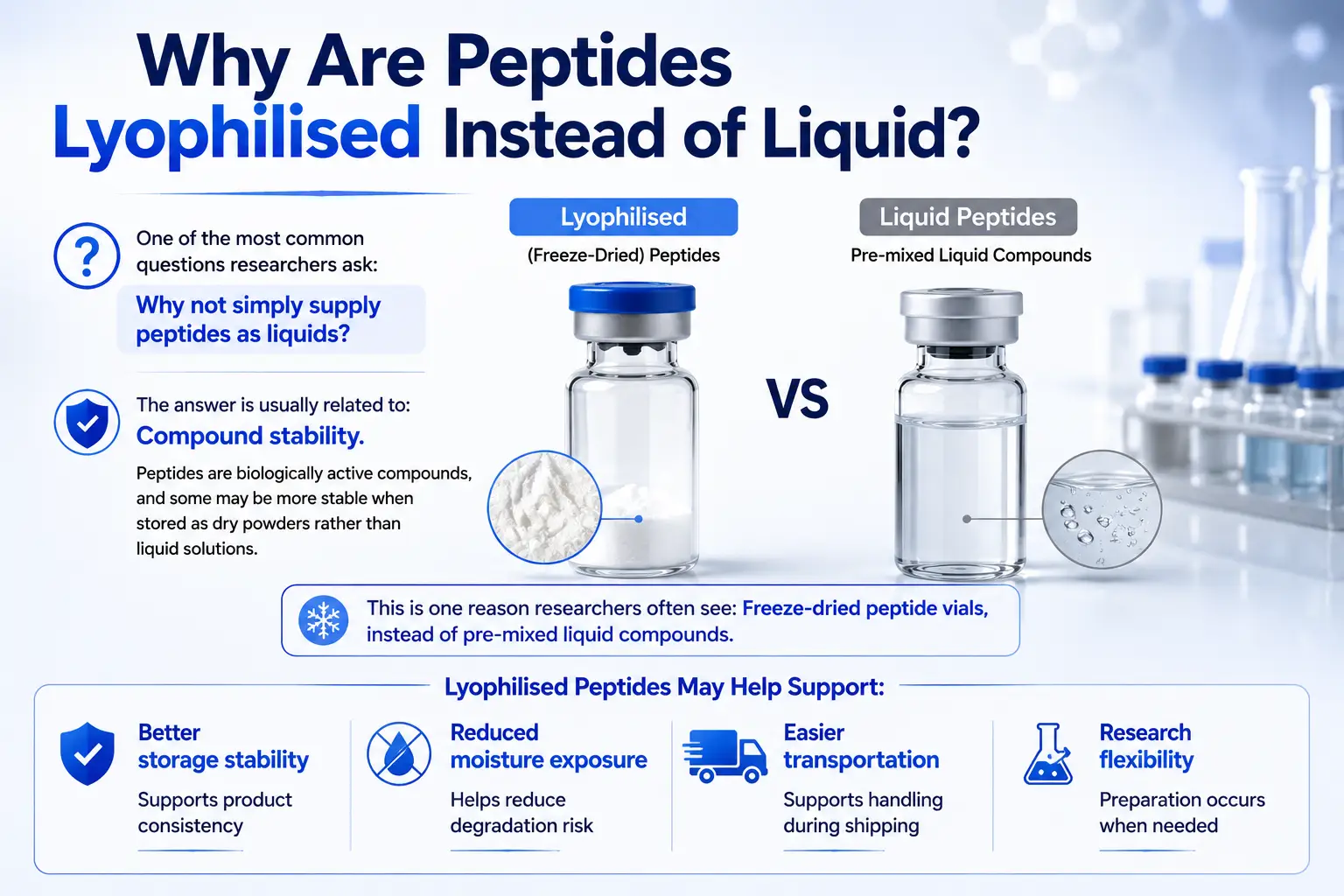
Why Are Peptides Lyophilised Instead of Liquid?
One of the most common questions researchers ask is:
Why not simply supply peptides as liquids?
The answer is usually related to: Compound stability.
Peptides are biologically active compounds, and some may be more stable when stored as dry powders rather than liquid solutions.
This is one reason researchers often see: Freeze-dried peptide vials, instead of pre-mixed liquid compounds. Lyophilised peptides may help support:
| Potential Benefit | Why It Matters in Research |
| Better storage stability | Supports product consistency |
| Reduced moisture exposure | Helps reduce degradation risk |
| Easier transportation | Supports handling during shipping |
| Research flexibility | Preparation occurs when needed |
Because of this, reconstituting lyophilised peptides has become a common topic in peptide education and laboratory awareness.
Why Researchers Discuss Peptide Reconstitution
Researchers commonly explore research peptide preparation because laboratory workflows often involve understanding:
- Compound handling
- Preparation processes
- Storage considerations
- Stability awareness
This does not necessarily mean researchers are looking for instructions.
Instead, many are simply trying to better understand: How peptide preparation works in scientific settings.
Topics like peptide mixing guide, peptide solution research, and how to reconstitute peptides are increasingly searched because peptide education has expanded significantly in recent years.
For suppliers focused on transparency and research education, helping researchers understand peptide preparation concepts has become an important part of building trust.
The Role of Bacteriostatic Water in Peptide Research
One term frequently associated with peptide reconstitution is: Bacteriostatic water
Researchers commonly search for: bacteriostatic water peptides, because BAC water is often discussed in laboratory environments involving research compound preparation.
What Is Bacteriostatic Water?
Bacteriostatic water is a specially prepared sterile water solution commonly referenced in research discussions related to lyophilised peptide preparation.
Because bacteriostatic water is frequently associated with peptide preparation discussions, many researchers choose suppliers that also provide BAC Water categories alongside research compounds.
At Australia Peptide Sciences, researchers can explore BAC Water as part of a broader ecosystem of research-focused products and educational content.
Why Sterile Handling Matters in Research Settings
When discussing research peptide preparation, another important concept is: Sterile workflow.
In laboratory environments, researchers commonly prioritize preparation conditions that support:
- Consistency
- Stability awareness
- Controlled handling
- Research reliability
Educational conversations around peptide reconstitution guide topics often emphasize:
Understanding preparation environments matters.
This is one reason transparency and educational content have become increasingly important among trusted research suppliers.
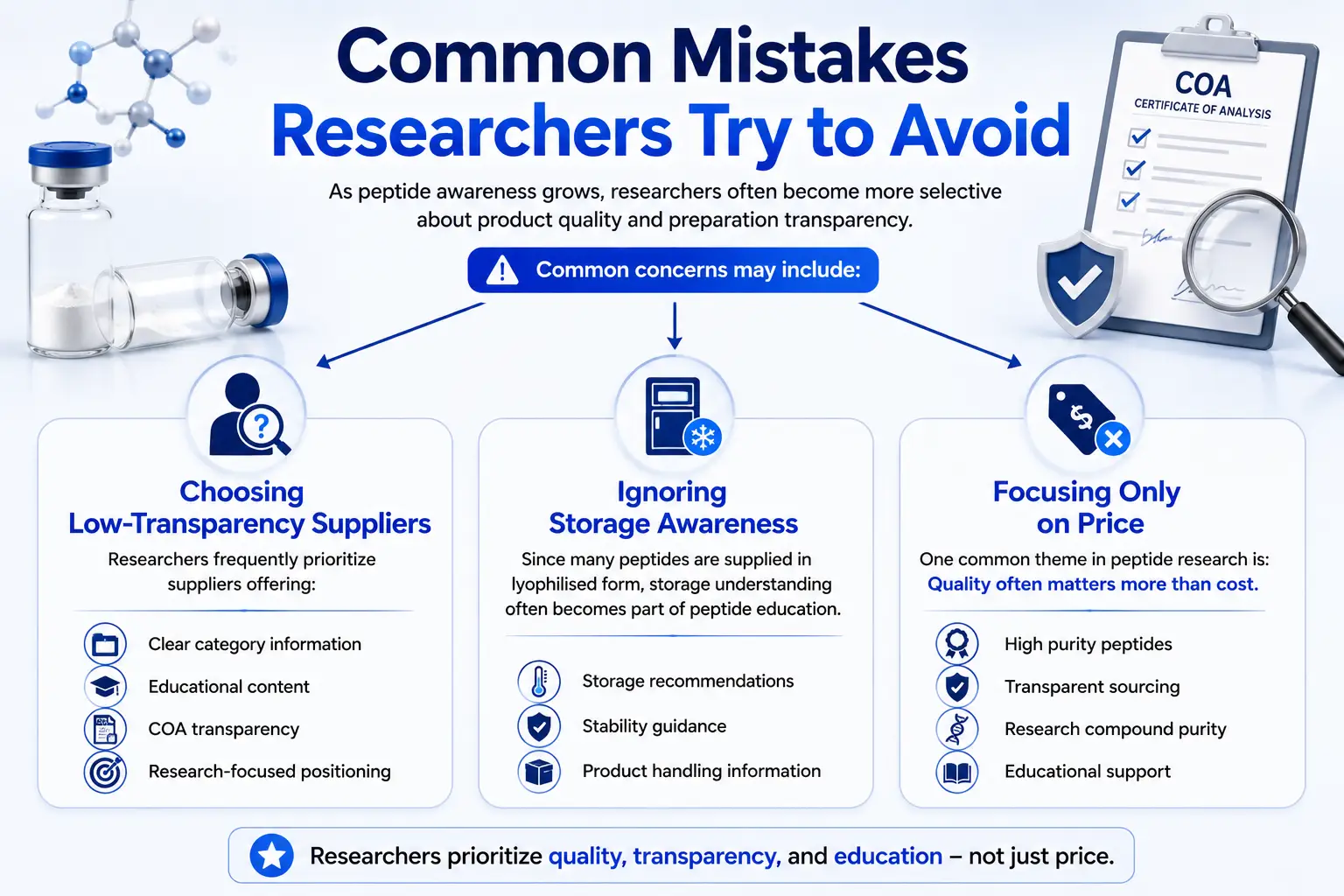
Peptide Reconstitution: Common Mistakes Researchers Try to Avoid
As peptide awareness grows, researchers often become more selective about product quality and preparation transparency.
Common concerns may include: Choosing Low-Transparency Suppliers
Researchers frequently prioritize suppliers offering:
- Clear category information
- Educational content
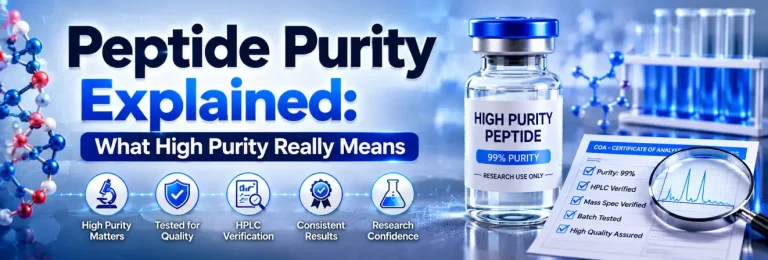
- COA transparency
- Research-focused positioning
Ignoring Storage Awareness
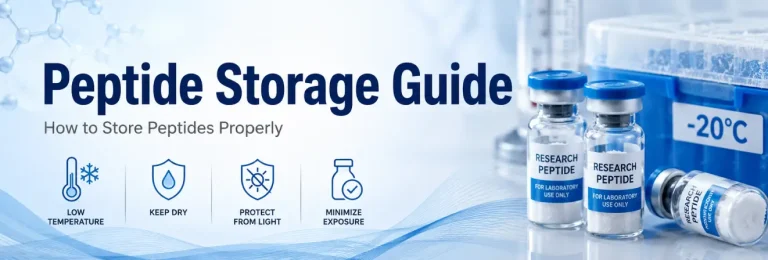
Since many peptides are supplied in lyophilised form, storage understanding often becomes part of peptide education.
Researchers commonly review:
- Storage recommendations
- Stability guidance
- Product handling information
Focusing Only on Price
One common theme in peptide research is: Quality often matters more than cost.
Researchers frequently prioritize:
- High purity peptides
- Transparent sourcing
- Research compound purity
- Educational support
rather than selecting products based only on pricing.
Peptide Reconstitution and Quality Transparency
As interest in research compounds online Australia continues to grow, researchers increasingly value suppliers that focus on:
✅ Product transparency
✅ Educational content
✅ Category organization
✅ Research-only positioning
✅ Quality-focused sourcing
Researchers commonly want to understand:
- What peptides are commonly studied for
- How peptides are categorized
- Why preparation matters in research settings
At Australia Peptide Sciences, peptide categories are organized around research pathways to make scientific exploration easier to understand, including:
- Recovery & Cellular Research Peptides
- Growth Hormone & Recovery Peptides
- Metabolic & Appetite Research Peptides
- Brain, Sleep & Healthy Aging Peptides
- Research Peptide Blends
- BAC Water for Research Preparation
This structure helps researchers better navigate peptide science, compound categories, and preparation-related concepts through educational content.
Shop high purity research peptides in Australia!
Why Researchers Prioritize Education Before Buying
There is growing demand for educational clarity.
Researchers increasingly value suppliers that help explain:
- Research pathways
- Product categories
- Peptide preparation concepts
- Quality verification
Rather than simply listing products.
This is one reason educational content has become an important trust signal in peptide research.
FAQs about Peptide Reconstitution
What is peptide reconstitution?
Peptide reconstitution refers to preparing a lyophilised (freeze-dried) peptide into a liquid form suitable for laboratory handling or research workflows.
Why are peptides supplied as powder?
Many peptides are supplied in lyophilised form because freeze-drying may help support greater stability, easier transport, and reduced degradation risk.
What are lyophilised peptides?
Lyophilised peptides are freeze-dried peptide compounds commonly supplied in powder form before research preparation.
What is bacteriostatic water used for in peptide research?
Bacteriostatic water peptides discussions commonly involve laboratory preparation and research handling, where sterile preparation environments are often prioritized.
Why does peptide reconstitution matter?
Researchers often explore research peptide preparation to better understand compound handling, preparation awareness, and stability considerations in laboratory settings.
What should researchers look for before buying peptides?
Researchers commonly prioritize:
✅ High purity compounds
✅ Transparent product information
✅ Educational content
✅ Research-focused positioning
✅ COA availability where applicable
Are all peptides reconstituted the same way?
Different peptides may have different research considerations, which is why researchers often prioritize educational content and supplier transparency rather than assuming all compounds are handled identically.
What should I look for in a peptide supplier?
Researchers often prioritize suppliers that emphasize quality, transparency, category organization, and research education, helping support a more informed sourcing experience.
Shop high purity research peptides in Australia!