

When sourcing research peptides in Australia, laboratories need to evaluate the material specification and supporting documentation. This guide focuses on batch identity, analytical evidence, supplier information and handling requirements. A peptide’s name or a research-use label does not establish the composition of a particular sample or its regulatory status.
What Are Research Peptides?
Research peptides are defined peptide compounds examined under controlled experimental conditions. Their amino-acid sequence and molecular modifications determine properties such as mass, charge, solubility, stability and receptor interaction. Depending on the research question, peptides may be examined through analytical chemistry, receptor assays, cellular models, biochemical methods or other validated experimental systems.
Peptides vs Proteins: What’s the Difference?
Many people confuse peptides with proteins, but the difference mainly comes down to size and complexity.
| Feature | Peptides | Proteins |
| General structure | Shorter amino-acid chains | Larger amino-acid polymers |
| Primary structure | Defined residue sequence | Defined residue sequence |
| Research methods | Sequence analysis, mass spectrometry, receptor or biochemical assays | Structural, biochemical and functional analyses |
| Experimental focus | Compound-specific molecular properties and interactions | Structure, function and larger biological systems |
Peptides are smaller, signaling-focused molecules, while proteins tend to perform larger structural or biological functions.
Because peptides are smaller, researchers often study them for how they interact with specific receptors and signaling systems inside the body.
A peptide sequence describes the order of amino-acid residues. It is part of the material specification used to identify a compound.
Adjacent residues are connected by peptide bonds. Sequence and chemical modifications both matter when matching a supplied material to a published research compound.
The Peptide Synthesis guide explains chemical production methods; purification and analytical characterisation are separate steps in evaluating the resulting material.
Why Are Peptides Studied?

Peptide research can address questions involving molecular recognition, receptor pharmacology, intracellular signalling, enzyme interactions, structure–activity relationships, stability, degradation and analytical identity. The appropriate endpoint depends on the compound, experimental model and research question. Findings from one peptide or model should not automatically be transferred to another peptide, clinical setting or personal use.
Common Types of Research Peptides
| Research Area | Example Experimental Focus |
|---|---|
| Receptor pharmacology | Ligand binding, potency and signalling |
| Peptide chemistry | Sequence, mass, purity and stability |
| Cellular signalling | Pathway-specific responses in defined models |
| Mitochondrial research | Membrane, respiration and cellular-energy assays |
| Neuropeptide research | Receptor and signalling studies |
| Multi-receptor compounds | Comparative receptor activity and signalling profiles |
They represent a broad group of compounds studied across different biological systems, from recovery and metabolism to cognition, sleep, healthy aging, and hormonal signaling.
Understanding these categories makes it easier to understand what peptides are studied for, how they work, and why different peptide groups exist in scientific research.
The research peptide catalogue contains laboratory materials supplied for controlled research use.
Research Peptides vs Approved Therapeutic Peptides

A peptide’s chemical classification does not establish therapeutic approval, safety or effectiveness. Research materials and approved medicines serve different purposes, as explained in the Research Use Only Peptides guide.
The TGA’s peptide-products guidance explains that regulatory requirements depend on a product’s contents, promotion and intended use. A research-use label alone does not settle those requirements.
Reading Laboratory Evidence When Sourcing Materials
Chromatography can report the relative abundance of detected components under the stated method. Mass spectrometry can support molecular identity. Receptor and cell-based assays examine biological responses. A supplier’s evidence should be matched to the question it actually addresses: analytical purity is not proof of biological activity.
Examples of Peptides in Cellular and Molecular Research
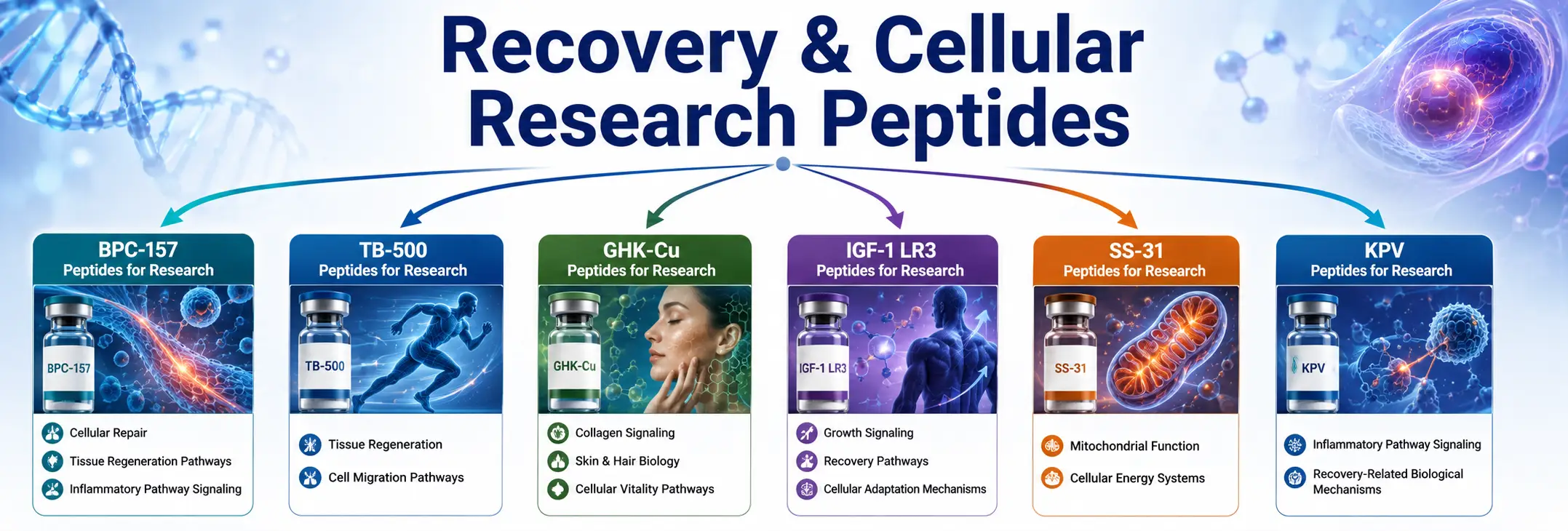
Different compounds require compound-specific experimental design and evidence interpretation.
BPC-157 can be examined in compound-specific cellular and signalling models.
TB-500 is studied in relation to actin-associated biology and cellular-migration models; findings involving full-length thymosin beta-4 should not automatically be attributed to TB-500.
GHK-Cu is a copper-binding peptide examined in models involving extracellular-matrix and cellular signalling.
IGF-1 LR3 is investigated through IGF-related receptor and signalling systems.
SS-31 is studied in experimental models involving mitochondrial membrane biology.
KPV can be examined in cellular models involving inflammatory signalling pathways.
MOTS-C is investigated in mitochondrial-derived peptide and cellular-energy research.
These descriptions identify laboratory research contexts and do not establish therapeutic or personal-use outcomes.
Growth-Hormone Signalling Research Peptides
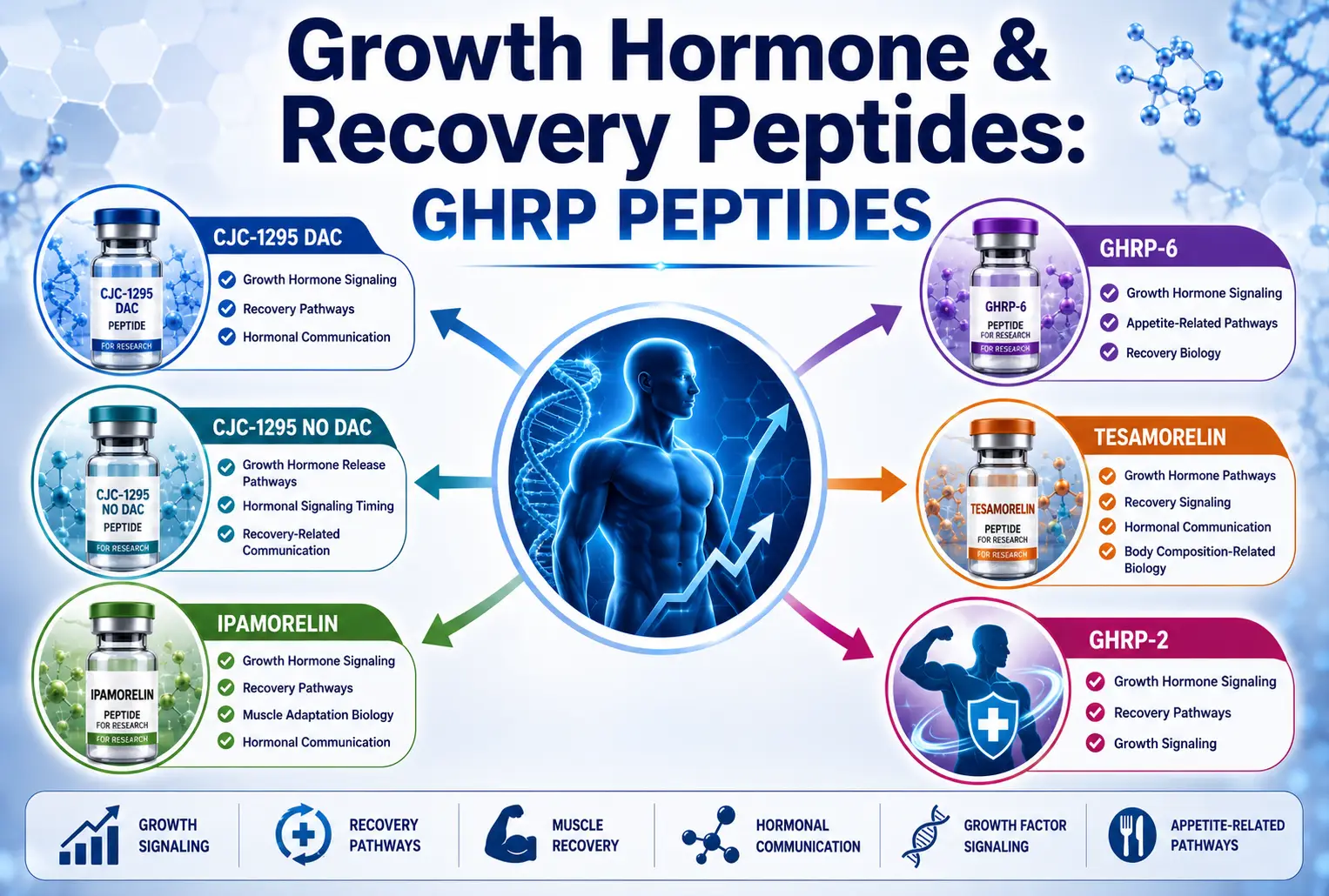
Some research peptides are examined through growth-hormone-related signalling systems. CJC-1295 compounds are studied in relation to GHRH-receptor pathways, while Ipamorelin and GHRP compounds are examined through ghrelin-receptor or growth-hormone-secretagogue receptor systems. Tesamorelin is also associated with GHRH-receptor research. Experimental comparisons should focus on receptor target, signalling duration, molecular structure and assay conditions rather than claims about muscle growth, recovery or personal use.
GLP-1 and Multi-Receptor Peptide Research
Retatrutide is investigated at GIPR, GLP-1R and GCGR. Match the stated compound identity to the published model before interpreting a batch’s research context.
Tirzepatide is investigated at GIPR and GLP-1R. A shared receptor target does not make the two compounds interchangeable in an assay.
The GLP-1 Peptide Research Guide explains this research category in more detail. Receptor pharmacology should remain distinct from claims about therapeutic effectiveness.
Neuropeptide and Cellular Signalling Research
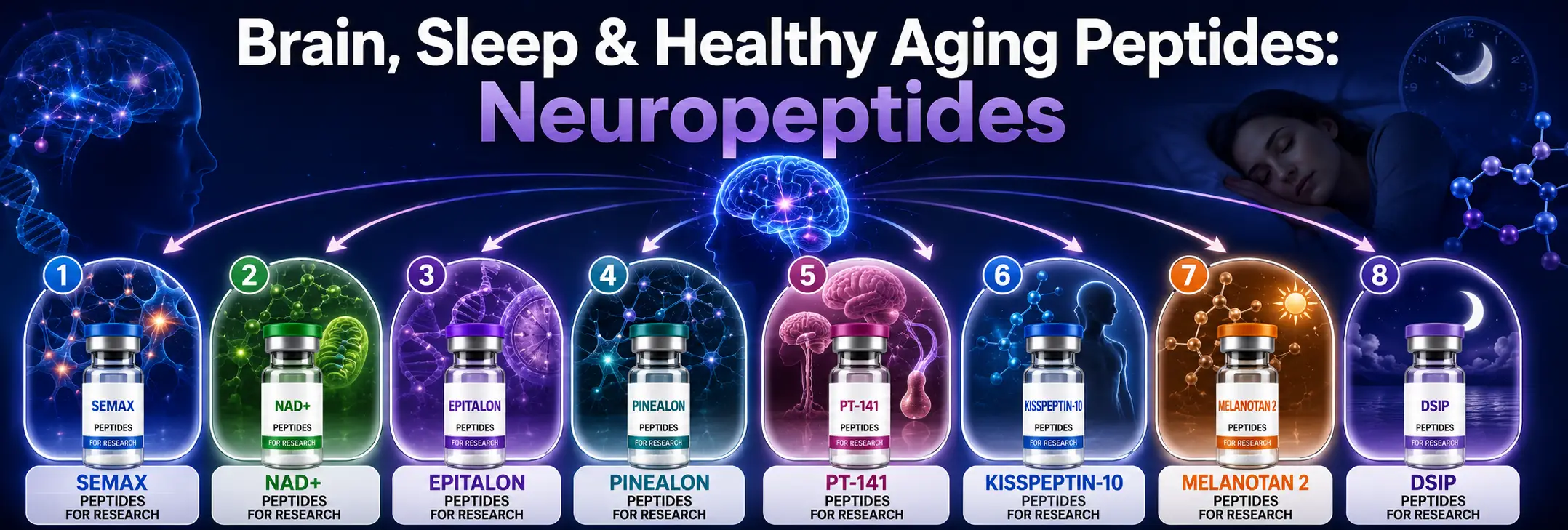
Neuropeptide research examines defined receptor systems, signalling pathways and molecular interactions in controlled experimental models. Compounds such as Semax, Pinealon, Kisspeptin-10, melanocortin-related peptides and other research materials differ substantially in sequence, receptor targets and evidence base. Each compound should therefore be evaluated according to its own molecular properties, experimental model and supporting evidence rather than broad claims about cognition, sleep, longevity or wellness.
Research Peptide Blends
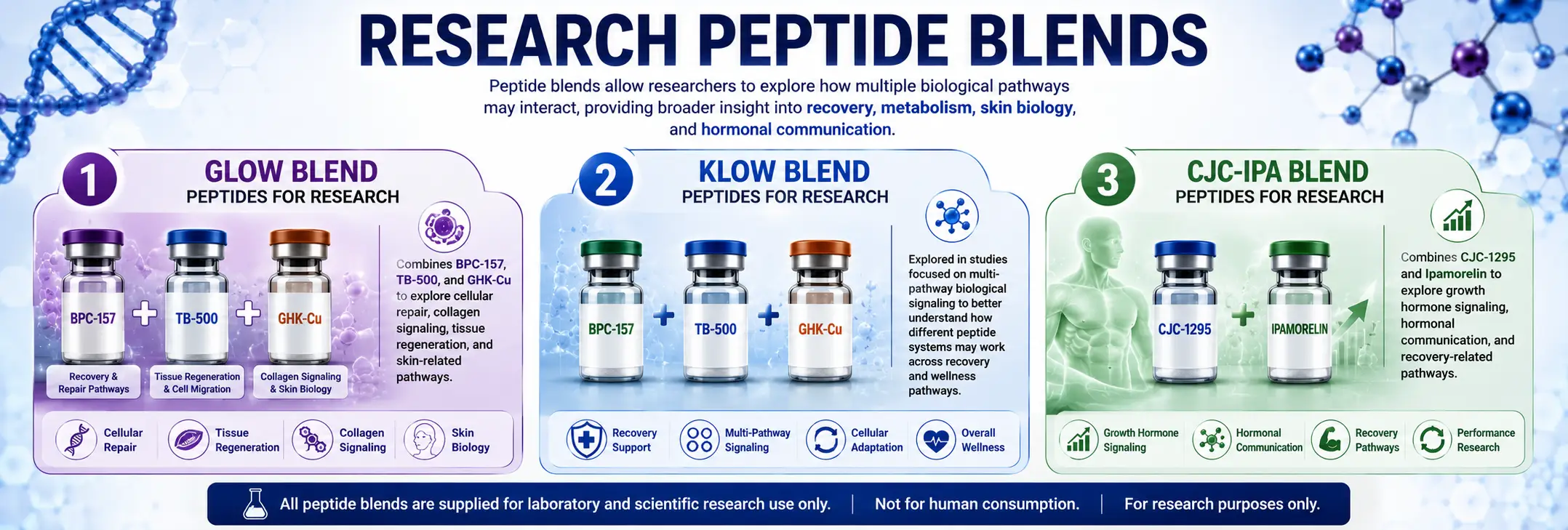
Peptide blends contain more than one defined research compound. Their interpretation requires the identity and quantity of each component to be considered separately before evaluating the combined formulation. A blend should not be assumed to reproduce the evidence associated with each individual component. Composition, batch documentation, experimental controls and analytical verification are therefore especially important in multi-compound research.
Laboratory Diluent Materials
Bacteriostatic water is used as a laboratory preparation material in suitable research workflows. Diluent selection depends on formulation compatibility, product documentation and validated experimental requirements. Differences between common diluent formulations are discussed in Bacteriostatic Water vs Saline.
How to Evaluate a Research Peptide Supplier in Australia
Laboratories evaluating research materials should consider compound identity, batch-specific analytical documentation, purity data, transparent product specifications, storage information, research-use-only positioning and consistency between batches. A Peptide Certificate of Analysis (COA) should be interpreted alongside the stated analytical methods rather than treated as proof of biological effectiveness.
Australia Peptide Sciences as a Research Supplier
Australia Peptide Sciences supplies peptide compounds and laboratory materials for research and development. Product information is organised around compound identity, research category and laboratory use, with analytical documentation available for relevant batches. Materials are supplied for laboratory and scientific research and are not represented for human or veterinary consumption.
Australia Peptide Sciences provides information on peptide chemistry, receptor signalling and laboratory research. Compound-specific receptor, structural and mechanistic comparisons are available in the Peptide Comparison Guides.
FAQs About Sourcing Research Peptides in Australia
What documents should a laboratory request from a supplier?
Request the material specification, batch identifier, analytical documentation and handling information relevant to the intended experiment.
Does Australian fulfilment establish analytical quality?
No. Fulfilment location and analytical quality are separate matters. Evaluate the batch documentation and methods rather than using location as a quality measure.
What does a Certificate of Analysis establish?
It reports the results and specifications stated for the identified batch. Its value depends on the methods, traceability and information actually included.
Does a high purity percentage confirm molecular identity?
Not by itself. Purity and identity answer different analytical questions and should be supported by appropriate methods.
Why should the batch number match across documents?
Matching identifiers help link the supplied material to the analytical report. A report for a different batch does not characterise the sample received.
What if handling information is missing?
Resolve the missing specification before incorporating the material into a validated laboratory workflow. Conditions should not be inferred from an unrelated peptide.
Does a research-use label establish regulatory approval?
No. The intended use and applicable regulatory requirements require separate consideration.
Where can laboratories find APS batch documentation?
Review the documentation associated with the supplied batch and check it against the laboratory’s material specification.
Sources:
Therapeutic Peptides: Recent Advances in Discovery, and Clinical Translation
Therapeutic peptides: current applications and future directions