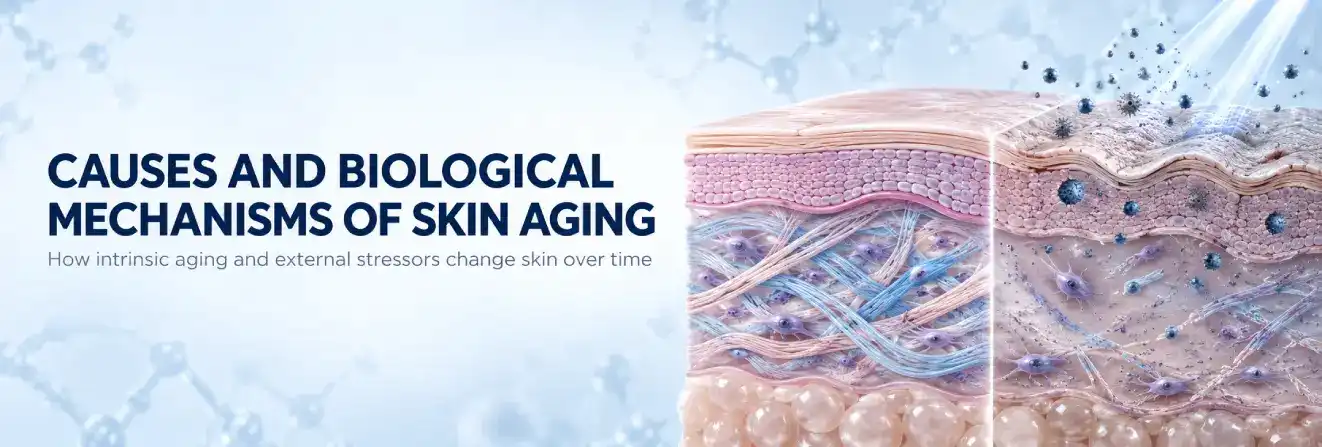
Skin aging is caused by a combination of intrinsic biological changes and extrinsic environmental exposures. Understanding what causes skin aging requires looking at changes in collagen, elastin, cellular function, oxidative stress and environmental exposure.
Over time, collagen production declines, elastic fibres become less organised, cell renewal slows and the skin’s ability to maintain and repair its structure becomes less efficient. At the same time, external factors such as ultraviolet (UV) radiation, smoking and air pollution can accelerate damage to skin cells and the extracellular matrix.
These intrinsic and extrinsic processes often overlap. Together, they can contribute to thinner, drier and less elastic skin, as well as wrinkles, changes in pigmentation and slower tissue repair.
Intrinsic and Extrinsic Causes of Skin Aging
The main skin ageing causes can be divided into intrinsic aging and extrinsic aging. Intrinsic aging develops naturally as part of the biological aging process, while extrinsic aging is influenced by environmental and lifestyle factors.
Both processes can occur at the same time and may affect many of the same structures, including collagen, elastin, fibroblasts and skin cells.
Intrinsic Skin Aging
Intrinsic aging is the gradual change that occurs within the skin as the body grows older. It affects the skin throughout the body, including areas that receive little sun exposure.
Several changes contribute to intrinsic skin aging:
- Collagen production gradually declines.
- Elastic fibres become less effective.
- Cell renewal slows.
- Sebaceous glands may produce less oil.
- The epidermis becomes thinner.
- Fibroblast activity decreases.
- Tissue repair becomes slower.
- Subcutaneous fat may decline.
These changes reduce some of the skin’s structural support and its ability to recover from everyday stress.
Extrinsic Skin Aging
Extrinsic aging is caused or accelerated by external influences. Ultraviolet radiation is one of the most important environmental contributors, especially on areas such as the face, neck, hands and arms.
Other contributing factors may include:
- Smoking
- Environmental pollution
- Repeated sun exposure
- Oxidative stress
- Poor nutrition
- Excessive alcohol intake
- Certain lifestyle patterns
Unlike intrinsic aging, many extrinsic influences can vary considerably between individuals.
| Factor | Intrinsic Aging | Extrinsic Aging |
| Main driver | Natural biological aging | Environmental and lifestyle exposure |
| Areas affected | Skin throughout the body | Often more visible on exposed areas |
| Collagen changes | Gradual reduction | Damage may be accelerated |
| UV involvement | Not the main driver | Major contributor |
| Prevention potential | Limited | Some factors may be reduced |
How Skin Changes as It Ages
Aging affects more than the visible surface of the skin. Healthy ageing skin involves structural changes through several layers, from the epidermis to the deeper connective tissues.
Changes in the Epidermis
The epidermis is the outermost layer of the skin. As aging progresses, it can become thinner even though the basic number of cell layers may remain relatively stable.
Cell turnover also becomes slower. New cells are produced and replaced less rapidly, which can affect the skin’s overall renewal process.
Pigment-producing cells also change with age. Their number may decline while some remaining cells become larger, contributing to uneven pigmentation or age-related spots.
Changes in the Dermis
The dermis contains collagen, elastic fibres, blood vessels, nerves, hair follicles and other supporting structures.
With age, the connective tissue within the dermis changes. These age-related skin changes include declining collagen production, reduced fibroblast activity and less efficient elastic structures.
These changes reduce structural support and contribute to wrinkles, laxity and skin elasticity loss.
Blood vessels may also become more fragile, which can make aging skin more susceptible to bruising.
Changes Beneath the Skin
The subcutaneous layer contains fat that helps provide insulation, padding and support.
As this layer becomes thinner, the skin may lose some of its cushioning. Reduced underlying support can also contribute to changes in facial contours and increase vulnerability to minor injury.
Collagen Loss and Ageing
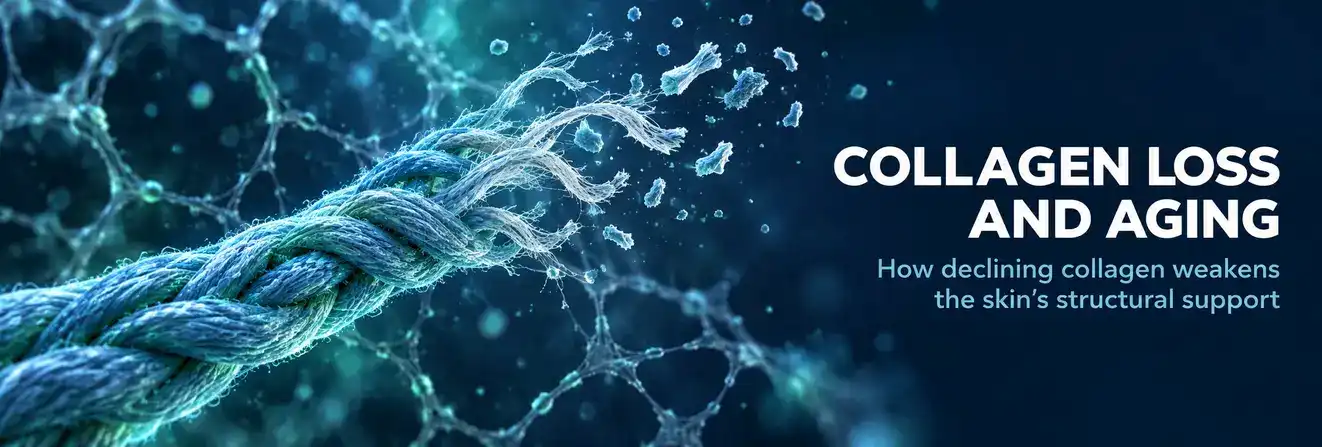
Collagen loss and aging are closely linked to changes in skin structure over time.
Collagen is one of the main structural proteins in the dermis. It provides strength and support and forms part of the extracellular matrix that surrounds and supports skin cells.
Why Collagen Declines With Age
Fibroblasts are cells responsible for producing collagen and other components of the extracellular matrix. With age, their number and activity can decline.
GHK-Cu peptide research also examines pathways related to collagen production, fibroblast activity and tissue structure.
At the same time, existing collagen may become fragmented, damaged or less well organised. This means aging skin is affected not only by reduced production of new collagen but also by changes in the quality of the collagen already present.
Environmental exposure, particularly ultraviolet radiation, can further contribute to collagen deterioration.
How Collagen Loss Affects the Skin
Reduced collagen can weaken the mechanical strength and firmness of the dermis. Because GHK-Cu is commonly studied in relation to collagen production and tissue structure, GHK-Cu peptide is also available as a research product for laboratory use.
Possible visible effects include:
- Fine lines
- Deeper wrinkles
- Reduced firmness
- Sagging
- Thinner skin
- Less structural support
- Slower recovery after damage
Collagen loss is therefore an important aging mechanism, but it is only one part of a wider biological process.
Collagen and the Extracellular Matrix
The extracellular matrix is a network of proteins and other molecules that surrounds cells and supports tissue structure.
Collagen, elastin and other components of this matrix work together to maintain skin strength, flexibility and organisation.
When aging changes these structures, communication between cells and the surrounding matrix may also be affected. This can influence both tissue integrity and repair.
Explore more research information from Australia Peptide Sciences
Why Skin Loses Elasticity With Age
Skin elasticity is the ability of the skin to stretch and then return toward its original shape. This property depends largely on elastic fibres in the dermis.
The Role of Elastin
Elastin contributes to the skin’s flexibility and ability to recover after movement or stretching.
When elastic fibres are healthy and well organised, they help maintain a smoother and more resilient skin structure.
What Happens to Elastic Fibres During Aging
As skin ages, elastic tissue changes in both quantity and organisation. Reduced elasticity means the skin does not recover from stretching as effectively as it once did.
This contributes to:
- Sagging
- Persistent creases
- Reduced firmness
- More visible wrinkles
Loss of elasticity commonly occurs alongside collagen deterioration, making the two processes closely connected.
How UV Exposure Accelerates Elasticity Loss
Repeated ultraviolet exposure can damage elastic fibres and alter the structure of the dermis.
Sun-exposed skin may develop abnormal elastic material, a process often associated with solar elastosis. This helps explain why chronically exposed skin can look rougher, less flexible and more deeply wrinkled than protected skin.
Sun Damage and Skin Aging
Sun damage is a major contributor to extrinsic skin aging. Ultraviolet radiation can affect DNA, collagen, elastin and other structures within the skin. Repeated exposure can gradually produce changes that differ from those caused by natural aging alone.
How UV Radiation Damages Skin
Ultraviolet radiation can contribute to several aging processes at once.
It may:
- Increase oxidative stress.
- Damage cellular DNA.
- Accelerate collagen breakdown.
- Alter elastic fibres.
- Contribute to pigmentation changes.
- Affect cellular repair mechanisms.
Because these effects can accumulate over time, repeated exposure may contribute to visible signs of premature aging.
What Is Photoaging?
Photoaging is premature or accelerated skin aging caused by long-term exposure to ultraviolet radiation.
It commonly affects areas of the body that receive regular sun exposure, including the face, neck, upper chest, arms and hands.
Photoaged skin may show:
- Deeper wrinkles
- Uneven pigmentation
- Reduced elasticity
- Rougher texture
- Sagging
- Areas of thickening or thinning
Intrinsic Aging vs Photoaging
Intrinsic aging generally develops gradually throughout the skin, while photoaging is concentrated more strongly in repeatedly exposed areas.
Natural aging may produce finer wrinkles and thinning, whereas chronic UV exposure can add deeper wrinkles, pigmentation changes and more pronounced disruption of elastic tissue.
Oxidative Stress and Skin Aging
Oxidative stress occurs when the production of reactive oxygen species (ROS) exceeds the ability of cellular defence systems to maintain balance. In the skin, ROS can arise through normal cellular metabolism and may increase in response to external exposures such as ultraviolet radiation, air pollution and tobacco smoke.
Excessive oxidative stress can damage proteins, lipids, DNA and components of the extracellular matrix. It can also contribute to collagen degradation and changes in normal cellular function, linking oxidative damage with both intrinsic aging and photoaging.
For a broader explanation of ROS, cellular damage and aging, see our guide to how oxidative stress affects the body.
Cellular Aging in Skin
Skin aging also reflects changes in how cells function, divide and respond to damage. Over time, factors such as accumulated DNA damage, mitochondrial dysfunction, telomere shortening and cellular senescence can reduce the efficiency of normal tissue maintenance and renewal.
Cellular senescence occurs when cells enter a persistent state in which they no longer divide normally. Senescent skin cells can accumulate with age and may alter tissue signalling, extracellular matrix maintenance and regenerative processes. Fibroblast senescence is particularly relevant because fibroblasts help produce collagen and other structural components of the dermis.
These mechanisms are part of the broader biology of cellular aging rather than processes unique to the skin. For a more detailed explanation, see what is cellular aging.
Chronic Inflammation and Skin Aging
Low-grade chronic inflammation can also contribute to the biological processes associated with skin aging. This age-related inflammatory state is sometimes described as inflammaging.
One connection between inflammation and aging involves cellular senescence. Senescent cells can remain metabolically active and release signalling molecules associated with the senescence-associated secretory phenotype (SASP). These signals may influence nearby cells, inflammatory pathways and the extracellular matrix.
Over time, persistent inflammatory signalling may contribute to reduced tissue homeostasis, extracellular matrix degradation and less efficient repair. Inflammation therefore interacts with other aging mechanisms, including oxidative stress and cellular senescence, rather than acting as an isolated cause of skin aging.
Glycation and Skin Aging
Glycation is another process that can affect structural proteins in aging skin.
It occurs when sugars react with proteins and contribute to the formation of advanced glycation end products, often abbreviated as AGEs.
What Are Advanced Glycation End Products?
AGEs are compounds that can accumulate gradually in tissues.
Their formation can alter the behaviour of long-lived proteins such as collagen.
How Glycation Changes Collagen
When glycation affects collagen, abnormal cross-links can form between collagen molecules.
These changes may make the extracellular matrix less flexible and interfere with normal interactions between cells and surrounding tissue.
Glycation may also contribute to oxidative and inflammatory processes.
Why Glycation Matters for Skin Structure
Collagen needs to retain an organised structure to support the skin efficiently.
When collagen becomes more rigid through cross-linking, tissue flexibility can decline. This can contribute to stiffness and reduced elasticity.
Glycation can further reduce collagen flexibility and contribute to structural changes in aging skin.
How Aging Affects Skin Repair Pathways
Age-related changes in skin repair pathways can reduce the skin’s ability to recover efficiently from everyday damage.
Repair depends on coordinated cellular activity, tissue renewal, circulation and extracellular matrix production.
Slower Cell Turnover
New skin cells are produced continuously, but the rate of renewal tends to slow with age.
Slower turnover can affect the skin’s ability to replace damaged or worn cells efficiently.
Reduced Fibroblast Activity
Fibroblasts support repair by producing collagen and other structural components.
When fibroblast activity declines, rebuilding the extracellular matrix becomes less efficient.
This may influence both normal tissue maintenance and recovery after injury.
Changes in Wound Healing
Aging skin can heal more slowly than younger skin.
This may be influenced by several changes occurring together, including thinner tissue, altered blood vessels, reduced cellular activity and lower regenerative capacity. These repair-related mechanisms are also studied in BPC-157 peptide research.
Other health factors can also affect wound healing, so aging is not the only influence.
Reduced Regenerative Capacity
Normal skin constantly balances cellular loss with regeneration.
With age, this balance becomes less efficient. Cellular senescence, reduced proliferation and slower extracellular matrix production can all contribute to weaker regeneration. These regeneration and tissue-repair pathways are also relevant to research involving GLOW peptide.
Environmental and Lifestyle Factors That Accelerate Skin Aging
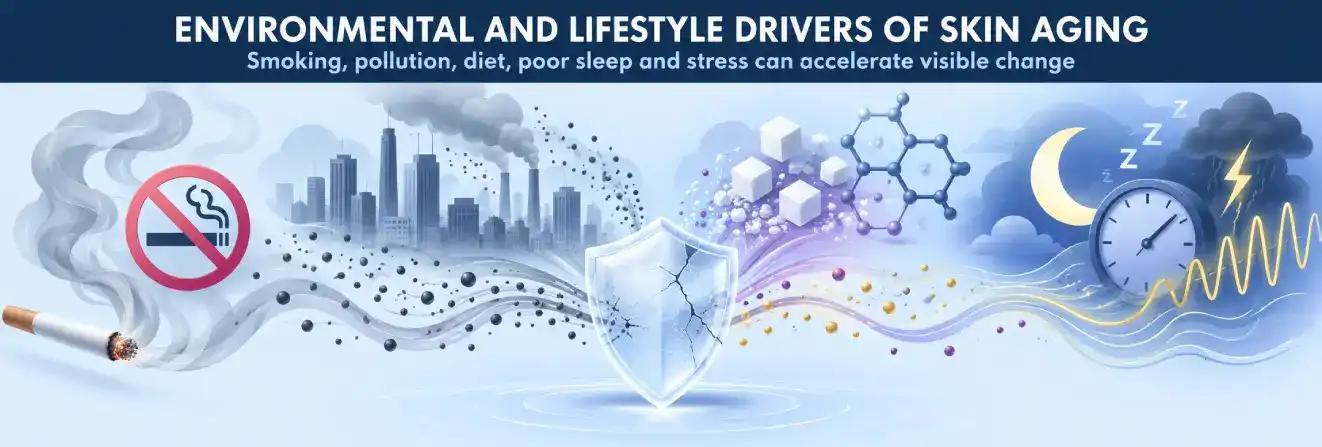
External influences can interact with natural biological aging and increase visible skin changes.
Smoking
Smoking is associated with premature skin aging and can affect collagen and elastic fibres.
Tobacco smoke also increases exposure to reactive compounds that contribute to oxidative stress.
Over time, this may increase wrinkling and loss of elasticity.
Air Pollution
Environmental pollutants can expose skin to reactive molecules and other substances that may increase oxidative stress.
This can affect the skin barrier and cellular structures, particularly when combined with other exposures such as ultraviolet radiation.
Diet and Metabolic Factors
Nutrition can influence general skin health.
High sugar intake may also contribute to glycation, while nutritional deficiencies can affect normal tissue maintenance.
Diet can influence skin health, but it is only one of several factors involved in skin aging.
Sleep and Stress
Poor sleep and prolonged stress may influence normal repair and cellular processes.
Their effects are less direct than those of biological aging or ultraviolet exposure, but they may still influence skin condition over time.
What Are the Most Visible Signs of Skin Aging?
Structural and cellular changes beneath the skin’s surface can contribute to wrinkles and age-related skin changes.
Common signs include:
- Fine lines
- Wrinkles
- Reduced firmness
- Sagging
- Dryness
- Thinner skin
- Uneven pigmentation
- Reduced elasticity
- Greater fragility
- Slower recovery after minor damage
These changes are outcomes of aging processes rather than separate causes.
For example, wrinkles may reflect collagen decline, elasticity loss, repeated facial movement and UV-related damage acting together.
Can Skin Aging Be Slowed?
Natural biological aging cannot be stopped completely, but exposure to some external factors can be reduced.
Limiting UV Damage
Reducing unnecessary ultraviolet exposure can help limit photoaging.
Common protective measures include using sunscreen, wearing protective clothing and limiting exposure during periods of strong sunlight.
Avoiding Tobacco Smoke
Avoiding smoking can reduce exposure to compounds associated with oxidative stress and collagen damage.
Because smoking affects several aging mechanisms at once, limiting tobacco exposure supports both skin and general health.
Supporting the Skin Barrier
Aging skin may become drier as oil production declines.
Gentle cleansing, avoiding excessive irritation and maintaining moisture can help support the skin barrier and improve comfort.
Supporting General Health
Adequate nutrition, hydration, sleep and overall health support normal tissue maintenance.
These measures cannot stop intrinsic aging, but they may help reduce additional stress on aging skin.
Browse available research products in the peptide shop
Skin Aging Mechanisms at a Glance
| Aging Mechanism | What Changes | Possible Skin Effect |
| Collagen decline | Reduced structural support | Wrinkles and reduced firmness |
| Elastin changes | Lower elastic recovery | Sagging and laxity |
| UV exposure | Damage to cells and extracellular matrix | Photoaging and pigmentation changes |
| Oxidative stress | Increased molecular damage | Structural and cellular deterioration |
| Cellular senescence | Reduced cellular function | Slower renewal |
| Glycation | Cross-linking of collagen | Reduced flexibility |
| Reduced repair | Slower tissue regeneration | Delayed recovery |
| Reduced oil production | Lower natural lubrication | Dryness and discomfort |
Understanding What Drives Skin Aging
Skin aging develops through a combination of structural, cellular and environmental changes. Natural biological changes gradually reduce collagen production, alter elastin, slow cell turnover and weaken tissue repair.
External influences can accelerate these processes. Ultraviolet radiation, oxidative stress, smoking and pollution can damage cells and components of the extracellular matrix, while glycation and cellular senescence add further changes at the molecular level.
These combined changes can make aging skin thinner, drier, less elastic and slower to repair. Intrinsic aging occurs naturally, while external factors such as UV exposure can accelerate visible changes.
FAQs about Skin Aging
What Is the Main Cause of Skin Aging?
What causes skin aging is a mix of natural biological changes and external exposure. Collagen and elastin gradually change with age, while factors such as UV radiation can speed up visible skin aging.
At What Age Does Skin Start Aging?
Skin aging processes can begin in early adulthood, even before visible signs appear. When wrinkles or firmness changes become noticeable depends on genetics, lifestyle and environmental exposure.
Does Collagen Loss Cause Skin Aging?
Collagen loss contributes significantly to skin aging because it reduces structural support and firmness. However, aging also involves changes in elastin, cell function, oxidative stress and tissue repair.
Does Sun Exposure Make Skin Age Faster?
Yes. Repeated UV exposure can accelerate skin aging by damaging collagen, elastin and cellular DNA. This long-term sun-related process is known as photoaging.
What Causes Skin to Lose Elasticity?
Skin loses elasticity as collagen, elastin and the extracellular matrix gradually change with age. Long-term UV exposure can make this loss of flexibility happen faster.
Is Skin Aging Reversible?
Natural skin aging cannot be fully reversed. Some visible signs may be improved or managed, but the underlying biological aging processes continue over time.Top of Form
Sources and Further Reading
- Photoaging: Update on Pathogenesis, Prevention, and Treatment – PubMed
- Photoaging: Current Concepts on Molecular Mechanisms, Prevention, and Treatment – PubMed
- Faces of Cellular Senescence in Skin Aging – PubMed
- The Role of Cellular Senescence in Skin Aging and Age-Related Skin Pathologies – PubMed
- Elastin Structure and Its Involvement in Skin Photoageing – PubMed
- Sugar Sag: Glycation and the Role of Diet in Aging Skin – PubMed