

Research peptides are amino acid chains studied in laboratories to investigate their molecular properties and interactions with biological targets. Researchers examine their sequence, identity, purity and stability, as well as their interactions with receptors, enzymes and other molecules. The methods used depend on the experimental question and the properties of the peptide being studied.
What Are Peptides?
Peptides are chains of amino-acid residues connected through peptide bonds.
The peptide sequence specifies the order of amino acid residues. Researchers use this information to examine how sequence changes influence molecular structure and properties.
Peptide properties vary with chain length, residue composition and chemical modifications. These differences can influence charge, solubility, stability and interactions with experimental targets. Research materials may be obtained from natural sources or produced synthetically.
Synthetic peptides with defined sequences allow researchers to investigate how specific molecular features influence interactions with receptors, enzymes and other biological targets.
What Makes a Peptide a Research Peptide?
Research peptides are peptide compounds investigated in laboratory studies to examine their molecular properties and biological interactions. They may include naturally occurring sequences or synthetic analogues studied using cell-based assays, biochemical methods and other controlled experimental models.
Research-only peptides are valuable because they allow scientists to study specific biological mechanisms under controlled conditions. Researchers may investigate how certain peptides influence metabolic signaling, cellular repair pathways, endocrine communication, inflammatory responses, or tissue-related processes.
Common areas of laboratory peptide research include:
- Cell culture studies
- Molecular biology research
- Laboratory pathway analysis
- Experimental biological models
- Protein interaction studies
The Research Peptides Australia guide explains Australian sourcing considerations and the supplier documentation needed to evaluate a batch.
How Are Peptides Studied in Research?

Laboratory peptide research uses analytical methods to assess molecular identity, composition and purity, while functional assays measure biological responses in defined experimental systems. Research into peptide signalling mechanisms helps explain how those responses arise from interactions with molecular targets.
Peptides as Biological Signaling Molecules
Some peptides act as signalling molecules, helping cells coordinate biological processes such as hormone release, metabolism and responses to external signals.
Researchers investigate peptide signaling because it may provide insight into:
- Cellular repair mechanisms
- Hormonal communication
- Appetite signaling
- Metabolic pathways
- Tissue regeneration pathways
- Inflammatory responses
Laboratory Applications of Research Peptides
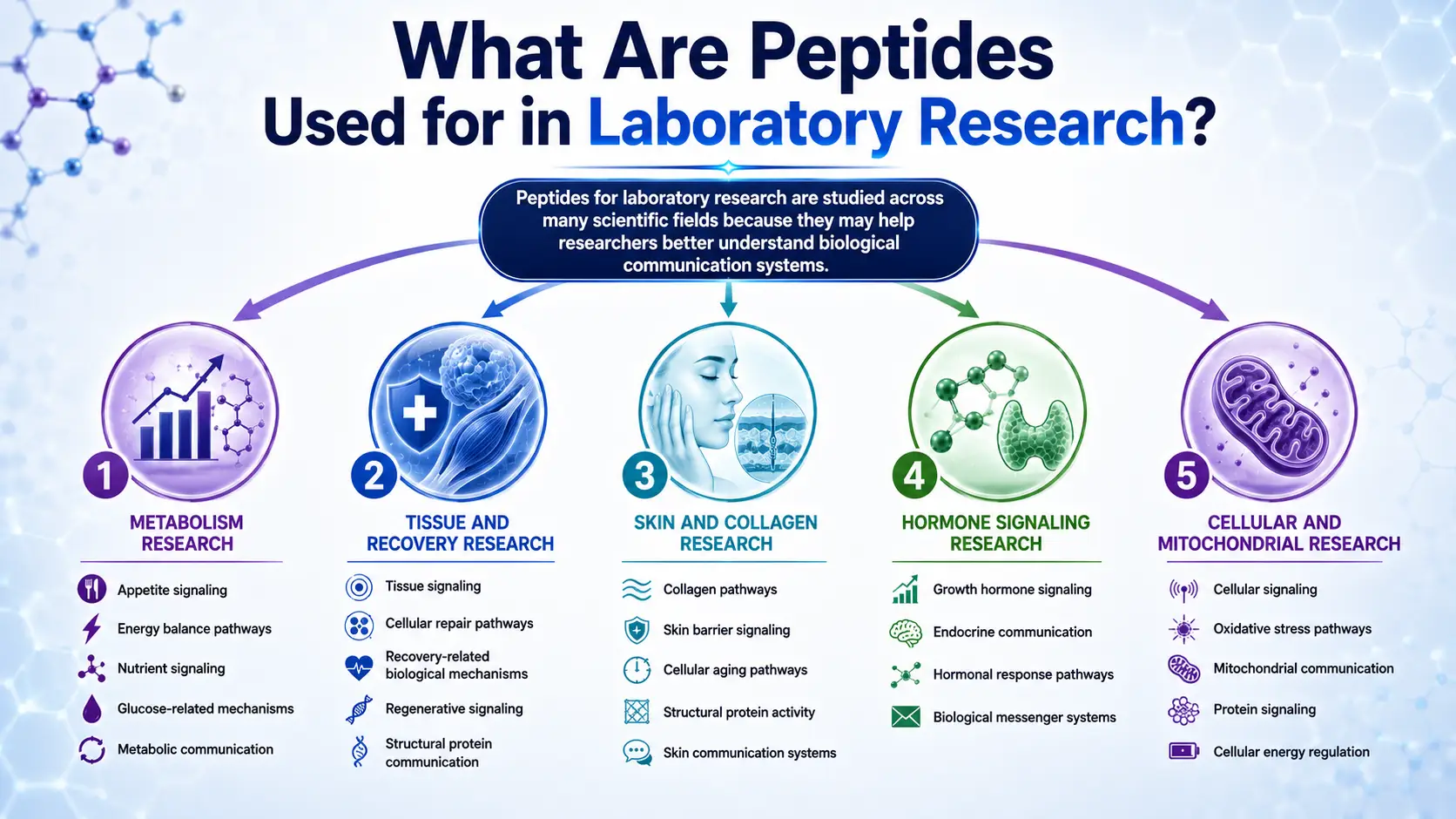
Research peptides can be examined across receptor pharmacology, cellular signalling, peptide chemistry, mitochondrial biology, endocrine signalling and structure-activity research. Experimental endpoints may include receptor potency, intracellular signalling, molecular stability, enzyme interactions, mitochondrial measurements and changes in defined cellular markers. Each compound requires its own experimental design, controls and evidence interpretation.
In multi-receptor pharmacology research, Tirzepatide can be examined through GIPR- and GLP-1R-related assays under controlled experimental conditions.
BPC-157 can be examined in compound-specific cellular and signalling models. Experimental observations should remain distinct from claims about recovery, treatment or personal use.
Peptides vs Proteins: What Is the Difference?
Peptides and proteins are both made from amino acids, but peptides generally consist of shorter chains. There is no universally accepted length threshold that separates all peptides from proteins.
| Peptides | Generally shorter amino-acid chains | Defined sequence and molecular properties | Studied using analytical, biochemical, receptor and cellular methods |
| Proteins | Generally larger amino-acid polymers | More complex structural organisation | Studied through structural, biochemical and functional methods |
Molecular size alone does not determine biological activity or target selectivity. A peptide’s sequence, structure and chemical properties also influence its interactions with other molecules.
Common Research Categories
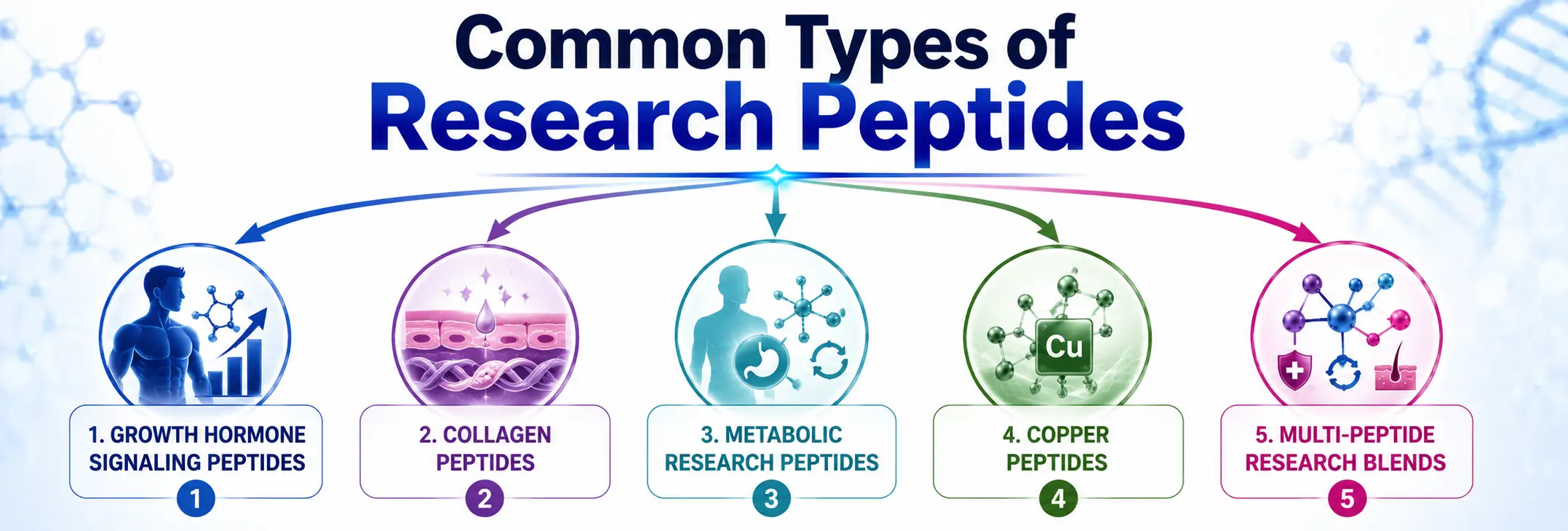
Research peptides can be grouped according to the experimental system being investigated, including receptor-signalling peptides, endocrine-signalling compounds, neuropeptides, copper-binding peptides, mitochondrial research compounds and multi-compound blends. These categories describe research context rather than therapeutic effect or suitability for personal use.
Why Are Research Peptides Important in Scientific Studies?
Defined peptide sequences allow researchers to examine how changes in molecular structure affect receptor interactions, enzyme activity and responses measured in laboratory experiments.
By comparing synthetic peptide variants under controlled conditions, researchers can investigate which amino acid residues contribute to binding, stability and measurable biological responses.
How Are Peptides Produced for Research?
Many laboratory peptides are produced through controlled synthetic methods in which amino acids are assembled in a defined sequence, followed by cleavage, purification and analytical characterisation. The underlying chemistry and common production methods are explained in the Peptide Synthesis guide.
Laboratory peptide production may involve:
- Sequence design and amino acid selection
- Peptide synthesis using an appropriate chemical method
- Cleavage, deprotection and purification
- Lyophilisation, where appropriate
- Analytical confirmation of identity and purity
Purity and consistency are important in peptide research because experimental accuracy depends on controlled laboratory standards.
What Researchers Evaluate Before Using Peptide Materials
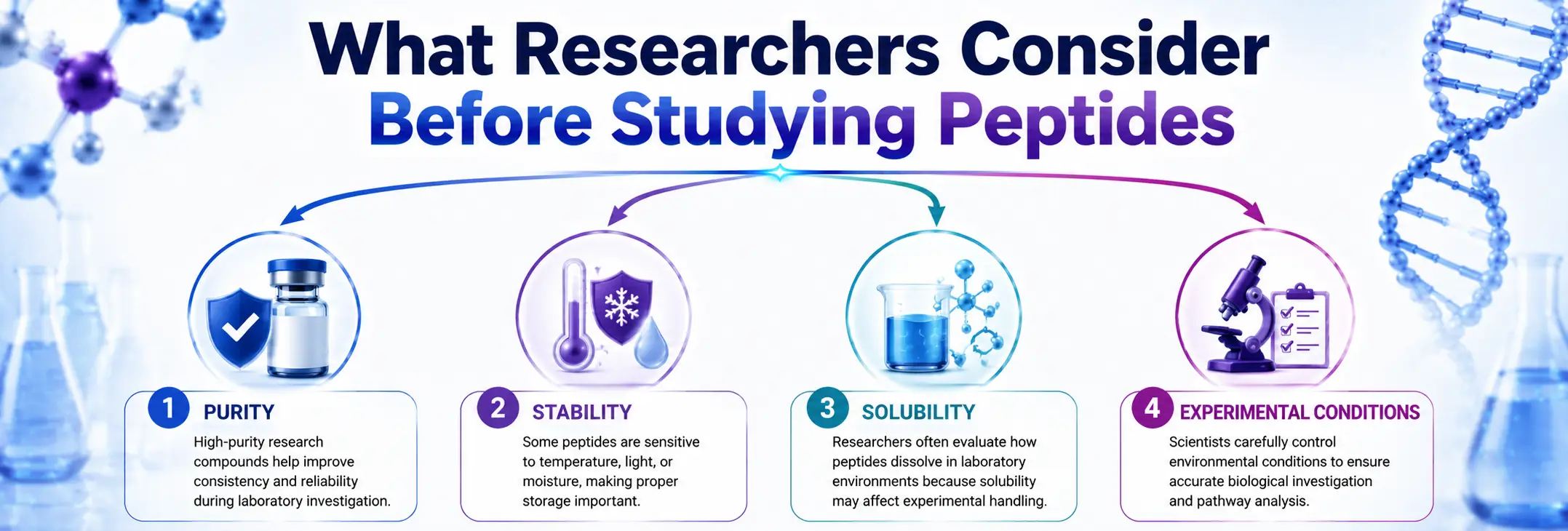
Laboratory evaluation may include molecular identity, purity, stability, solubility, storage requirements, batch consistency and compatibility with the intended experimental system. Batch-specific analytical information should be reviewed through an appropriate Peptide Certificate of Analysis (COA).
Research Use and Regulatory Distinction
Research-use peptides are supplied for laboratory or scientific investigation and should not be represented as approved therapeutic products. The distinction between research material and approved medicines is explained further in the Research Use Only Peptides guide. Research-use materials are not represented for human or veterinary consumption.
Research Peptides in Laboratory Science
Research peptides are studied under controlled laboratory conditions to examine their molecular properties and interactions with biological systems. Reliable findings depend on verified compound identity, appropriate experimental methods and careful interpretation of the results. Observations from laboratory models should not be presented as evidence of clinical effectiveness or suitability for personal use.
The Research Peptide Guides cover analytical documentation, preparation and storage.
The Peptide Comparison Guides compare compound-specific research questions and receptor profiles.
FAQs About Research Peptides
What are peptides in simple terms?
Peptides are short chains of amino acids linked by peptide bonds. Their biological properties depend on their sequence and molecular structure.
What is a research peptide?
A research peptide is a peptide examined in laboratory studies to investigate its chemical properties, molecular interactions or biological activity.
What are research-only peptides?
Research-only peptides are experimental peptide compounds intended strictly for laboratory use and scientific analysis.
Are peptides proteins?
Both are made from amino acids, but peptides generally have shorter chains. There is no single universally accepted length cutoff between them.
Why are peptides studied in laboratories?
Research peptides can be used to investigate receptor interactions, molecular signalling, enzyme activity, structure-activity relationships, stability and other defined experimental questions.
Are research-use peptides intended for human use?
No. Materials supplied as research-use peptides are intended for laboratory or scientific investigation and are not represented for human or veterinary consumption.
How are synthetic peptides made?
Synthetic peptides are produced through controlled laboratory synthesis using specific amino acid sequences.