
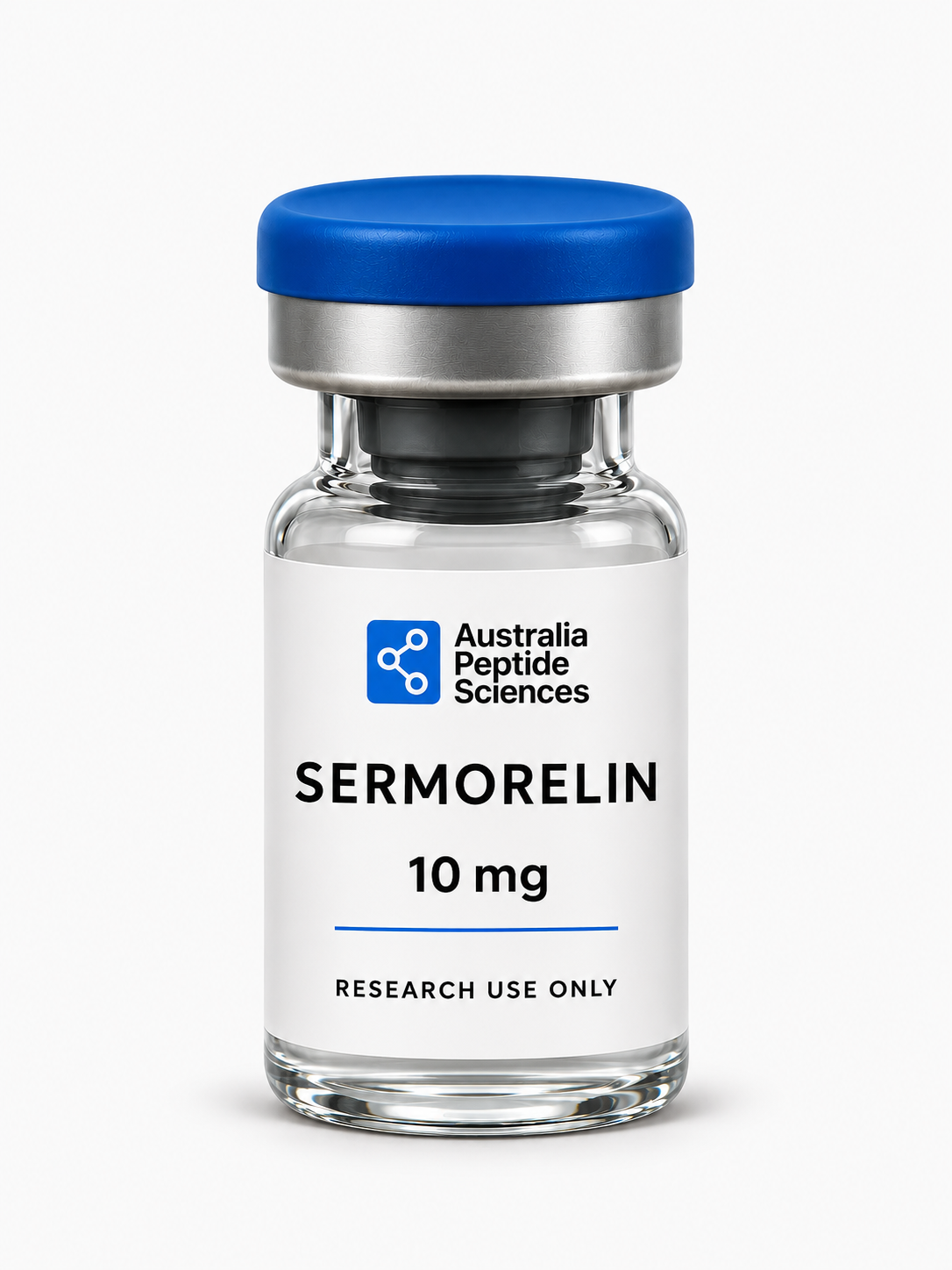
Description
Sermorelin is a 29-amino-acid peptide related to the naturally occurring growth hormone-releasing hormone. It is investigated as a receptor-active research compound in experimental models of the hypothalamic-pituitary axis, particularly those examining GHRH receptor activation and downstream signalling.
For laboratories evaluating a sermorelin peptide in Australia, the 10mg product designation should be considered alongside verified identity, composition and batch-specific quality records. The scientific description below concerns sermorelin as a molecule; it does not independently verify the quality, activity or regulatory status of an individual product batch.
What Is Sermorelin Peptide?
Sermorelin is also described in scientific literature as GHRH(1-29)-NH₂ or growth hormone-releasing factor (1-29)-amide. The shortened peptide retains the N-terminal segment associated with GHRH receptor activity.
Three distinctions help researchers interpret sermorelin research peptides accurately:
- Sermorelin is not growth hormone: It is a signalling peptide studied for its interaction with the receptor system involved in GH release.
- It is not a ghrelin-receptor agonist: Its primary research target is the GHRH receptor rather than the GHS-R1a pathway associated with peptides such as ipamorelin.
- Sermorelin acetate is a specific salt form: The “acetate” description should appear in product metadata only when supported by the supplier’s chemical specifications and batch records.
Sermorelin 10mg: Product Specifications
| Product name | Sermorelin 10mg |
| Molecular class | Synthetic GHRH(1-29) peptide fragment |
| Peptide length | 29 amino acids |
| Reference sequence | Tyr-Ala-Asp-Ala-Ile-Phe-Thr-Asn-Ser-Tyr-Arg-Lys-Val-Leu-Gly-Gln-Leu-Ser-Ala-Arg-Lys-Leu-Leu-Gln-Asp-Ile-Met-Ser-Arg-NH₂ |
| Reference identifiers | CAS 86168-78-7 (free base) · C₁₄₉H₂₄₆N₄₄O₄₂S · 3357.9 g/mol |
| Labelled product size | 10mg |
| Salt form / counterion | As stated on the batch Certificate of Analysis (COA) |
| Identity and purity | Batch-specific - see the Certificate of Analysis (COA) |
| Primary research context | GHRH receptor and pituitary signalling models |
The 10mg label describes the stated product size. It does not establish a solution concentration, test concentration, experimental procedure or verified net peptide content without supporting records.
How Does Sermorelin Work in Laboratory Research?
GHRH receptor activation
In receptor-competent pituitary research models, sermorelin can interact with growth hormone-releasing hormone receptors. These receptors are associated with Gs-protein signalling and adenylyl cyclase activation.
cAMP and downstream signalling
Receptor activation can increase cyclic adenosine monophosphate (cAMP), engaging downstream signalling processes involved in the regulation of growth hormone production and release. Model selection, receptor expression and assay conditions affect how those responses are measured.
Sermorelin Research Areas
A sermorelin 10mg research listing is most useful when it clearly identifies the experimental questions associated with the molecule rather than implying clinical outcomes. Relevant topics in the scientific literature include:
- GHRH receptor pharmacology: Receptor recognition and downstream intracellular signal responses.
- Pituitary endocrine signalling: Laboratory models examining growth hormone release and its upstream regulation.
- cAMP pathway analysis: Measurement of receptor-linked second-messenger responses under controlled experimental conditions.
- GHRH-fragment comparisons: Structural and functional comparisons between the 29-residue fragment and other GHRH-related compounds.
These are research contexts, not claims that a particular product batch has been shown to treat a health condition or to produce a desired human outcome.
Sermorelin Compared With Other Research Peptides
Sermorelin is structurally related to native GHRH. It should not be presented as interchangeable with modified GHRH analogues or with ghrelin-receptor ligands, which can differ in sequence, receptor interaction and pharmacology.
For an example of a distinct GHRH-related material, see the CJC-1295 No DAC research product. Product-specific composition and analytical evidence are required before meaningful comparisons.
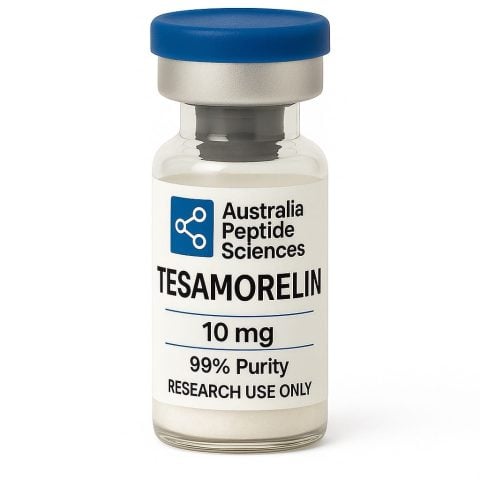
The Tesamorelin research guide provides further background on another GHRH analogue and the importance of distinguishing molecular structures and evidence.
Before You Buy Sermorelin in Australia for Research
Searches for “buy sermorelin Australia” or “sermorelin peptide for sale” do not establish whether an advertised product may lawfully be supplied. Australian laboratories considering a listed research material should verify the following before procurement:
- Chemical identity: Confirm the 29-amino-acid sequence, amidation and the documented salt form, if applicable.
- Labelled quantity: Check how the 10mg amount is defined, including peptide content and any counterion or water contribution where relevant.
- Batch-specific quality records: Match the reported identity and analytical results to the material and lot being assessed.
- Regulatory permissions: Check the current requirements for possession, importation, supply and advertising in the relevant Australian jurisdiction.
A certificate of analysis may report identity or chromatographic purity, but these are distinct measurements. Review the APS Certificate of Analysis library and ensure the document actually corresponds to the relevant batch.
For an explanation of what chromatographic purity does and does not establish, consult the APS HPLC laboratory testing guide.
Research Use Only - Not for Human Use
Sermorelin 10mg is described here exclusively for controlled laboratory and analytical research. It is not intended for human consumption, self-administration, treatment, diagnosis, performance enhancement or veterinary administration. The scientific discussion does not constitute medical instructions or a claim of therapeutic benefit.
Sermorelin 10mg is a research peptide of interest in GHRH receptor, pituitary signalling and cAMP pathway models. For Australian laboratories, a useful product specification must establish the peptide’s exact identity and salt form, support its labelled quantity with batch-specific analytical records, and be consistent with applicable regulatory requirements. Research-only wording does not replace these checks.
Reviews
There are no reviews yet