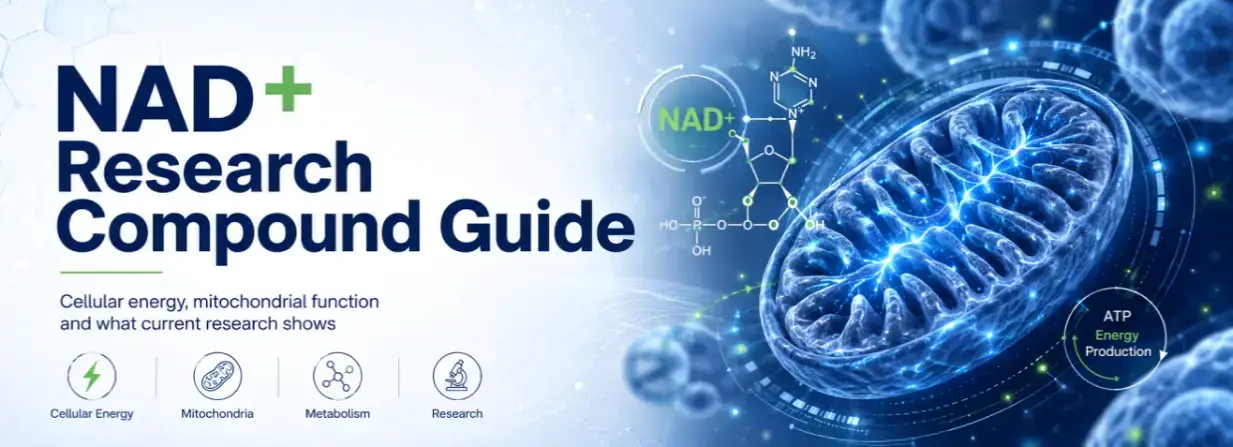
NAD+ research focuses on nicotinamide adenine dinucleotide, a coenzyme involved in cellular metabolism, redox balance, mitochondrial function and energy transfer. NAD+ also supports several enzyme systems linked to cellular signalling and metabolic regulation.
Although NAD+ is essential to normal cell function, increasing its levels does not automatically improve energy production, mitochondrial performance or longevity. Current evidence ranges from established biochemical mechanisms to preclinical findings, biomarker changes and human clinical outcomes.
Learn more about Australia Peptide Sciences
What Is NAD+?
NAD+ is the oxidised form of nicotinamide adenine dinucleotide, a naturally occurring dinucleotide coenzyme found throughout cellular metabolism. It is not a peptide, hormone or growth factor.
Its most established role is in oxidation-reduction reactions, commonly called redox reactions. During these reactions, NAD+ accepts electrons and a proton to form NADH. NADH can later donate those electrons in other metabolic reactions.
This ability to cycle between NAD+ and NADH allows the pair to transfer reducing equivalents between different biochemical processes.
NAD+ also has important non-redox functions. Several enzyme families use NAD+ as a substrate, including:
- sirtuins;
- poly(ADP-ribose) polymerases, or PARPs;
- CD38 and related NAD+-metabolising enzymes.
These systems connect NAD+ metabolism with processes such as cellular signalling, DNA-damage responses, metabolic regulation and stress adaptation.
NAD+ and NADH
NAD+ and NADH are two forms of the same redox couple.
NAD+ is the oxidised form. It can accept electrons during metabolic reactions.
NADH is the reduced form. It carries high-energy electrons that can be transferred to other biochemical systems, including the mitochondrial electron transport chain.
The relationship between the two is important because cellular metabolism depends not only on the absolute amount of NAD+, but also on the balance between oxidised and reduced forms in different cellular compartments.
The NAD+/NADH ratio is therefore commonly discussed in NAD+ metabolism research as an indicator of cellular redox state.
A whole-cell NAD+/NADH measurement does not fully represent cellular metabolism because different cellular compartments maintain partly distinct NAD pools.
Is NAD+ a peptide or a research compound?
NAD+ is not a peptide. Peptides are chains of amino acids linked by peptide bonds, whereas NAD+ is a dinucleotide coenzyme with a completely different chemical structure and biological role.
The phrase NAD+ research compound is sometimes used in laboratory and commercial research contexts, but scientifically NAD+ is better described as an endogenous coenzyme.
Unlike peptide compounds that may interact with receptors or signalling pathways, NAD+ participates directly in metabolic and enzyme-dependent processes.
Why NAD+ Is Central to Cellular Energy Metabolism
NAD+ cellular energy research centres on its role as an electron carrier in the pathways cells use to extract usable energy from nutrients.
NAD+ does not directly create ATP. Instead, it participates in metabolic reactions that generate NADH, which can then transfer electrons to systems involved in ATP production.
Describing NAD+ as directly producing cellular energy oversimplifies its metabolic role.
NAD+ in glycolysis
Glycolysis occurs in the cytosol and converts glucose into pyruvate through a series of enzyme-controlled reactions.
One step requires NAD+ to accept electrons during the oxidation of glyceraldehyde-3-phosphate. NAD+ is reduced to NADH during this reaction.
For glycolysis to continue, cells must regenerate NAD+ from NADH. The mechanism depends on cellular conditions.
Under aerobic conditions, reducing equivalents associated with cytosolic NADH can ultimately contribute to mitochondrial oxidative metabolism through specialised shuttle systems. Under conditions where mitochondrial oxidation cannot keep pace, cells may regenerate NAD+ through other pathways, such as conversion of pyruvate to lactate.
NAD+ availability is therefore directly connected with the cell’s capacity to continue specific energy-generating reactions.
NAD+ in the citric acid cycle
Within mitochondria, the citric acid cycle, also known as the tricarboxylic acid or TCA cycle, contains several reactions in which NAD+ accepts electrons.
These reactions produce NADH while oxidising metabolic intermediates derived from carbohydrates, fats and amino acids.
The resulting NADH carries electrons to the mitochondrial respiratory chain.
This connection between nutrient oxidation, NAD+ reduction and electron transport explains why NAD+ is considered a central component of bioenergetics rather than simply an ageing-related molecule.
NADH and the electron transport chain
NADH can donate electrons to Complex I of the mitochondrial electron transport chain.
Electron transfer through the respiratory complexes contributes to the movement of protons across the inner mitochondrial membrane. The resulting electrochemical gradient is then used by ATP synthase to produce ATP.
NAD+ therefore supports ATP production indirectly by enabling the metabolic reactions that generate electron-carrying NADH.
More NAD+ does not automatically mean more ATP. Energy production depends on many additional factors, including substrate availability, mitochondrial integrity, oxygen availability, enzyme activity, membrane potential and the balance between ATP demand and production.
NAD+ Research and Mitochondrial Function
NAD+ mitochondrial function research investigates how NAD metabolism interacts with mitochondrial energy production, redox balance, signalling and adaptation to cellular stress.
The biological relationship is well established. Mitochondria depend on NAD+/NADH cycling for oxidative metabolism, while mitochondrial activity also affects how NAD pools are used and regenerated.
What remains less certain is whether experimentally increasing NAD+ availability consistently improves mitochondrial function in humans.
Why mitochondria depend on NAD+
Mitochondria use NAD+-dependent reactions in several major metabolic processes, including:
- the citric acid cycle;
- fatty-acid oxidation;
- amino-acid metabolism;
- electron transfer into the respiratory chain.
NADH generated inside mitochondria provides electrons to oxidative phosphorylation.
Mitochondrial NAD+ is also connected with NAD+-dependent enzymes, including mitochondrial sirtuins such as SIRT3, which have been studied for their roles in regulating metabolic enzymes and stress responses.
Related mitochondrial research also includes compounds such as the SS-31 peptide, which is studied in relation to mitochondrial function and cellular bioenergetics.
These relationships place NAD+ at the centre of several mitochondrial metabolic processes.
However, increased NAD+ concentrations have not been shown to consistently improve mitochondrial performance in humans.
What preclinical studies suggest
Animal and laboratory studies have produced substantial evidence that manipulating NAD+ metabolism can affect mitochondrial biology.
In some experimental models, NAD+-raising interventions have been associated with changes in mitochondrial respiration, oxidative metabolism, metabolic flexibility, vascular function, muscle physiology and cellular stress responses.
These studies help establish biological plausibility.
However, animal experiments often differ from human studies in important ways. Researchers may use different doses relative to body size, longer exposures relative to lifespan, genetically modified models or experimental disease states that do not closely reproduce normal human physiology.
Preclinical findings have not yet been confirmed as equivalent outcomes in humans.
What human studies show
Human research is considerably more mixed.
Trials of NAD+ precursors such as nicotinamide riboside and nicotinamide mononucleotide have frequently shown that NAD-related metabolites can be increased in blood or other measured compartments.
Yet higher NAD-related biomarkers have not consistently produced measurable improvements in mitochondrial respiration, insulin sensitivity, exercise performance or other physiological outcomes.
Some controlled studies have found little or no change in skeletal-muscle mitochondrial function despite evidence that the intervention altered the NAD metabolome.
NAD+ is essential to mitochondrial biology, while the effects of increasing NAD+ availability vary according to the intervention, tissue, population and outcome studied.
Major NAD+ Pathways in Cellular Metabolism
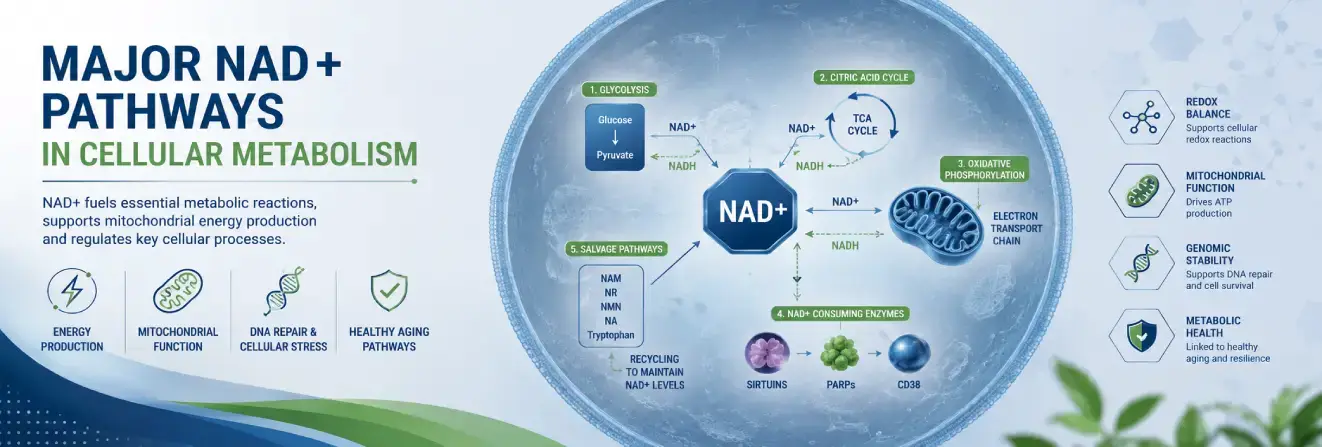
NAD+ pathways include both biosynthetic routes that create or regenerate NAD+ and consumption pathways in which NAD+ is used by metabolic or signalling enzymes.
Cells do not rely on a single source of NAD+. Instead, NAD homeostasis is maintained through interconnected pathways involving dietary precursors, endogenous metabolites, salvage reactions and NAD+-consuming enzymes.
De novo NAD+ synthesis
Humans can synthesise NAD+ through a de novo pathway beginning with the amino acid tryptophan.
Tryptophan enters the kynurenine pathway and can ultimately contribute to the formation of quinolinic acid, which is converted through several enzymatic steps into NAD+.
This pathway demonstrates that NAD+ metabolism is connected with broader amino-acid and vitamin metabolism.
It is not the only route used to maintain NAD+ pools.
The Preiss–Handler pathway
Nicotinic acid, a form of vitamin B3, can enter NAD+ biosynthesis through the Preiss–Handler pathway.
Nicotinic acid is converted into nicotinic acid mononucleotide and then into additional intermediates before NAD+ is formed.
This route differs from the nicotinamide salvage pathway but contributes to the same broader NAD metabolome.
The salvage pathway
The salvage pathway is an important mechanism for recycling nicotinamide back into NAD+.
When enzymes such as sirtuins and PARPs consume NAD+, nicotinamide can be released as a product. Cells can reuse this nicotinamide rather than allowing it to be lost.
Nicotinamide phosphoribosyltransferase, or NAMPT, converts nicotinamide into nicotinamide mononucleotide, or NMN.
NMN can then be converted into NAD+ by nicotinamide mononucleotide adenylyltransferase enzymes, commonly abbreviated as NMNATs.
This recycling pathway is one reason NAMPT, NMN and NMNAT are prominent entities in NAD+ metabolism research.
Nicotinamide riboside and NAD+ synthesis
Nicotinamide riboside, or NR, is another NAD+ precursor.
NR can be phosphorylated by nicotinamide riboside kinases to form NMN, which can subsequently be converted to NAD+.
This pathway is the basis for much of the clinical research involving oral NR.
Research on NR supplementation and direct NAD+ administration involves different compounds and pharmacological questions.
NAD+-Consuming Enzymes and Cellular Signalling
NAD+ is not only transferred between oxidised and reduced states. It is also chemically consumed by several enzyme systems.
Three of the most important groups in current research are sirtuins, PARPs and CD38-related enzymes.
Sirtuins
Sirtuins are NAD+-dependent enzymes involved in the regulation of protein activity and cellular signalling.
Humans have several sirtuin enzymes located in different cellular compartments. SIRT1 and SIRT3 are particularly prominent in research on metabolism and ageing biology.
Sirtuins require NAD+ for their enzymatic reactions. For this reason, changes in NAD+ availability may influence sirtuin activity under certain conditions.
Sirtuins have been linked experimentally with processes including:
- metabolic adaptation;
- mitochondrial regulation;
- stress responses;
- gene expression;
- protein deacetylation.
However, the fact that sirtuins require NAD+ does not mean that increasing NAD+ automatically produces all outcomes associated with sirtuin signalling.
Enzyme activity depends on multiple regulatory factors beyond substrate availability.
PARPs and DNA-damage responses
Poly(ADP-ribose) polymerases are another class of NAD+-consuming enzymes.
PARP1 is particularly well studied for its response to DNA damage. When activated, PARP enzymes use NAD+ to transfer ADP-ribose units to target proteins and participate in signalling associated with DNA repair.
High levels of PARP activity can increase NAD+ consumption.
This creates an important biological link between NAD+ metabolism, genomic stress and DNA-damage responses.
This mechanistic link does not establish that NAD+ supplementation repairs DNA or prevents diseases associated with DNA damage. The established mechanism and the clinical outcome are separate questions.
CD38 and NAD+ turnover
CD38 is an enzyme with NADase activity that can consume extracellular or intracellular NAD-related substrates depending on its location and cellular context.
Research has examined whether changes in CD38 activity contribute to altered NAD metabolism during ageing and inflammation.
Animal studies have provided mechanistic evidence connecting increased CD38 activity with declining NAD+ availability in some ageing tissues.
The extent to which this mechanism determines whole-body NAD+ decline in humans remains an active research area.
NAD+ and Cellular Ageing
NAD+ cellular ageing research focuses on whether changes in NAD metabolism contribute to biological processes that accompany advancing age.
Multiple studies have reported lower NAD+ abundance in certain tissues or biological samples from older individuals compared with younger groups. However, the pattern is not universal.
NAD+ should therefore not be described as a molecule that simply declines at the same rate in every tissue as people age.
Does NAD+ decline with age?
Evidence suggests that age-associated changes in NAD+ metabolism occur, but the magnitude and consistency vary according to:
- tissue type;
- cell population;
- measurement technique;
- metabolic health;
- inflammation;
- disease status;
- study population.
Some human studies have identified lower NAD-related measures with age, while others have not observed the same pattern in every tissue examined.
Measurement itself is another complication because NAD+ and related metabolites can be unstable and different analytical techniques do not always produce directly comparable values.
Ageing can be associated with altered NAD metabolism, but a universal fixed decline across all human tissues has not been established.
Why ageing could alter NAD+ homeostasis
Several biological processes may contribute to changes in NAD+ availability during ageing.
Potential mechanisms studied experimentally include:
- increased activity of NAD+-consuming enzymes;
- chronic inflammatory signalling;
- accumulated DNA damage and PARP activation;
- changes in NAMPT and salvage-pathway activity;
- altered mitochondrial metabolism;
- changes in nutrient sensing;
- cellular senescence.
These processes can interact.
For example, cellular stress may increase NAD+ consumption while changes in biosynthesis or recycling make it more difficult to restore NAD pools.
Oxidative stress may also contribute to cellular damage and changes in NAD+ metabolism under certain biological conditions.
Many of these relationships have strong mechanistic support, particularly from experimental and animal studies. Their relative importance in normal human ageing is still being defined.
What NAD+ Longevity Research Actually Shows
NAD+ longevity research is scientifically interesting, but current evidence does not show that raising NAD+ extends human lifespan.
Much of the strongest evidence connecting NAD metabolism with lifespan comes from model organisms and mechanistic experiments rather than long-term human trials.
For a research-focused overview, this presentation explores NAD+ metabolism and its relationship with ageing.
https://www.youtube.com/watch?v=ochiepD7XiA
Other areas of longevity research also examine compounds such as the Epitalon peptide, although their mechanisms and evidence should be evaluated separately from NAD+ research.
Evidence from animal studies
Rodent research has examined NR, NMN and other NAD+-modifying interventions across numerous models.
Some studies have reported improvements in specific measures of metabolic function, vascular physiology, muscle function, mitochondrial biology or other healthspan-related outcomes.
Lifespan results are less consistent.
Certain experimental models have shown survival or lifespan changes, while other studies have found no meaningful lifespan extension after NAD+-precursor supplementation.
Results can depend heavily on the species, strain, disease model, age at treatment, compound, exposure and endpoint.
Animal findings therefore support further investigation but cannot establish that the same intervention will increase longevity in humans.
Human longevity evidence
Human trials are not currently capable of demonstrating whether NAD+-raising strategies extend lifespan.
Most clinical studies have lasted weeks or months rather than decades and have focused on biomarkers or shorter-term physiological outcomes.
Researchers therefore examine intermediate endpoints such as:
- NAD-related metabolite concentrations;
- glucose regulation;
- vascular measurements;
- exercise performance;
- body composition;
- inflammatory markers;
- mitochondrial measures;
- sleep or fatigue outcomes.
These studies provide information about biological activity rather than direct evidence of longer human lifespan.
A compound can alter a biomarker without meaningfully changing disease risk, function, healthspan or lifespan.
What Human NAD+ Research Has Found So Far
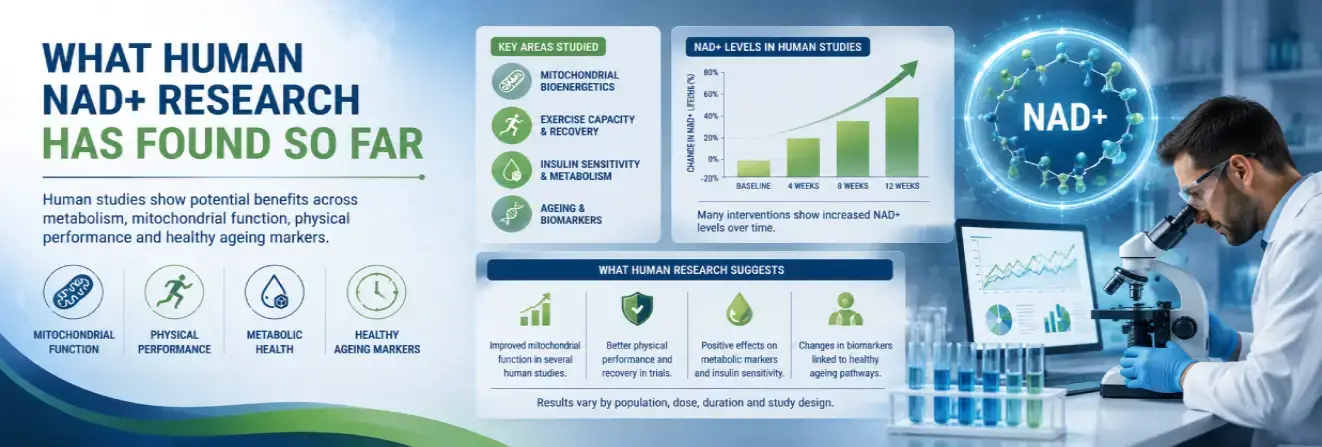
The most consistent result in human NAD+-boosting research is biochemical target engagement: oral NR and NMN frequently increase circulating or cellular NAD-related metabolites.
Clinical and functional outcomes are much less consistent.
This distinction is one of the most important points in current NAD+ research.
Evidence from nicotinamide riboside studies
NR has been examined in healthy adults, older adults and populations with metabolic or chronic health conditions.
Controlled trials have commonly shown that oral NR can increase NAD+ or related metabolites in blood-derived samples.
However, downstream findings have varied.
Across different studies, researchers have reported combinations of:
- increased NAD-related biomarkers;
- little or no change in insulin sensitivity;
- little or no change in resting energy expenditure;
- inconsistent effects on blood pressure;
- inconsistent effects on body composition;
- limited or absent changes in exercise outcomes;
- variable effects on inflammatory markers;
- tissue responses that do not always match blood responses.
Small sample sizes and short intervention periods limit how confidently many individual findings can be interpreted.
Evidence from nicotinamide mononucleotide studies
NMN has also been evaluated in several human intervention trials.
Many studies have reported increases in blood NAD+ or related metabolites after oral NMN.
Human research has also examined NMN and muscle insulin sensitivity in specific study populations.
Some trials have observed changes in selected outcomes such as submaximal exercise measures, walking performance or muscle insulin sensitivity in particular populations.
Other controlled studies have reported no significant effects on outcomes including blood pressure, body composition, glucose regulation, arterial stiffness, muscle strength or sleep measures.
The evidence therefore does not support presenting NMN as producing a uniform physiological effect across humans.
Biochemical target engagement is not clinical efficacy
Current evidence can be summarised across three key questions:
| Claim | Human Evidence | Preclinical Evidence | Current Conclusion |
| NAD+ is required for cellular metabolism | Strong | Strong | Established |
| NR/NMN can raise NAD biomarkers | Strong | Strong | Established |
| Raising NAD+ improves mitochondrial function | Mixed | Promising | Not established |
| NAD+ slows human ageing | Insufficient | Promising | Not established |
| NAD+ extends lifespan | No human evidence | Mixed | Not established |
Biochemical changes and clinical outcomes remain distinct across NAD+ cellular energy, mitochondrial and longevity research.
A rise in blood NAD+ may show that a compound entered or influenced the NAD metabolic network. It does not automatically show that tissues function better or that clinically meaningful outcomes have improved.
NAD+ vs NMN vs NR
NAD+, NMN and NR belong to the same metabolic system but are not interchangeable.
| Compound | Biological role | Relationship to NAD+ | Research context |
| NAD+ | Endogenous coenzyme | Final coenzyme used in redox and NAD+-dependent reactions | Cellular metabolism, redox biology, signalling and experimental NAD+ administration |
| NMN | NAD+ intermediate | Converted into NAD+ by NMNAT enzymes | Frequently studied as an NAD+-raising precursor |
| NR | Vitamin B3-related precursor | Can be converted to NMN and subsequently NAD+ | Extensively studied in human NAD+-precursor trials |
Much of the human literature frequently described broadly as “NAD+ supplementation research” actually investigates NR or NMN rather than administering NAD+ itself.
NAD+ precursors and direct NAD+ can differ in absorption, metabolism and tissue distribution.
Findings from NR, NMN and direct NAD+ studies are specific to the intervention that was tested.
How NAD+ Is Measured in Research
Measuring NAD+ accurately is more difficult than simply taking a routine blood reading.
NAD+ and many related metabolites are chemically sensitive, and concentrations can change during sample collection, processing or storage.
This creates an important limitation when comparing studies.
Biological samples used in NAD+ research
Researchers may measure NAD-related metabolites in:
- whole blood;
- plasma;
- serum;
- peripheral blood mononuclear cells;
- skeletal muscle;
- urine;
- other specialised tissues.
A change in one compartment does not guarantee an equivalent change in another.
Blood-based increases are therefore not sufficient evidence that every tissue has experienced the same degree of NAD+ change.
Analytical methods
Mass spectrometry is widely used to characterise NAD+ and related metabolites because it can provide sensitive and chemically specific measurements.
Nuclear magnetic resonance spectroscopy may also be used in certain research settings.
Some studies have relied on enzymatic or colorimetric methods.
Results from different methods should be compared cautiously because assays differ in sensitivity, specificity and handling requirements.
Sample stability matters
NAD+ can degrade during collection and preparation.
Extraction conditions, storage temperature, time before processing and the stability of related metabolites can affect measured values.
This helps explain why apparent differences between trials may reflect not only biology but also methodology.
Standardisation of NAD metabolomics remains an important area for future research.
Important Limitations in NAD+ Research
NAD+ research is biologically mature in some areas and clinically early in others.
The basic metabolic importance of NAD+ has been established for decades. The uncertainty lies mainly in what happens when researchers deliberately alter NAD availability in humans.
Human studies are often small
Many clinical trials of NR and NMN have enrolled relatively small groups.
Small samples reduce statistical power and make isolated positive findings harder to generalise.
They also increase the importance of replication.
Intervention durations are usually short
Most trials last weeks or months.
That may be sufficient to measure biomarker changes but is not sufficient to establish effects on long-term ageing, chronic disease development or lifespan.
Study populations differ substantially
Research has included:
- healthy younger adults;
- middle-aged adults;
- older adults;
- people with overweight or obesity;
- people with impaired metabolic health;
- populations with specific clinical conditions.
An effect detected in one group cannot automatically be applied to another.
Baseline NAD metabolism may also influence how strongly a person or tissue responds to an intervention.
Different tissues may respond differently
Blood NAD+ is easier to measure than NAD+ in muscle, brain or other organs.
Researchers therefore frequently rely on circulating markers.
Yet the biological effect of greatest interest may occur inside a particular tissue.
A blood biomarker can demonstrate systemic exposure or metabolic response without proving target engagement in every relevant organ.
NAD+ metabolism is dynamic
Steady-state NAD+ concentration is only one part of NAD metabolism.
Cells continuously synthesise, recycle, consume and transform NAD-related molecules.
If both NAD+ synthesis and consumption increase simultaneously, the measured concentration may not fully reflect the rate of NAD turnover.
Research methods that examine metabolic flux can provide information that static concentration measurements cannot.
Interpreting NAD+ Research Without Overstating the Evidence
Current evidence supports the biological importance of NAD+ without establishing that NAD+-raising interventions slow human ageing.
Several conclusions are well supported:
- NAD+ is essential to redox metabolism and many cellular reactions.
- NAD+ and NADH are fundamental components of cellular energy metabolism.
- Mitochondria depend on NAD-linked pathways.
- NAD+ is consumed by enzymes including sirtuins, PARPs and CD38.
- NAD metabolism can change with age, disease and cellular stress.
- NR and NMN can increase NAD-related biomarkers in many human studies.
- Preclinical experiments provide substantial biological plausibility for modifying NAD pathways.
Other claims remain uncertain:
- whether increasing NAD+ consistently improves mitochondrial functionin humans;
- whether NAD+-raising compounds improve energy or performance in otherwise healthy people;
- whether higher NAD+ slows human cellular ageing in a clinically meaningful way;
- whether NAD+-boosting strategies improve human healthspan;
- whether they extend human lifespan.
Together, these findings highlight the difference between established NAD+ biology and still-uncertain human outcomes.
NAD+ Research in Australia
Interest in NAD+ Australia research sits within the broader international investigation of metabolic biology, mitochondrial function and ageing pathways.
For Australian researchers, NAD+ remains relevant for both its established biochemical role and the emerging evidence surrounding experimental interventions.
The essential biological role of NAD+ does not establish therapeutic effects for NAD+ research compounds.
Research outcomes vary according to the compound studied, the experimental model, the measured endpoint and the level of evidence.
For example, findings from mouse studies of NMN do not establish that direct NAD+ produces the same effects in humans.
Likewise, an increase in whole-blood NAD+ after NR supplementation does not establish an improvement in mitochondrial function throughout the body.
These evidence gaps remain relevant as NAD+ research expands into healthy ageing and longevity.
Related areas of investigation also include neuropeptide research into brain function, sleep and healthy ageing.
Future Directions for NAD+ Metabolism Research
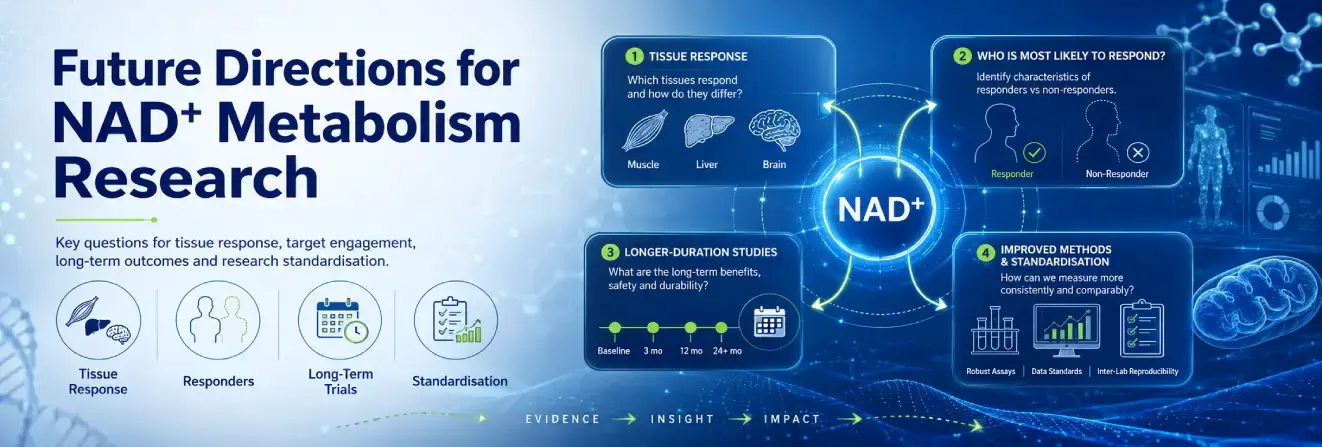
Future NAD+ metabolism research is increasingly focused on outcomes beyond changes in blood biomarkers.
Several questions remain particularly important.
Which tissues respond?
Evidence remains limited on how NAD+-raising interventions affect NAD metabolism in specific tissues beyond circulating measurements.
Skeletal muscle, liver, adipose tissue and the nervous system may not respond identically.
Who is most likely to respond?
NAD+-raising interventions may have different effects depending on age, metabolic health, baseline NAD status or underlying cellular stress.
Identifying biological responders and non-responders could help explain why results vary among trials.
How much does target engagement matter?
A key unresolved question is whether the magnitude of a rise in NAD-related biomarkers predicts any functional outcome.
A large biochemical change may not necessarily produce a large physiological change.
An important unresolved question is whether changes in NAD metabolism correlate with prespecified measures of function.
What happens over longer periods?
Short-term studies cannot answer questions about healthspan or long-term safety.
The long-term effects of NAD+-raising strategies remain uncertain because most randomised trials have been relatively short and have not assessed long-term clinical outcomes.
Can methods become more standardised?
Improved agreement around sample collection, metabolite extraction, analytical techniques and reporting would make it easier to compare results across laboratories.
Standardisation is especially important for NAD+ because the metabolites being measured can be unstable and highly sensitive to experimental handling.
Explore our full range of research peptides
NAD+ research confirms that NAD+ is central to cellular metabolism, mitochondrial energy pathways and NAD+-dependent signalling. Human studies show that NR and NMN can increase NAD-related biomarkers, but it remains unclear whether these changes consistently improve metabolism, physical function, healthspan or longevity. Larger and longer human trials are still needed to establish meaningful clinical outcomes.
FAQs About NAD+ Research
Is NAD Plus scientifically proven?
NAD+ is a well-characterised coenzyme that plays established roles in cellular metabolism, redox balance and mitochondrial energy processes. However, current NAD+ research does not show that supplementation reliably slows ageing, boosts energy or extends human lifespan. Studies of precursors such as NR and NMN often report increases in NAD-related biomarkers, while effects on metabolic health, physical function and other clinical outcomes remain mixed.
Which form of NAD+ is most effective?
Current evidence has not established one NAD+ form or NAD+-boosting approach as the most effective for improving human health or longevity. NR and NMN have been studied more extensively in humans and can raise circulating NAD-related metabolites, but these biochemical changes have not consistently translated into meaningful clinical benefits. Human evidence for direct intravenous NAD+ is still comparatively limited.
Is NAD just vitamin B12?
No. NAD+ and vitamin B12 are different molecules with distinct biological roles. NAD+ stands for nicotinamide adenine dinucleotide and functions as a coenzyme in cellular metabolism and electron-transfer reactions. Vitamin B12, also called cobalamin, is an essential vitamin involved in processes such as red blood cell formation and nervous-system function. NAD+ production is more closely linked to vitamin B3-related compounds, including nicotinamide and nicotinic acid.
Is NAD+ legal in Australia?
NAD+ in Australia is regulated under therapeutic-goods legislation rather than being categorised simply as legal or illegal. NAD, NAD+ and NADH are not permitted ingredients in standard listed medicines. Products containing these substances may instead fall under other regulatory pathways, exemptions or authorisation requirements. NMN is regulated separately and may be permitted in certain listed oral medicines when the relevant conditions are satisfied.
Sources
TGA Guidance on NAD, NAD+, NADH and NMN Medicines in Australia
NAD+ Supplementation and Human Anti-Ageing Evidence – Systematic Review