Epitalon vs NAD+ is not a like-for-like comparison: Epitalon is a synthetic tetrapeptide studied mainly in telomere-related models, whereas NAD+ is an essential coenzyme involved in cellular energy, redox metabolism, and enzyme activity.
They are often grouped under the broad label of longevity research, but they are not equivalent compounds and do not act through one shared pathway. There is also no sound scientific basis for naming one as universally “better”.
The useful comparison is which research question each compound can address, how its effects are measured, and how strong the supporting evidence is.
Epitalon vs NAD+ at a Glance
At a glance, epitalon vs NAD+ is best understood as a comparison between a targeted experimental peptide and a molecule already required for cellular ageing processes.
| Feature | Epitalon | NAD+ |
| Molecular class | Synthetic tetrapeptide | Dinucleotide coenzyme |
| Common form or sequence | Ala-Glu-Asp-Gly, also written AEDG | Oxidised form of the NAD+/NADH redox pair |
| Main research focus | Telomere biology, telomerase, gene expression and circadian-related pathways | Redox balance, cellular energy, mitochondrial function, DNA repair and signalling |
| Typical laboratory endpoints | Telomere length, hTERT expression, telomerase activity, ALT activity and senescence markers | NAD+/NADH ratio, ATP, oxygen consumption, metabolite profiles and NAD+-dependent enzyme activity |
| Evidence base | Primarily cell and animal studies, with limited direct human evidence | Extensive basic biology, strong preclinical evidence and a growing but mixed human evidence base |
| Main interpretation risk | Treating telomere changes as proof of longer life | Treating increased NAD-related biomarkers as proof of better health outcomes |
This distinction prevents a common error: comparing broad marketing claims rather than mechanisms, models, and endpoints.
What Is Being Compared in Epitalon vs NAD+ Research?
What is Epitalon?
Epitalon, also written Epithalon, is a synthetic tetrapeptide composed of alanine, glutamic acid, aspartic acid, and glycine.
It differs from Epithalamin, a pineal-derived peptide preparation containing multiple components. Research examines Epitalon in relation to telomeres, telomerase activity, gene expression, and circadian biology. Learn more in the Epitalon peptide research guide.
What is NAD+?
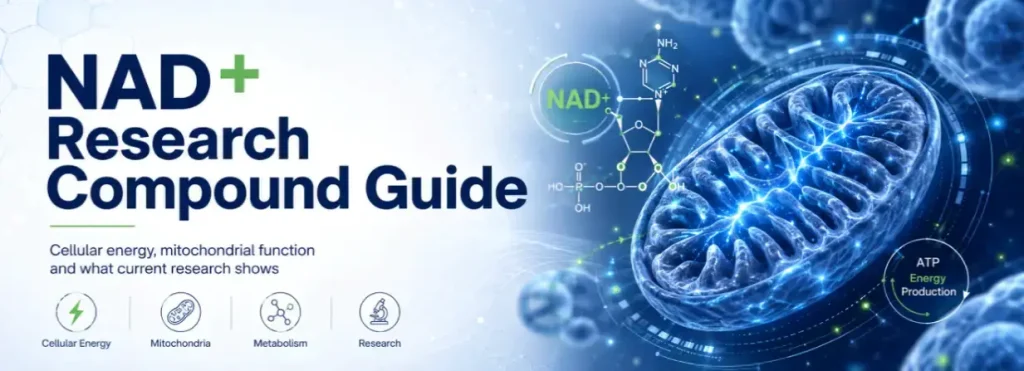
Nicotinamide adenine dinucleotide, or NAD+, is a coenzyme involved in cellular metabolism and redox balance. It cycles between NAD+ and its reduced form, NADH, while also supporting enzymes associated with DNA repair and cellular signalling.
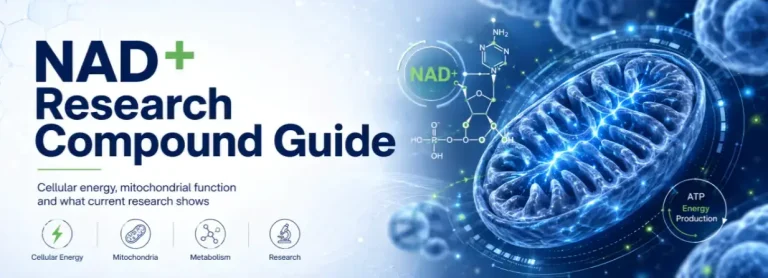
For a deeper overview of its metabolic roles, research methods, and current evidence, see our NAD+ Research Compound Guide.
NAD+ is not a peptide and should not be confused with its precursors, including nicotinamide riboside (NR) and nicotinamide mononucleotide (NMN). Evidence concerning these precursors does not automatically apply to direct NAD+.
Telomere Research vs Cellular Energy: Two Different Pathways
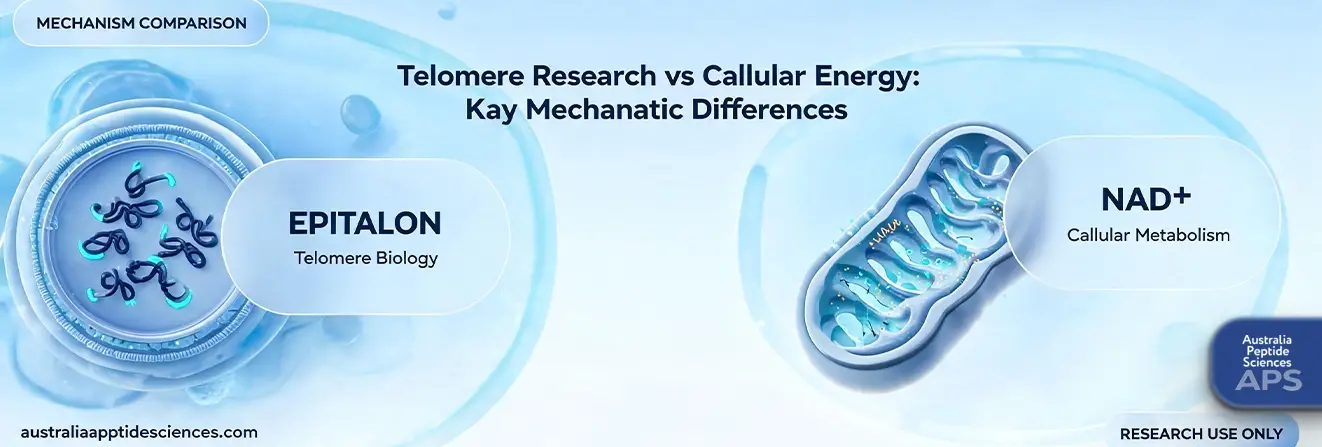
The comparison of telomere research vs cellular energy captures the central distinction: Epitalon studies focus mainly on telomere biology, whereas NAD+ studies examine energy and redox metabolism
1. Epitalon and telomere biology
Telomeres protect chromosome ends and often shorten during cell division. Telomerase can counter this process by adding telomeric DNA.
A 2003 cell-culture study reported increased telomerase activity and telomere elongation after Epitalon exposure. A 2025 study also reported telomere changes in normal and breast cancer cell lines through telomerase-related and ALT pathways. The paper later received a figure correction.
These remain in vitro findings. Telomere elongation in cultured cells does not prove slower ageing, clinical benefit, or longer human lifespan. Researchers must also assess proliferation, genomic stability, and cell viability because telomere-maintenance pathways are active in many cancer cells.
2. NAD+ and cellular energy metabolism
NAD+ accepts electrons during glycolysis and the tricarboxylic acid cycle to form NADH. NADH then supplies reducing equivalents to the electron transport chain that supports oxidative phosphorylation.
The balance between NAD+ and NADH therefore affects redox regulation and cellular metabolism.
Relevant endpoints include mitochondrial function, oxygen consumption, membrane potential, and reactive oxygen species.
NAD+ also supports sirtuins and PARP enzymes and is broken down by enzymes such as CD38. Changes in NAD+ may therefore reflect differences in its synthesis, recycling, distribution, or consumption.
3. Where the pathways may overlap
Telomere dysfunction, mitochondrial stress, DNA damage, and cellular senescence are interconnected. This creates possible overlap between Epitalon-related telomere research and NAD+-dependent metabolism.
However, there is no established evidence of a combined longevity effect. Studies examining both compounds require separate Epitalon, NAD+, combination, and control groups.
What Does the Evidence Show for Epitalon vs NAD+?
The evidence differs in both scale and quality. Any assessment of epitalon compared to NAD+ should separate cell, animal, and human findings.
1. Evidence for Epitalon
Epitalon research remains primarily preclinical. Cell studies have examined hTERT expression, telomerase activity, and telomere length, while animal studies have explored lifespan and ageing-related markers. A 2003 study in female mice found no increase in mean lifespan, although it reported changes in maximum lifespan and survival among the longest-lived animals. These results do not establish general lifespan extension.
Direct human evidence for purified Epitalon is limited. Some older reports examined Epithalamin or combined peptide preparations, so their results cannot be assigned confidently to Epitalon.
2. Evidence for NAD+
NAD+ has an established role in redox metabolism, mitochondrial function, and DNA-repair pathways. However, most human trials have investigated its precursors, particularly NR and NMN, rather than direct NAD+.
A 2026 systematic review found that NR and NMN increased NAD-related biomarkers, but their effects on metabolic, vascular, and other healthspan outcomes were mixed or absent. It identified no qualifying clinical-outcome trials of intravenous or intramuscular NAD+ for anti-ageing purposes.
A separate 2026 analysis of seven human cohorts found that whole-blood NAD+ remained stable with age. This suggests that blood NAD+ should not be treated as a universal biomarker of biological ageing.
3. Evidence-strength comparison
| Evidence level | Epitalon | NAD+ | Responsible conclusion |
| Established biology | Defined peptide studied in telomere pathways | Essential coenzyme in metabolism and enzyme function | NAD+ has the broader biological foundation |
| Cell studies | Telomerase, hTERT and telomere findings | Extensive metabolic, mitochondrial and repair research | The compounds address different mechanisms |
| Animal studies | Limited ageing-related studies | Large preclinical evidence base | Animal findings do not prove human effectiveness |
| Human biomarkers | Limited for purified Epitalon | Stronger for NR and NMN than direct NAD+ | Biomarker changes may not produce functional benefits |
| Human outcomes | Insufficient for firm conclusions | Mixed and inconclusive | Neither has been shown to extend human lifespan |
Visit Australia Peptide Sciences
Epitalon and NAD+ Are Different Types of Compounds
In a longevity peptide comparison, Epitalon and NAD+ should first be separated by compound class: Epitalon is a peptide, whereas NAD+ is a dinucleotide coenzyme.
This difference affects experimental design. Epitalon studies must account for peptide stability and sequence integrity, while NAD+ research must consider redox state, metabolite conversion, and cellular distribution. Comparisons should therefore use molar concentration, exposure, and pathway-specific endpoints rather than equal mass alone.
How to Design Epitalon NAD+ Research
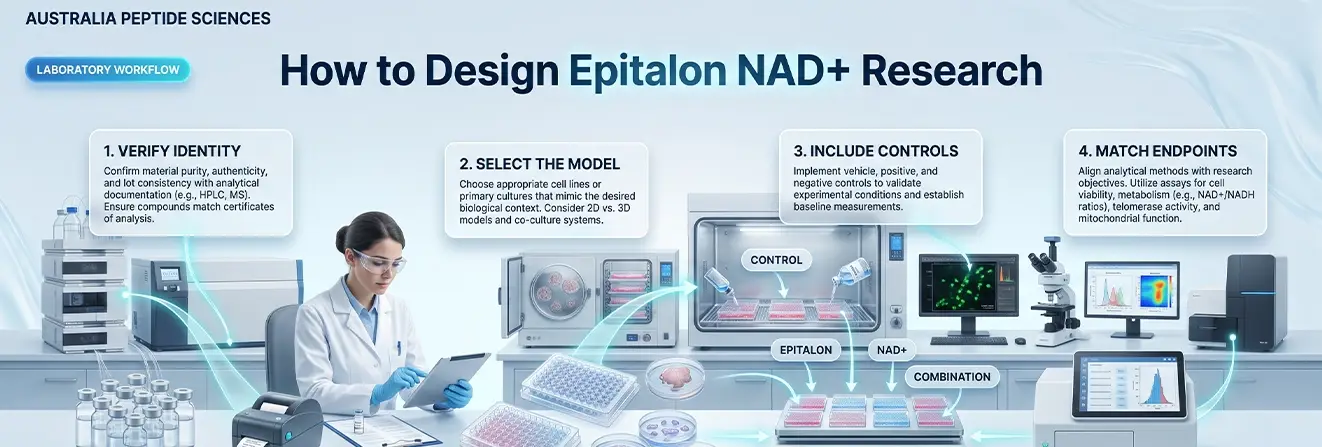
Useful epitalon NAD+ research begins with a measurable question. Researchers should define the compound, model, exposure period, and endpoint rather than asking which material is generally “better” for longevity.
1. Confirm material identity
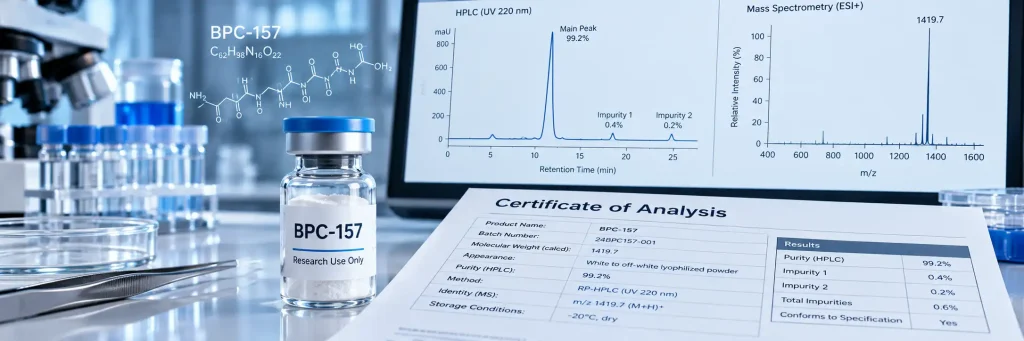
Record the material, batch, form, and analytical methods used to assess identity and purity. These tests confirm sample characteristics but do not demonstrate biological effectiveness.
Epitalon studies should verify peptide sequence and stability. NAD+ studies must distinguish NAD+ from NADH and from precursors such as NR and NMN.
2. Select a relevant model
Fibroblasts may suit telomere and replicative-senescence studies, while metabolically active cells may be better for mitochondrial endpoints.
Cancer cell lines can help examine telomerase and ALT mechanisms, but they should not be treated as models of normal ageing tissue. Animal and observational human studies also require careful interpretation because neither establishes direct human causation alone.
3. Include appropriate controls
A controlled study should include:
- Vehicle or untreated controls
- A pathway-relevant positive control
- Justified concentrations and time points
- Independent biological replicates
- Cell-viability measurements
- A predefined statistical plan
Combination studies should include Epitalon-only, NAD+-only, combined-treatment, and control groups. This allows researchers to distinguish individual effects from possible interactions.
4. Match endpoints to each mechanism
Epitalon research may measure:
- Telomere length
- hTERT expression
- Telomerase and ALT activity
- Senescence and proliferation
- DNA damage and genomic stability
NAD+ research may measure:
- NAD+, NADH and related metabolites
- NAD+/NADH ratio
- ATP production
- Mitochondrial respiration
- Sirtuin or PARP activity
- Oxidative stress and DNA damage
For both Epitalon and NAD+ studies, material identity, suitable controls, and pathway-specific endpoints should be defined before interpreting a biological response.
5. Use more than one marker
Higher ATP does not necessarily confirm healthier mitochondria, just as longer telomeres do not prove improved genomic stability. Reliable conclusions require molecular, functional, and safety-relevant measurements.
Shared Questions Across Cellular Aging Compounds
The term cellular aging compounds includes materials acting on different parts of the ageing process. Shared research areas include:
- Cellular senescence
- Mitochondrial function
- DNA damage and repair
- Oxidative stress
- Immune signalling
- Circadian regulation
- Proteostasis and autophagy
Epitalon is primarily studied in telomere and gene-regulation models, while NAD+ is associated with metabolism, redox biology, and NAD+-dependent enzymes.
Can Epitalon and NAD+ Be Compared Directly?
A direct comparison is possible only after the research objective is narrowed. For epitalon vs NAD+, the correct choice depends on the endpoint rather than a general ranking.
| Research question | More directly aligned material | Why |
| Does a treatment alter hTERT, telomerase, or telomere length in a defined cell model? | Epitalon | These are central endpoints in the Epitalon literature |
| Does a treatment change redox state, NAD-dependent enzymes, or metabolic flux? | NAD+ | NAD+ directly participates in these processes |
| Does a model show altered mitochondrial respiration or ATP production? | NAD+ | These endpoints are closely linked to NAD+/NADH metabolism |
| Do telomere and metabolic responses interact under cellular stress? | Both, with separate and combined groups | A factorial design can test main effects and interaction |
| Which compound extends human lifespan? | Neither can currently answer this | Direct human evidence is insufficient |
This framework supports a more accurate longevity research comparison by matching each compound to the endpoint it is best suited to investigate
Research Limitations and Australian Context
Results depend on compound identity, model, exposure, and assay quality. Cell and animal findings cannot establish human safety or effectiveness.
Australia Peptide Sciences supplies materials strictly for controlled research.
They are not intended for human or veterinary consumption, and this article provides no dosing or treatment guidance.
A certificate of analysis (COA) can support batch identity and purity, but it does not prove biological effectiveness or longevity outcomes.
Key Findings from the Longevity Research Comparison
- Epitalon is a tetrapeptide studied mainly in telomere and telomerase research.
- NAD+ is a dinucleotide coenzyme involved in metabolism, mitochondrial function, and DNA repair.
- Epitalon evidence is dominated by cell and animal studies.
- NAD+ biology is well established, but human anti-ageing outcomes remain inconclusive.
- Direct NAD+, NR, and NMN are not interchangeable.
- Neither compound has been shown to extend human lifespan.
Different Compounds, Different Research Questions
The most accurate answer to epitalon vs NAD+ is that they address different research questions. Epitalon is better aligned with telomere and gene-regulation studies, while NAD+ is more relevant to redox balance, metabolism, and mitochondrial function.
Neither is a proven anti-ageing intervention. Conclusions must remain tied to the model, controls, and measured endpoints.
FAQs About Epitalon and NAD+ Research
Does Epitalon make you look younger?
No reliable human evidence shows that Epitalon produces a younger appearance.
What supplement is better than NAD+?
No supplement is universally better than NAD+, and evidence for alternatives such as NR and NMN depends on the research endpoint.
How does Epitalon make you feel?
Epitalon has no established or predictable subjective effects in humans.
Is Epitalon peptide available in Australia?
Epitalon is available in Australia as a research compound but is not intended for human or veterinary consumption.
How safe is Epitalon?
Epitalon’s safety has not been established through large, high-quality human clinical trials.
What is another name for Epitalon?
Epithalon is an alternative spelling of Epitalon, while Epithalamin is a different pineal-derived preparation.
What is Epithalon peptide?
Epithalon is a synthetic tetrapeptide composed of alanine, glutamic acid,
aspartic acid, and glycine.
What is the main difference between Epitalon and NAD+?
Epitalon is a peptide studied mainly in telomere research, while NAD+ is a coenzyme involved in cellular energy and metabolism.
Can Epitalon and NAD+ be studied together?
Yes, they can be studied in separate and combined groups, although no combined longevity effect has been established.
Is Epitalon or NAD+ more relevant to telomere research?
Epitalon is more directly relevant to telomere research, while NAD+ is primarily associated with energy and redox metabolism.
References
Epitalon and telomerase activity
NAD+ supplementation evidence review