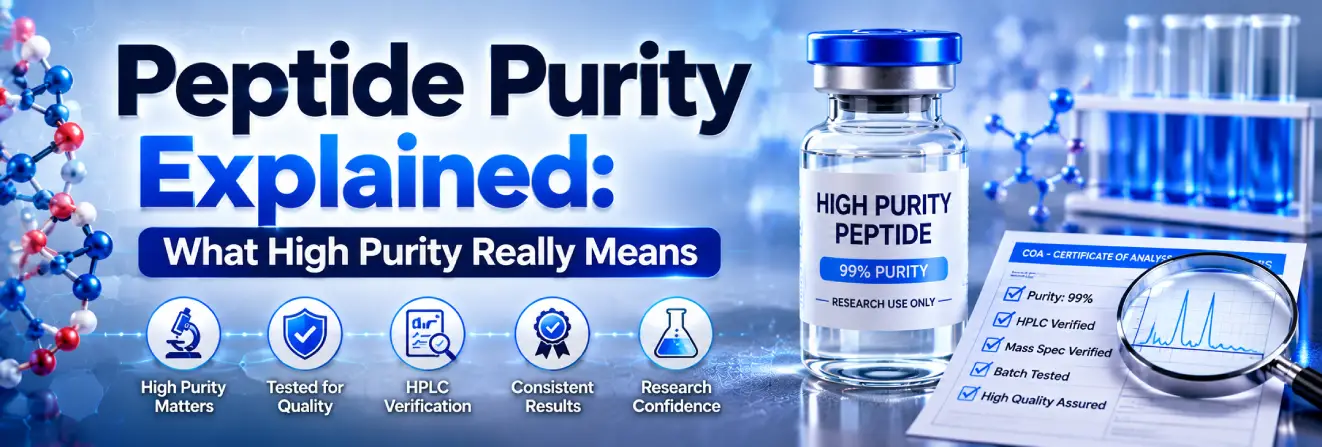
Peptide purity is an important analytical characteristic when evaluating research materials. Laboratories may review chromatographic purity, molecular identity, batch documentation and analytical methods to understand the characteristics of a specific peptide lot. Purity data should be interpreted together with the method used rather than treated as a complete measure of research quality.
But what does peptide purity meaning actually refer to?
In simple terms, peptide purity refers to how much of a sample contains the intended compound versus impurities or byproducts from the manufacturing process. It is also important to understand the difference between “pure” and “high purity peptides”, while no research compound is considered perfectly pure, higher purity levels are often prioritized for greater consistency and transparency.
As interest in peptide quality continues to grow, researchers are increasingly selective about sourcing compounds from suppliers that emphasize testing, transparency, and research-focused standards.
What Does Peptide Purity Mean?
Understanding peptide purity meaning is one of the most important parts of evaluating research compounds. In simple terms, peptide purity refers to:
Peptide purity commonly refers to the proportion of detected peptide-related material attributed to the target compound under a specified analytical method and set of conditions. The reported value should not automatically be interpreted as the absolute mass percentage of every component in the vial.
The remaining percentage may include trace impurities, byproducts, or residual materials created during the manufacturing and synthesis process.
For example:
| Purity Level | What It Means |
| Reported 99% chromatographic purity | Approximately 99% of the detected chromatographic signal is attributed to the principal component under the stated method conditions. |
| Remaining detected signal | May include related impurities, synthesis byproducts or other detected components, depending on the analytical method. |
This is why researchers often pay close attention to research compound purity before sourcing products. In laboratory settings, higher purity is commonly associated with greater consistency and transparency, which is one reason many researchers prioritize high purity peptides.
Broader information about research materials, quality documentation and supplier evaluation is available in the Research Peptides Australia guide.
Why Analytical Purity Is Not Absolute
A reported purity result is method-dependent. Analytical methods have defined detection limits, separation conditions and measurement uncertainty, so a purity result should be interpreted according to the specific method and specification rather than as proof that every possible impurity has been excluded.
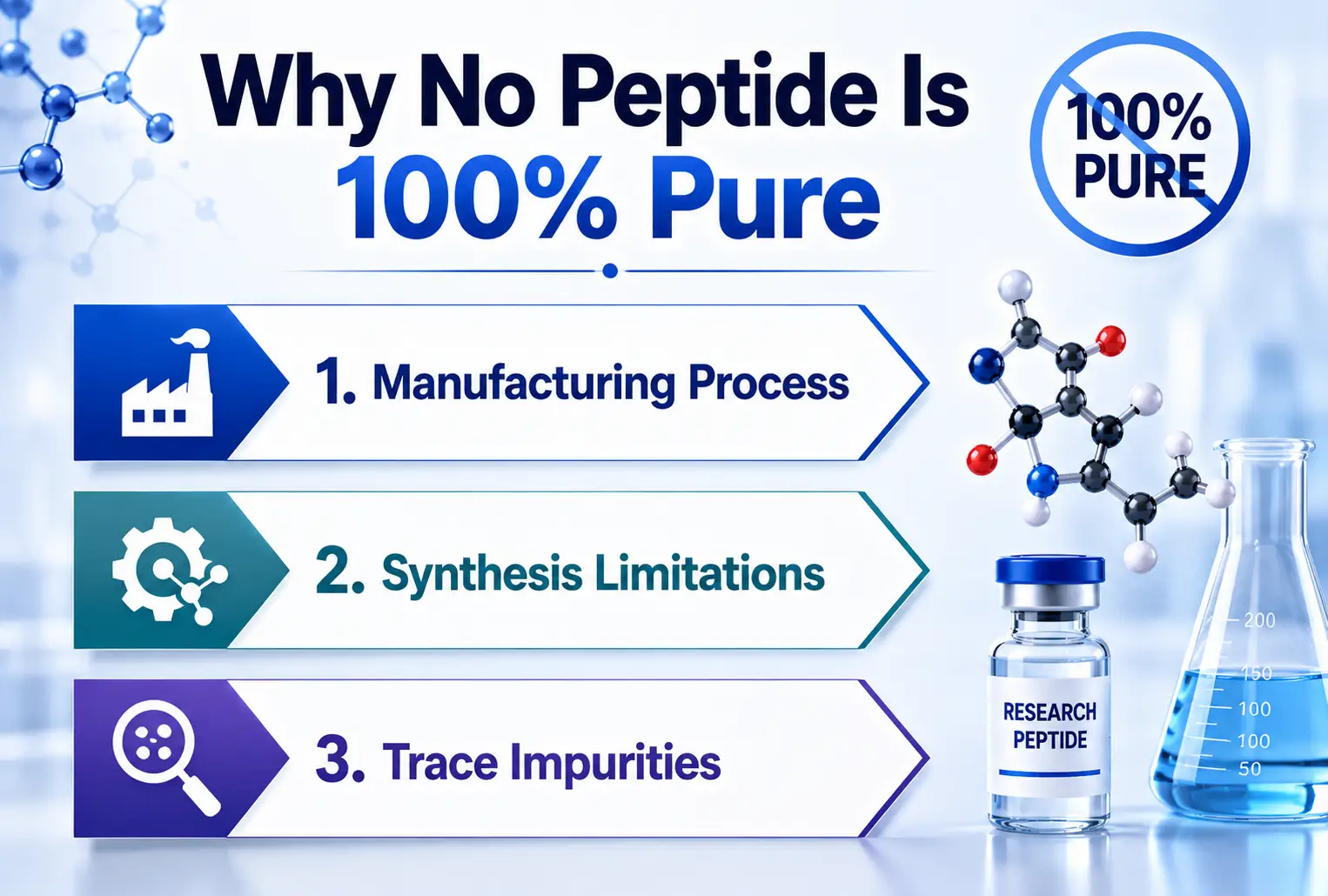
Manufacturing Process
Peptides are created through a process called peptide synthesis
During synthesis, amino acids are assembled into a specific sequence. Even with highly controlled manufacturing standards, very small amounts of unintended materials or reaction byproducts may remain.
Synthesis Limitations
The peptide production process is highly advanced, but like most scientific manufacturing methods, it still has limitations. Tiny variations can occur during synthesis, purification, or handling, which is why researchers commonly evaluate peptide quality using purity percentages rather than expecting absolute perfection.
Synthesis-related impurities can arise during peptide assembly, cleavage and purification. These processes are described further in the Peptide Synthesis guide.
Trace Impurities
Even high purity peptides may contain extremely small amounts of:
- Synthesis byproducts
- Residual compounds
- Trace impurities
A reported value near 99% may indicate high chromatographic purity under the stated test conditions, but the number alone does not establish molecular identity, total composition or suitability for a particular experiment.
Laboratory materials should be evaluated using compound identity, batch-specific analytical documentation and the requirements of the intended research protocol.
Why Peptide Purity Matters in Laboratory Research
Analytical purity can influence interpretation, reproducibility and comparison between experimental materials. Laboratories may evaluate purity together with compound identity, batch consistency, storage conditions and the analytical methods used. Purity should therefore be treated as one component of material characterisation rather than as a standalone indicator of experimental quality.
Research Consistency
One of the biggest reasons researchers focus on research compound purity is consistency. In laboratory environments, researchers often want confidence that the compound being studied remains as consistent as possible across preparation and repeated use.
Higher purity compounds may help reduce unnecessary variability, which is why many researchers reviewing peptide quality often check purity percentages and supporting testing information before sourcing products.
Laboratory Preparation
Purity may also influence laboratory preparation. Researchers commonly prioritize compounds with transparent testing and quality documentation because clearer purity information can help improve confidence during handling and preparation workflows.
For this reason, many researchers review:
- Purity percentages
- Testing methods
- Batch information
- COA documentation
before purchasing high purity peptides.
Batch Reliability
Another reason purity matters is batch reliability. Since peptides are produced in batches, researchers often value compounds supported by transparent batch testing peptides and quality verification. Greater consistency between batches may help support smoother research planning and better confidence in laboratory sourcing.
Confidence in Testing
Researchers also commonly prioritize peptide testing because quality documentation may provide greater transparency around how compounds were evaluated. Supporting information such as HPLC peptide purity results, mass spectrometry, and peptide quality assurance measures may help researchers better understand product consistency before laboratory use.
This is why many researchers prioritize high purity peptides rather than choosing compounds based on price alone. In research settings, quality often matters more than cost, especially when transparency, testing standards, and consistency can directly influence confidence in laboratory workflows. Researchers increasingly prefer suppliers that emphasize quality, testing, and research-focused transparency, helping support a more dependable research experience.
How to Interpret a Reported 99% Peptide Purity Result
One of the most common questions researchers ask is:
What does 99% peptide purity actually mean?
A reported 99% purity value should be interpreted according to the analytical method used. For chromatographic testing, it generally indicates that the principal detected peak accounts for approximately 99% of the integrated signal under the stated method conditions. Additional analytical evidence is required to support molecular identity and broader composition.
For example:
| Component | Example in a 99% Pure Peptide |
| Intended peptide compound | ~99% |
| Trace impurities/byproducts | ~1% |
This does not necessarily mean the peptide is “perfect” or free from all impurities. Instead, it means the compound has undergone purification and testing to achieve a very high level of consistency.
Is 99% Peptide Purity Considered High?
Generally, yes. In research settings, 99% peptide purity is commonly viewed as a high purity standard, especially when supported by transparent testing documentation such as a Certificate of Analysis (COA).
Researchers often evaluate purity ranges like this:
Reported purity values should not be converted into universal quality grades. Interpretation should consider the analytical method, specification, chromatogram, identity data and requirements of the intended laboratory experiment.
This is one reason researchers frequently prioritize high purity peptides. Greater purity may help support more consistent laboratory handling, clearer quality expectations, and improved confidence in research compound purity.
However, researchers often look beyond purity percentages alone. Testing transparency, batch consistency, and supplier quality standards also matter when evaluating peptide quality.
Batch-specific analytical results can be reviewed through the Peptide Certificates of Analysis (COAs).
Why Researchers Often Prioritize 99% Peptide Purity
Researchers commonly prioritize 99% peptide purity because laboratory research often depends on consistency and transparency. Higher purity compounds may help reduce unwanted variability, making it easier to evaluate biological pathways in controlled environments.
In practice, many researchers consider:
- Purity percentage
- Testing verification
- Batch consistency
- COA documentation
Before sourcing peptides. This is one reason trusted suppliers often emphasize high purity peptides, supported by transparent testing information rather than marketing claims alone.
How Is Peptide Purity Tested?
Understanding peptide testing is an important part of evaluating research compound purity. Purity percentages do not appear randomly — they are usually determined through laboratory testing methods designed to evaluate both compound identity and purity.
Researchers commonly review testing methods because they help provide greater confidence in:
- Peptide quality
- Purity verification
- Batch consistency
- Research transparency
Among the most common testing approaches are HPLC peptide purity testing, mass spectrometry, and batch testing procedures.
HPLC Peptide Purity Testing
One of the most widely used methods for evaluating peptide purity is:
HPLC (High-Performance Liquid Chromatography)
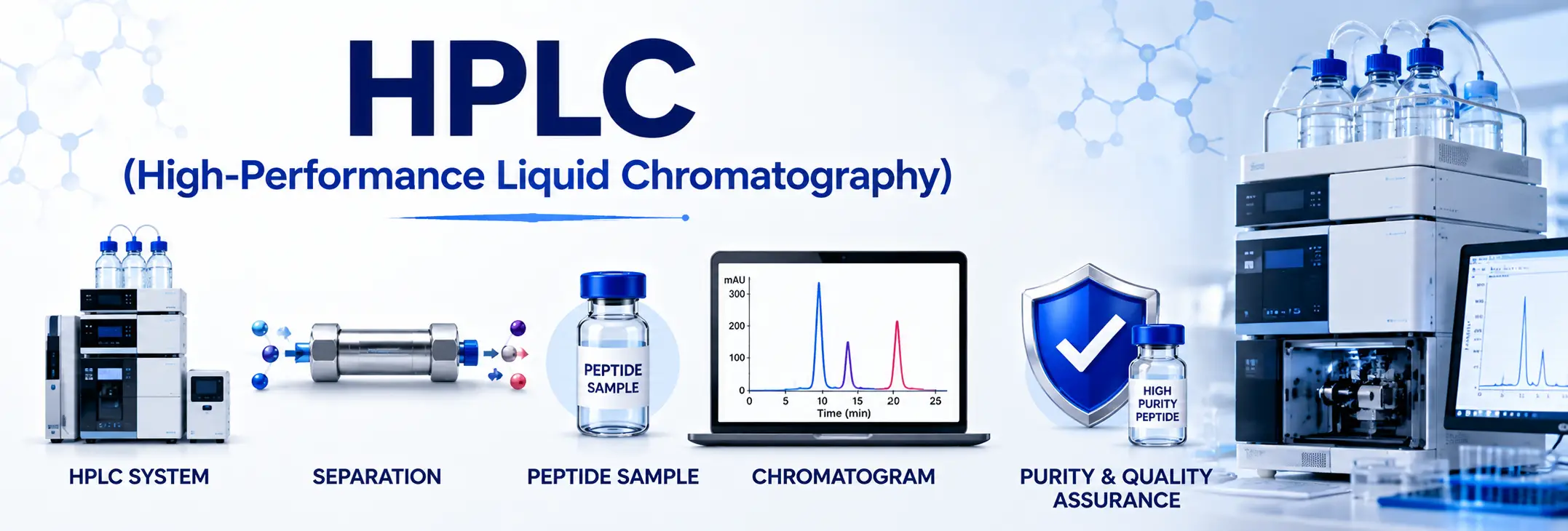
HPLC can separate components within a peptide sample and provide a chromatographic purity estimate under defined analytical conditions. Peak-area results can indicate the relative abundance of detected components, but HPLC alone does not establish complete molecular identity or absolute sample composition.
How Does HPLC Work?
Without getting overly technical, HPLC works by separating components within a peptide sample so researchers can better understand:
- The intended compound concentration
- Presence of impurities
- Overall purity level
The results are often displayed as: Chromatograms
A chromatogram is essentially a visual representation showing how different compounds appear during testing.
Researchers commonly review chromatograms because they may help indicate:
- Compound purity
- Consistency
- Impurity levels
This is one reason HPLC peptide purity testing is widely trusted and frequently included in a peptide certificate of analysis.
Why Researchers Trust HPLC
Researchers often trust HPLC because it provides:
- Greater transparency
- Standardized purity evaluation
- Consistent testing methods
- Better visibility into impurities
For suppliers focused on high purity peptides, HPLC testing often plays an important role in supporting peptide quality assurance.
Mass Spectrometry (MS)
Another important method used in peptide testing is: Mass Spectrometry (MS)
While HPLC focuses mainly on purity, mass spectrometry is commonly used to help verify the molecular identity of a peptide compound.
In simple terms, researchers use MS to help answer the question:
Is this actually the intended peptide?
Mass spectrometry helps support:
- Peptide identity verification
- Molecular confirmation
- Additional testing transparency
Researchers often view MS and HPLC together as complementary methods because:
HPLC and mass spectrometry provide complementary analytical information. Chromatography can characterise detected components and relative purity, while mass spectrometry can provide evidence about molecular mass and identity. Neither method alone establishes every aspect of material quality.
Batch Testing Peptides
Another important aspect of research peptide testing involves: Batch testing peptides
Since peptides are manufactured in production batches, researchers commonly value suppliers that verify quality on a batch-by-batch basis.
Why does this matter?
Because consistency between batches may influence:
- Research preparation
- Product confidence
- Handling consistency
- Laboratory workflows
Reliable peptide quality assurance often includes greater transparency around batch testing and verification.
Laboratory Research Materials and Purity Documentation
Terms such as “lab grade” do not replace analytical specifications. Laboratories should review compound identity, reported purity, batch information, analytical methods and supporting documentation rather than relying on a general grade label alone.
In research settings, lab grade peptide purity is often associated with:
- Quality-focused sourcing
- Research-use positioning
- Transparent testing methods
- Higher consistency expectations
Researchers evaluating high purity peptides commonly look for:
✅ Certificate of Analysis (COA)
✅ Purity percentage transparency
✅ Testing methods such as HPLC or MS
✅ Supplier transparency and educational content
Rather than focusing only on price, researchers often prioritize suppliers that make peptide quality easier to evaluate through transparent documentation and clear category information.
Not all peptide products are manufactured or tested to the same standards. Researchers often compare research compound purity because consistency may matter when evaluating laboratory preparation and quality expectations.
Comparing Peptide Purity Data
When comparing research materials, laboratories should examine the reported purity value together with the analytical method, identity evidence, batch documentation, chromatographic data and experimental requirements. A higher numerical purity value does not automatically establish better suitability for every research application.
This is one reason many researchers prioritize high purity peptides, particularly when supported by peptide testing and transparent quality documentation.
Common Misunderstandings about Peptide Purity
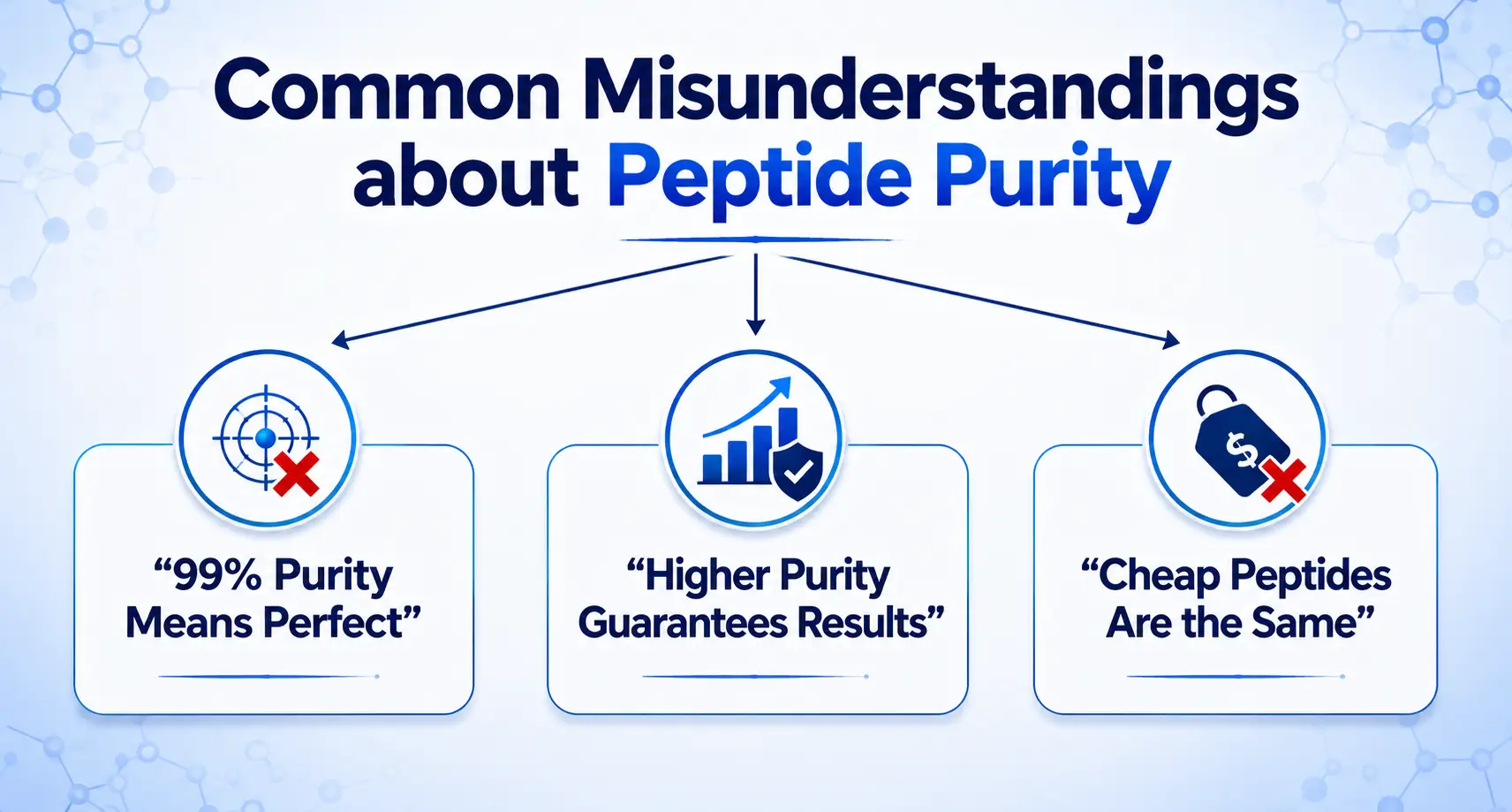
There are several misconceptions about peptide purity meaning, especially among newer researchers.
“99% Purity Means Perfect”
Not exactly.
Even 99% peptide purity still allows for trace impurities or byproducts from manufacturing. Higher purity generally means greater refinement — not absolute perfection.
“Higher Purity Guarantees Results”
Higher purity may support better consistency, but it does not guarantee outcomes in research settings. Researchers typically evaluate compounds alongside preparation methods, research goals, and testing transparency.
“Cheap Peptides Are the Same”
Price alone rarely tells the full story. Researchers often prioritize quality, testing standards, and transparency over cost alone, particularly when consistency matters.
Red Flags When Evaluating Peptide Quality
When evaluating high purity peptides, researchers often look for signs of transparency and testing credibility.
Common warning signs include:
- Missing purity documentation
- No Certificate of Analysis
- No testing methods listed
- Unrealistic purity claims
- Missing batch information
| Red Flag | Why It Matters |
| Missing COA | Limited transparency |
| No purity % | Harder verification |
| No batch number | Less consistency tracking |
| Unrealistic claims | Lower trust |
Researchers commonly value suppliers that make peptide quality assurance easier to evaluate through transparent documentation.
Evaluating Peptide Quality Documentation
Relevant evaluation criteria include batch-specific COAs, clearly stated analytical methods, compound identification, traceable lot information, storage specifications and consistency between the product description and analytical documentation. Broader supplier criteria are covered in the Where to Buy Research Peptides in Australia guide.
Why Researchers Prioritize Peptide Quality over Price
In research settings, quality often matters more than price. While lower-cost products may seem attractive, researchers frequently prioritize consistency, transparency, supplier trust, and research reliability when sourcing compounds.
Higher quality compounds supported by testing transparency and peptide quality assurance may help improve confidence over the long term, especially when repeat sourcing and batch consistency matter.
Does Higher Peptide Purity Always Mean Better Research Material?
Not necessarily. Higher analytical purity can reduce certain detectable impurities, but suitability also depends on correct molecular identity, formulation, stability, analytical method, batch consistency and the requirements of the specific experiment.
Analytical purity does not establish therapeutic approval, safety or suitability for personal use. The distinction is explained further in the Research Use Only Peptides guide.
FAQs About Peptide Purity
What does peptide purity mean?
Peptide purity is an analytical measurement describing the relative amount of the principal peptide component detected under specified test conditions. Its interpretation depends on the analytical method used.
What does a reported 99% peptide purity result mean?
In chromatographic analysis, a reported value near 99% generally indicates that the principal detected peak represents approximately 99% of the integrated signal under the stated method conditions. It should not automatically be interpreted as absolute mass composition.
Does higher purity always mean better research material?
No. Purity is only one characteristic. Molecular identity, analytical methodology, formulation, stability, batch consistency and experimental requirements should also be considered.
How is peptide purity commonly evaluated?
High-performance liquid chromatography is commonly used to assess chromatographic purity. Mass spectrometry may provide complementary information about molecular mass and identity.
Can HPLC confirm peptide identity by itself?
Not completely. HPLC provides chromatographic information about detected components, while additional analytical methods such as mass spectrometry can provide supporting evidence about molecular identity.
Why does batch-specific purity documentation matter?
Batch-specific documentation allows laboratories to link analytical results to the material actually being evaluated and helps identify differences between production lots.
What information should a peptide COA contain?
Relevant information may include compound identity, batch or lot number, analytical result, testing method and test date. The reported data should correspond to the specific batch being supplied.
Can a peptide be proven to be absolutely 100% pure?
Analytical results are limited by the methods and detection conditions used. A reported purity value therefore should not be interpreted as proof that every possible impurity is absent.
Is purity alone enough to establish peptide quality?
No. Laboratories should consider purity together with molecular identity, analytical methods, storage conditions, formulation, batch traceability and experimental requirements.