Sterile water vs bacteriostatic water is primarily a comparison of preservative content and laboratory handling requirements. Preservative-free sterile water contains no antimicrobial additives, whereas bacteriostatic water commonly contains benzyl alcohol to inhibit the growth of susceptible bacteria.
Although both solutions are prepared under sterile conditions, their formulation differences can influence contamination control, compound compatibility and experimental reproducibility. The presence of a bacteriostatic preservative does not sterilise contaminated material or guarantee peptide stability.
The differences between sterile water and bacteriostatic water influence preservative compatibility, laboratory handling, storage requirements and peptide research conditions. It also explains why diluent selection must be supported by compound-specific documentation and validated experimental requirements.
What Is Sterile Water?
Sterile water is an aqueous preparation manufactured and processed to meet specified sterility requirements. Its purity, endotoxin limits and suitability for laboratory applications depend on the product grade and documented specifications.
Key characteristics of preservative-free sterile water include:
- No added antimicrobial preservatives
- No bacteriostatic additives
- No benzyl alcohol
- No preservative-based protection against bacterial growth after container access
Preservative-free sterile water may be relevant to laboratory experiments where antimicrobial additives could interfere with compound stability or analytical measurements. However, sterility alone does not establish compatibility with every research material.
Depending on product specifications and validated protocols, potential laboratory applications include:
- Dilution of compatible laboratory materials
- Preparation of defined aqueous research solutions
- Reconstitution of compatible lyophilised research compounds
- Preparation of suitable analytical controls
- Experimental assays sensitive to antimicrobial preservatives
In peptide research, solvent selection should account for compound solubility, formulation requirements, preservative sensitivity and compatibility with the intended analytical method.
The absence of antimicrobial preservatives also introduces specific contamination-control considerations.
Once a container has been opened or accessed, continued sterility cannot be assumed. Handling and permitted reuse must follow the manufacturer’s labelling and validated laboratory procedures.
Appropriate aseptic handling, container integrity and documented preparation conditions are therefore essential for maintaining laboratory consistency.
What Is Bacteriostatic Water?
Bacteriostatic water is a sterile aqueous diluent containing an antimicrobial preservative. Unlike preservative-free sterile water, its formulation helps inhibit the growth of susceptible bacteria under appropriate conditions.
Benzyl alcohol is commonly used as the preservative, often at a concentration of approximately 0.9%. However, the exact formulation must be confirmed against the manufacturer’s documentation.
Preservative activity does not sterilise contaminated material or establish peptide stability, solvent compatibility or suitability for a particular analytical method.
Relevant laboratory handling considerations include:
- Multi-access workflows where permitted by product labelling
- Controlled aseptic handling and container integrity
- Manufacturer-defined storage conditions and opened-container use limits
- Compound-specific compatibility with research preparation protocols
Researchers should distinguish antimicrobial preservative activity from the chemical and physical stability of a prepared peptide solution.
Repeated laboratory handling may be supported by preserved formulations where product labelling, experimental compatibility and validated procedures permit it.
Neither bacteriostatic water nor preservative-free sterile water is universally preferable. Selection depends on preservative sensitivity, compound characteristics and experimental requirements.
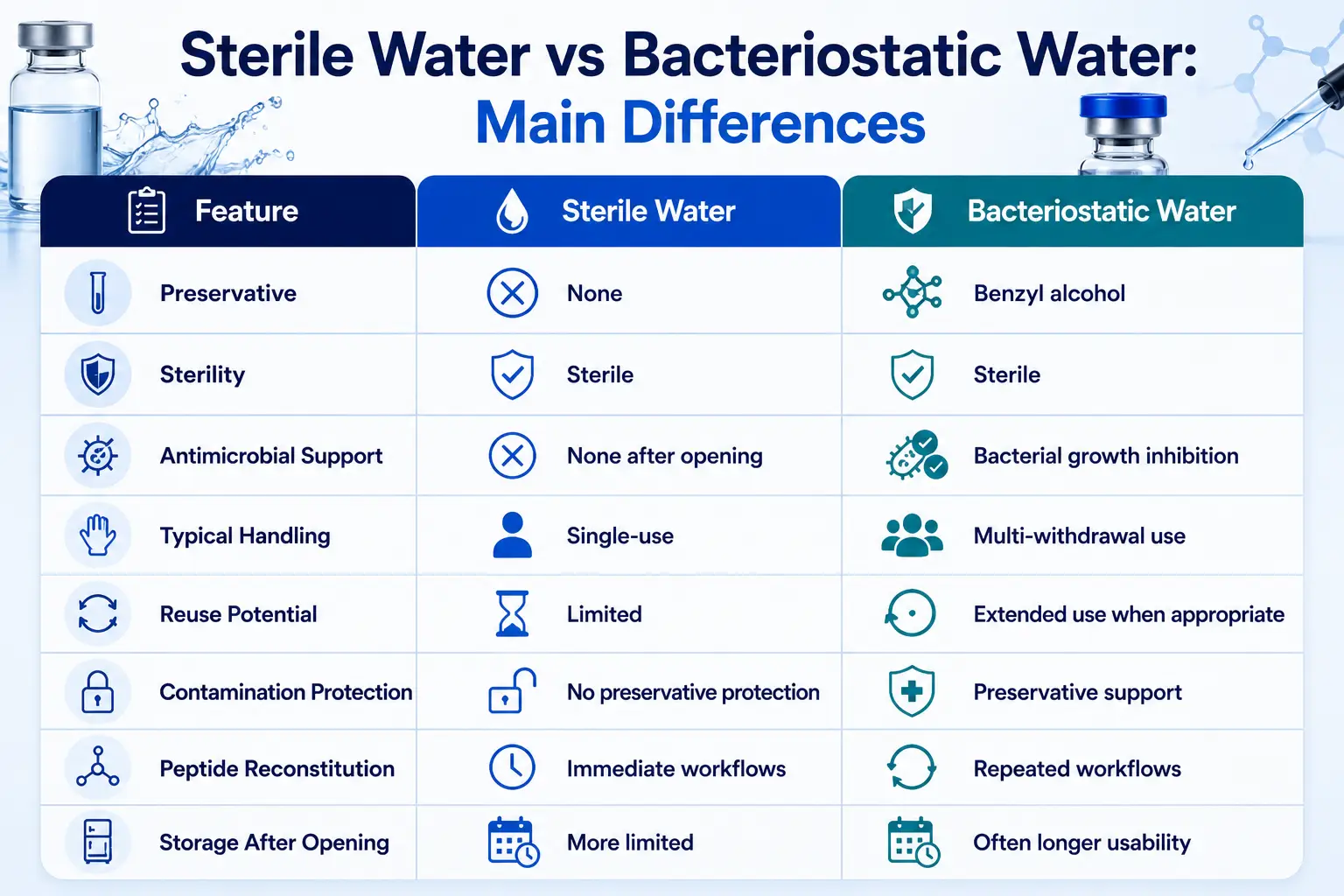
Sterile Water vs Bacteriostatic Water: Main Differences
The primary distinction in the Sterile Water vs Bacteriostatic Water comparison is preservative content.
However, several other practical differences also influence laboratory selection.
| Feature | Sterile Water | Bacteriostatic Water |
| Preservative | None | Commonly benzyl alcohol (verify product label) |
| Sterility | Sterile | Sterile |
| Antimicrobial Support | No added antimicrobial preservative | Inhibits the growth of susceptible bacteria |
| Typical Handling | Generally single-use, according to product labelling | Multiple withdrawals when permitted by product labelling |
| Reuse Potential | Subject to single-use restrictions | Subject to manufacturer-defined use limits |
| Contamination Protection | No preservative protection | Preservative support |
| Peptide Reconstitution | When preservative-free conditions are compatible | When preservative-containing conditions are compatible |
| Storage After Opening | Follow labelled storage and use limits | Follow labelled storage and opened-container use limits |
This table highlights the central difference between sterile water and bacteriostatic water while also showing how workflow considerations affect selection.
Why Diluent Compatibility Matters in Peptide Research
Some peptides for research are supplied in lyophilised form and may require a compatible diluent before laboratory analysis. The distinction between sterile water and bacteriostatic water becomes relevant when evaluating preservative sensitivity and formulation requirements.
Diluent selection depends on the chemical characteristics of the research compound and the requirements of the experimental method.
Key laboratory considerations include:
- Labelled storage conditions and opened-container use limits
- Manufacturer-permitted single- or multiple-withdrawal handling
- Peptide solubility and stability under specified solvent conditions
- Effects of benzyl alcohol on compound compatibility and analytical assays
- Requirements of validated experimental protocols
Neither solution is universally suitable for peptide research. Researchers must evaluate compound-specific documentation and experimental compatibility before selecting a diluent.
Additional factors affecting solvent selection, solubility and laboratory preparation are discussed in the Peptide Reconstitution Guide.
Where compound-specific documentation requires an acidic solvent, researchers may evaluate Acetic Acid Water 3ml as an alternative laboratory preparation material. Its suitability must be established through formulation data and validated experimental requirements.
Diluent Compatibility in Peptide Research
In peptide research, selecting sterile water or bacteriostatic water requires evaluating how the diluent’s formulation may affect compound stability, analytical measurements and experimental reproducibility.
Neither formulation is universally suitable. Researchers must consider preservative sensitivity, solvent compatibility and validated laboratory requirements.
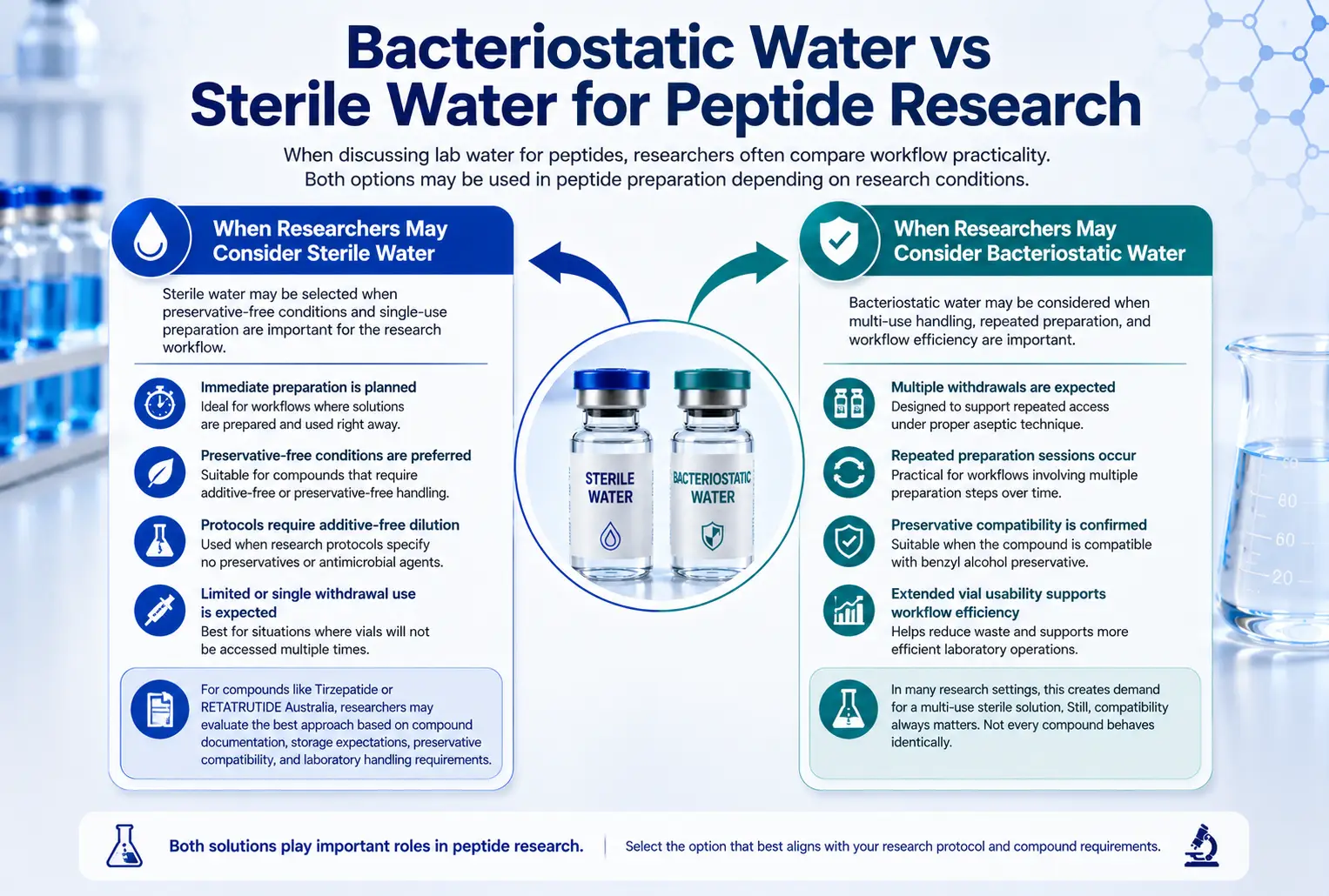
Preservative-Free Laboratory Conditions
Preservative-free sterile water may be evaluated when experimental protocols require:
- Preparation without antimicrobial additives
- Minimal preservative-related interference with analytical assays
- Compatibility with compound-specific formulation requirements
- Handling consistent with the product’s labelled container restrictions
For lyophilised research compounds such as Retatrutide, researchers must establish diluent compatibility through compound-specific documentation and validated experimental methods. The suitability of either formulation should not be assumed without supporting evidence.
Preserved Laboratory Conditions
Bacteriostatic water may be evaluated when laboratory requirements include:
- A documented need for a preserved aqueous diluent
- Manufacturer-permitted repeated container access
- Established compatibility with benzyl alcohol
- Defined storage and handling requirements
Preservative inclusion does not guarantee peptide stability or eliminate contamination risks. Laboratory selection must remain consistent with product documentation and validated experimental conditions.
Can Sterile Water and Bacteriostatic Water Be Used Interchangeably?
Sterile water and bacteriostatic water are not automatically interchangeable in laboratory research because their formulations differ in antimicrobial preservative content.
Substitution is appropriate only when compound-specific evidence and validated laboratory protocols establish compatibility.
Preservative content may influence experimental conditions, so substituting one diluent for another can introduce additional variables that affect research reproducibility.
Diluent selection must follow manufacturer specifications, laboratory SOPs and compound-specific compatibility data. Neither formulation should be considered universally suitable for peptide research.
Researchers can review the Certificate of Analysis Peptides Guide to understand how batch-specific analytical documentation supports peptide quality assessment. However, a peptide COA does not independently establish diluent compatibility or sterility.
Storage Guidelines for Lab Water for Peptides
Storage conditions for sterile water and bacteriostatic water must follow product-specific labelling. The presence of an antimicrobial preservative does not establish a universal storage temperature or guarantee sterility after container access.
Laboratories should evaluate labelled storage conditions, container integrity, expiry information and manufacturer-defined handling requirements for each diluent formulation.
General Storage Recommendations
Common recommendations include:
- Store according to product label
- Keep at recommended temperature
- Avoid direct sunlight
- Prevent overheating
- Avoid freezing unless specified
- Maintain original sealed container
Additionally:
- Record vial opening dates where permitted by product labelling and laboratory protocols.
- Follow the labelled expiry date and any manufacturer-defined in-use period after opening.
- Reject visibly compromised solutions or damaged containers. Visual clarity alone does not confirm sterility.
The permitted storage period of a diluent must be distinguished from the stability of a peptide solution prepared with it. Peptide stability requires separate compound-specific evidence.
Key Research Considerations for Diluent Selection
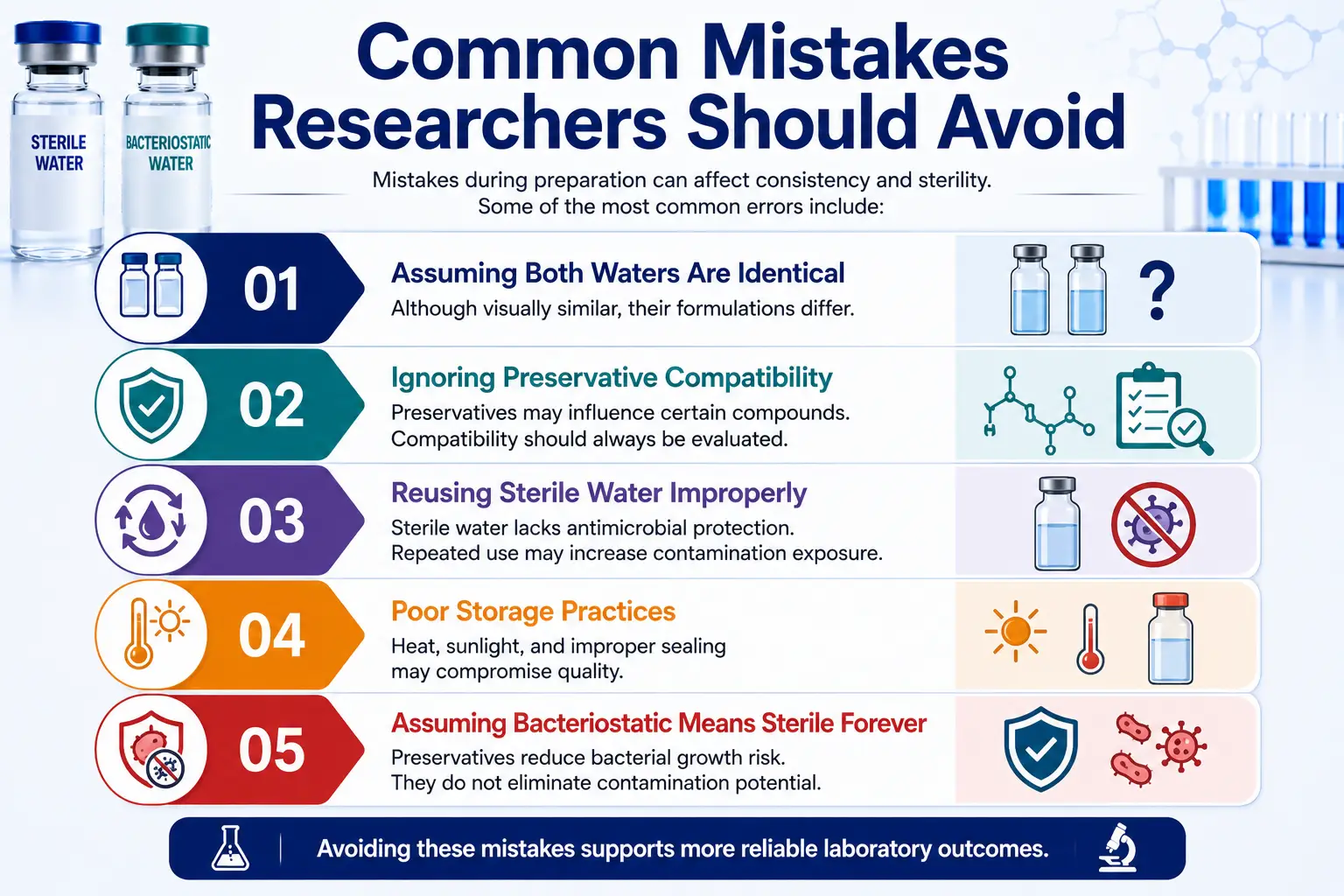
Sterile water and bacteriostatic water differ primarily in antimicrobial preservative content, which influences laboratory handling, compound compatibility and experimental conditions.
Neither formulation is universally suitable for peptide research. Researchers must evaluate preservative sensitivity, product specifications, container restrictions and compound-specific requirements before selecting a diluent.
Selecting an appropriate diluent requires documented compatibility and adherence to validated laboratory protocols. Preservative activity does not independently establish peptide stability or eliminate contamination risks.
For broader information on laboratory material specifications, supplier documentation and research quality, see the Research Peptides Australia guide.
FAQs About Sterile Water vs Bacteriostatic Water
What is the difference between sterile water and bacteriostatic water?
The main difference is antimicrobial preservative content. Bacteriostatic water commonly contains benzyl alcohol, while preservative-free sterile water contains no antimicrobial additives. This distinction influences laboratory handling and compound compatibility.
Is bacteriostatic water better than sterile water for peptide research?
Neither formulation is universally preferable. Bacteriostatic water may be appropriate when preservative compatibility is established, while preservative-free sterile water may be required for assays sensitive to antimicrobial additives. Selection depends on validated experimental requirements.
Can sterile water and bacteriostatic water be used interchangeably?
Not automatically. Substitution requires evidence of compatibility with the specific peptide, solvent formulation and experimental method. Benzyl alcohol may introduce variables that influence compound stability or analytical measurements.
Can benzyl alcohol interfere with laboratory research assays?
Yes. Benzyl alcohol may affect certain analytical measurements, biological assays or compound formulations. Researchers should evaluate preservative compatibility and include appropriate experimental controls where required.
Does bacteriostatic water prevent contamination after opening?
No. Benzyl alcohol helps inhibit the growth of susceptible bacteria but does not eliminate contamination risks or sterilise contaminated solutions. Container handling must follow product labelling and established aseptic laboratory procedures.
How do researchers evaluate diluent compatibility with peptides?
Researchers evaluate peptide solubility, chemical stability, preservative sensitivity, formulation requirements and potential interference with analytical methods. Diluent selection should follow compound-specific documentation and validated laboratory protocols.