
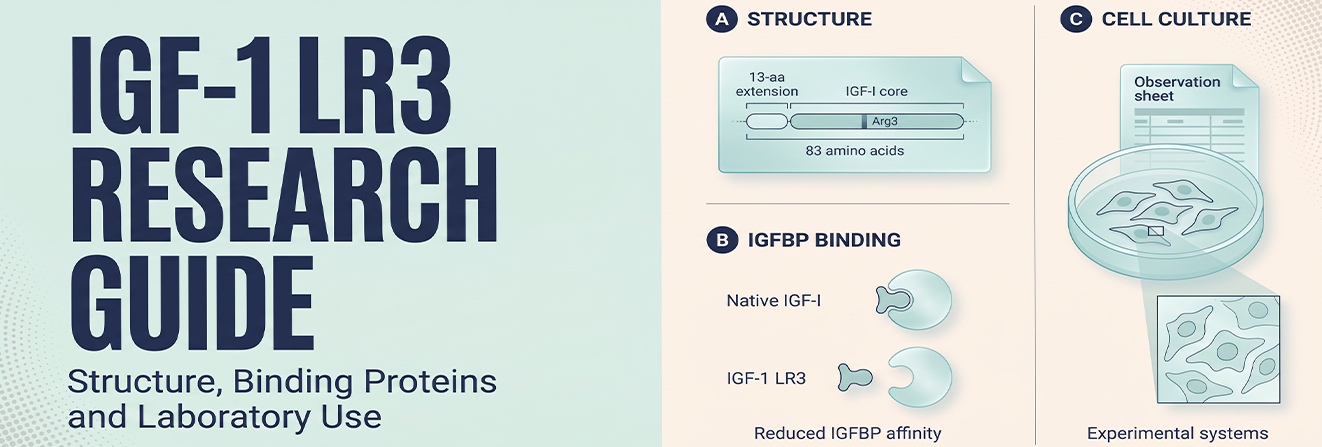
IGF-1 LR3, also known as Long R3 IGF-I, is a modified IGF-I analogue used in laboratory research. Its structural changes reduce interactions with IGF binding proteins and may alter growth-factor availability.
Researchers study this analogue in receptor signalling, cell proliferation and mammalian cell culture, where responses vary by experimental system.
Understanding IGF-1 LR3 requires reviewing its structure, receptor activity, research evidence and limitations.
Quick Answer: What Is IGF-1 LR3?
IGF-1 LR3 is an 83-amino-acid IGF-1 analogue containing an arginine substitution at position 3 of the native IGF-I sequence and a 13-amino-acid N-terminal extension.
These modifications substantially reduce its affinity for insulin-like growth factor binding proteins (IGFBPs). Consequently, the analogue can produce greater biological responses than native IGF-I in some cell-culture systems.
Its principal research applications include growth-factor signalling, cellular proliferation and mammalian cell-culture studies. It is not an approved treatment for human or veterinary use.
What Is IGF-1 LR3?
Insulin-like growth factor I is a peptide hormone involved in growth, development and metabolic regulation. It forms part of the growth hormone (GH) and IGF signalling system.
Native human IGF-I contains 70 amino acids, and its activity depends on receptor availability, binding proteins and the experimental environment.
LR3 IGF-1 is a recombinant analogue designed to alter these interactions.
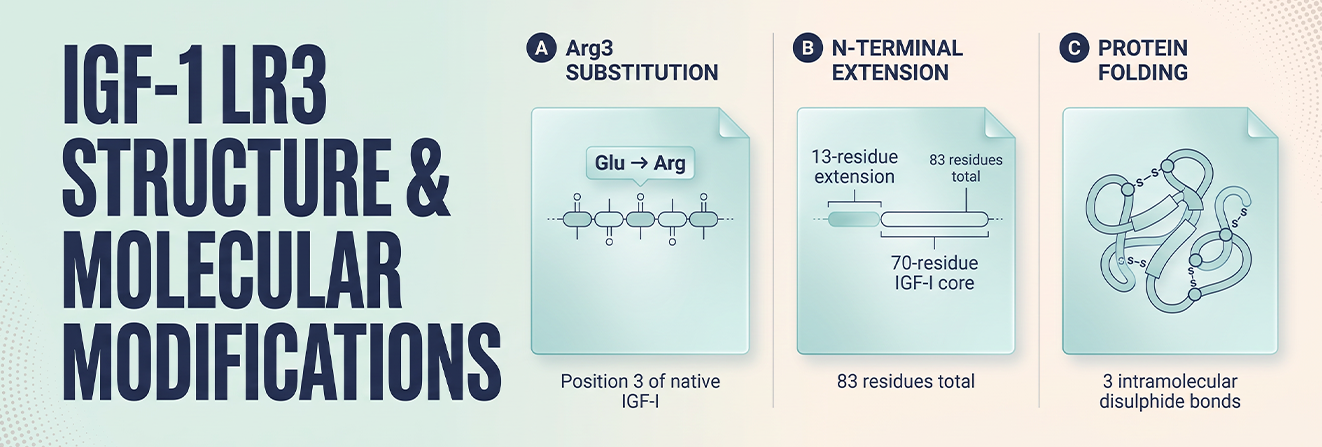
Long R3 refers to two molecular changes:
- Arg3 substitution: Arginine replaces glutamic acid at position 3.
- N-terminal extension: A 13-amino-acid sequence is added to the molecule’s beginning.
Together, these changes create an 83-amino-acid analogue with reduced affinity for several IGF binding proteins.
IGF-1 LR3 Molecular Characteristics
| Property | IGF-1 LR3 |
| Full scientific name | Long [Arg3] insulin-like growth factor I |
| Common abbreviation | Long R3 IGF-I |
| Parent molecule | Human insulin-like growth factor I |
| Amino-acid length | 83 residues |
| Native IGF-I length | 70 residues |
| Main modification | Glu3 to Arg substitution |
| Additional modification | 13-residue N-terminal extension |
| Approximate molecular mass | 9.1 kDa |
| Protein structure | Three intramolecular disulphide bonds |
| Main research characteristic | Reduced IGFBP binding |
| Principal research applications | Receptor signalling and cell culture |
IGF-1 LR3 Structure and Molecular Modifications
The biological properties of IGF-1 LR3 originate from changes to the amino-acid sequence of native IGF-I.
1. The Arginine Substitution at Position 3
In native human IGF-I, the third amino acid is glutamic acid (Glu or E).
In the analogue, it is replaced by arginine (Arg or R).
Their different chemistry and charge alter local interactions in the N-terminal region.
This region helps binding proteins recognise IGF-I.
King and colleagues found that glycine or arginine substitutions at position 3 greatly reduced IGFBP-2 binding, linking N-terminal changes to growth-factor availability.
Reduced binding-protein affinity did not require stronger receptor binding.
2. The 13-Amino-Acid N-Terminal Extension
The second modification adds 13 residues before the original IGF-I sequence.
Francis and colleagues described recombinant fusion protein analogues containing this extension, including Long [Arg3]-IGF-I.
The additional sequence modifies the molecular environment surrounding the native N-terminal region and contributes to the analogue’s distinctive binding characteristics.
3. Why Protein Folding Matters
IGF-I contains six cysteine residues that form three intramolecular disulphide bonds.
These bonds help stabilise the protein’s three-dimensional structure. Correct folding is important because molecular shape influences ligand recognition and biological activity.
A material may have an apparently correct molecular mass while containing incorrectly folded or aggregated protein.
Therefore, sequence identity alone does not establish that a recombinant IGF-1 LR3 preparation retains the expected biological properties.
How Do IGF Binding Proteins Affect IGF-1 LR3?
IGF binding proteins regulate the availability and biological activity of insulin-like growth factors.
The six principal high-affinity IGF binding proteins, designated IGFBP-1 through IGFBP-6, influence how IGF-I and IGF-II interact with receptors and extracellular environments.
1. The Role of IGFBPs in Growth-Factor Regulation
Binding proteins can influence growth-factor distribution, stability, transport and access to cellular receptors.
Depending on the protein, tissue and experimental conditions, IGFBPs may reduce or facilitate particular IGF-mediated responses.
For example, binding proteins released into cell-culture medium can influence how much free IGF-I remains available for receptor interaction.
This means that adding the same amount of growth factor to two different cell cultures does not necessarily produce equivalent biological activity.
Cell lines may differ in their expression of IGFBPs, receptor abundance and other signalling components.
2. Why IGF-1 LR3 Has Reduced IGFBP Affinity
The structural modifications in Long R3 IGF-I alter regions involved in binding-protein recognition.
Early biochemical studies demonstrated that modified IGF-I analogues could bind substantially less strongly to particular IGFBPs while retaining the ability to activate relevant cellular responses.
In experimental environments containing binding proteins, reduced sequestration can increase the amount of analogue available to interact with cellular receptors.
However, greater biological activity does not necessarily mean stronger receptor binding.
What Did the Original Studies Show?
King and colleagues examined recombinant IGF-I analogues with substitutions at position 3. The modified proteins showed markedly reduced IGFBP-2 binding and increased biological potency in rat L6 myoblast assays, despite slightly reduced type 1 IGF receptor affinity.
Francis and colleagues subsequently investigated extended IGF-I analogues, including Long [Arg3]-IGF-I.
In cell lines secreting IGFBPs, several modified analogues produced greater biological responses than native IGF-I.
The results differed in chicken embryo fibroblasts, which did not secrete detectable IGFBPs into the medium. In that system, Long [Arg3]-IGF-I was less potent than native IGF-I.
These findings demonstrate that the apparent advantage of IGF-1 LR3 is strongly influenced by the presence of binding proteins and the characteristics of the experimental system. The broader research peptide guides provide compound-specific context for comparing structures, mechanisms and research evidence.
How Does IGF-1 LR3 Interact With Cellular Receptors?
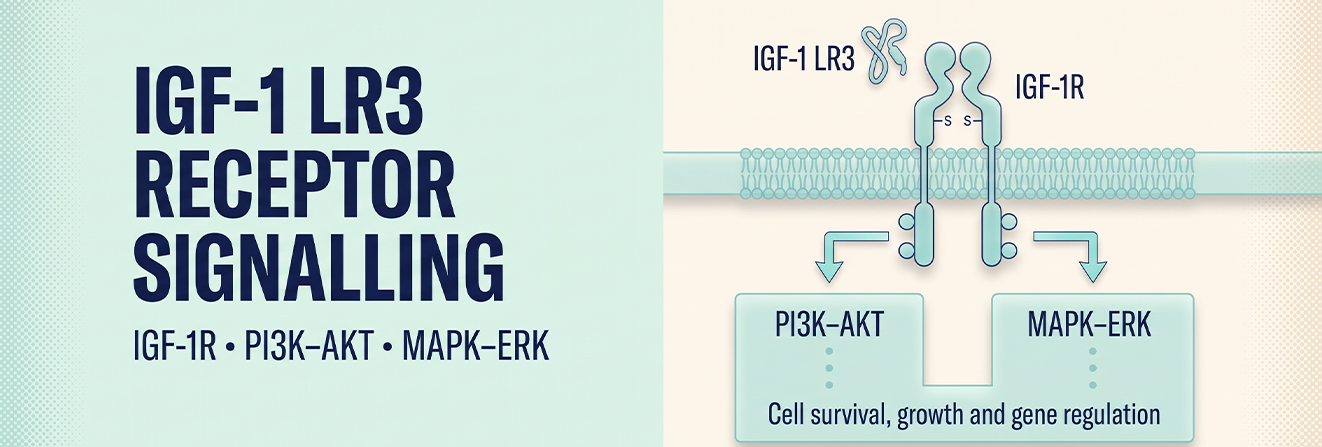
IGF-1 LR3 acts through receptor-mediated signalling in the insulin-like growth factor system. Activation of IGF-1R can engage PI3K-AKT and MAPK-ERK pathways involved in cell survival, growth and gene regulation.
The principal receptor is the type 1 insulin-like growth factor receptor, or IGF-1R. Responses still depend on receptor expression, IGFBP availability and the experimental system.
This pathway is not unique to IGF-1 LR3; it is also activated by native IGF-I. Therefore, receptor signalling alone does not establish that LR3 is universally more potent.
IGF-1 LR3 vs Native IGF-1: What Are the Differences?
Although IGF-1 LR3 is derived from human IGF-I, the two molecules are not functionally identical in every experimental context.
| Characteristic | Native IGF-I | IGF-1 LR3 |
| Molecular length | 70 amino acids | 83 amino acids |
| Position 3 | Glutamic acid | Arginine |
| N-terminal extension | Absent | Present |
| IGFBP interactions | High-affinity binding to several IGFBPs | Markedly reduced affinity |
| IGF-1R interaction | Established endogenous ligand | Retains receptor-mediated activity |
| Biological potency | Depends on experimental conditions | Can be greater in IGFBP-containing systems |
| Main research context | Endogenous IGF physiology and signalling | Modified ligand availability and experimental cell culture |
Reduced IGFBP binding may alter growth-factor availability and clearance, but it does not establish a universal circulating half-life for IGF-1 LR3.
IGF-1 LR3 Cell Culture and Laboratory Applications
IGF-1 LR3 cell culture research is a well-documented application of the analogue.
Defined growth factors help researchers study cell behaviour and recombinant protein production.
Long R3 IGF-I has been evaluated in serum-free CHO-cell media. Researchers can review the LR3 product page for compound-specific information.
1. Research Involving CHO Cells
CHO cells are widely used to study recombinant protein production in controlled systems.
A study published in Biotechnology Progress compared insulin and LongR3 for their ability to support growth, viability and recombinant protein production in two serum-free CHO cell lines.
LongR3 better sustained viability under the tested conditions.
The cell lines differed in growth-factor requirements, highlighting cell-specific responses.
These findings support use in some bioprocessing settings but do not show superiority in every CHO system. Ipamorelin offers a separate comparison point.
2. Serum-Free and Chemically Defined Media
Serum-free media reduce serum-derived components, while chemically defined media specify their ingredients.
Reduced binding-protein affinity may help researchers study growth-factor availability in defined media. Related materials include CJC-1295 No DAC.
3. Interpreting Cell-Culture Results
Interpretation should consider cell-line performance, receptor expression, controls and measured endpoints.
These factors help clarify the role of Long R3 IGF-I in culture systems.
What Does Scientific Research Show About IGF-1 LR3?
1. Findings From In Vitro Studies
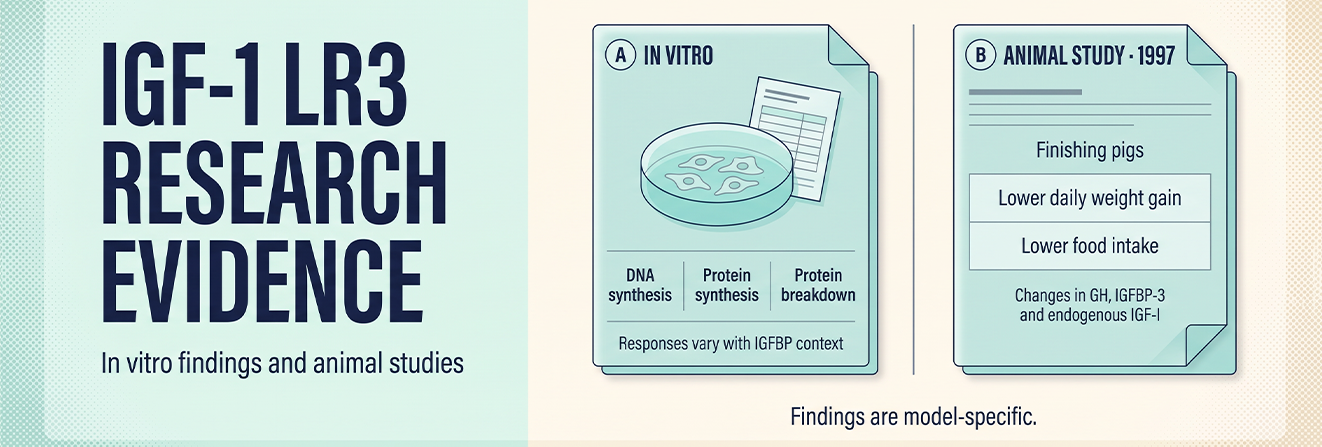
Foundational in vitro studies established that changes to the IGF-I N-terminal region can reduce binding-protein interactions and alter biological potency.
The observed responses included changes in DNA synthesis, protein synthesis and protein breakdown in selected experimental cell lines.
The results were strongly influenced by whether the tested cells secreted IGFBPs.
This provides evidence for a mechanism involving growth-factor availability, although the magnitude of the response cannot be generalised across all cell types.
2. Findings From Animal Studies
A 1997 study by Dunaiski and colleagues investigated Long [R3] IGF-I in finishing pigs. The study reported lower daily weight gain and food intake, with changes in growth hormone, IGFBP-3 and endogenous IGF-I.
How Is IGF-1 LR3 Quality Evaluated for Research?
Certificates of Analysis
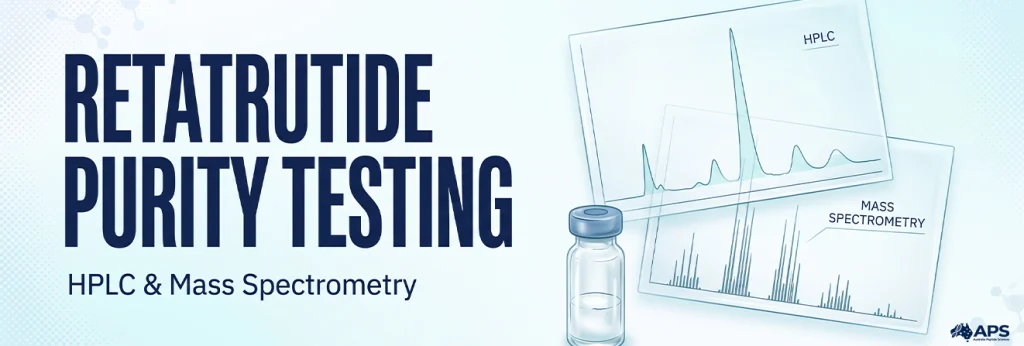
A COA can support review of identity and reported purity, but no single result proves correct folding, structural integrity or biological activity. Researchers can consult the COA guide when interpreting analytical information and its limitations.
IGF-1 LR3 Storage and Stability Considerations
Lyophilised and Solution-State Materials
Storage stability depends on formulation and handling. Lyophilised material and reconstituted solutions may require different conditions. The peptide synthesis guide provides context on how production methods can affect material quality.
IGF-1 LR3 Australia: Research and Regulatory Considerations
Research involving IGF-1 LR3 Australia must follow the applicable Australian regulatory framework.
Relevant obligations may include the Poisons Standard and Therapeutic Goods Administration requirements, depending on the substance and intended use.
Requirements also depend on the applicable rules for research, manufacture, importation, supply and advertising.
Research-use-only labelling does not override these obligations.
IGF-1 LR3 is not an approved human therapeutic product in Australia.
IGF-1 and its analogues are prohibited under the 2026 anti-doping rules.
Laboratories should assess the compound, research purpose and institutional requirements before use.
Key IGF-1 LR3 Research Considerations
IGF-1 LR3 is a modified IGF-I analogue whose reduced binding-protein affinity makes it valuable for investigating growth-factor availability, receptor signalling and cellular responses.
The strongest evidence concerns laboratory systems, where outcomes depend on cell type, IGFBP expression and experimental conditions. Animal findings further demonstrate that systemic responses cannot be predicted from cellular activity alone.
Reliable interpretation requires appropriate experimental controls, analytical characterisation and clear recognition of the limits of available evidence.
Frequently Asked Questions About IGF-1 LR3
What is IGF-1 LR3?
IGF-1 LR3 is an engineered 83-amino-acid analogue of human insulin-like growth factor I with reduced affinity for several IGF binding proteins.
What does Long R3 IGF-I mean?
Long refers to the additional 13 amino acids at the N-terminus. R3 identifies the arginine substitution at position 3 of the native IGF-I sequence.
How is IGF-1 LR3 different from natural IGF-1?
It contains two structural modifications that reduce binding-protein affinity and can alter biological activity in certain experimental systems.
Why does IGF-1 LR3 bind less strongly to IGFBPs?
Its N-terminal modifications change molecular features involved in binding-protein recognition, reducing affinity for several IGFBPs.
Does IGF-1 LR3 activate the IGF-1 receptor?
Yes. Experimental research demonstrates that the analogue retains biological activity associated with IGF receptor-mediated signalling.
Is IGF-1 LR3 always more potent than native IGF-1?
No. Its relative potency varies with the experimental system, particularly the presence and characteristics of IGF binding proteins.
What is IGF-1 LR3 used for in cell culture?
It is investigated as a growth-factor supplement in mammalian cell cultures, including selected CHO cell systems used for recombinant protein research.
How long does IGF-1 LR3 remain biologically active?
The duration of biological activity depends on experimental conditions, including the cell model, medium composition and assay design. Cell-culture findings do not establish a universally applicable activity duration.
How is IGF-1 LR3 purity assessed?
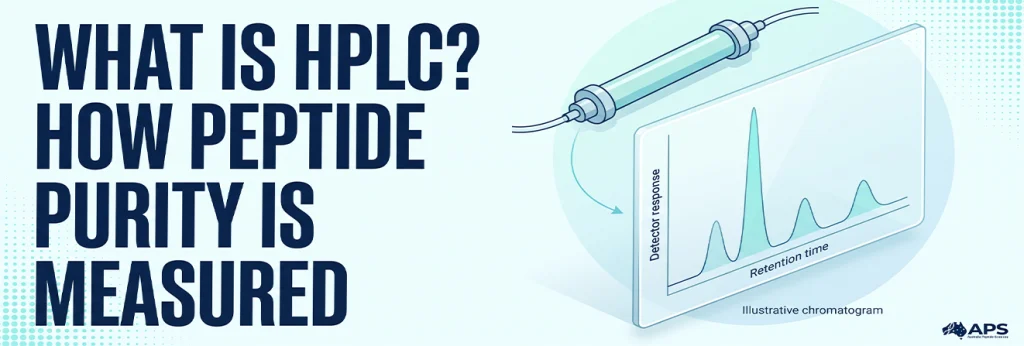
Analytical methods such as HPLC and mass spectrometry help assess purity and identity. Additional testing may be needed to evaluate structural integrity and biological activity.
Is IGF-1 LR3 approved for human use in Australia?
No. IGF-1 LR3 is not an approved human therapeutic product in Australia. Research-only labelling does not remove applicable regulatory obligations.
References
- Francis GL, Ross M, Ballard FJ, et al. Novel recombinant fusion protein analogues of insulin-like growth factor (IGF)-I indicate the relative importance of IGF-binding protein and receptor binding for enhanced biological potency. Journal of Molecular Endocrinology. 1992;8(3):213-223. https://doi.org/10.1677/jme.0.0080213
- King R, Wells JRE, Krieg P, et al. Production and characterization of recombinant insulin-like growth factor-I (IGF-I) and potent analogues of IGF-I, with Gly or Arg substituted for Glu3, following their expression in Escherichia coli as fusion proteins. Journal of Molecular Endocrinology. 1992;8(1):29-41. https://doi.org/10.1677/jme.0.0080029
- Dunaiski V, Dunshea FR, Walton PE, Goddard C. Long [R3] insulin-like growth factor-I reduces growth, plasma growth hormone, IGF binding protein-3 and endogenous IGF-I concentrations in pigs. Journal of Endocrinology. 1997;155(3):559-565. https://doi.org/10.1677/joe.0.1550559
- Effects of insulin and LongR(3) on serum-free Chinese hamster ovary cell cultures expressing two recombinant proteins. Biotechnology Progress. 2000. https://doi.org/10.1021/bp0000914
- Therapeutic Goods Administration. How we regulate therapeutic peptide products. https://www.tga.gov.au/products/medicines/monitoring-and-compliance/how-we-regulate-therapeutic-peptide-products
- Australian Government. Therapeutic Goods (Poisons Standard, October 2026) Instrument 2026. Australian legislation
- Sport Integrity Australia. 2026 Prohibited List. https://www.sportintegrity.gov.au/what-we-do/anti-doping/substance-education/2026-prohibited-list