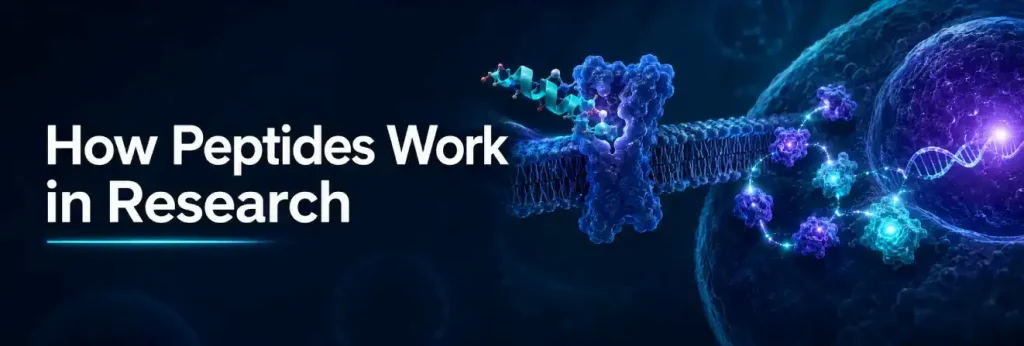
Peptides vs Proteins is a fundamental topic in molecular biology because both are built from amino acids but differ in size, structure, and biological function.
Understanding how these molecules differ helps explain their roles in cellular processes and scientific research.
Signalling molecules, enzymes, and structural proteins all play essential roles in living organisms.
This guide explores their structure, functions, and importance in modern biochemical and pharmaceutical research.
For laboratory-focused context on how peptides are defined and studied, see our What Are Peptides for Research? guide.
Peptides vs Proteins: Quick Answer
Peptides and proteins are both made from amino acids linked by peptide bonds. The main difference is their size, structure, and complexity.
For a closer look at the chemical linkage joining amino acids, see our Peptide Bond guide.
Peptides are shorter chains, usually containing around 2–50 amino acids, while proteins are larger molecules that fold into complex three-dimensional structures and perform diverse biological functions.
What Are Amino Acids? The Building Blocks of Peptides and Proteins
Amino acids are organic molecules that serve as the building blocks of peptides and proteins. They join together through peptide bonds to form longer chains, with the amino acid sequence determining a molecule’s structure and function. Even a single change in this sequence can affect its biological activity.
Researchers can explore this relationship further in our Peptide Sequence guide, which explains how amino-acid order defines peptide identity and molecular behaviour.
Each amino acid contains four components:
- An amino group (-NH₂)
- A carboxyl group (-COOH)
- A hydrogen atom
- A unique side chain (R group)
The side chain gives each amino acid its unique chemical properties, influencing how peptides and proteins fold, interact, and function.
Essential and Non-Essential Amino Acids
Twenty standard amino acids are commonly incorporated into proteins through the genetic code, although their availability and biosynthesis differ between biological systems.
| Essential Amino Acids | Non-Essential Amino Acids |
| Cannot be synthesised by the body; must come from diet | Produced naturally by the body |
| Leucine | Alanine |
| Lysine | Glycine |
| Valine | Glutamine |
| Methionine | Serine |
| Phenylalanine | Aspartate |
| Threonine | — |
| Isoleucine | — |
| Tryptophan | — |
| Histidine | — |
Both groups are equally important for building functional peptides and proteins.
How Amino Acids Join Together to Form Peptides and Proteins
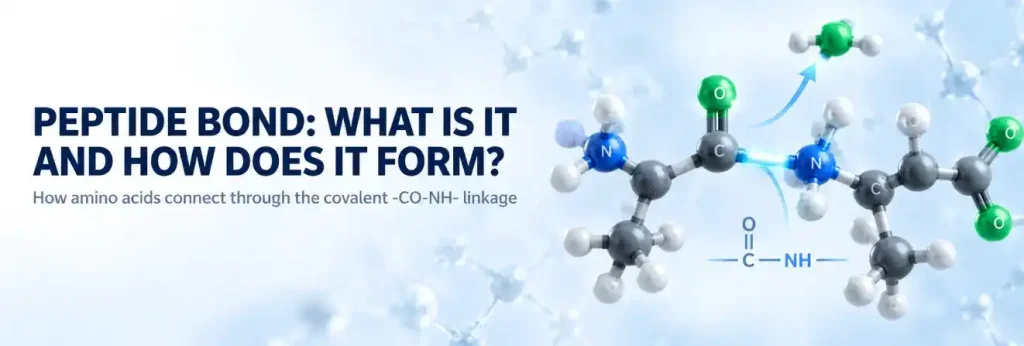
Amino acids connect through a chemical reaction called dehydration synthesis. In this reaction:
- One amino acid loses a hydroxyl group (-OH)
- Another loses a hydrogen atom (-H)
- Water is released
- A peptide bond forms between the two amino acids
Repeating this process builds progressively longer chains:
| Stage | Description |
| Amino Acid | Individual building block |
| Dipeptide | Two amino acids joined together |
| Oligopeptide | Short chain of several amino acids |
| Polypeptide | Longer amino acid chain |
| Protein | One or more folded polypeptide chains with biological activity |
This sequence shows how simple building blocks progress into the complex molecules we know as peptides and proteins.
For additional detail on laboratory peptide production, see How Are Peptides Made? and our Peptide Synthesis guide.
Why Amino Acid Sequence Matters for Peptides and Proteins
The order of amino acids matters more than their number. A protein with 200 amino acids in one sequence can perform a completely different function from a protein with the same amino acids arranged differently.
This sequence determines:
- Molecular folding
- Three-dimensional structure
- Chemical stability
- Binding ability
- Biological function
- Interaction with enzymes
- Cellular localisation
For this reason, scientists describe amino acid sequence as the blueprint behind molecular structure and function.
What Are Peptides?
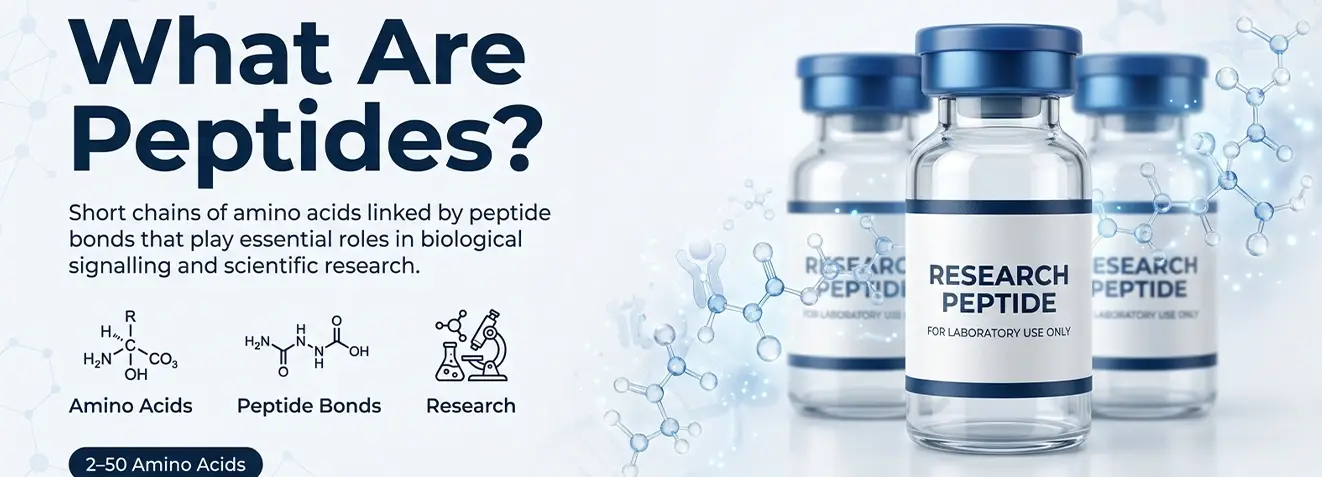
Peptides are short chains of amino acids connected by peptide bonds. There’s no universally accepted numerical definition, but most scientific literature commonly describes peptides as containing approximately 2–50 amino acids, although definitions vary between fields.
Longer chains may be classified as polypeptides, and many biologically active polypeptides form proteins when they adopt stable functional structures.
Due to their small size, peptides usually have simpler structures than proteins, often remaining flexible rather than folding into complex three-dimensional shapes.
Despite their relatively small size, peptides can participate in diverse biological processes and are frequently studied as signalling molecules, molecular probes and research tools.
Peptides occur naturally in plants, animals, microorganisms, and humans. Researchers also synthesise peptides in laboratories for biochemical investigations, molecular biology, analytical studies and structure-function research.
Types of Peptides
Peptides can be classified by origin, structure, or biological function.
Natural Peptides
Synthesised naturally by living organisms, these participate in normal physiological processes. Examples include signalling peptides, antimicrobial peptides and regulatory peptides.
Synthetic Peptides
Manufactured using laboratory techniques that precisely control amino acid sequence and purity. Widely used for:
- Biochemical research
- Laboratory assays
- Drug discovery research
- Molecular interaction studies
- Diagnostic development
For research-focused examples of synthetic compounds, browse our Research Peptide Guides.
Linear Peptides
Contain two free ends and represent the most common structural arrangement.
Cyclic Peptides
Cyclic peptides form a closed-loop structure where the two ends of the molecule are connected. Their circular architecture often increases structural stability compared with linear peptides.
Key Characteristics of Peptides
Peptides share several important features that distinguish them from larger proteins.
| Characteristic | Description |
| Size | Smaller amino acid chains |
| Structure | Usually less complex than proteins |
| Folding | Limited or partial folding in many cases |
| Synthesis | Often produced chemically in laboratories |
| Biological Role | Frequently involved in signalling and regulation |
| Research Applications | Commonly used in molecular and pharmaceutical research |
Because of these properties, peptides remain an active area of investigation across structural biology, analytical chemistry, biotechnology, and biomedical research.
Why Researchers Study Peptides
Interest in peptides has grown considerably over recent decades because they offer unique opportunities for understanding biological communication at the molecular level.
Researchers investigate peptides to better understand:
- Cellular communication
- Receptor interactions
- Hormonal signalling
- Immune system regulation
- Protein interactions
- Molecular recognition
- Drug discovery platforms
- Biomarker identification
Their relatively small size also makes many peptides easier to synthesise and modify compared with larger proteins, allowing scientists to investigate structure-function relationships with greater precision.
Researchers assessing laboratory materials should also distinguish molecular identity from analytical purity. See our Peptide Purity Explained guide for additional context.
What Are Proteins?
Proteins are large biological molecules composed of one or more long chains of amino acids joined together by peptide bonds. Unlike peptides, proteins fold into highly organised three-dimensional structures that determine how they interact with other molecules and carry out specialised biological functions.
The complexity of proteins allows them to perform an extraordinary range of tasks within living organisms. Proteins perform structural, catalytic, transport, signalling and regulatory functions across biological systems.
While peptides often function as signalling molecules, proteins generally perform broader structural, catalytic, transport, and regulatory roles that require complex folding and greater molecular stability.
The Four Levels of Protein Structure
A protein’s biological activity depends on more than its amino acid sequence. After synthesis, the chain folds into a specific three-dimensional shape that allows the protein to function correctly.
Changes in this structure can reduce or eliminate its activity.
The Four Levels of Protein Structure
| Level | Description |
| Primary Structure | The linear sequence of amino acids |
| Secondary Structure | Local folding patterns, such as alpha-helices and beta-sheets, formed through hydrogen bonding |
| Tertiary Structure | The complete three-dimensional shape of a single polypeptide chain |
| Quaternary Structure | Multiple folded protein chains assembled into one functional complex |
This hierarchy is the foundation of modern protein structure research.
How Protein Folding Influences Function
Primary Structure
The exact order of amino acids in the protein chain. Even replacing one amino acid can influence:
- Folding
- Stability
- Biological activity
- Molecular interactions
Many inherited disorders are linked to alterations in primary amino acid sequences.
Secondary Structure
As the chain grows, nearby amino acids interact to form repeating patterns, most commonly:
- Alpha-helices
- Beta-sheets
- Loops and turns
These patterns add stability and prepare the molecule for more complex folding.
Tertiary Structure
The complete three-dimensional folding of a single protein molecule, driven by:
- Hydrogen bonds
- Hydrophobic interactions
- Ionic interactions
- Van der Waals forces
- Disulphide bonds
This final shape determines whether the protein can perform its intended function.
Quaternary Structure
Some proteins consist of several folded polypeptide chains assembled together, such as:
- Haemoglobin
- Collagen
- DNA polymerases
- Antibodies
Interaction between these subunits often boosts stability and enables more sophisticated biological functions.
Major Functions of Proteins
Proteins participate in nearly every biological process.
Their functions include:
| Function | Example |
| Enzymes | DNA polymerase, amylase |
| Structural support | Collagen, keratin |
| Transport | Haemoglobin, albumin |
| Immune defence | Antibodies |
| Cell signalling | Receptors |
| Movement | Actin, myosin |
| Storage | Ferritin |
Many proteins perform multiple roles simultaneously depending on their location within the body.
Peptides vs Proteins: What’s the Difference?
Although peptides and proteins share the same basic building blocks, several characteristics distinguish them.
Understanding these differences provides valuable context for biological research and molecular science.
| Feature | Peptides | Proteins |
| Typical size | Usually 2–50 amino acids | Often more than 50–100 amino acids |
| Molecular weight | Lower | Higher |
| Structural complexity | Relatively simple | Highly complex |
| Folding | Limited or partial | Extensive three-dimensional folding |
| Stability | Highly sequence- and environment-dependent | Highly structure- and environment-dependent |
| Domains | Rare | Common |
| Biological roles | Often signalling and regulation | Diverse structural and functional roles |
| Laboratory production | Frequently synthesised chemically | Often produced using recombinant expression systems |
| Research applications | Molecular probes, biochemical studies | Structural biology, enzyme research, diagnostics |
The difference between peptides and proteins extends beyond amino acid count. Structural organisation, folding behaviour, and biological complexity are equally important when classifying these molecules.
The boundary between a peptide and a protein is therefore practical rather than absolute. Amino-acid count is useful, but folding, domains and functional organisation also influence classification.
From Amino Acids to Functional Proteins
Proteins are not assembled randomly. Cells follow a carefully regulated sequence of events to convert genetic information into functional molecules.
The process begins with DNA and proceeds through multiple stages before a mature protein is produced.
Genetic Information
Genes stored within DNA contain instructions that specify the order of amino acids.
Protein-coding genes contain information used to produce one or more protein products.
Transcription
In eukaryotic cells, protein-coding DNA is transcribed into messenger RNA within the nucleus.
This temporary copy transports genetic instructions to ribosomes.
Translation
Ribosomes read the mRNA sequence.
Transfer RNA molecules deliver the appropriate amino acids, which are linked together by peptide bonds.
At this stage, a growing polypeptide chain is produced.
Folding
After synthesis, the polypeptide begins folding into its correct three-dimensional shape.
Some proteins fold spontaneously, while others require specialised helper proteins known as molecular chaperones.
Quality Control
Cells continuously monitor newly synthesised proteins.
Improperly folded proteins may be:
- Repaired
- Refolded
- Broken down and recycled
This quality-control system helps maintain normal cellular function.
For comparison, laboratory peptide synthesis often uses chemical assembly rather than cellular transcription and translation. See our Peptide Synthesis guide for the peptide-focused workflow.
Amino Acids vs Peptides vs Proteins: Key Differences at a Glance
The relationship between amino acids, peptides, and proteins can be summarised as follows:
| Characteristic | Amino Acids | Peptides | Proteins |
| Basic unit | Yes | No | No |
| Built from amino acids | — | Yes | Yes |
| Peptide bonds present | No | Yes | Yes |
| Complex folding | No | Limited | Extensive |
| Biological complexity | Low | Moderate | High |
| Typical role | Building block | Signalling and regulation | Broad biological functions |
How Are Peptides Studied in Biological Signalling?
Many peptides are studied as signalling molecules that interact with receptors or other molecular targets. Their biological roles vary substantially according to sequence, structure and experimental system.
Cell Signalling
Peptide-related signalling research may examine pathways involving:
- Cell growth
- Tissue repair
- Immune responses
- Metabolism
- Cellular differentiation
Their ability to bind specific receptors makes peptides valuable tools in biological research.
How Are Peptides Studied in Immune Signalling?
Peptide research also includes molecules associated with innate immunity, inflammatory signalling and host defence. Examples include antimicrobial peptides, cytokine-derived peptides and other host-defence sequences.
Peptides and Tissue Repair Research
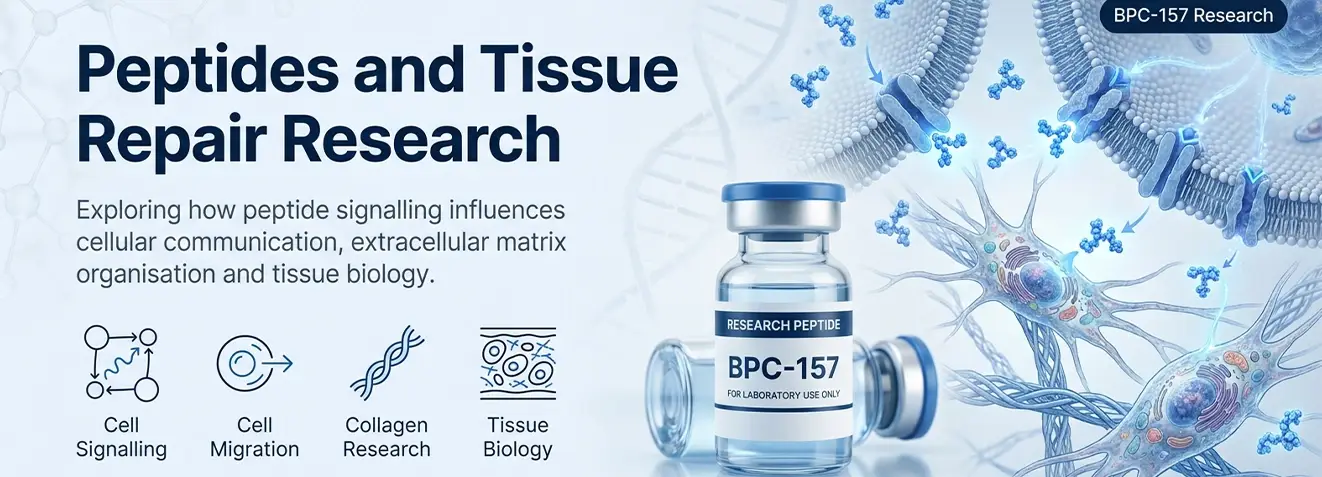
Compounds such as BPC-157 have been investigated in preclinical tissue-response models involving cell migration, extracellular-matrix signalling and related pathways. These findings remain experimental and should not be interpreted as established human repair effects.
Research continues to investigate how peptide signalling influences:
- Cell migration
- Extracellular matrix organisation
- Wound healing mechanisms
- Collagen production
- Cellular communication
A structurally distinct example is TB-500 peptide, which is investigated in relation to actin-associated and cellular-migration pathways.
These studies remain active areas of molecular biology and regenerative medicine research.
How Are Peptides Studied in Neurobiology?
The nervous system also relies on peptides.
Neuropeptides help regulate communication between neurons and influence numerous physiological processes.
Examples include:
- Endorphins
- Enkephalins
- Substance P
- Neuropeptide Y
These molecules provide useful examples of peptide-mediated signalling in neurobiological research.
Biological Functions of Proteins
Proteins perform an exceptionally wide range of functions due to their larger size and highly organised structures. Almost every biological process depends on proteins working together within cells and tissues.
Enzymes
Enzymes are proteins that accelerate chemical reactions without being consumed in the process. Thousands of reactions rely on enzymes every second, including:
- DNA polymerase
- RNA polymerase
- Amylase
- Lipase
- Catalase
Without enzymes, most biochemical reactions would occur too slowly to sustain life.
Structural Support
Many proteins provide strength and stability to cells and tissues:
| Protein | Function |
| Collagen | Supports connective tissues |
| Keratin | Forms hair, nails, and skin |
| Elastin | Provides tissue elasticity |
| Actin | Supports cellular architecture |
Structural proteins maintain the integrity of organs and tissues throughout the body.
Collagen-related research also includes structurally distinct materials such as GHK-Cu peptide, which is studied in copper-binding and extracellular-matrix models.
Molecular Transport
Some proteins transport essential molecules through blood or across cell membranes, such as:
- Haemoglobin carrying oxygen
- Albumin transporting fatty acids and hormones
- Membrane transport proteins moving ions and nutrients
These systems help maintain cellular homeostasis.
Immune Defence
Antibodies are specialised proteins produced by the immune system. They recognise foreign molecules and coordinate immune responses, with a specificity that allows the body to distinguish self from non-self.
Cellular Movement
Movement within cells depends heavily on proteins such as:
- Actin
- Myosin
- Kinesin
- Dynein
These enable muscle contraction, intracellular transport, cell division, and chromosome movement.
Actin-related cellular movement is also relevant to research involving compounds such as TB-500 peptide, although peptide findings should be interpreted separately from the functions of endogenous actin proteins.
Cellular Communication
Many cell membrane receptors are proteins. When signalling molecules bind these receptors, they trigger communication pathways that regulate numerous biological activities.
Why Peptides and Proteins Behave Differently
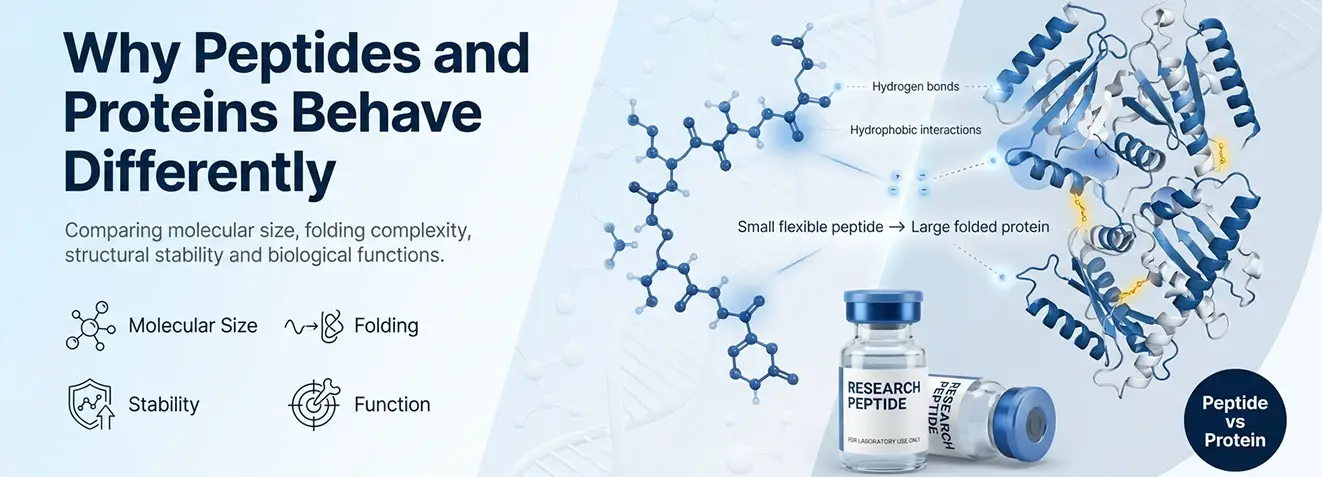
Although both originate from amino acids, several physical and chemical properties explain why peptides and proteins behave differently, extending far beyond molecular size.
Molecular Size
Size influences almost every aspect of molecular behaviour.
Smaller molecules often:
- Diffuse more rapidly
- Have fewer folding requirements
- Possess lower structural complexity
Larger proteins generally exhibit:
- More extensive folded structure
- More specialised functions
- Complex three-dimensional organisation
Folding Complexity
Many peptides remain relatively flexible, while proteins usually require highly organised folding before becoming biologically active. Proper folding creates:
- Active sites
- Binding pockets
- Structural domains
- Recognition surfaces
This additional complexity greatly expands protein functionality.
Chemical Interactions
Several forces influence molecular stability:
- Hydrogen bonding
- Hydrophobic interactions
- Ionic attractions
- Van der Waals forces
- Disulphide bridges
Proteins often involve more extensive combinations of these interactions because of their larger folded structures, while individual peptides may rely on a smaller subset depending on sequence and conformation.
Structural Stability
Proteins often have more extensive folded structures, while peptide stability varies widely according to sequence, conformation and environmental conditions. Peptides may be more susceptible to:
- Enzymatic degradation
- Environmental changes
- Conformational flexibility
Stability still varies considerably depending on amino acid composition and molecular architecture.
Functional Diversity
A small peptide often performs one highly specific biological task, while a large protein may contain multiple functional domains, allowing it to perform several activities simultaneously. This complexity contributes to the enormous diversity of proteins found in living organisms.
Peptides and Proteins in Research and Biotechnology
Modern biotechnology depends heavily on both peptides and proteins.
Researchers investigate these molecules to better understand cellular mechanisms, develop analytical methods, and improve laboratory technologies.
Common research applications include:
- Molecular biology
- Structural biology
- Cell biology
- Biochemistry
- Diagnostic development
- Biomarker discovery
- Protein engineering
- Drug discovery research
- Vaccine research
- Laboratory assay development
For researchers working specifically with peptide materials, our Research Peptide Guides provide compound-specific information on mechanisms, evidence and laboratory considerations.
Because peptides are relatively straightforward to synthesise, they are frequently used to study receptor interactions and molecular recognition.
Proteins, owing to their complexity, are often investigated to understand enzyme activity, structural organisation, immune function, and cellular regulation.
How Are Peptides and Proteins Produced in the Laboratory?
Although both are built from amino acids, their production methods differ significantly:
| Peptides | Proteins |
| Frequently synthesised chemically | Commonly produced using recombinant DNA technology |
| Easier sequence modification | More complex expression systems |
| Faster laboratory synthesis | Require specialised host cells |
| Higher sequence control | More extensive purification procedures |
The production method depends on molecular size, structural complexity, and the intended research application.
For more detail on peptide-specific production methods, see How Are Peptides Made? and Peptide Synthesis.
Are Small Proteins the Same as Peptides?
One of the most common questions in molecular biology is whether small proteins should be classified as peptides, and the answer isn’t always straightforward. There’s no universally accepted amino acid cut-off, since scientists weigh structural organisation and folding behaviour alongside size, not just a number.
Factors Used to Classify Biological Molecules
Many textbooks describe peptides as containing up to roughly 50 amino acids, while proteins generally contain more than 50 to 100, though exceptions exist, since some short sequences fold into stable structures and behave like proteins. Classification depends on multiple characteristics, including:
- Peptide chain length
- Three-dimensional folding
- Structural stability
- Biological activity
- Presence of multiple functional domains
- Molecular complexity
This explains why discussions about small proteins vs peptides sometimes vary across scientific publications.
Common Misconceptions About Peptides and Proteins
Several misconceptions continue to cause confusion, particularly for students and those new to molecular biology.
| Myth | Fact |
| Peptides and proteins are completely different molecules. | Proteins are built from amino acid chains in the same way as peptides. |
| Every peptide eventually becomes a protein. | Many peptides function independently and never become proteins. |
| Proteins are simply longer peptides. | Length is important, but folding and structural complexity are equally significant. |
| All proteins contain hundreds of amino acids. | Some proteins contain fewer amino acids while still exhibiting stable protein-like structures. |
| Peptides cannot fold. | Some peptides form stable secondary or cyclic structures, although generally less complex than proteins. |
| Size alone determines classification. | Scientists also evaluate molecular behaviour, folding, stability, and biological function. |
Understanding these distinctions helps build a more accurate picture of biomolecular science.
Which Is More Complex: Peptides or Proteins?
Proteins generally show greater structural and functional diversity than peptides, thanks to:
- Multiple structural domains
- Extensive three-dimensional folding
- Complex binding surfaces
- Catalytic activity
- Long-distance molecular interactions
- Large interaction networks inside cells
Peptides, by comparison, often perform highly targeted functions using simpler structures, which doesn’t make them less important, just suited to different tasks.
| Peptides | Proteins |
| Often regulate biological signalling. | Often perform structural and catalytic functions. |
| Usually interact with specific receptors. | Often interact with numerous molecules simultaneously. |
| Relatively simple architecture | Highly organised molecular architecture |
Both classes are indispensable for maintaining normal biological systems.
The Peptide Protein Difference Explained
Peptides and proteins share the same fundamental building blocks—amino acids joined through peptide bonds—but differ in average size, structural organisation, folding and functional complexity.
Peptides are often investigated as signalling molecules, molecular probes and defined experimental compounds, while proteins perform a wider range of catalytic, structural, transport and regulatory functions.
The peptide-protein distinction is not defined by amino-acid count alone. Sequence, three-dimensional organisation and biological behaviour all contribute to how a molecule is classified and studied.
For additional peptide-focused laboratory information, explore our What Are Peptides for Research? guide and Research Peptide Guides.
Explore Research Peptide Guides →
FAQs about Peptides vs Proteins
What is the main difference between peptides and proteins?
Peptides are generally shorter amino-acid chains with less extensive structural organisation, while proteins are typically larger and fold into more complex three-dimensional structures. There is no universal amino-acid cut-off that separates every peptide from every protein.
How many amino acids make a peptide?
Peptides are often described as containing roughly 2–50 amino acids, but this is a practical convention rather than an absolute scientific boundary. Folding and functional organisation also influence classification.
Are proteins made from amino acids?
Yes, every protein is built from amino acids connected through peptide bonds, with sequence determining folding and function.
Can peptides fold into three-dimensional structures?
Yes. Some peptides adopt stable secondary structures, turns, helices or cyclic conformations. Proteins generally develop more extensive tertiary or quaternary organisation.
Why is protein folding important?
Folding creates the functional regions proteins need to bind molecules, catalyse reactions, transport substances, and enable cellular communication.
What determines peptide chain length?
Peptide chain length is determined by the number of amino-acid residues incorporated during biosynthesis or laboratory synthesis. How that chain is classified depends on both its length and structural behaviour.
Why are peptide bonds important?
Peptide bonds link amino acids into chains and form the chemical backbone of both peptides and proteins.
Why are peptides and proteins important in research?
They provide fundamental systems for studying molecular recognition, receptor signalling, enzyme activity, structural biology, cellular regulation and biotechnology.