

AOD-9604 is a synthetic growth-hormone-derived peptide investigated in metabolic and adipose-tissue research.
Published evidence includes preclinical studies examining lipid-related pathways as well as human clinical development in which meaningful weight-loss efficacy was not confirmed.
This guide explains the compound’s structure, proposed pathways, evidence limitations, analytical considerations and Australian research context.
Research-use note: Australia Peptide Sciences supplies AOD-9604 strictly for laboratory and scientific research and not for human or veterinary administration.
What Is AOD-9604 Peptide?
AOD-9604 is a synthetic 16-amino-acid peptide derived from the C-terminal region of human growth hormone. It contains the hGH 177-191 sequence with an additional N-terminal tyrosine residue.
The compound was originally investigated because researchers wanted to understand whether the lipid-related region of growth hormone could be studied separately from the broader endocrine effects of full-length human growth hormone.
In simpler terms, AOD-9604 is not full human growth hormone. It is a smaller research peptide fragment studied for specific metabolic pathways rather than broad hormonal activity.
| Feature | Research Description |
| Compound type | Synthetic peptide fragment |
| Research category | Growth hormone fragment research compound |
| Main research area | Lipid metabolism and adipose tissue research |
| Common research terms | Lipolysis, lipogenesis, fatty-acid utilisation, adipocyte signalling |
| Intended positioning | Research use only |
| Not intended for | Human consumption, treatment, personal use, or therapeutic claims |
AOD-9604 has appeared in both preclinical and clinical development literature. Some animal studies reported changes in body weight gain and adipose tissue activity, but larger human data did not confirm strong weight-loss efficacy. This makes balanced interpretation essential. One PubMed-indexed study in obese Zucker rats reported reduced body weight gain and increased lipolytic activity after AOD9604 treatment, but animal findings cannot be treated as proof of human effectiveness.
Why AOD-9604 Is Studied in Metabolic Research
AOD-9604 is studied through growth-hormone-fragment and adipose-tissue pathways, which are mechanistically distinct from incretin-based compounds such as GLP-1 receptor agonists.
Researchers have examined whether it may influence the breakdown, storage, and oxidation of fats in experimental models.
The main research interest includes:
- Lipolysis, or the breakdown of stored triglycerides.
- Lipogenesis, or the formation and storage of fat.
- Adipocyte signalling in fat cell models.
- Fatty-acid utilisation and lipid-metabolism endpoints in preclinical models.
- Growth hormone fragment activity without full growth hormone effects.
- Glucose and insulin-related observations in research models.
This does not mean AOD-9604 peptide should be described as a weight-loss product. A research compound may be scientifically interesting even when clinical translation is limited or uncertain.
A major point in AOD-9604 peptide research is the difference between mechanism and outcome. A compound can show activity in cells or animals, yet fail to produce meaningful results in large human trials.
Common Research Questions Around AOD-9604
Researchers may investigate questions such as:
- How does AOD-9604 interact with adipose tissue models?
- Does AOD-9604 influence lipolysis pathways?
- Does AOD-9604 affect lipogenesis in experimental systems?
- How does AOD-9604 differ from full-length human growth hormone?
- Does AOD-9604 affect IGF-1-related activity?
- What did preclinical studies show compared with human research?
- How should AOD-9604 material identity, stability and documentation be assessed in laboratory research?
A 2013 review discussing obesity pharmacotherapy noted that development of AOD-9604 was terminated after a 24-week trial in 536 subjects failed to induce significant weight loss. This is one of the most important limitations to mention when discussing AOD-9604 research accurately.
AOD-9604 Peptide Pathways Studied in Research
AOD-9604 pathways are usually discussed in relation to lipid metabolism, adipose tissue signalling, and growth hormone fragment biology. The following pathways are the most relevant for a research-only guide.
Lipolysis Pathways
Lipolysis is the process by which stored triglycerides are broken down into free fatty acids and glycerol. In AOD-9604 lab research, this pathway is important because early studies explored whether the peptide could affect fat breakdown in adipose tissue models.
Researchers may examine markers related to:
- Triglyceride breakdown.
- Free fatty acid release.
- Adipocyte activity.
- Enzymes involved in lipid mobilisation.
- Cellular signalling linked to metabolic activation.
Lipogenesis Pathways
Lipogenesis is the process by which the body converts excess energy into stored fat. AOD-9604 research has also explored whether the peptide fragment may influence pathways involved in fat formation.
In laboratory settings, this may include studying:
- Fat storage signalling.
- Adipocyte differentiation.
- Enzymes involved in lipid synthesis.
- Metabolic responses in preclinical models.
Fatty-Acid Utilisation and Energy-Metabolism Research
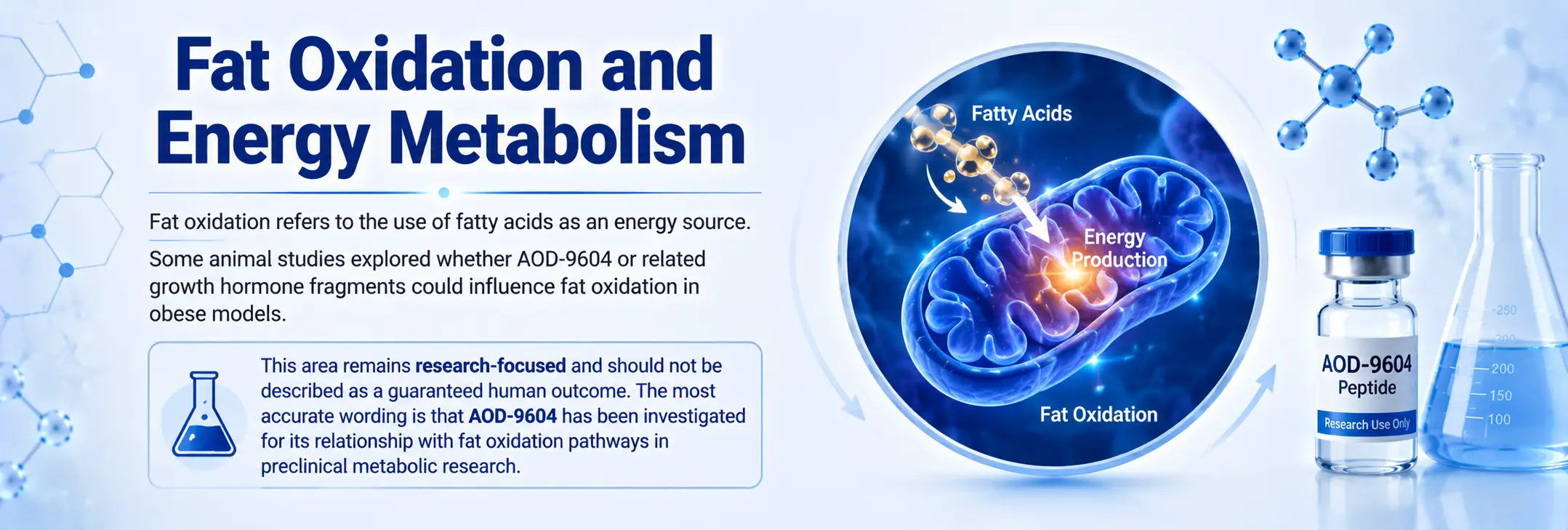
Preclinical studies have examined whether AOD-9604 or related growth-hormone fragments influence lipid utilisation and energy-metabolism endpoints in animal models. These findings remain model-specific and should not be interpreted as evidence of human fat-loss effects.
Beta-Adrenergic Pathway Research
Some preclinical AOD-9604 studies have investigated beta-adrenergic signalling, including β3-adrenoceptor-related mechanisms in animal models.
This pathway is relevant because beta-3 adrenergic receptors are involved in adipose tissue metabolism in certain animal models. However, researchers should avoid assuming that animal receptor findings translate directly into human fat-loss effects.
IGF-1 and Glucose Metabolism Questions
Full-length growth hormone can influence IGF-1 and glucose metabolism. AOD-9604 was studied partly because researchers wanted to evaluate whether a smaller growth hormone fragment could be examined without the same broad endocrine effects.
This is a key reason AOD-9604 peptide research is often discussed separately from full growth hormone research.
What Does AOD-9604 Research Show So Far?
A useful AOD-9604 peptide guide should separate research evidence into three categories:
- Preclinical research.
- Human research.
- Safety and regulatory limitations.
This helps avoid exaggerated claims while still explaining why the compound remains scientifically interesting.
Preclinical Research Findings
Preclinical studies have investigated AOD-9604 in animal models, especially obese rodent models. These studies explored changes in body weight gain, adipose tissue activity, and lipid metabolism markers.
Some findings suggested:
- Reduced body weight gain in certain obese animal models.
- Increased lipolytic activity in adipose tissues.
- Potential changes in fat oxidation.
- Distinct activity compared with full-length growth hormone.
These findings are relevant to AOD-9604 metabolic research, but they remain preclinical. Animal models can help researchers identify possible pathways, but they cannot confirm human efficacy.
Human Research Findings
The human research story is more limited. Early development explored AOD-9604 as a potential obesity-related compound, but the larger human trial did not support continued development for that purpose.
The key point: A 24-week Phase 2b trial involving 536 subjects failed to show significant weight loss, and development for obesity was discontinued.
For research-focused content, this should be stated clearly. It improves trust and prevents the blog from sounding promotional or medically misleading.
A balanced summary would be:
| Research Area | What It Suggests | Main Limitation |
| Animal metabolic models | Possible lipid pathway activity | Does not prove human results |
| Adipose tissue research | Interest in lipolysis and lipogenesis | Mechanisms remain context-dependent |
| Human obesity research | Larger trial did not confirm significant efficacy | No approved therapeutic use |
| Safety data | Some short-term research did not show major concerns | Long-term human safety remains limited |
| Regulatory context | Research and compounding concerns exist | Must avoid human-use claims |
AOD-9604 and the hGH 177-191 Region
AOD-9604 is closely related to the C-terminal region of human growth hormone. This is why researchers often discuss it alongside terms such as:
- hGH 177-191-derived fragment with an additional N-terminal tyrosine.
- Growth hormone fragment.
- Lipolytic domain of human growth hormone.
- C-terminal peptide fragment.
However, AOD-9604 should not be described as the same thing as full-length human growth hormone. It is a smaller peptide fragment studied for narrower pathway questions.
| Topic | AOD-9604 Peptide | Full-Length Human Growth Hormone |
| Structure | Synthetic peptide fragment | Complete hormone |
| Research focus | Lipid metabolism and adipose tissue pathways | Broad endocrine activity |
| IGF-1 relevance | Studied for limited GH-axis activity | Can influence IGF-1 |
| Glucose relevance | Studied for metabolic distinction | Can affect glucose regulation |
| Research positioning | Research compound only | Hormone-related clinical context |
| Human-use claim | No | No |
Researchers examining related GH-axis mechanisms may compare AOD-9604 conceptually with tesamorelin, while recognising that the two compounds differ substantially in structure, mechanism and clinical evidence.
AOD-9604 Lab Research Applications
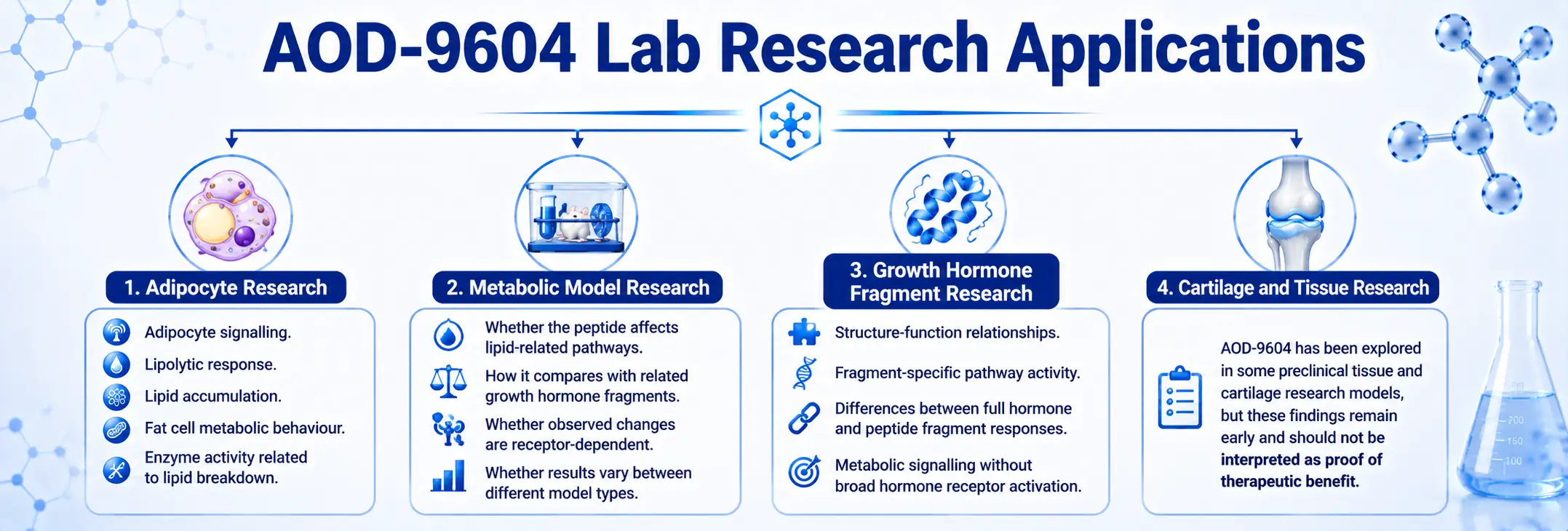
AOD-9604 lab research may be relevant to several experimental areas. These applications should be described as research questions, not outcomes.
Adipocyte Research
Adipocytes are fat cells. In research settings, AOD-9604 may be studied in relation to adipocyte activity, lipid storage, and lipid mobilisation.
Potential research focus areas include:
- Adipocyte signalling.
- Lipolytic response.
- Lipid accumulation.
- Fat cell metabolic behaviour.
- Enzyme activity related to lipid breakdown.
Metabolic Model Research
AOD-9604 may be investigated in metabolic models involving lipid-related endpoints. These research questions differ from mitochondrial-derived peptide research such as MOTS-C.
- Whether the peptide affects lipid-related pathways.
- How it compares with related growth hormone fragments.
- Whether observed changes are receptor-dependent.
- Whether results vary between different model types.
Growth Hormone Fragment Research
AOD-9604 is also relevant in broader growth hormone fragment research. It allows researchers to study whether specific peptide regions of human growth hormone have distinct biological activity.
This can help investigate:
- Structure-function relationships.
- Fragment-specific pathway activity.
- Differences between full hormone and peptide fragment responses.
- Metabolic signalling without broad hormone receptor activation.
Cartilage and Tissue-Model Research
AOD-9604 has also appeared in experimental cartilage and tissue-related research. This evidence is distinct from its earlier obesity development programme and remains insufficient to establish therapeutic effects.
AOD-9604 Australia: Research and Regulatory Context
For Australia Peptide Sciences, AOD-9604 should remain clearly positioned as a laboratory research material rather than a therapeutic or performance product.
AOD-9604 should not be presented as:
- A personal-use peptide.
- A fat-loss product.
- A supplement.
- A medicine.
- A therapeutic injection.
- A sports performance compound.
- A treatment for obesity, injury, or disease.
Australian scheduling decisions have specifically addressed AOD-9604. In 2015, the TGA scheduling delegate confirmed a Schedule 4 entry for AOD-9604 as part of measures addressing performance- and image-enhancing drugs, citing limited long-term safety data, misuse concerns and unproven efficacy claims.
For APS content, this means the blog should consistently reinforce:
- For research use only.
- Not for human consumption.
- Not for therapeutic use.
- Not intended to diagnose, treat, cure, or prevent disease.
- Not intended for use in sport or performance enhancement.
- Researchers must follow applicable regulations, institutional requirements, and safety protocols.
AOD-9604 is also relevant to anti-doping research and compliance because WADA lists growth hormone fragments, including AOD-9604 and hGH 176-191, within its prohibited-substance framework.
AOD-9604 Research Compound Quality: What Researchers Should Check
When evaluating any AOD-9604 research compound, quality documentation matters. Research reproducibility depends on identity, purity, handling, storage, and traceability.
Certificate of Analysis
A Certificate of Analysis, or COA, is one of the most important documents researchers should review.
A useful COA may include:
- Product name.
- Batch number.
- Analytical purity result and method.
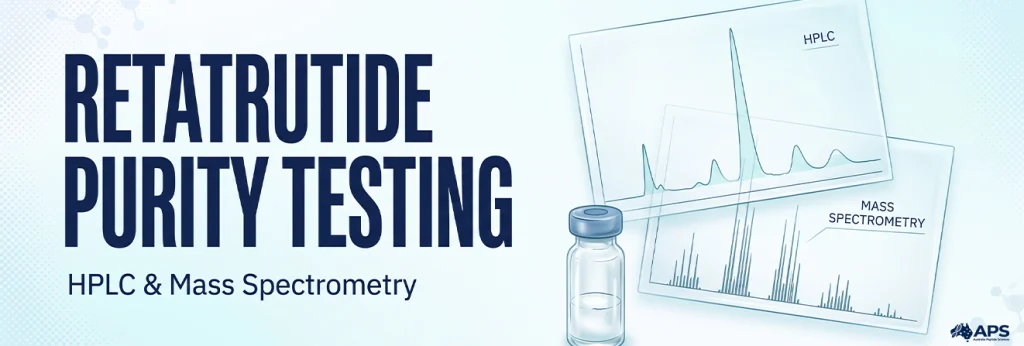
- HPLC analysis.
- Mass spectrometry confirmation.
- Testing date.
- Molecular weight confirmation.
- Storage guidance.
| COA Element | Why It Matters |
| Batch number | Supports traceability |
| HPLC purity | Helps verify purity profile |
| Mass spectrometry | Supports identity confirmation |
| Testing date | Shows when analysis was performed |
| Storage notes | Helps protect peptide integrity |
| Supplier details | Supports documentation standards |
For more detail, see our Certificate of Analysis guide and Peptide Purity Explained.
View Certificates of Analysis for Research Materials →
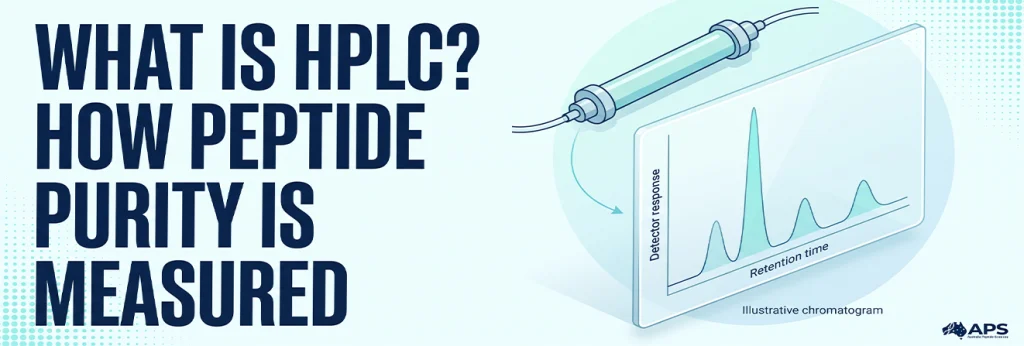
Peptide Purity
Purity is central to AOD-9604 lab research. Low-purity or poorly characterised peptides can affect research outcomes, introduce unwanted variables, or make results difficult to reproduce.
Researchers should avoid relying on vague claims such as “high quality” without supporting documentation. Batch-specific testing is more useful than generic product claims.
Lyophilised Peptide Format
AOD-9604 research materials may be supplied in lyophilised form. Lyophilisation removes most water from the material and can improve dry-state stability under appropriate storage conditions.
For broader context, see our Lyophilised Peptides guide.
Researchers should still follow supplier-specific storage instructions because peptide stability can be affected by:
- Light exposure.
- Repeated handling.
- Time after experimental preparation.
- Container integrity.
Storage and Stability Considerations
Stability depends on formulation, temperature, moisture, light, packaging and time. Researchers should follow batch- or product-specific stability information rather than applying universal storage assumptions.
For broader guidance, see our Peptide Storage Stability guide.
Research-Only Labelling
For a compound like AOD-9604, labelling is not just a formality. It supports compliance and reduces misuse risk.
Product pages, packaging, and educational content should consistently state:
- Research use only.
- Not for human consumption.
- Not a medicine.
- Not a supplement.
- Not intended for personal use.
- Not intended for therapeutic application.
What AOD-9604 Peptide Is Not
This section is important because many online discussions blur the line between research and personal use.
AOD-9604 peptide is not:
- An approved obesity medication.
- A weight-loss treatment.
- A fat-burning injection.
- A sports performance product.
- A supplement.
- A recovery treatment.
- A human-use peptide.
- A substitute for medical care.
- A compound for self-experimentation.
FDA has identified potential significant safety concerns for compounded AOD-9604, including immunogenicity, peptide-related impurities and API-characterisation complexity, and states that available safety information is insufficient to determine whether compounded AOD-9604 could cause harm in humans.
For APS, the safest editorial approach is to avoid personal-use language entirely. Instead of writing “how AOD-9604 works in the body,” use research-safe wording such as “pathways investigated in AOD-9604 research models.”
Common Misunderstandings About AOD-9604 Research
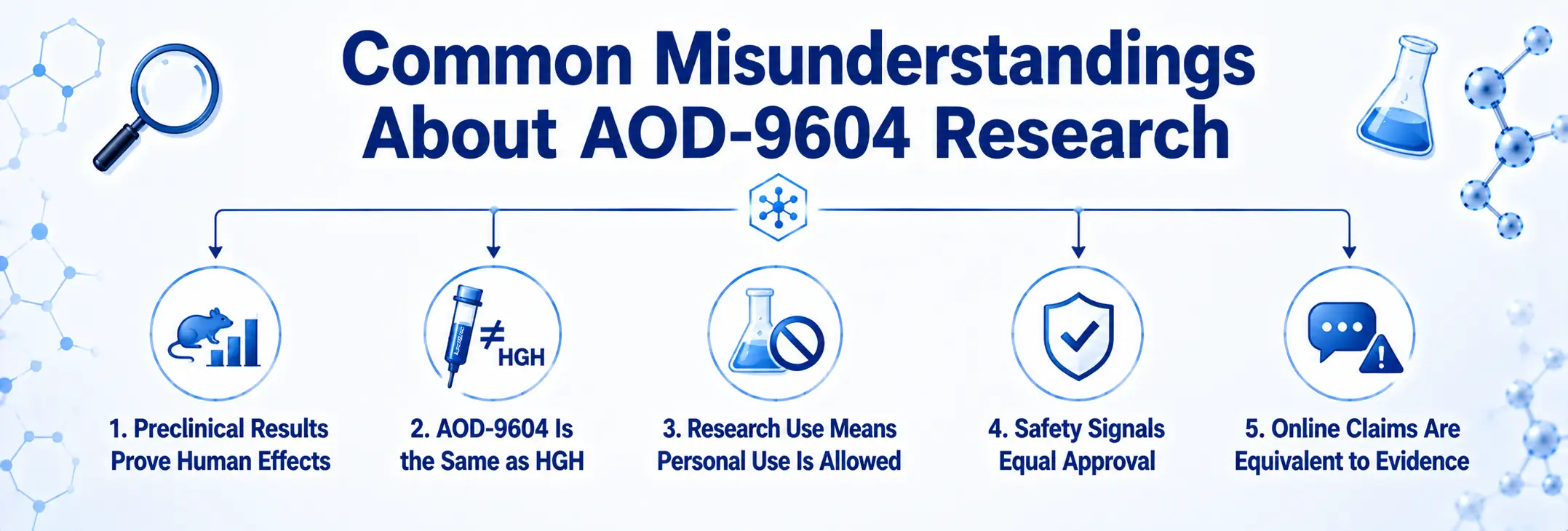
Misunderstanding 1: Preclinical Results Prove Human Effects
They do not. Preclinical findings can guide research, but they cannot prove clinical benefit.
Misunderstanding 2: AOD-9604 Is the Same as HGH
It is not. AOD-9604 is a synthetic peptide fragment related to a region of human growth hormone, not full-length HGH.
Misunderstanding 3: Research Use Means Personal Use Is Allowed
No. Research use only means laboratory research use. It does not mean personal experimentation, injection, ingestion, topical use, or any form of human application.
Misunderstanding 4: Safety Signals Equal Approval
Safety observations in research do not equal approval for therapeutic use. A compound can have some safety data and still not be approved as a medicine.
Misunderstanding 5: Online Claims Are Equivalent to Evidence
They are not. Social media claims, personal reports, and marketing statements are not substitutes for controlled studies, regulatory review, and verified laboratory data.
Examples of promotional or personal-use framing that should be avoided include:
- “Best AOD-9604 protocol.”
- “AOD-9604 before and after.”
- “AOD-9604 for body recomposition.”
This approach keeps the article useful for researchers while reducing the risk of unsafe claims.
Research Design Considerations for AOD-9604
Researchers planning AOD-9604 lab research should consider the quality and limitations of their model.
Important design considerations may include:
- Whether the model is in vitro, ex vivo, animal-based, or analytical.
- Which lipid metabolism markers are being measured.
- Whether the study focuses on lipolysis, lipogenesis, or oxidation.
- Whether the peptide identity has been confirmed.
- Whether a batch-specific COA is available.
- Whether storage conditions are documented.
- Whether controls and replicates are included.
- Whether conclusions remain within the limitations of the model and evidence level.
AOD-9604 research should be designed to answer specific mechanistic questions, not to justify personal-use claims.
Key Takeaways for Researchers
AOD-9604 is a synthetic growth-hormone-derived peptide studied primarily in lipid-metabolism, adipocyte and growth-hormone-fragment research.
Preclinical studies reported activity in certain metabolic models, but larger human obesity research did not demonstrate meaningful weight-loss efficacy, which is an important limitation when interpreting the compound.
Its mechanism and long-term human safety remain incompletely characterised, and regulatory agencies have raised concerns regarding compounded AOD-9604 and unproven therapeutic claims.
Laboratory research should therefore focus on compound identity, batch-specific analytical documentation, appropriate controls and evidence-based interpretation rather than extrapolating preclinical findings into personal-use outcomes.
For additional compound-specific information, browse our Research Peptide Guides.
Explore AOD-9604 Peptide for Laboratory Research Only →
FAQs About AOD-9604 Peptide Research
What is AOD-9604 peptide?
AOD-9604 is a synthetic 16-amino-acid peptide derived from the C-terminal region of human growth hormone. It contains the hGH 177-191 sequence with an additional N-terminal tyrosine and is studied primarily in metabolic and adipose-tissue research.
What is AOD-9604 research focused on?
AOD-9604 research commonly focuses on lipid metabolism, adipocyte signalling, lipolysis- and lipogenesis-related mechanisms, and growth-hormone-fragment biology.
Is AOD-9604 the same as HGH?
No. AOD-9604 is not full-length human growth hormone. It is a smaller synthetic peptide fragment related to a specific region of human growth hormone.
What are AOD-9604 pathways?
AOD-9604 research commonly examines lipid-metabolism, adipocyte and beta-adrenergic-related pathways in preclinical models. These mechanisms do not establish human fat-loss effects.
Is AOD-9604 approved for human use?
AOD-9604 should not be represented as an approved therapeutic product. Australia Peptide Sciences supplies it strictly for laboratory research and not for human or veterinary administration.
Why is AOD-9604 studied in metabolic research?
AOD-9604 is studied because researchers have investigated whether a specific growth hormone fragment may influence lipid-related pathways without the broader endocrine effects associated with full-length growth hormone.
What should researchers check when sourcing AOD-9604?
Researchers should review compound identity, batch-specific COA data, analytical purity methods, identity confirmation, storage information and lot traceability.
What Is the Australian Regulatory Context for AOD-9604?
AOD-9604 has been specifically addressed in Australian scheduling decisions. Regulatory obligations depend on the exact product, intended use and applicable laws, while Australia Peptide Sciences supplies its material strictly for laboratory research.
Did Human AOD-9604 Research Establish Weight-Loss Efficacy?
No meaningful weight-loss effect was demonstrated in the larger 24-week human obesity trial, and development for that indication was discontinued. Preclinical metabolic findings should not be treated as proof of human efficacy.
Why is COA documentation important for AOD-9604 lab research?
COA documentation helps researchers confirm batch identity, purity, testing methods, and traceability. This supports research reproducibility and reduces uncertainty around compound quality.
Is AOD-9604 the Same as hGH 176-191?
Not exactly. AOD-9604 is a defined 16-amino-acid peptide based on the hGH 177-191 region with an additional N-terminal tyrosine. Online terminology around “hGH fragments” is not always chemically precise.
Is AOD-9604 Prohibited in Sport?
Growth-hormone fragments including AOD-9604 are listed within WADA’s prohibited-substance framework. Athletes and sporting organisations should always check the current WADA Prohibited List directly because the list is updated regularly.
Reliable sources:
https://pubchem.ncbi.nlm.nih.gov/compound/Aod-9604