
GLP-1 peptides in metabolic research are widely studied because they influence insulin secretion, appetite signalling, glucose regulation, and communication between multiple biological systems.
Researchers studying GLP-1 pathways examine how these signalling mechanisms interact across different tissues to better understand metabolic regulation and cellular communication.
For researchers studying metabolic pathways, understanding this mechanism is the starting point for designing sound experimental protocols and interpreting results with confidence.
This guide breaks down the biology behind this hormone class, how it interacts with metabolic pathways, and what current research indicates about its role in laboratory studies.
What Are GLP-1 Peptides?
GLP-1 belongs to the incretin hormone family, a group of gut-derived signalling molecules that enhance insulin secretion and support metabolic health after food intake; the native hormone is rapidly degraded in the bloodstream, which is why researchers rely on modified peptide analogues with extended stability for laboratory study.
In a research setting, these peptides are supplied as lyophilised powders that require reconstitution, with purity and a certificate of analysis (COA) standards in place, since impurities can skew experimental outcomes.
Key characteristics researchers look for in this compound class include:
- Molecular stability under standard storage conditions
- Verified amino acid sequence matching published reference data
- Consistent batch-to-batch purity, typically reported at or above 98 percent
- Clear documentation supporting research-only classification
How Do GLP-1 Peptides Work in Metabolic Research?
GLP-1 peptides influence metabolic processes by activating receptors in the pancreas, digestive system, and brain.
This receptor signalling helps coordinate insulin secretion, glucose regulation, digestion, and appetite-related pathways.
Key metabolic responses associated with GLP-1 receptor activation include:
- Supporting glucose-dependent insulin release from pancreatic beta cells.
- Helping regulate glucagon activity and glucose production in the liver.
- Influencing the rate of gastric emptying and nutrient absorption.
- Activating signalling pathways involved in appetite regulation.
Within this context, Retatrutide peptide is studied for its combined activity at GLP-1, GIP, and glucagon receptors.
Is GLP-1 a Hormone or a Peptide?
This is a common point of confusion in early-stage research literature. GLP-1 is technically both. It is classified as a peptide hormone, meaning it is a short chain of amino acids that functions as a signalling molecule, similar to insulin or glucagon itself.
| Classification | Explanation |
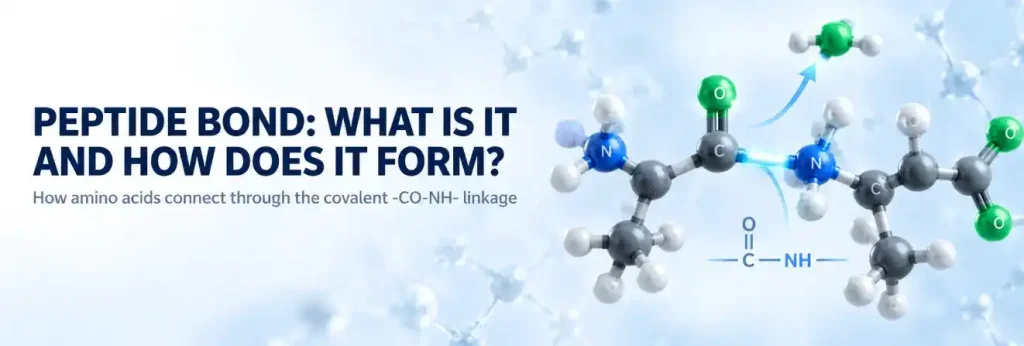
| Peptide | A chain of amino acids linked by peptide bonds; GLP-1 is 30–31 amino acids in its active form |
| Hormone | A signalling molecule released into the bloodstream that acts on distant tissues |
| Peptide hormone | The combined classification that accurately describes GLP-1’s structure and function |
So when researchers refer to glp 1 peptides, they are referring to synthetic versions of this naturally occurring peptide hormone, engineered for stability in controlled laboratory environments.

Where Is GLP-1 Produced in the Body?
GLP-1 originates from a single precursor gene, proglucagon, which is processed differently depending on the tissue involved.
1. Intestinal L-cells
Located mainly in the distal ileum and colon, these cells release GLP-1 in response to nutrient intake, particularly carbohydrates and fats.
2. Brainstem neurons
A smaller population of neurons in the nucleus tractus solitarius also produces GLP-1, contributing to central appetite regulation independently of gut release, a pathway relevant to research on obesity peptides.
3. Pancreatic alpha cells
These process the same proglucagon gene into glucagon rather than GLP-1, which is why the two hormones are described as glucagon-like despite having largely opposite effects on blood glucose.
This dual site of production is one reason GLP-1 research spans both gastroenterology and neuroscience, rather than sitting neatly in one field.
How Does GLP-1 Receptor Activation Influence Metabolism?
The mechanism of action is glucose-dependent, meaning it enhances insulin release primarily when blood glucose levels are elevated. This unique pathway makes it a key focus in metabolic research due to its potential safety advantages.
Beyond insulin secretion, the mechanism involves:
1. Beta cell preservation
Some preclinical research models suggest GLP-1 receptor activation may support beta-cell function over time, although this area remains under active investigation.
2. Delayed gastric emptying
Slower stomach emptying reduces the rate of post-meal glucose spikes, which researchers measure using postprandial glucose curves.
3. Reduced glucagon secretion
This lowers hepatic glucose production, particularly relevant in models of insulin resistance.
4. Central appetite pathways
Receptor activation in the hypothalamus is linked to reduced food intake in animal models, forming the basis of much of the current metabolic research pipeline.
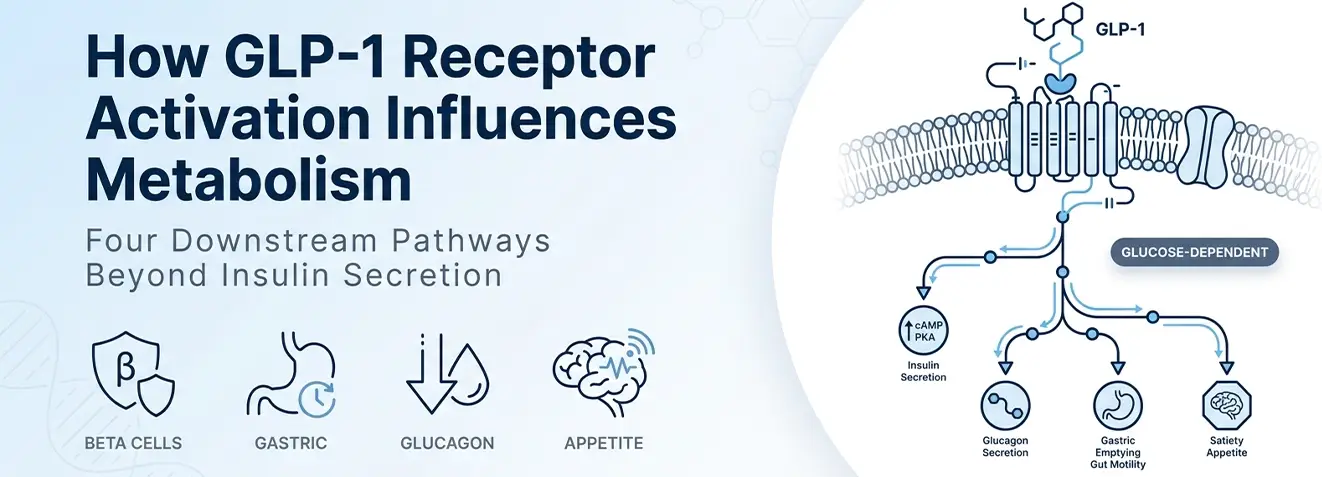
The GLP-1 receptor signalling pathway explains how GLP-1 regulates cellular metabolism by activating GLP-1 receptors and increasing cAMP production. This triggers downstream pathways, including PKA and Epac, that influence insulin secretion and metabolic responses.
Key steps in this signalling process include:
- GLP-1 binding to the GLP-1 receptor on target cells
- Activation of G-protein-mediated signalling
- Increased intracellular cAMP production
- Activation of PKA and Epacpathways
- Regulation of insulin release and metabolic signalling responses
Related metabolic research also examines compounds such as AOD-9604 peptide, although they act through pathways distinct from GLP-1 receptor signalling.
What Are the Metabolic Actions of GLP-1?
GLP-1 signalling contributes to metabolic balance by coordinating glucose regulation, energy utilisation, and nutrient response pathways.
Researchers study these metabolic actions to understand how GLP-1 receptor signalling affects glucose regulation, energy balance, nutrient sensing, and broader metabolic adaptation.
1. Metabolic Actions by System
| System | Metabolic Action |
| Pancreas | Glucose-dependent insulin secretion and reduced glucagon release |
| Stomach | Delayed gastric emptying and altered nutrient absorption patterns |
| Liver | Reduced hepatic glucose output through improved metabolic signalling |
| Hypothalamus | Appetite and satiety signalling pathways |
| Cardiovascular system | Ongoing research into vascular and cardiac-related metabolic markers |
2. Beyond Glucose Regulation
Beyond glucose regulation, GLP-1 research has expanded into wider areas of energy metabolism. Scientists investigate how GLP-1 signalling interacts with nutrient sensing pathways, energy utilisation, and metabolic flexibility, including:
- Mitochondrial function and cellular energy pathways, including those examined in MOTS-C peptide research.
- Interactions between nutrient intake and metabolic signalling
- Changes in energy balance pathways
- Connections between hormonal signals and metabolic adaptation
3. The Concept of Metabolic Reset
One emerging area of investigation is whether sustained GLP-1 receptor activation may influence longer-term metabolic adaptations. The term metabolic reset is often used in research discussions to describe potential changes in metabolic regulation over time, although it remains an active area of scientific investigation rather than an established outcome.
Current research explores questions such as:
- Whether prolonged GLP-1 receptor activation affects energy expenditure patterns in experimental models
- How sustained GLP-1 signalling influences genes involved in lipid metabolism
- Whether metabolic markers, including insulin sensitivity and lipid profiles, change during extended study periods
- How metabolic responses differ depending on research duration and experimental conditions
Examples of Glucagon-Like Peptides in Research
The broader glucagon-like peptide family includes more than one member, and understanding the distinctions helps clarify why GLP-1 specifically draws such consistent research attention.
Examples of glucagon-like peptides used or referenced in research settings:
| Glucagon-Like Peptide | Role in Research |
| GLP-1 (glucagon-like peptide-1) | The primary focus of metabolic research, acting on the GLP-1 receptor across pancreatic, gastric, hepatic, and central pathways. |
| GLP-2 (glucagon-like peptide-2) | Derived from the same proglucagon gene but acting on an entirely separate receptor, with effects concentrated on intestinal tissue growth and gut barrier integrity rather than glucose regulation. |
| Glucagon | Produced from the same precursor gene in pancreatic alpha cells, glucagon raises blood glucose, functioning in the opposite direction to GLP-1. |
| Exendin-based peptides | Structurally related compounds that also act on the GLP-1 receptor, originally identified from non-human sources and used to inform early GLP-1 receptor research. |
These glucagon-like peptide examples demonstrate that shared genetic origin does not mean shared function. Each compound in this family has a distinct receptor target and a distinct physiological role, which is an important distinction for anyone reviewing the wider literature.
Native GLP-1 vs GLP-1 Analogues: Key Differences
Native GLP-1 is a naturally occurring peptide hormone produced in the body, while GLP-1 Peptides are modified compounds designed to replicate specific aspects of GLP-1 receptor activity in research and pharmaceutical development.
| Feature | Native GLP-1 | GLP-1 Analogues |
| Origin | Naturally produced peptide hormone | Modified peptide-based compounds |
| Stability | Rapidly broken down in circulation | Designed with improved stability characteristics |
| Research focus | Understanding natural signalling pathways | Studying prolonged receptor activation |
| Biological role | Regulates physiological responses after nutrient intake | Used to investigate extended GLP-1 receptor activity |
Comparing native GLP-1 with modified analogues helps researchers understand how structural changes can influence receptor interaction, stability, and metabolic signalling outcomes.

Explore Australia Peptide’s range of research-grade GLP-1 peptides to support metabolic research with documented purity and research-use-only standards.
Are Research-Grade GLP-1 Compounds the Same as Clinical Products?
No. Research-grade compounds are intended only for laboratory studies, helping researchers investigate receptor interactions and metabolic pathways under controlled conditions. Clinical GLP-1 products follow separate pharmaceutical regulations and are not interchangeable with research compounds.
When sourcing research-grade compounds, laboratories should consider:
- Confirming the availability of a batch-specific certificate of analysis (COA)
- Verifying clear research-use-only labelling
- Reviewing independent purity testing documentation
- Ensuring that no therapeutic claims are associated with laboratory research materials
Research Applications of GLP-1 Pathways
GLP-1 research is conducted across multiple scientific fields because this signalling pathway affects several interconnected biological systems. Researchers investigate its role in different areas to better understand metabolic regulation and cellular communication.
| Research Field | Area of Investigation |
| Metabolic research | Glucose regulation, insulin signalling, and energy balance |
| Neuroscience | Appetite signalling and central nervous system pathways |
| Gastrointestinal research | Gastric emptying and nutrient response mechanisms |
| Cardiovascular research | Effects on vascular and cardiac-related pathways |
The broad research interest in Tirzepatide stems from its ability to modulate multiple metabolic signalling pathways, including interactions between the GLP-1 and GIP receptor systems.
By influencing communication between different organs, Tirzepatide research provides insights into complex metabolic processes such as glucose regulation, energy balance, and nutrient response mechanisms.
Beyond understanding GLP-1 biology, researchers must also consider compound quality and documentation when selecting research materials.
Sourcing GLP-1 Peptides Australia Researchers Can Rely On
Researchers sourcing GLP-1 peptides in Australia need to prioritise regulatory compliance alongside compound quality, particularly when working with research-grade peptide materials.
Research peptide suppliers in Australia should follow applicable TGA requirements and ensure products are clearly labelled and sold for laboratory research use only, without implying human therapeutic use.
When evaluating a local supplier, researchers should check for:
- Batch-specific certificates of analysis showing purity data
- Clear research-use-only labelling consistent with TGA expectations
- Transparent sourcing and manufacturing information
- Responsive technical support for questions about handling and storage
Reliable local sourcing also reduces delays in research timelines, since import complications can affect study scheduling. Working with a supplier that understands both the science and the regulatory environment makes for smoother project planning.
Exploring GLP-1 Pathways in Metabolic Research
GLP-1 peptides in metabolic research represent an expanding field focused on receptor signalling, glucose regulation, energy metabolism, and communication between multiple biological systems.
By studying GLP-1 pathways, researchers can better understand how hormonal signals influence metabolic processes and how these mechanisms interact across different tissues.
Continued research into GLP-1 receptor activity, metabolic adaptation, and cellular signalling provides valuable insights into the broader field of metabolic science. Accurate documentation, reliable sourcing, and appropriate laboratory practices remain essential for producing consistent and meaningful research outcomes.
Australia Peptide Sciences supports research-focused investigations by providing research-grade peptide compounds with quality documentation.
Explore the range of research peptides available from Australia Peptide Sciences, along with supporting product documentation and information for research use.
FAQs About GLP-1 Peptides in Metabolic Research
What peptide is GLP-1?
GLP-1 is a peptide hormone produced in the body that regulates insulin secretion, glucose metabolism, appetite signalling, and digestion.
Is GLP-1 peptide the same as Ozempic?
No. GLP-1 is a natural peptide hormone, while Ozempic is a pharmaceutical GLP-1 receptor agonist developed for medical use.
Do GLP peptides really work?
Research shows GLP-1 pathways influence glucose regulation, insulin signalling, and appetite control, but outcomes depend on the specific compound and research context.
What is the best GLP-1 peptide for weight loss?
From a research perspective, there is no single “best” GLP-1 peptide because compounds differ in structure, receptor activity, stability, and experimental applications.
Is GLP-1 safe?
GLP-1-related compounds have different safety profiles depending on whether they are research compounds or approved medicines and how they are used.
Who cannot take GLP-1?
Suitability for GLP-1 medications depends on individual health factors and should be determined by a qualified healthcare professional.
What is the biggest side effect of GLP-1?
Commonly reported side effects of approved GLP-1 medications include gastrointestinal symptoms such as nausea, vomiting, and changes in digestion.
What happens if you stop taking GLP-1?
Stopping approved GLP-1 treatments may affect metabolic outcomes, and changes should be discussed with a healthcare professional.
What is the difference between peptides and GLP-1?
Peptides are short chains of amino acids, while GLP-1 is a specific peptide hormone involved in metabolic signalling.
Are peptides better than Ozempic?
Peptides and Ozempic are not directly comparable because research peptides and approved medications have different purposes and regulatory standards.