

If you keep asking yourself why do I feel hungry all the time, you’re not alone. Many people experience constant hunger even after eating, and the reason is rarely just “not eating enough.”
Feeling hungry all the time is usually caused by imbalances in appetite hormones, poor diet quality, blood sugar fluctuations, lack of sleep, or metabolic factors affecting how your body uses energy.
Hunger is driven by biological signals, although behavioural and environmental factors can also influence appetite.
What Is Appetite Regulation (And Why It Matters)?
Before diving deeper into what are the reasons for feeling hungry all the time, it’s important to understand how hunger works.
Your body has a built-in system called appetite regulation. It controls:
- When you feel hungry
- When you feel full
- How much you eat
This system is managed by the brain (especially the hypothalamus) and several hormones.
Key Hormones:
- Ghrelin→ signals hunger
- Leptin→ signals fullness
- Insulin→ regulates blood sugar and energy
When this system is balanced, hunger feels natural.
When it’s disrupted, you may experience feeling hungry all the time.
What Are the Reasons for Feeling Hungry All the Time?
Let’s answer the big question directly:
1. You’re not eating the Right Foods
Not all calories are equal.
If your diet is low in:
- Protein
- Fiber
- Healthy fats
Your body digests food quickly, and hunger returns faster.
Example:
A sugary snack = full for 30 minutes
A protein + fiber meal = full for hours
For laboratory studies of metabolic and appetite-related pathways, explore our range of research peptides in Australia, supported by research-use-only information.
2. Blood Sugar Is Unstable
One of the biggest hidden reasons behind why do feel hungry all the time is blood sugar imbalance.
When you eat high-sugar or refined foods:
- Blood sugar spikes
- Insulin increases
- Blood sugar crashes
Result: You feel hungry again - even if you just ate.
3. Lack of Sleep
Sleep has a direct impact on hunger.
- Less sleep → more ghrelin (hunger hormone)
- Less sleep → less leptin (fullness hormone)
That’s why after a bad night’s sleep, you crave more food - especially carbs.
4. Stress and Emotional Eating
Stress increases cortisol, which can:
- Trigger cravings
- Increase appetite
- Disrupt hunger signals
This is why many people feel hungry even when they’re not physically in need of food.
5. Fast Metabolism
Sometimes the answer to why do I feel hungry all the time is simple:
Your body burns energy quickly.
This happens in people with:
- Higher muscle mass
- Active lifestyles
- Naturally fast metabolism
More energy burned = more hunger signals
6. Dehydration
This one surprises most people.
Thirst can feel like hunger.
If you’re not drinking enough water, your brain may signal hunger instead.
7. Hormonal Imbalances
Hormones control appetite more than people realize.
If hormones are off, you may experience:
- Constant hunger
- Cravings
- Difficulty feeling full
You may also like: Why are some people’s metabolism faster than others?
Feeling Hungry All the Time: What Does It Mean?
If you’re constantly hungry, your body is telling you something.
It may mean:
- You’re not getting enough nutrients
- Your energy balance is off
- Your hormones are not aligned
- Your metabolism is working differently
How to Control Appetite Naturally
Instead of fighting hunger, focus on supporting your body’s system.
| Strategy | What to Do | Why It Works |
| Prioritize Protein | Include protein in every meal (eggs, lean meat, legumes) | Protein increases satiety and helps reduce hunger hormones, keeping you full longer |
| Eat More Fiber | Add vegetables, whole grains, and fiber-rich foods | Fiber slows digestion and stabilizes energy levels, preventing sudden hunger |
| Balance Your Meals | Combine protein, healthy fats, and complex carbs | Balanced meals prevent blood sugar spikes and crashes that trigger hunger |
| Stay Hydrated | Drink water regularly, especially before meals | Dehydration can mimic hunger signals, leading to unnecessary eating |
| Sleep Better | Aim for consistent, quality sleep (7-8 hours) | Better sleep improves hormone balance (ghrelin & leptin), reducing appetite |
| Manage Stress | Practice stress-reducing habits (exercise, breathing, routine) | Lower stress reduces cortisol levels, which helps regulate appetite |
The Science behind Hunger
As research evolves, scientists are studying how hunger is influenced at a deeper level.
This includes:
- Hormonal signaling
- Metabolic pathways
- Cellular energy systems
This is where metabolic research becomes important.
Appetite & Metabolic Research (How These Systems Are Studied)
At Australia Peptide Sciences, research focuses on understanding how the body regulates appetite, energy use, and metabolism at a biological level.
This includes studying how signals move between:
- The brain (hypothalamus)
- Hormones (ghrelin, leptin, insulin)
- Cells and energy systems
To explore these processes, researchers investigate specific compounds that interact with metabolic and appetite-related pathways.
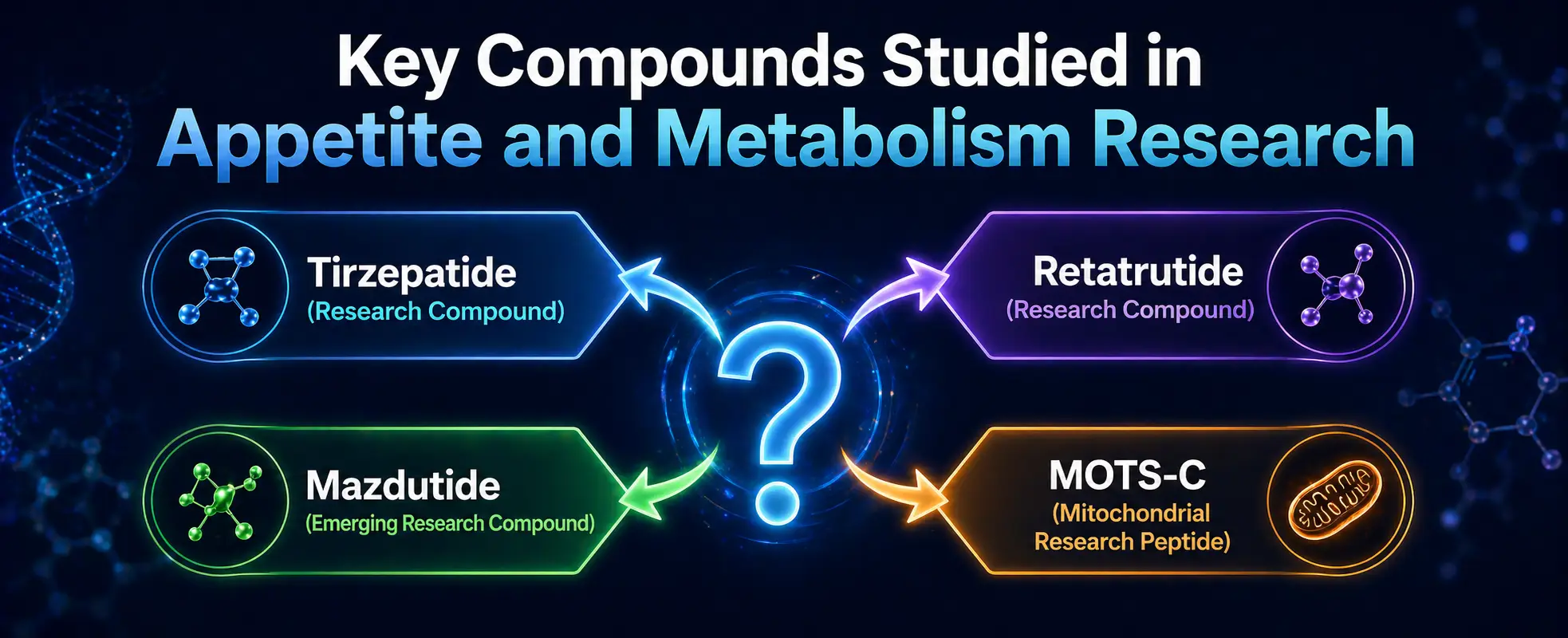
Key Compounds Studied in Appetite and Metabolism Research
Tirzepatide (Research Compound)
Tirzepatide for research is studied for its interaction with dual metabolic signaling pathways, commonly associated with:
- Appetite regulation
- Blood sugar control
- Energy balance
Mechanism of Action
Tirzepatide is associated with pathways that:
- Reduce hunger signals
- Slow gastric emptying (how fast food leaves the stomach)
- Improve how the body uses glucose
Research Focus
In laboratory settings, Tirzepatide is explored to better understand:
- Why some people feel hungry more often
- How appetite signals are regulated
- The relationship between metabolism and food intake
Retatrutide (Research Compound)
Retatrutide Peptide for research is considered a next-generation metabolic compound and is studied for its interaction with multiple biological pathways at once.
Mechanism of Action
It is associated with:
- Appetite signaling pathways
- Energy expenditure pathways
- Fat metabolism regulation
Compared to earlier compounds, Retatrutide is explored for its broader metabolic interaction.
Research Focus
Researchers study Retatrutide to understand:
- Complex appetite regulation systems
- Multi-pathway metabolic responses
- Why metabolism differs between individuals
Mazdutide (Emerging Research Compound)
Mazdutide peptides for research is an emerging compound in metabolic research, often studied in relation to:
- Appetite signaling
- Energy balance
- Hormonal regulation
Mechanism of Action
Mazdutide is associated with:
- Appetite-related hormonal pathways
- Energy utilization processes
Research Focus
It is explored in early-stage research to better understand:
- Appetite control mechanisms
- Metabolic efficiency
- Body energy regulation
MOTS-C (Mitochondrial Research Peptide)
MOTS-C is a peptide linked to mitochondrial function, which plays a key role in energy production at the cellular level.
Mechanism of Action
MOTS-C is studied for its role in:
- Cellular energy regulation
- Metabolic adaptation
- Mitochondrial signaling
Since mitochondria control how energy is produced, MOTS-C is highly relevant in understanding why energy levels and hunger vary between individuals.
Research Focus
Researchers explore MOTS-C to study:
- Energy efficiency at the cellular level
- The link between metabolism and fatigue
- How cells respond to energy demands
Shop Research Peptides Australia
What Do These Compounds Help Researchers Understand?
These compounds are investigated in experimental models of receptor signalling, energy balance, glucose.
They are used in research to study:
1. Hunger Signaling
- How the body decides when you feel hungry
- Why hunger signals can become stronger or weaker
2. Energy Balance
- How the body uses vs stores energy
- Why some people burn calories faster
3. Metabolic Efficiency
- How efficiently the body converts food into energy
- Why metabolism varies between individuals
4. Hormonal Regulation
- How hormones like ghrelin and leptin behave
- How signals between brain and body can become disrupted
All compounds mentioned are: for laboratory research, scientific investigation, and educational purposes, they are not intended for human consumption or appetite control use.
Why Understanding Hunger Changes Everything
When you understand why do I feel hungry all the time, everything changes.
Instead of:
- Blaming yourself
- Using willpower
You start:
- Understanding your body
- Supporting your biology
- Making smarter decisions
Feeling hungry all the time is not random.
It’s your body communicating something important.
The goal isn’t to ignore hunger, it’s to understand it.
Explore Retatrutide for laboratory research → View specifications, pricing and Certificates of Analysis.
FAQs
Why am I always hungry even after eating?
You may still feel hungry after eating if your meal lacks protein, fiber, or nutrients, or if your blood sugar drops quickly after eating.
Is it normal to feel hungry all the time?
Occasional hunger is normal, but constant hunger may indicate imbalance in diet, hormones, sleep, or metabolism.
Does metabolism affect hunger?
Yes, people with faster metabolism burn energy quicker, which can lead to more frequent hunger.
Can stress make you feel hungry?
Yes, stress increases cortisol, which can increase appetite and cravings.
Shop Research Peptides Australia
Sources: