


What is a metabolic diet? It is an eating approach designed to support how the body uses food for energy, manages blood sugar, balances appetite, and maintains metabolic health.
A metabolic diet is not one single fixed diet. It can describe several nutrition patterns that focus on improving the body’s relationship with energy, food, and fuel use.
Some versions focus on higher-protein meals.
Some focus on lower refined carbohydrate intake.
Some include fasting windows.
Others are simply based on whole foods, fibre, healthy fats, and balanced meal timing.
This guide explains what a metabolic diet means, how it may support metabolic health, what foods are usually included, and how approaches like a Metabolic switching diet and Metabolic switching fasting may fit into a healthy lifestyle.
What Is a Metabolic Diet?
A metabolic diet is a structured eating pattern that focuses on supporting metabolism.
Metabolism is the process your body uses to convert food into energy. This includes how the body breaks down carbohydrates, fats, and proteins, how it stores energy, how it burns energy, and how it regulates blood sugar.
A metabolic diet usually aims to support:
- Better energy balance
- Healthier food choices
- Stable appetite
- Better blood sugar control
- Healthy weight management
- Improved body composition
- Better metabolic flexibility
Metabolic health is closely connected to markers such as blood sugar, blood pressure, waist size, cholesterol, and triglycerides. Metabolic syndrome, for example, is linked with high blood pressure, high blood sugar, excess waist fat, and abnormal cholesterol or triglyceride levels.
Why Metabolic Health Matters
Metabolic health affects how the body handles food and energy every day.
When metabolic health is working well, the body can usually:
- Use food for energy efficiently
- Keep blood sugar more stable
- Manage hunger and fullness better
- Support healthy body weight
- Maintain better energy throughout the day
- Recover better after meals and activity
A diet for metabolic health should focus on improving daily nutrition quality rather than chasing fast results.
This means eating meals that provide:
- Protein for fullness and muscle support
- Fibre for digestion and blood sugar balance
- Healthy fats for satiety
- Nutrient-dense carbohydrates for energy
- Vegetables and fruits for vitamins, minerals, and antioxidants
Healthy eating patterns generally emphasize whole, nutrient-dense foods such as vegetables, fruits, protein foods, healthy fats, and whole grains.
To understand this topic in more detail, read our full guide: What Is Metabolic Health.
How a Diet for Metabolic Health Works
A diet for metabolic health works by improving the quality, timing, and balance of the foods you eat.
Instead of focusing only on calories, it looks at how meals affect:
- Blood sugar
- Insulin response
- Hunger
- Energy levels
- Cravings
- Digestion
- Body composition
Since hunger and cravings can affect long-term consistency, it is also useful to understand What Is Appetite Regulation and how it relates to daily food choices.
A simple metabolic plate may include:
| Meal Part | Examples | Purpose |
| Protein | Eggs, fish, chicken, tofu, lentils | Supports fullness and lean muscle |
| Fibre-rich carbohydrates | Oats, beans, quinoa, vegetables | Supports digestion and blood sugar balance |
| Healthy fats | Olive oil, avocado, nuts, seeds | Supports satiety |
| Vegetables | Leafy greens, broccoli, tomatoes, capsicum | Adds nutrients and volume |
| Water | Water or unsweetened drinks | Supports hydration |
A metabolic diet does not need to remove all carbohydrates. Many people benefit from choosing better carbohydrates rather than avoiding them completely.
Can a Metabolic Diet Improve Metabolic Health?
A metabolic diet may help improve metabolic health when it is balanced, realistic, and consistent.
It may support better health by helping people:
- Reduce refined sugar intake
- Eat more protein
- Eat more fibre
- Reduce frequent snacking
- Choose more whole foods
- Improve portion awareness
- Support healthy weight management
- Maintain steadier energy
However, a metabolic diet is not a cure-all. It should not be presented as a guaranteed solution for every person.
For readers who want more practical lifestyle steps, our guide on how to improve metabolic health explains natural strategies that support better energy, nutrition quality, and daily habits.
Metabolic health is influenced by many factors, including:
- Diet quality
- Physical activity
- Sleep
- Stress
- Age
- Genetics
- Body composition
- Medication
- Medical conditions
Weight and metabolic health are also influenced by sleep, age, genes, medications, physical activity, and overall nutrition.
Metabolic Diet Food List
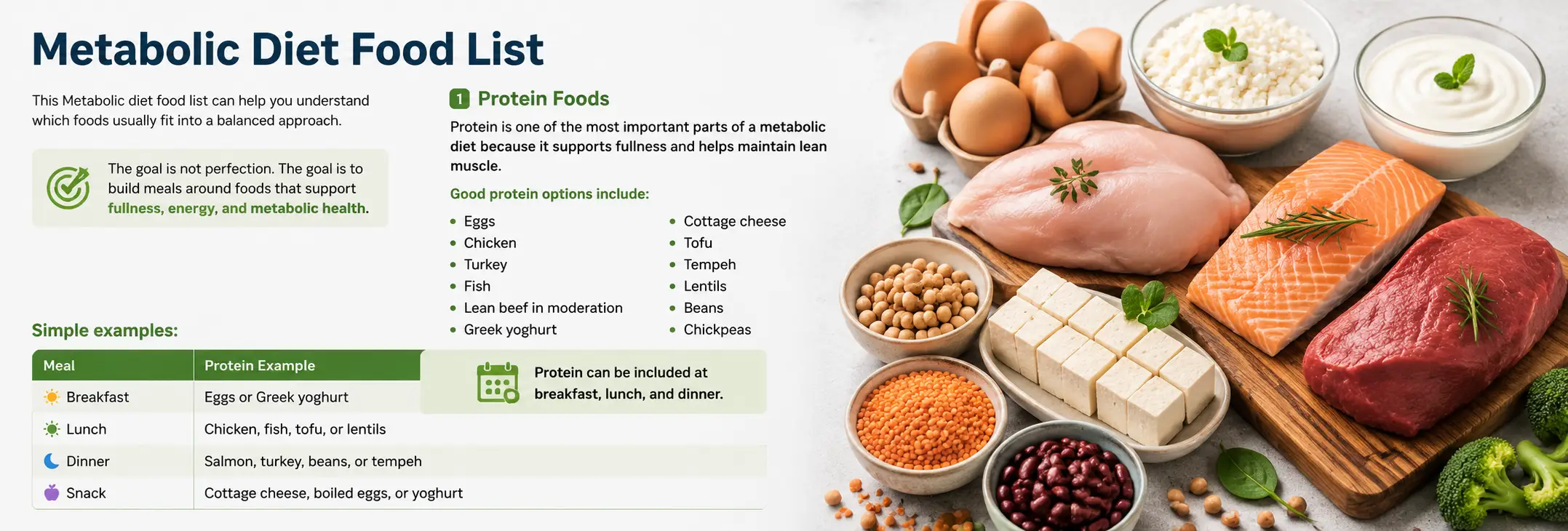
This Metabolic diet food list can help you understand which foods usually fit into a balanced approach.
The goal is not perfection. The goal is to build meals around foods that support fullness, energy, and metabolic health.
1. Protein Foods
Protein is one of the most important parts of a metabolic diet because it supports fullness and helps maintain lean muscle.
Good protein options include:
- Eggs
- Chicken
- Turkey
- Fish
- Lean beef in moderation
- Greek yoghurt
- Cottage cheese
- Tofu
- Tempeh
- Lentils
- Beans
- Chickpeas
Protein can be included at breakfast, lunch, and dinner.
Simple examples:
| Meal | Protein Example |
| Breakfast | Eggs or Greek yoghurt |
| Lunch | Chicken, fish, tofu, or lentils |
| Dinner | Salmon, turkey, beans, or tempeh |
| Snack | Cottage cheese, boiled eggs, or yoghurt |
For laboratory research audiences, RETATRUTIDE Australia Peptide may be relevant to research discussions around metabolic pathways and appetite-related mechanisms.
2. Fibre-Rich Carbohydrates
Carbohydrates are not automatically bad for metabolic health. The quality of the carbohydrate matters.
Better options include:
- Oats
- Brown rice
- Quinoa
- Barley
- Lentils
- Beans
- Chickpeas
- Sweet potatoes
- Berries
- Apples
- Pears
- Vegetables
These foods provide fibre and nutrients. They also tend to be more filling than refined carbohydrates.
Foods to limit include:
- White bread
- Sugary cereals
- Pastries
- Sweets
- Sugary drinks
- Refined snack foods
3. Healthy Fats
Healthy fats help make meals more satisfying.
Useful options include:
- Avocado
- Olive oil
- Nuts
- Seeds
- Fatty fish
- Tahini
- Natural nut butter
Healthy fats are calorie-dense, so portion size still matters.
For example:
| Food | Simple Portion Idea |
| Olive oil | 1 tablespoon |
| Avocado | 1/4 to 1/2 avocado |
| Nuts | Small handful |
| Seeds | 1 tablespoon |
| Nut butter | 1 tablespoon |
4. Vegetables and Fruits
Vegetables and fruits are important because they add fibre, water, vitamins, minerals, and antioxidants.
Good vegetable options include:
- Spinach
- Lettuce
- Kale
- Broccoli
- Cauliflower
- Zucchini
- Capsicum
- Tomato
- Cucumber
- Carrots
- Mushrooms
Good fruit options include:
- Berries
- Apples
- Oranges
- Kiwi
- Pears
- Grapefruit
A practical goal is to include vegetables in at least two meals per day.
Foods to Limit on a Metabolic Diet
A metabolic diet does not require perfection, but some foods are better limited because they may make appetite, energy, and blood sugar harder to manage.
Foods to limit include:
- Sugary drinks
- Energy drinks with sugar
- Sweets
- Cakes
- Pastries
- Fried fast food
- Refined grains
- Highly processed snacks
- Excess alcohol
- Large portions of sugary sauces
These foods are not banned forever. However, eating them too often may make it harder to improve metabolic health.
A realistic approach works better than an extreme approach.
Instead of removing everything at once, start with simple swaps:
| Instead of | Try |
| Sugary drink | Water or unsweetened tea |
| Sweet cereal | Oats with berries |
| White bread snack | Greek yoghurt or eggs |
| Fried meal | Grilled protein with vegetables |
| Candy snack | Fruit with nuts |
What Is a Metabolic Switching Diet?
A Metabolic switching diet is an eating approach designed to help the body shift between using carbohydrates and fat for energy.
The body normally uses carbohydrates after meals.
During longer gaps without food, the body may begin using more stored energy.
This shift is sometimes called metabolic switching.
A Metabolic switching diet may include:
- Lower refined carbohydrate intake
- Higher protein meals
- More fibre-rich foods
- Longer gaps between meals
- Reduced snacking
- Planned fasting windows
- Whole-food meals
The goal is not to force the body into extreme restriction. The goal is to support flexibility.
A Metabolic switching diet should still include enough nutrients. It should not become a very low-calorie plan that leaves a person tired, hungry, and difficult to sustain.

Metabolic Switching Fasting: How It Fits In
Metabolic switching fasting uses planned fasting windows to create longer periods between meals.
This may help the body spend more time away from constant digestion and food intake.
Common examples include:
| Fasting Style | Eating Window | Fasting Window |
| 12:12 | 12 hours | 12 hours |
| 14:10 | 10 hours | 14 hours |
| 16:8 | 8 hours | 16 hours |
For beginners, 12:12 is often the simplest starting point.
Metabolic switching fasting is not required for everyone. Some people feel better with regular meals. Others may benefit from reducing late-night snacking or avoiding constant grazing.
Meal quality still matters.
A poor-quality eating window filled with refined foods, sugar, and low protein will not support metabolic health well, even if fasting is included.
Who Should Be Careful With Fasting?
Fasting may not be suitable for:
- People with diabetes
- People taking medication that affects blood sugar
- Pregnant women
- Breastfeeding women
- People with a history of disordered eating
- People with certain medical conditions
- People with very high energy needs
Anyone with a medical condition should speak with a qualified healthcare professional before trying fasting or making major dietary changes.
Metabolic Diet Plan Free: Simple 1-Day Example
This Metabolic diet plan free example is for general educational purposes. It is not a personalised medical diet plan.
The purpose is to show how a balanced metabolic diet might look in a simple day.
Breakfast
| Food | Example |
| Protein | 2 eggs or Greek yoghurt |
| Fibre-rich carbohydrate | Oats or berries |
| Healthy fat | Chia seeds or nuts |
| Drink | Water or unsweetened tea |
Example breakfast:
- Greek yoghurt
- Berries
- Oats
- Chia seeds
- Water or unsweetened tea
Why it works:
- Protein supports fullness
- Fibre supports digestion
- Healthy fats improve satiety
- No added sugar is needed
Lunch
| Food | Example |
| Protein | Grilled chicken, tofu, fish, or lentils |
| Carbohydrate | Quinoa, brown rice, or beans |
| Vegetables | Salad, broccoli, cucumber, capsicum |
| Fat | Olive oil or avocado |
Example lunch:
- Grilled chicken or tofu
- Quinoa
- Mixed vegetables
- Olive oil dressing
- Water
Why it works:
- Balanced protein and fibre
- Good meal volume from vegetables
- Healthy fats support satiety
- Better carbohydrate quality
Snack
A snack is optional. It depends on hunger, meal timing, and activity level.
Good snack options:
- Apple with nut butter
- Greek yoghurt
- Boiled eggs
- Hummus with vegetables
- Cottage cheese
- Small handful of nuts
Snack tip:
Choose snacks that contain protein or fibre.
Avoid snacks that are mostly refined carbohydrates or sugar.
Dinner
| Food | Example |
| Protein | Salmon, turkey, tofu, beans, or eggs |
| Vegetables | Roasted vegetables or salad |
| Carbohydrate | Sweet potato, lentils, or beans |
| Fat | Avocado, olive oil, or seeds |
Example dinner:
- Salmon or lentils
- Roasted vegetables
- Sweet potato
- Olive oil
- Water
Why it works:
- Provides protein for recovery
- Includes fibre-rich carbohydrates
- Supports fullness at night
- Avoids heavy refined foods
Optional Metabolic Switching Fasting Version
For a gentle fasting version:
| Time | Meal |
| 7:00 am | Breakfast |
| 12:30 pm | Lunch |
| 4:00 pm | Optional snack |
| 7:00 pm | Dinner |
| 7:00 pm-7:00 am | Overnight fasting |
This creates a simple 12-hour overnight fasting window.
It is easier than aggressive fasting and may be more realistic for long-term use.
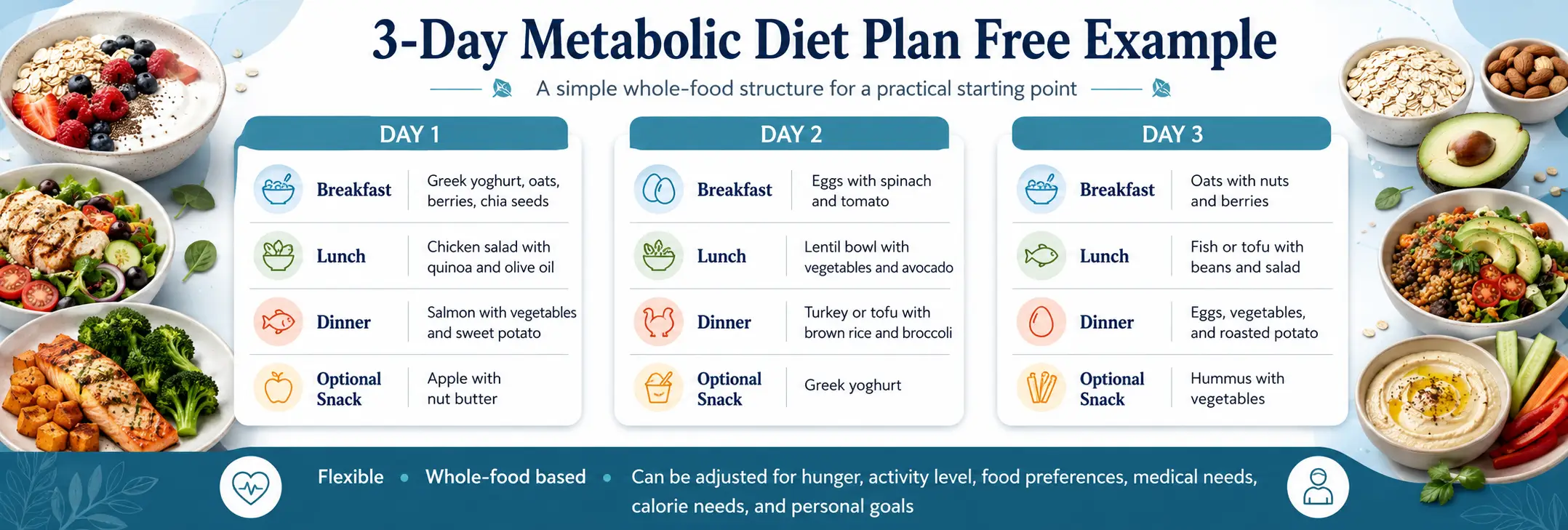
3-Day Metabolic Diet Plan Free Example
Here is a simple 3-day structure for readers who want a more practical starting point.
| Day | Breakfast | Lunch | Dinner | Optional Snack |
| Day 1 | Greek yoghurt, oats, berries, chia seeds | Chicken salad with quinoa and olive oil | Salmon with vegetables and sweet potato | Apple with nut butter |
| Day 2 | Eggs with spinach and tomato | Lentil bowl with vegetables and avocado | Turkey or tofu with brown rice and broccoli | Greek yoghurt |
| Day 3 | Oats with nuts and berries | Fish or tofu with beans and salad | Eggs, vegetables, and roasted potato | Hummus with vegetables |
This plan is simple, flexible, and based on whole foods.
It can be adjusted depending on:
- Hunger
- Activity level
- Food preferences
- Medical needs
- Calorie needs
- Personal goals
Common Mistakes When Starting a Metabolic Diet
A metabolic diet can be helpful, but common mistakes can make it harder to follow.
1. Cutting Calories Too Low
Eating too little may lead to:
- Strong hunger
- Low energy
- Cravings
- Poor sleep
- Difficulty staying consistent
A metabolic diet should support the body, not punish it.
2. Removing Too Many Carbohydrates
Some people feel better with fewer refined carbohydrates.
However, removing nearly all carbohydrates is not necessary for everyone.
Active people may need more carbohydrates from foods like:
- Oats
- Rice
- Quinoa
- Beans
- Lentils
- Fruit
- Sweet potatoes
The better approach is to improve carbohydrate quality.
3. Ignoring Protein
Low-protein meals often fail to keep people full.
Try to include protein in each main meal.
Examples:
- Eggs at breakfast
- Chicken or tofu at lunch
- Fish, turkey, lentils, or beans at dinner
4. Eating Too Many “Healthy” Calories
Healthy foods still contain calories.
Examples include:
- Nuts
- Olive oil
- Avocado
- Nut butter
- Seeds
These foods are valuable, but portions matter.
5. Expecting Fast Results
Metabolic health improves through repeated habits.
Progress may show up as:
- Better energy
- Less snacking
- Improved hunger control
- Better sleep
- Better exercise performance
- Gradual weight changes
The goal is sustainable improvement, not a quick crash diet.
Who Should Be Careful With a Metabolic Diet?
A metabolic diet may not be suitable for everyone without professional guidance.
People who should be careful include:
- People with diabetes
- People taking blood sugar medication
- People with kidney disease
- Pregnant women
- Breastfeeding women
- People with a history of disordered eating
- People with thyroid conditions
- People with complex hormonal conditions
- Athletes with high energy needs
This is especially important if the plan includes major carbohydrate restriction or fasting.
A balanced metabolic diet based on whole foods may be safe for many people, but restrictive versions should be approached carefully.
Medical guidance is important for anyone with existing health conditions.
How to Start a Metabolic Diet Safely
The safest way to start is to make gradual changes. You can follow these steps:
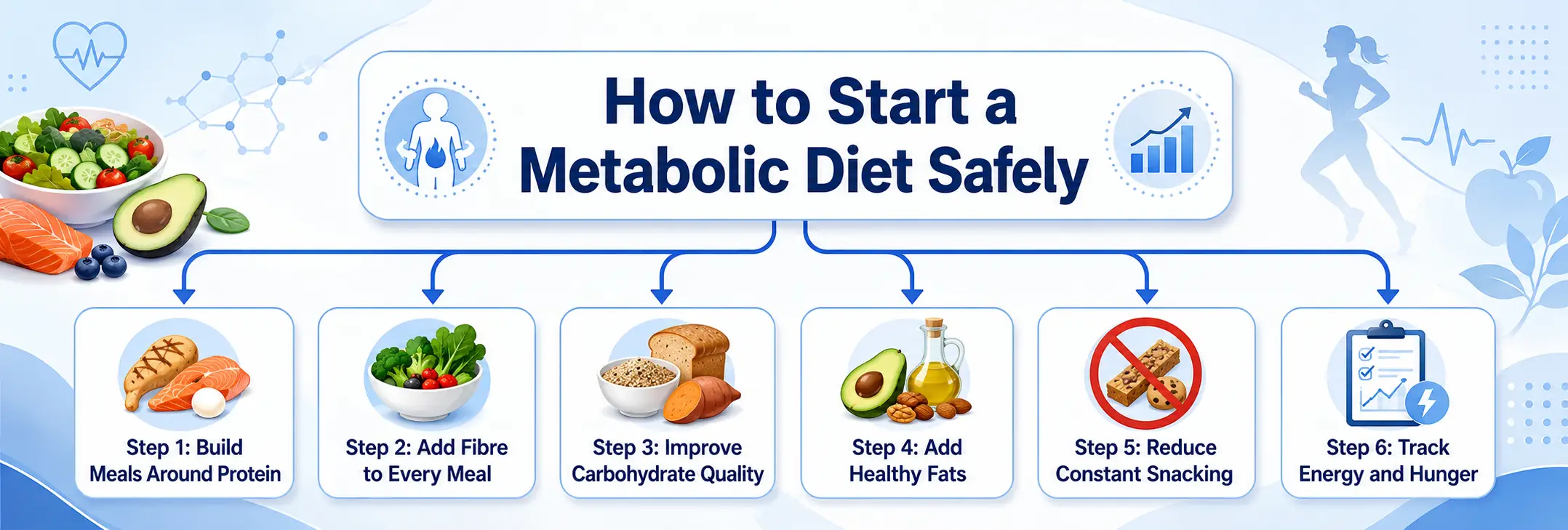
Step 1: Build Meals Around Protein
Start each main meal with a protein source.
Good options:
- Eggs
- Fish
- Chicken
- Turkey
- Tofu
- Tempeh
- Greek yoghurt
- Lentils
- Beans
Step 2: Add Fibre to Every Meal
Fibre helps support digestion and fullness.
Add:
- Vegetables
- Beans
- Lentils
- Oats
- Berries
- Apples
- Whole grains
Step 3: Improve Carbohydrate Quality
Replace refined carbohydrates with fibre-rich choices.
| Replace | With |
| Sugary cereal | Oats |
| White bread | Whole grain bread |
| Candy | Fruit |
| White rice only | Brown rice, quinoa, or lentils |
| Sugary drinks | Water |
Step 4: Add Healthy Fats
Use healthy fats in reasonable amounts.
Examples:
- Olive oil
- Avocado
- Nuts
- Seeds
- Fatty fish
Step 5: Reduce Constant Snacking
Some people snack because they are hungry.
Others snack from habit, stress, or low-protein meals.
Before snacking, ask:
- Am I physically hungry?
- Did my last meal include protein?
- Did my last meal include fibre?
- Have I had enough water?
- Am I tired or stressed?
Step 6: Track Energy and Hunger
A metabolic diet should help you feel more stable, not worse.
Track:
- Morning energy
- Hunger between meals
- Cravings
- Sleep
- Digestion
- Mood after meals
- Exercise performance
This helps you adjust the plan without guessing.
Is a Metabolic Diet Good for Weight Management?
A metabolic diet may support weight management when it helps reduce overeating and improves meal quality.
It can help because protein, fibre, and healthy fats may make meals more satisfying.
This may reduce:
- Frequent hunger
- Late-night snacking
- Sugar cravings
- Overeating refined foods
- Energy crashes
However, weight management still depends on the overall balance between energy intake and energy use.
The most effective plan is one that a person can repeat consistently.
In research settings, Tirzepatide Peptide is also commonly discussed in relation to metabolic and appetite-related research pathways.
Metabolic Diet vs Regular Diet
A metabolic diet is different from many short-term diets because it focuses on how the body responds to food.
| Regular Diet | Metabolic Diet |
| Often focuses mainly on calories | Focuses on food quality, energy, and metabolic health |
| May be short-term | Should be sustainable |
| May remove many foods | Should improve food choices |
| Often creates strict rules | Should create better habits |
| May ignore blood sugar and hunger | Focuses more on fullness and energy |
A metabolic diet should not be extreme. It should help people eat in a way that supports long-term metabolic health.
For readers interested in laboratory research categories connected to metabolic and appetite-related pathways, the GLP-1 peptide category may be relevant.
Final Thoughts: Is a Metabolic Diet Worth Trying?
A metabolic diet may be worth trying if it is balanced, sustainable, and focused on whole foods.
The best version includes:
- Protein-rich meals
- Fibre-rich carbohydrates
- Vegetables and fruits
- Healthy fats
- Fewer refined foods
- Better meal timing
- Enough hydration
- Regular movement
- Good sleep
It may help improve metabolic health when it supports better blood sugar balance, appetite control, body composition, and daily energy.
However, it should not be treated as a quick fix.
A metabolic diet works best when it becomes a realistic lifestyle pattern rather than a short-term restriction.
Research-focused readers may also explore Mazdutide 10mg as part of broader laboratory research interest in metabolic health and energy balance.
Explore Retatrutide for laboratory research → View specifications, pricing and Certificates of Analysis.
FAQs About What Is a Metabolic Diet
What does a metabolic diet consist of?
A metabolic diet usually consists of protein-rich foods, fibre-rich carbohydrates, healthy fats, vegetables, fruits, and minimally processed meals. It may also include balanced meal timing or fasting windows, depending on the plan.
What foods can you eat on a metabolic diet?
You can eat foods such as eggs, fish, chicken, tofu, lentils, beans, oats, vegetables, berries, olive oil, avocado, nuts, seeds, and whole grains as part of a balanced metabolic diet.
What is a metabolic diet?
A metabolic diet is an eating approach designed to support how the body uses food for energy, manages blood sugar, controls appetite, and maintains metabolic health.
Can a metabolic diet improve metabolic health?
A metabolic diet may help improve metabolic health when it focuses on whole foods, protein, fibre, healthy fats, better meal timing, and fewer refined foods.
What should be included in a Metabolic diet food list?
A Metabolic diet food list may include eggs, fish, chicken, tofu, lentils, beans, oats, quinoa, vegetables, berries, olive oil, avocado, nuts, and seeds.
Sources:
1. World Health Organization - Healthy Diet
https://www.who.int/news-room/fact-sheets/detail/healthy-diet
2. CDC - About Healthy Weight and Growth
https://www.cdc.gov/healthy-weight-growth/about/index.html
3. National Institutes of Health / PubMed Central - Intermittent Fasting and Metabolic Health