
If you’ve ever tried to lose weight, you’ve probably heard both terms: fat loss vs weight loss. Many people use them interchangeably, but they are not the same.
And this confusion can actually slow down your progress.
Weight loss refers to losing total body weight (including water, muscle, and fat), while fat loss specifically refers to reducing body fat while preserving muscle mass. The goal for long-term health is fat loss, not just weight loss.
Shop Research Peptide Australia
What Is Weight Loss?
Weight loss simply means the number on the scale goes down.
But here’s what most people don’t realize:
When you lose weight, you may be losing:
- Body fat
- Muscle mass
- Water weight
This is why rapid weight loss often doesn’t lead to lasting results.
Example:
If someone loses 5 kg quickly, it doesn’t necessarily mean they lost 5 kg of fat.
What Is Fat Loss?
Fat loss is more specific and more important.
It refers to reducing body fat percentage, while maintaining:
- Lean muscle
- Strength
- Metabolic health
Fat loss improves:
- Body composition
- Energy levels
- Long-term health
Fat Loss vs Weight Loss: Key Differences
Here’s the clearest way to understand it:
| Factor | Weight Loss | Fat Loss |
| What is lost | Fat, muscle, water | Primarily body fat |
| Speed | Often fast | Slower but sustainable |
| Impact on body | May reduce muscle | Preserves muscle |
| Long-term results | Often temporary | More sustainable |
| Health benefits | Limited | Significant |
Why Fat Loss Is Better Than Weight Loss
If your goal is simply to weigh less, weight loss might seem enough.
But if your goal is:
- Better health
- More energy
- Sustainable results
Then fat loss is the better approach.
Why?
Because losing muscle can:
- Slow down metabolism
- Reduce strength
- Make weight regain easier
Fat loss improves how your body functions, not just how it looks.
You may also like: Why are some people’s metabolisms faster than others?
Why Some People Lose Weight but Not Fat
A common frustration is:
“I’m losing weight, but I don’t look different.”
This usually happens when weight loss includes muscle loss.
Reasons include:
- Very low-calorie diets
- Lack of protein
- No resistance training
- Poor metabolic support
The Role of Metabolism in Fat Loss
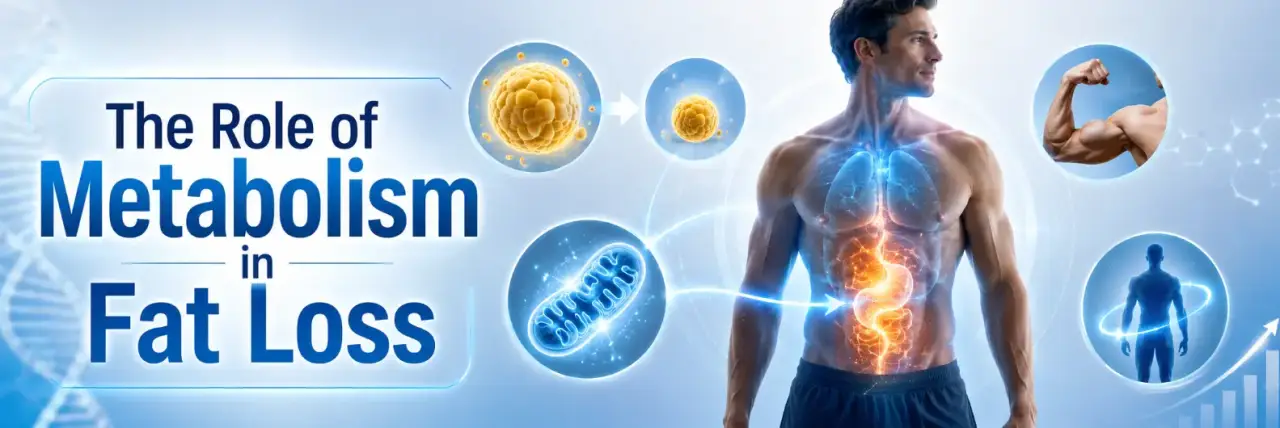
Metabolism plays a major role in whether you lose fat or just weight.
Your metabolism determines:
- How your body uses energy
- How fat is stored or burned
- How efficiently calories are processed
People with better metabolic function tend to:
- Lose more fat.
- Maintain muscle.
- Avoid weight regain.
Fat Loss Is About Energy Efficiency, Not Just Calories
Most competitors stop at “calories in vs calories out.”
But that’s only part of the picture.
The real question is:
How does your body use those calories?
This depends on:
- Hormonal balance
- Cellular energy production
- Metabolic pathways
How to Focus on Fat Loss Instead of Just Weight Loss
To shift from weight loss to fat loss, focus on:
1. Build and Maintain Muscle
Muscle increases metabolism and helps burn more fat.
2. Prioritize Protein
Protein supports muscle retention and reduces fat storage.
3. Improve Metabolic Health
This includes:
- Stable blood sugar
- Hormonal balance
- Efficient energy use
4. Avoid Extreme Dieting
Crash diets often lead to:
- Muscle loss
- Slower metabolism
- Weight regain
The Role of Cellular Energy in Fat Loss
Fat loss is not just about diet - it’s about how your cells function.
At the cellular level:
- Energy is produced in mitochondria
- Fat is used as fuel
- Hormones regulate energy balance
When cellular energy is efficient, fat loss becomes easier.
Research on Fat Loss and Metabolism
Modern research focuses on understanding how the body regulates:
- Energy balance
- Fat storage
- Appetite
- Metabolic efficiency
This has led to interest in compounds studied for their interaction with these systems.
Shop Research Peptide Australia
Metabolic Research Compounds (How They Work)

At Australia Peptide Sciences, research looks beyond calories to understand how the body regulates fat loss at a biological level, through hormones, signaling pathways, and cellular energy systems.
Below is a simplified look at how commonly studied compounds interact with these systems.
Tirzepatide (Research Compound)
Trizepatide researches show us how dual hormone signaling affects appetite, glucose handling, and energy balance.
Mechanism of action (simplified):
Tirzepatide is associated with GLP-1 and GIP receptor pathways, two key signals involved in metabolic control.
- GLP-1 pathway (satiety & digestion):
- Signals the brain to reduce hunger
- Slows gastric emptying → food stays longer in the stomach → prolonged fullness
- Supports glucose regulation
- GIP pathway (nutrient handling):
- Influences how the body responds to nutrients after meals
- Modulates insulin-related signaling
Why it matters for fat vs weight loss:
By influencing both appetite signals and nutrient utilization, this dual-pathway approach is studied to understand how the body can reduce energy intake while improving how calories are used.
Research focus:
- Appetite signaling and satiety timing
- Post-meal metabolic response
- Energy intake vs expenditure balance
Retatrutide (Research Compound)
What researchers are studying in Retatrutide: how multi-pathway signaling impacts both energy intake and energy expenditure.
Mechanism of action (simplified):
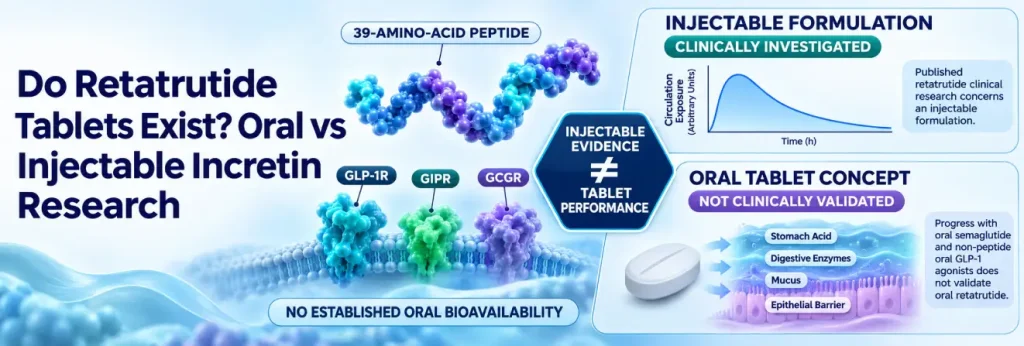
Retatrutide is associated with three pathways:
- GLP-1 (satiety)
- GIP (nutrient response)
- Glucagon-related signaling (energy expenditure)
Key difference:
While GLP-1 and GIP mainly influence how much you eat, glucagon-related pathways are associated with how much energy your body uses.
- May influence fat oxidation (using fat as fuel)
- May increase energy expenditure at a cellular level
- Interacts with liver and metabolic tissues in energy regulation
Why it matters:
This broader mechanism is studied to understand how the body can both reduce intake and increase output, a key concept in fat loss vs simple weight loss.
Research focus:
- Energy expenditure pathways
- Fat metabolism vs storage
- Multi-system metabolic signaling
Mazdutide (Emerging Research Compound)
Studying Mazdutide shows us how combined hormonal signaling affects body composition and metabolic efficiency.
Mechanism of action (simplified):
Mazdutide is associated with pathways involved in:
- Appetite regulation (satiety signals)
- Energy balance
- Hormonal coordination after meals
It is explored as part of a newer generation of compounds that aim to coordinate multiple metabolic signals simultaneously rather than acting on a single pathway.
Why it matters:
Fat loss is not just about eating less, it’s about how the body responds to food, stores energy, and maintains balance. Mazdutide is studied to better understand these interactions.
Research focus:
- Appetite control vs energy utilization
- Hormonal synchronization
- Body composition changes (fat vs lean mass)
MOTS-C (Mitochondrial Research Peptide)
With MOST-C researchers are studying how cellular energy systems influence metabolism and fat utilization.
Mechanism of action (simplified):
MOTS-C is linked to mitochondrial signaling, the system responsible for producing energy (ATP) inside cells.
- Supports cellular energy regulation
- Associated with metabolic adaptation (how cells respond to energy demands)
- Influences how cells switch between glucose and fat as fuel
Key concept:
Your ability to lose fat depends not just on hormones, but on how efficiently your cells produce and use energy.
Why it matters:
- Better cellular efficiency → improved fat utilization
- Poor mitochondrial function → reduced energy output, easier fat storage
Research focus:
- Energy production at the cellular level
- Metabolic flexibility (switching fuel sources)
- Relationship between fatigue, metabolism, and fat storage
How These Mechanisms Connect to Fat Loss vs Weight Loss
Understanding these pathways helps explain a key difference:
- Weight loss → reducing total body mass
- Fat loss → improving how the body uses energy and stores fat
What researchers are trying to understand:
- Hunger signaling
- Why some people feel hungry more often
- How satiety signals can be prolonged
- Energy balance
- How much energy is consumed vs burned
- Why this balance differs between individuals
- Fat metabolism
- When the body stores fat vs uses it
- How metabolic pathways influence this decision
- Cellular efficiency
- How well cells produce energy
- Why inefficient cells lead to fatigue and fat storage
Retatrutide vs Tirzepatide: Key Differences Explained
| Factor | Tirzepatide | Retatrutide |
| Type of Compound | Dual-pathway metabolic compound | Triple-pathway metabolic compound |
| Primary Pathways (Mechanism) | GLP-1 + GIP receptor signaling | GLP-1 + GIP + glucagon-related signaling |
| How It Works (Simple) | Reduces appetite and slows digestion while improving glucose response | Reduces appetite while also increasing energy expenditure and fat metabolism |
| Main Focus in Research | Appetite control + metabolic regulation | Appetite control + energy expenditure + fat oxidation |
| Energy Balance Impact | Primarily reduces energy intake (eat less) | Affects both intake and output (eat less + burn more) |
| Fat Metabolism Role | Indirect (via appetite and glucose control) | More direct involvement in fat utilization pathways |
| Complexity of Action | More targeted (2 pathways) | More complex (3 pathways working together) |
| Research Maturity | More established and widely studied | Newer and still emerging in research |
| User Perception | More predictable and familiar | More advanced but less understood |
| Search Popularity | Higher (e.g., “tirzepatide”, “mounjaro tirzepatide”) | Growing (e.g., “retatrutide vs tirzep |
You may also like: Why do I feel hungry all the time?
Explore Retatrutide for laboratory research → View specifications, pricing and Certificates of Analysis.
FAQs
What is the difference between fat loss vs weight loss?
Weight loss refers to losing total body weight, including water, muscle, and fat. Fat loss specifically means reducing body fat while preserving lean muscle mass. Fat loss is generally considered healthier and more sustainable because it improves body composition and metabolic health rather than simply lowering the number on the scale.
Does burning fat cause weight loss?
Yes, burning fat can cause weight loss because stored fat is used by the body as energy. However, overall weight loss may also include water loss and muscle loss. This is why someone can lose weight without necessarily improving body composition if muscle mass is also reduced.
Is losing body fat the same as losing weight?
No, losing body fat is not the same as losing weight. Weight loss includes all forms of body mass, while body fat loss specifically targets fat tissue. A person can lose fat while maintaining or even gaining muscle, which may result in little change on the scale but significant improvements in body composition.
When you lose weight, what fat goes first?
The body does not choose fat loss from one exact area first. Fat is typically lost gradually based on genetics, hormones, and metabolism. Many people notice fat reduction first in areas where their body naturally stores less fat, while stubborn areas may take longer to change.
Where does body fat go when losing weight?
When body fat is broken down for energy, most of it leaves the body through carbon dioxide during breathing, while the rest is released as water through sweat, urine, and other body fluids. Fat does not simply “turn into muscle” or disappear, it is converted into usable energy and metabolic byproducts.
Shop Research Peptide Australia
Sources:
Rapid Weight Loss vs. Slow Weight Loss: Which is More Effective